
Zemo Alvani
The Tush people's winter village on the Alazani plain — sheep, wool, an 8th–9th-century basilica — where the road to Tusheti begins.
- Time needed
- 1.5 h
- From Tbilisi
- 113 km · 2:15
- Road
- Paved
- Car needed
- Economy class
- Season
- All year
- Entry
- free
Every autumn, when snow begins to close the Abano Pass, Tusheti packs up and comes down to the plain — and a good part of it comes to Zemo Alvani.
Zemo Alvani is a large village on the left bank of the Alazani, 460 metres above sea level and 9 km from Akhmeta; the 2014 census counted 3,306 people. Its families are Tush, of the Tsova and Pirikiti communities, and for generations their year was split in two. The men spent roughly April to October with the flocks in the high valleys of Tusheti, and the sheep wintered down here on the Alvani plain.
Georgian sources trace the Tush claim to this land to King Levan of Kakheti (1520–1574); a charter of Teimuraz II and Erekle II from 1757 still treated it as pasture only. Other accounts link the grant to the 17th century and Tush service in Kakheti's wars: in the Bakhtrioni uprising of 1659 the Tush fought under their own hero, Zezva Gaprindauli. Permanent homes followed in the early 19th century, and in the 1950s Soviet policy moved most of the remaining highland families down to the plain.
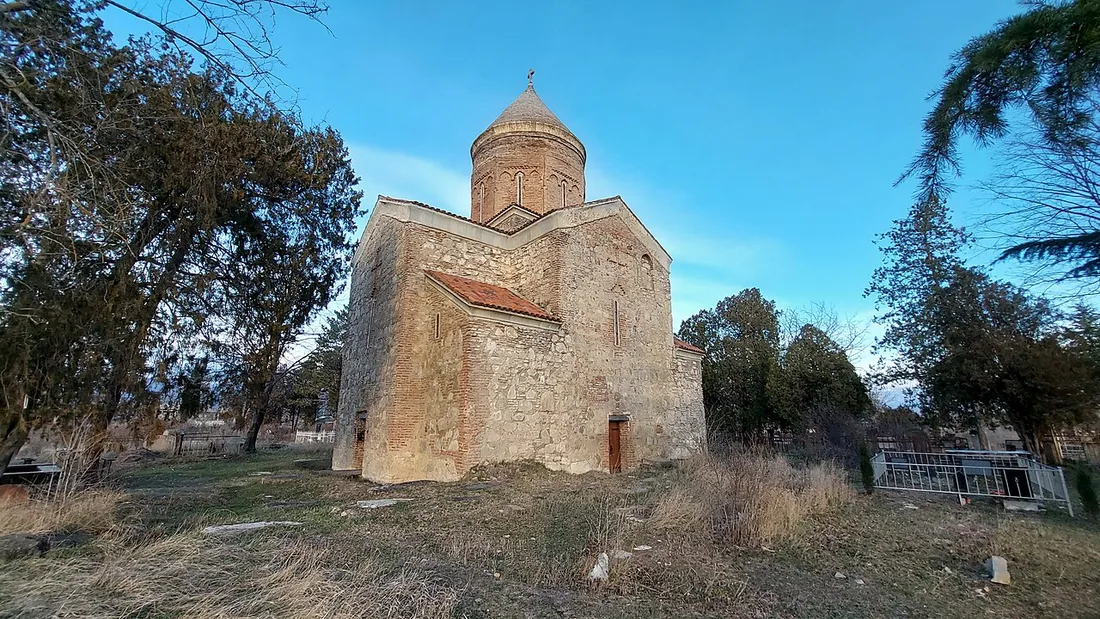
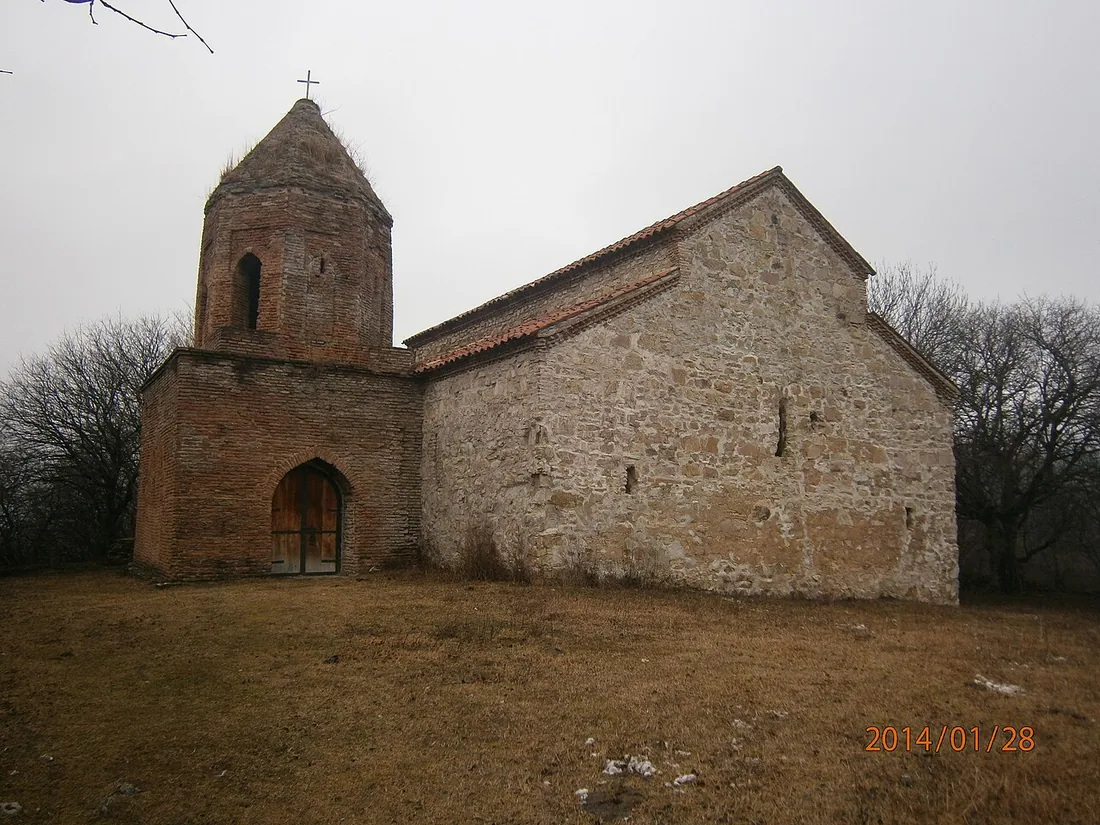
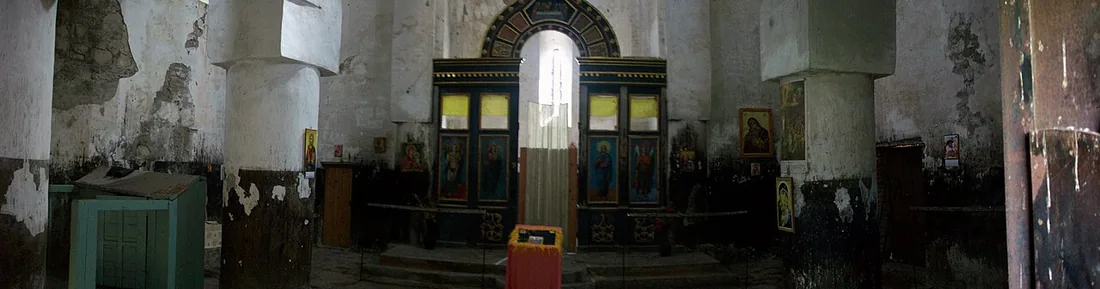
Step off the main road. On the north-eastern edge of the village, inside a stone wall, stands a three-nave basilica of St John the Baptist from the 8th–9th century; on a high hill nearby lie the ruins of Tskhrakara, King Levan's brick palace. When the Soviet wool industry collapsed in the 1990s, a single mill here, Dito's, was left spinning wool for the whole community.
On the last Sunday of May, Zezvaoba brings a market and a horse race to Alvani in Zezva's honour.
Tusheti's towers stand in the clouds; for half the year, its kitchen tables are laid down here.
Practical advice
The village is free and open all year, with no tickets or opening hours. Ask locally for the path up to the Tskhrakara ruins and whether the basilica is unlocked. In October, and again in spring, the flocks are on the move, so expect sheep across the road and drive slowly. For a crowd, come to Zezvaoba on the last Sunday of May. Heading on to Tusheti? Neighbouring Kvemo Alvani has the last ATM before the mountains and the shared 4x4 taxis to Omalo. Fill up in Akhmeta, the last reliable fuel.
How to get there from Tbilisi
Cross the Gombori Pass: the S5 out of Tbilisi, then the Sh38 from Vaziani over the range and down to the edge of Telavi. Join the Sh42 north-west towards Akhmeta for about 7 km, turn right onto the Sh184, which runs across the vineyard plain past Alaverdi cathedral, then follow the Sh43 into the village. In all it is about 113 km and two and a quarter hours, asphalt throughout, so an economy car is plenty. If snow shuts Gombori, go round via Sagarejo and Gurjaani on the S5 and Sh42. The road on over the Abano Pass to Tusheti is offroad-class only, open roughly June to mid-October.
Click a marker for details. Coloured lines are ready-made road trips.
Nearby places
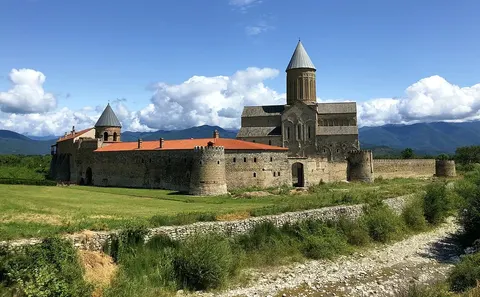
Alaverdi Cathedral
Kvirike III's 11th-century cathedral, over fifty metres tall and alone on the Alazani plain — for nearly a thousand years Georgia's tallest church.
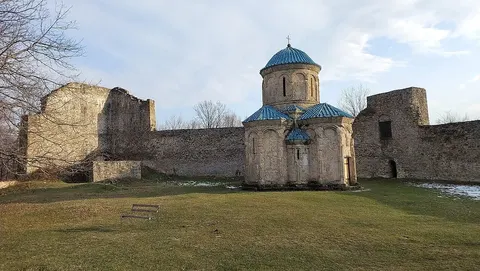
Kvetera Fortress and Church
A small 10th-century church roofed in azure tile, inside the forest citadel on the Akhmeta–Tianeti road that a king once failed to take.
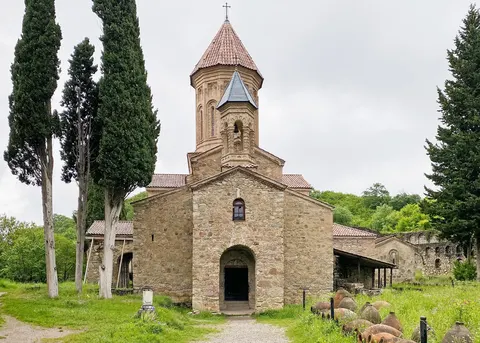
Ikalto Academy
Saint Zenon's 6th-century monastery west of Telavi, and the roofless hall of the medieval academy where, tradition says, Rustaveli studied.
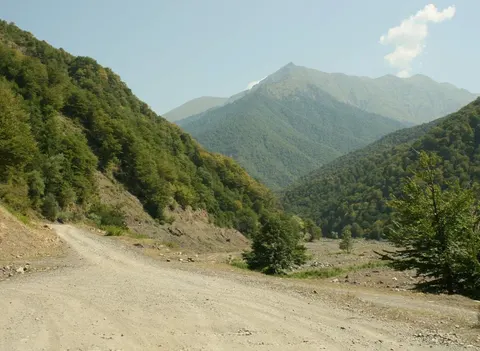
Pankisi Gorge
The upper Alazani valley north of Akhmeta, home for nearly two centuries to the Chechen-speaking Kists: brick mosques, wooded slopes, open doors.
Best car for this trip
Guides
- Driving in Georgia: What the Distances Actually Cost You Georgia is a small country with slow roads. Here is what 267 measured drives from Tbilisi say about how long y
Pickup locations
Car Rental at Tbilisi Airport — 51 km (straight line)