
Zedazeni Monastery
On the forested Saguramo ridge above Mtskheta, the hill where John, leader of the Thirteen Assyrian Fathers, settled on the site of a pagan idol.
- Time needed
- 1.5 h
- From Tbilisi
- 36 km · 1:00
- Road
- Unpaved sections
- Car needed
- Crossover / SUV
- Season
- May–October
- Entry
- free
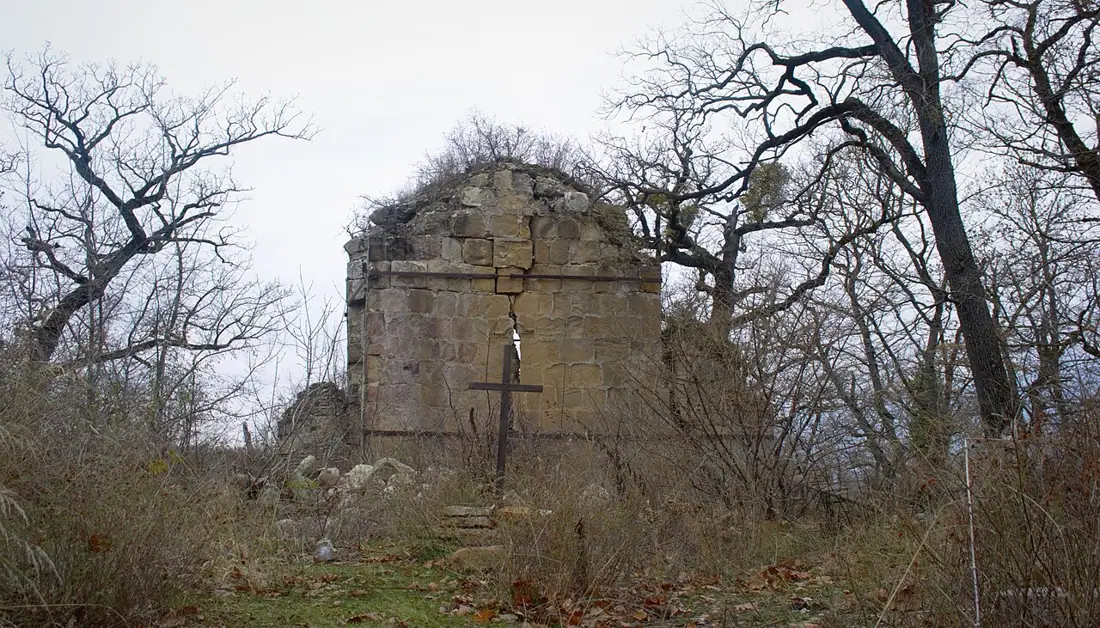
Tradition says an idol of the pagan god Zaden once stood on this summit of the Saguramo ridge; in the 6th century a monk from Syria climbed up, settled beside its ruin, and he has borne the hill's name ever since.
The monk was John — John of Zedazeni — leader of the Thirteen Assyrian Fathers. He came to Mtskheta in the mid-6th century and chose this empty height over the royal town below. From here he sent his disciples across Kartli and Kakheti — Shio went to his cave west of Mtskheta — and stayed behind with two companions. He built no church, only a cave chapel and a few cells, and when he died, in 573 by Georgian tradition, he was buried in a small chapel raised for him.
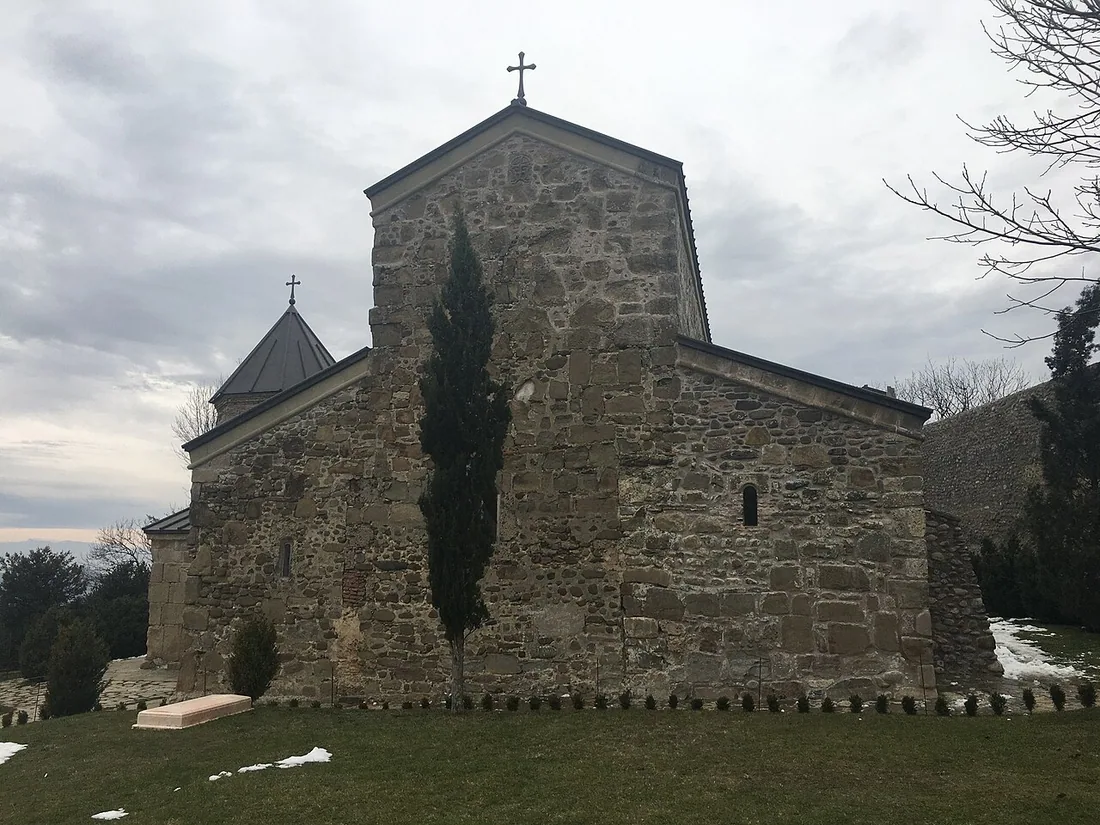
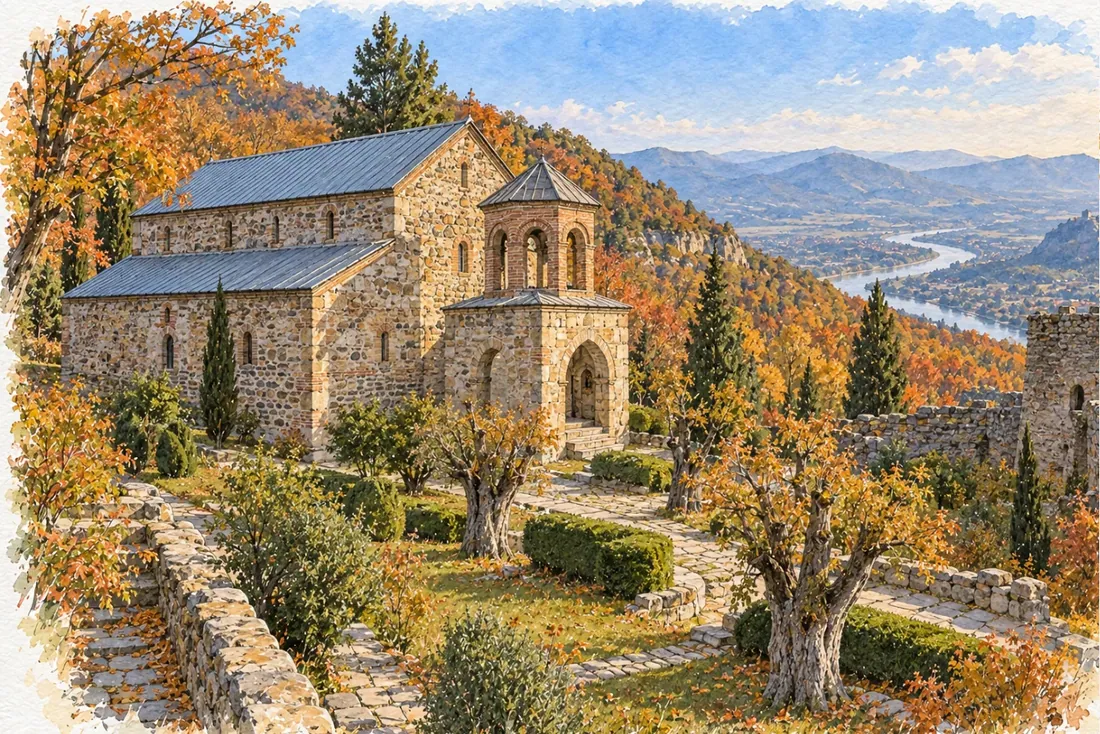
That chapel now lies inside a larger church. At the end of the 8th century Catholicos Clement built a three-aisled basilica of St John the Baptist and folded the old hall church, of around 600, into its north aisle. There, up four steps, stands John's stone sarcophagus, a third of it pushed into the sanctuary. The walls are river cobbles, rubble and brick, the facades bare but for a simple carved cross; over the south porch rises an 18th-century octagonal brick belfry, open on four arches.
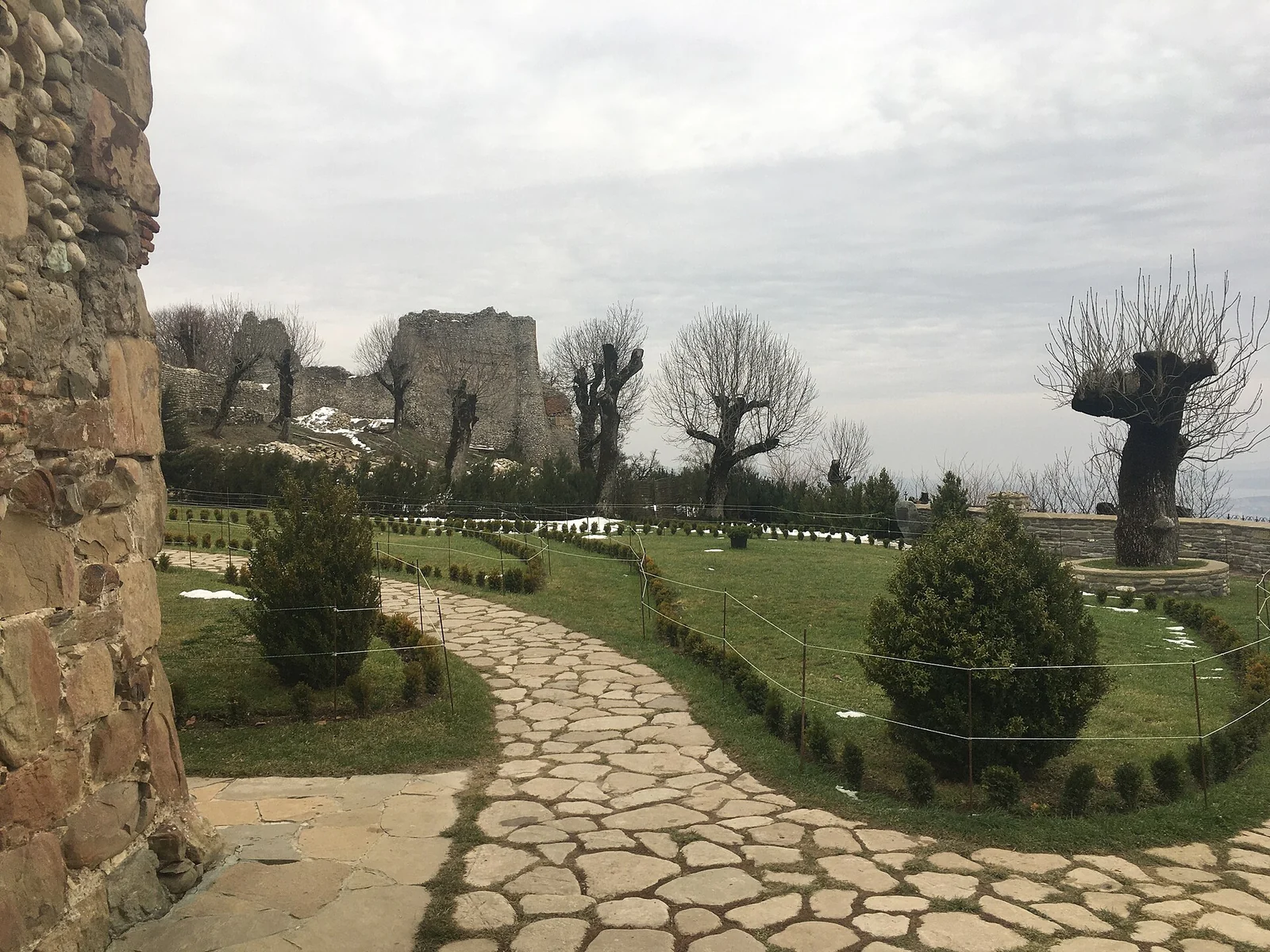
The summit was a stronghold too. In 1101 David the Builder took Zedazeni from the King of Kakheti, destroying the Kakhetian and Seljuk troops sheltering in it, and gave it to his comrade-in-arms Niania Bakuriani. Monastic life lapsed in 1705 and again in 1915–22; restorers came in 1938 and again in 1970–71.
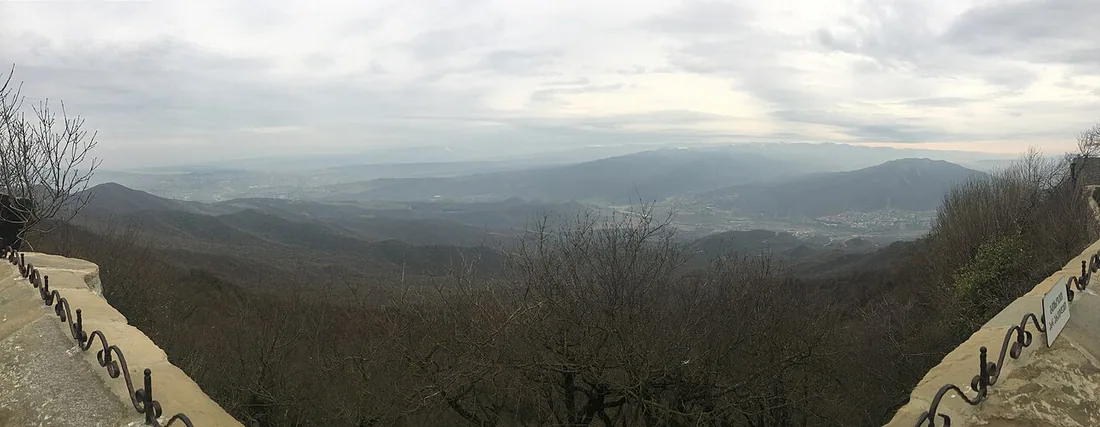
From the edge of the hill, Mtskheta lies far below at the meeting of its rivers, small enough to hide behind a raised hand — perhaps exactly the distance John had in mind.
Gallery
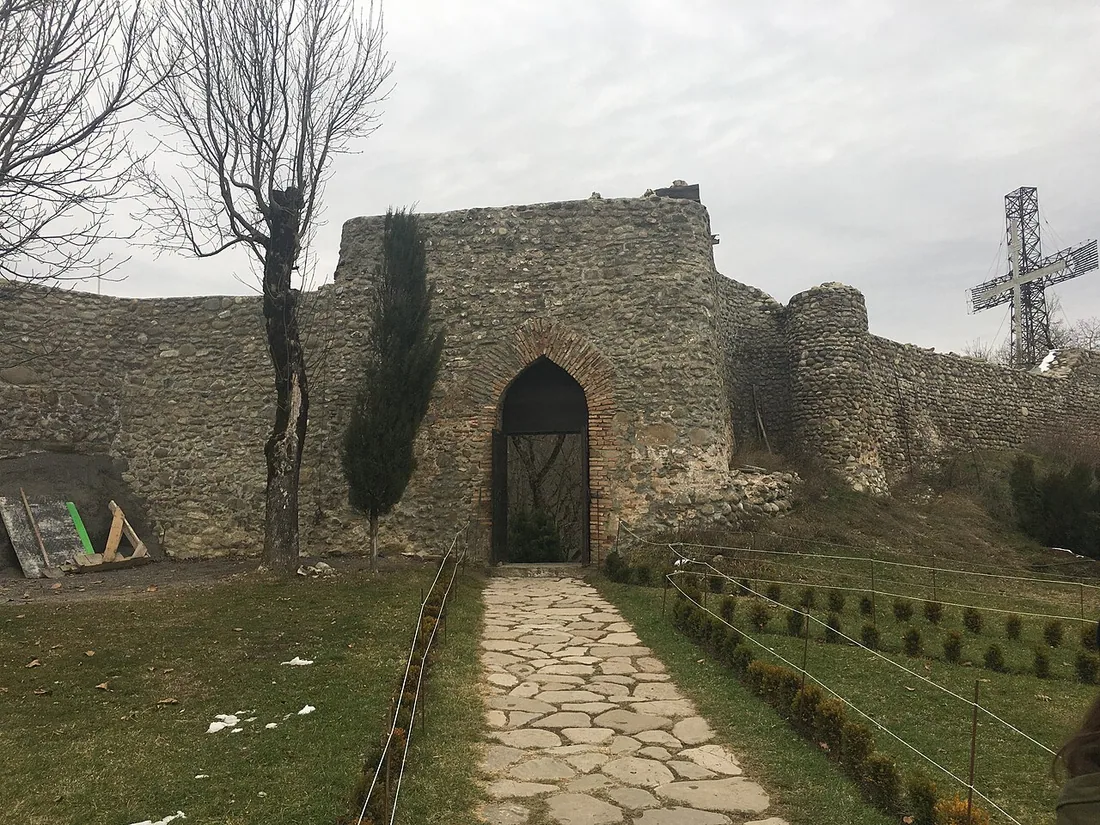
Practical advice
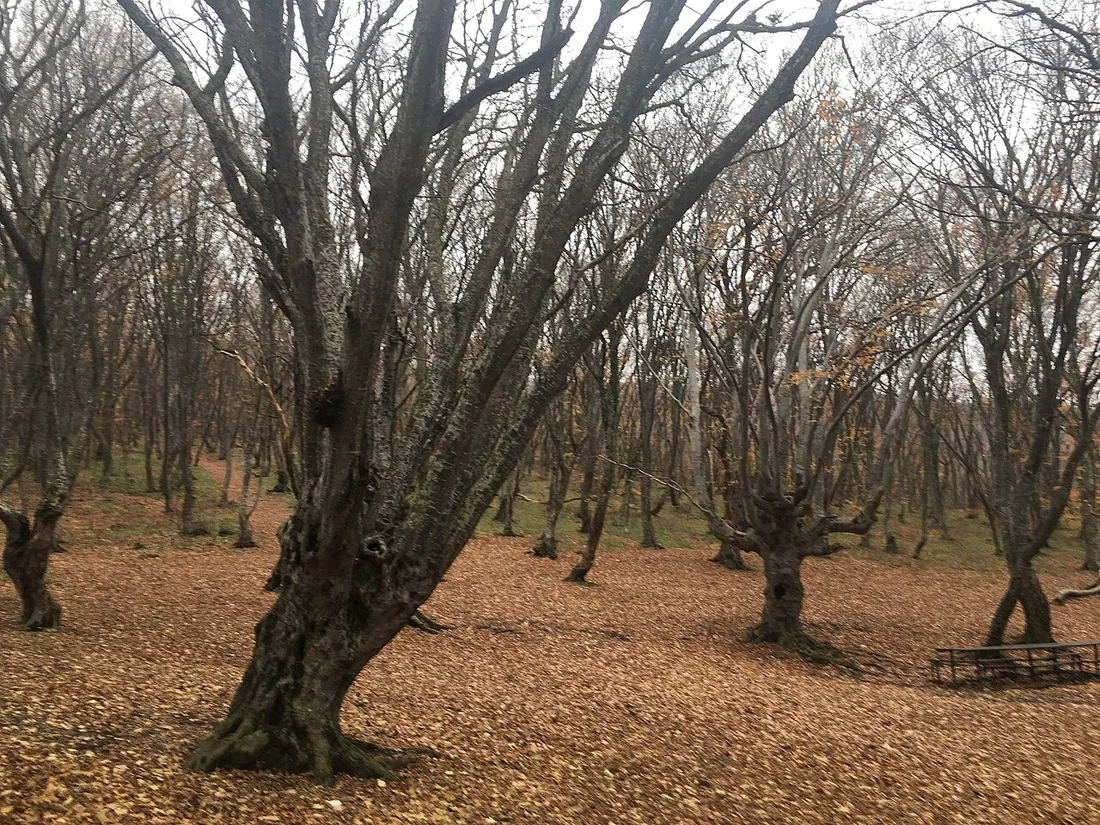
Allow an hour and a half at the top, plus time for the slow final climb. Cover shoulders and knees; women should bring a headscarf. There is no café or shop and no reliable toilet, so bring water and a snack. The edge of the summit is unfenced in places — keep children close. Cloud can settle on the ridge and swallow the view entirely, so check the forecast and aim for the morning. In October the forest on the approach turns copper and gold and deserves a stop of its own.
How to get there from Tbilisi
Take the S1 motorway (E60) north-west from Tbilisi, past the Mtskheta exit, and leave it at Tsitsamuri, where the Sh149 branches off towards Saguramo. Follow it and the signs for Zedazeni; the last 4–5 km climb the ridge in tight hairpins on a steep, broken mix of old concrete and gravel with no barriers. That is about 36 km and an hour from central Tbilisi. In dry weather a careful driver in an ordinary car will get up, but an SUV is the sensible choice, and after rain or snow the only one. Park by the monastery wall. Fill the tank before you leave the motorway.
Click a marker for details. Coloured lines are ready-made road trips.
Nearby places
Samtavro Monastery
Where Nino lived among the brambles and Georgia's first Christian king lies buried: a working convent five minutes up the street from Svetitskhoveli.
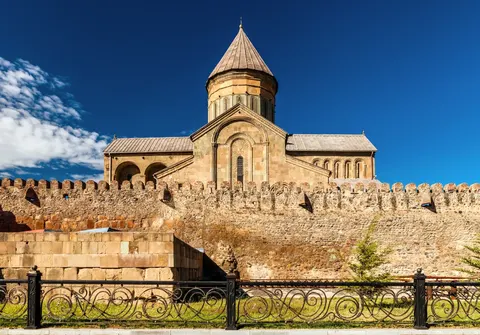
Svetitskhoveli Cathedral
Georgia's mother church: an 11th-century cathedral said to guard Christ's robe, with kings beneath its floor and its architect's carved hand on the wall.
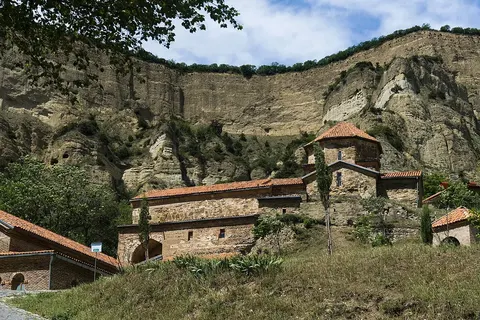
Shio-Mgvime Monastery
A 6th-century monastery deep in a pale limestone gorge west of Mtskheta, grown around the cave where the hermit Shio chose to live, die and be buried.
Best car for this trip
Unpaved sections
Guides
- Do You Need a 4x4 in Georgia? We rate the road surface and the minimum car class for all 267 places in our database. 227 of them need nothin
- The Best Time to Visit Georgia, Counted Month by Month Georgia does not have one season. It has two countries: a 60% country from November to April and a 99% country
Pickup locations
Car Rental in Tbilisi — 20 km (straight line)
Booking and enquiries
The easiest way to reach these places is by car — you pick the route and the stops.