
Svetitskhoveli Cathedral
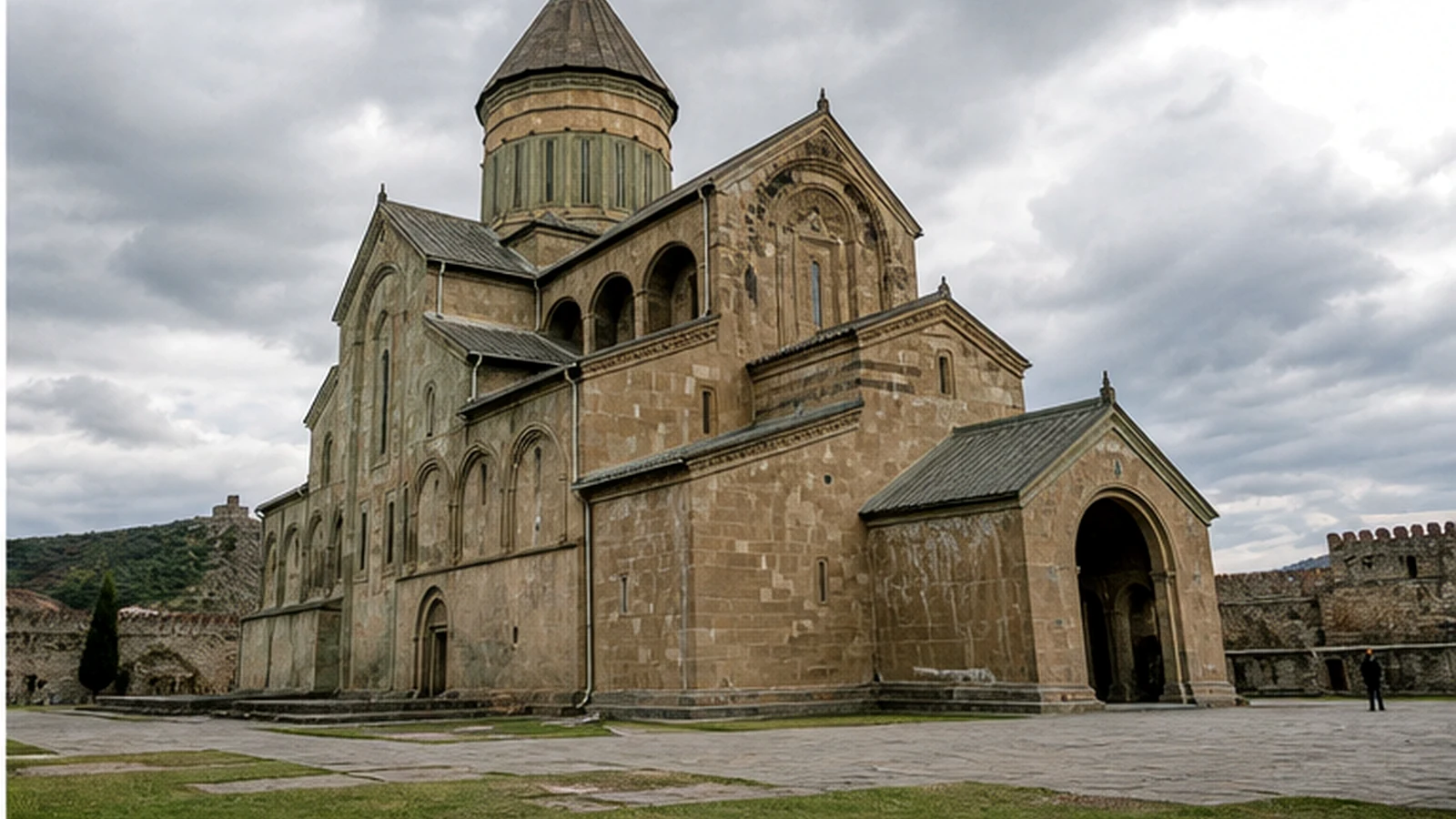
Georgia's mother church: an 11th-century cathedral said to guard Christ's robe, with kings beneath its floor and its architect's carved hand on the wall.
- Time needed
- 2 h
- From Tbilisi
- 25 km · 0:30
- Road
- Paved
- Car needed
- Economy class
- Season
- All year
- Entry
- free
High on the north wall of Svetitskhoveli a carved right arm grips a mason's square, and the inscription asks forgiveness for "Arsukidze, slave of God" — a signature that has outlasted every king buried inside, and the kingdom too.
The cathedral rests on a legend. Tradition says Elias, a Jew of Mtskheta, bought Christ's robe from a Roman soldier at Golgotha and carried it home; his sister Sidonia touched it, died on the spot and was buried still clutching it. A cedar grew from her grave. St Nino had it felled for the church's columns; the seventh rose into the air by itself and came down only after she had prayed all night. Hence the name: sveti, pillar, tskhoveli, living. Inside, a small stone copy of the Holy Sepulchre marks Sidonia's grave.
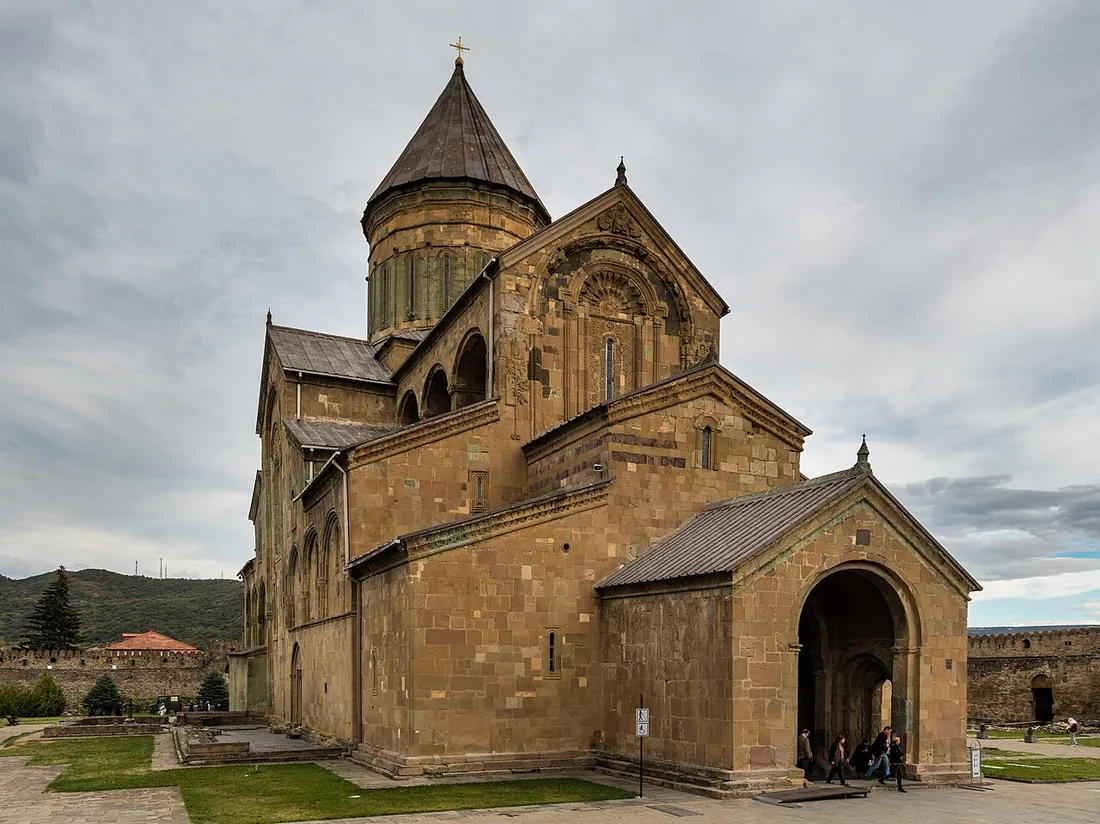
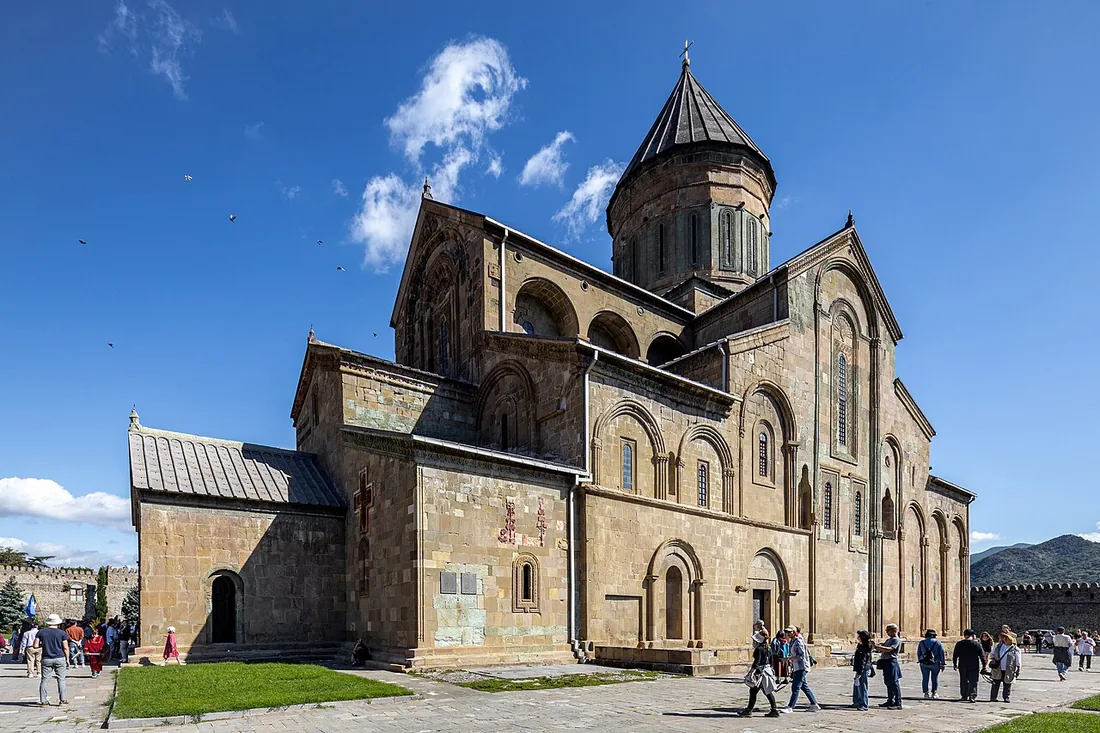
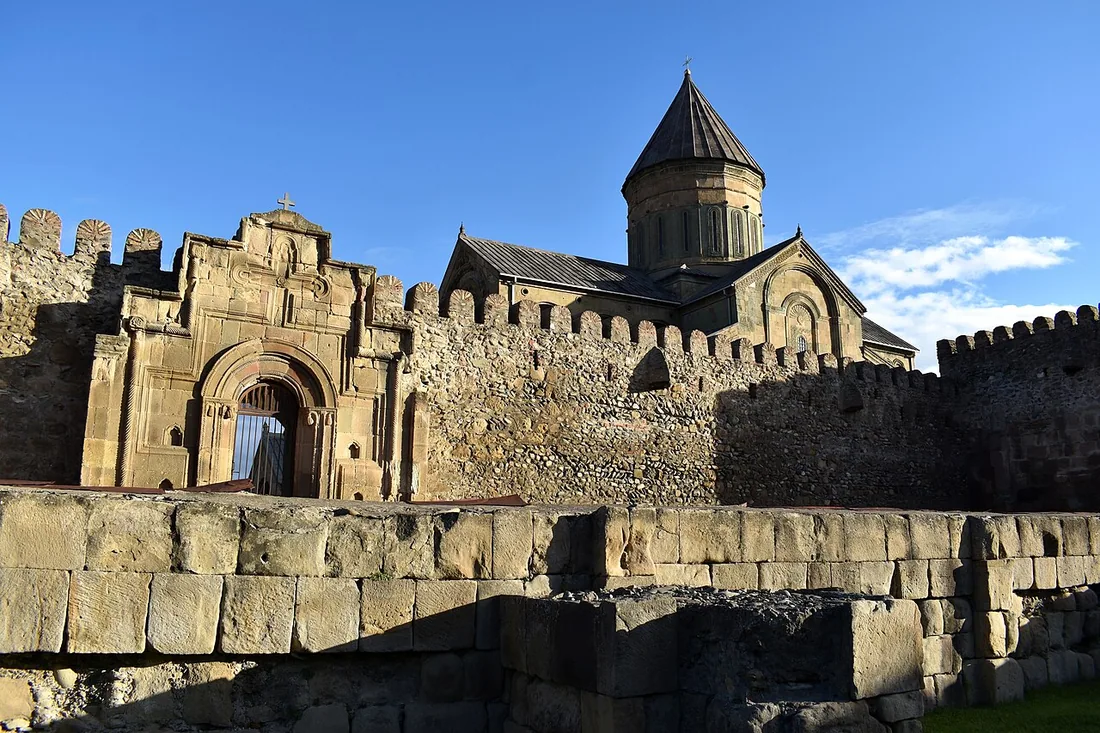
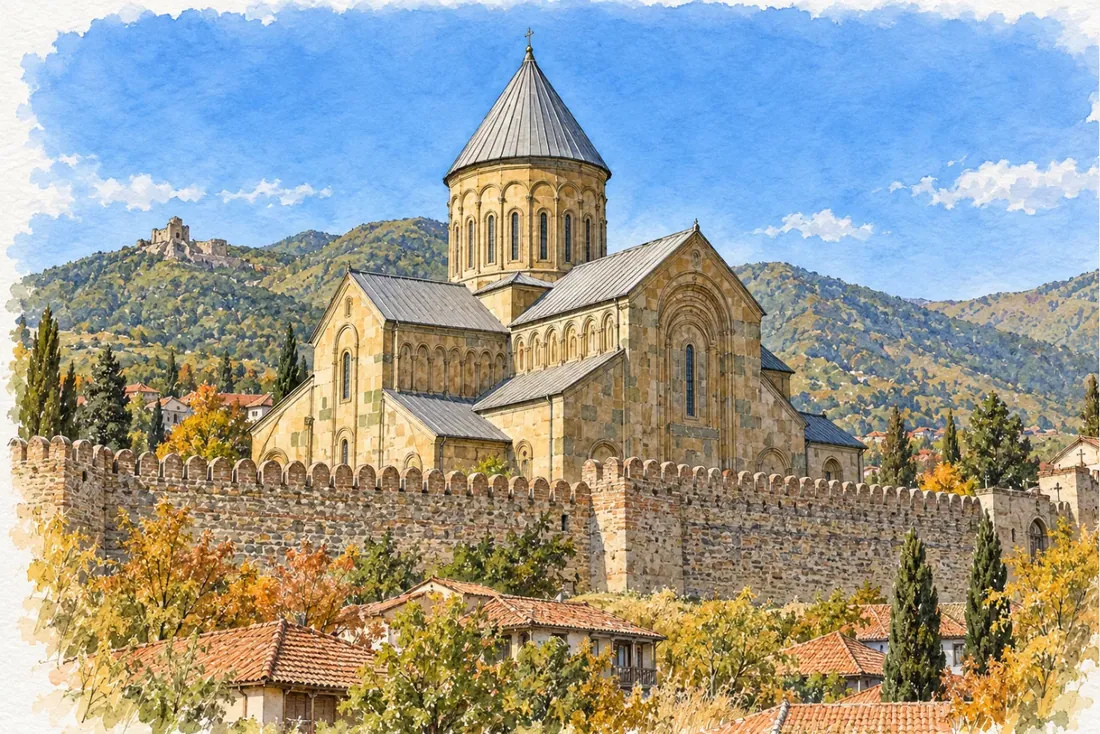
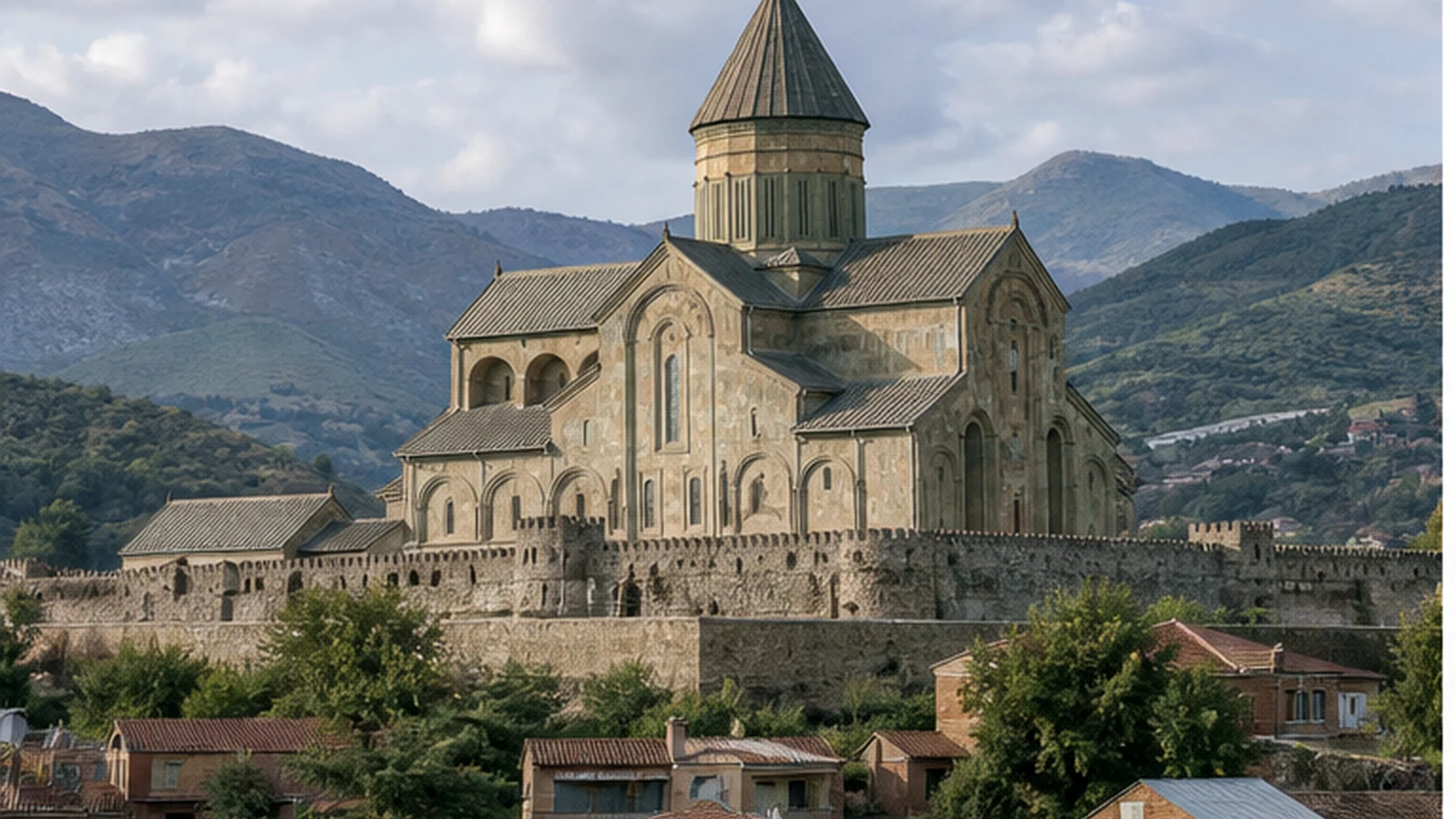
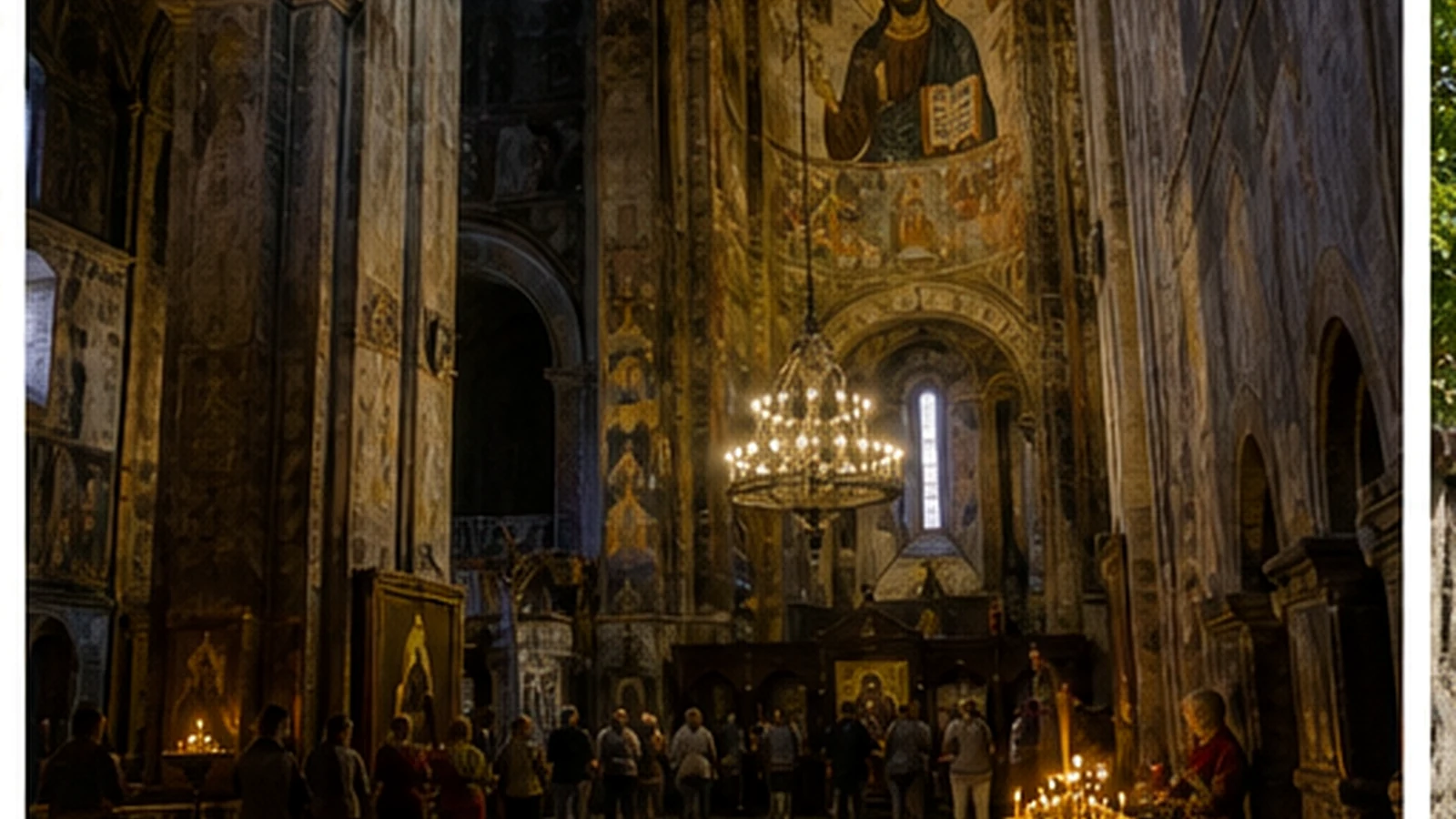
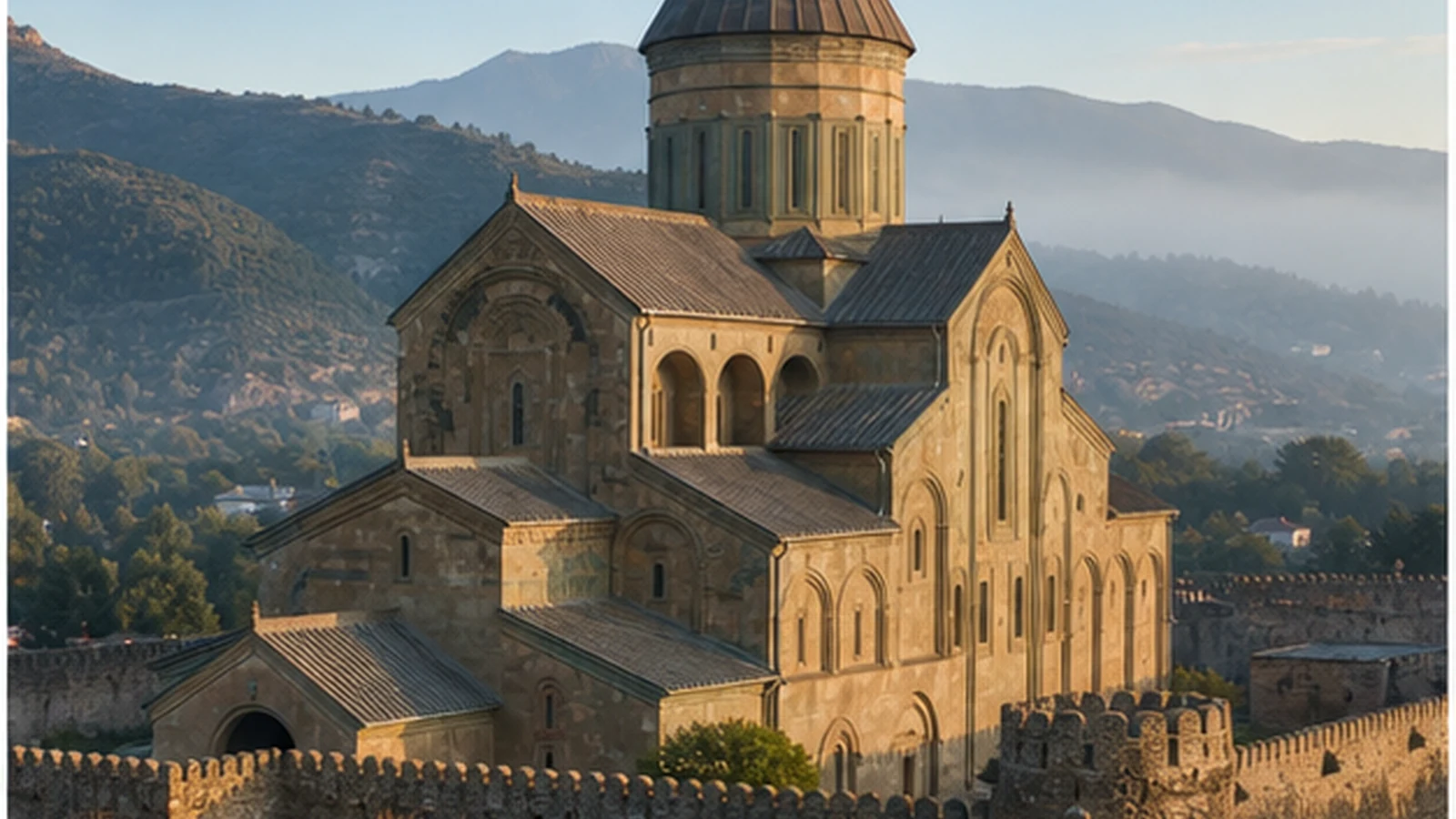
The first church went up under King Mirian III in the 4th century and a basilica under Vakhtang Gorgasali in the 5th. The present cross-domed cathedral was built between 1010 and 1029, at the invitation of Catholicos Melchizedek I. In 1787 Erekle II ringed it with the towered wall you still walk through. The oddest blow came in the 1830s, when Russian officials whitewashed the medieval frescoes ahead of a visit by Tsar Nicholas I that never happened. Restorers have recovered fragments, among them a 13th-century Beast of the Apocalypse and figures of the zodiac.
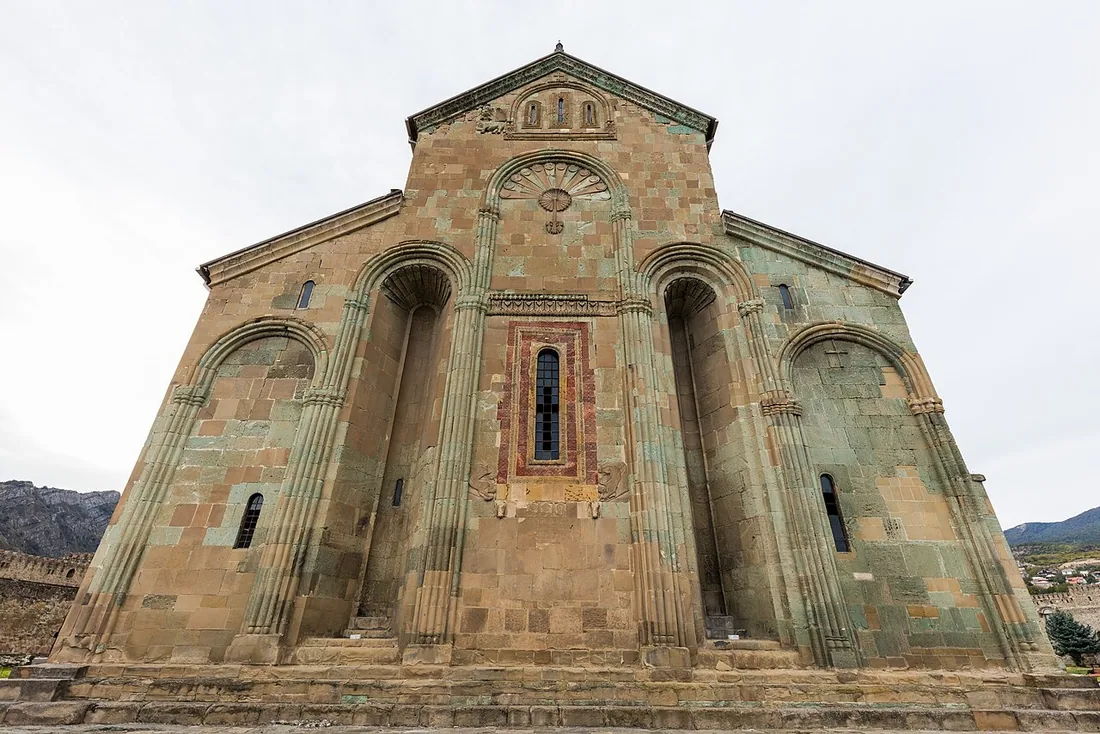
Before the altar lie Vakhtang Gorgasali, Erekle II, his tomb marked with a sword and shield, and his son George XII, the last king of Georgia. Outside, on the east front, an eagle spreads its wings above a lion, and two bulls' heads survive from the 5th-century church.
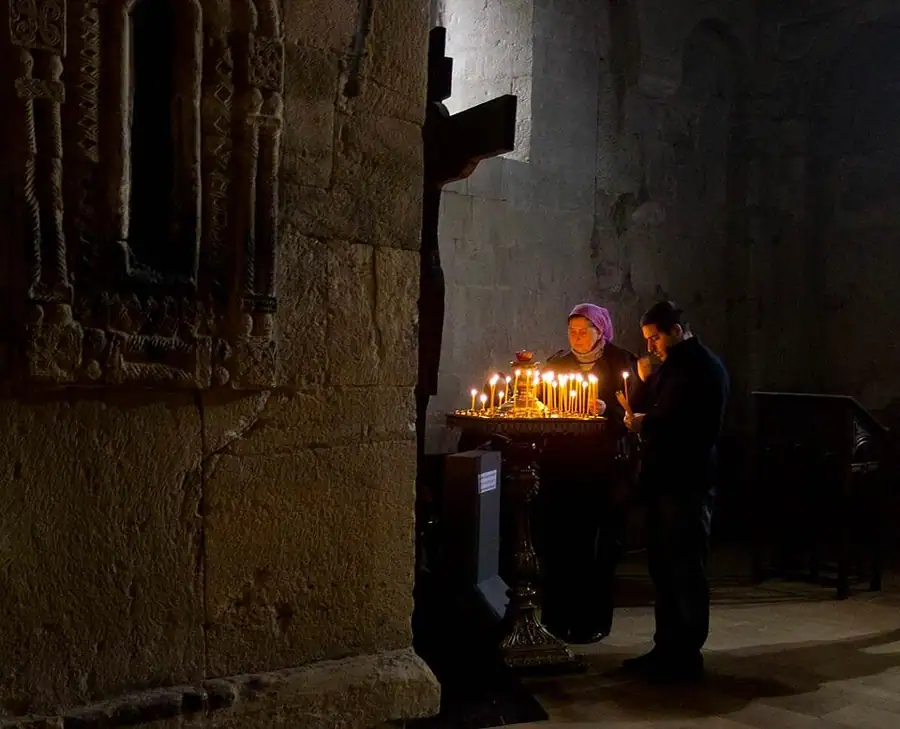
Come on a Sunday, with a christening at one pillar and a wedding at the next, and it stops being a monument.
Gallery
Practical advice
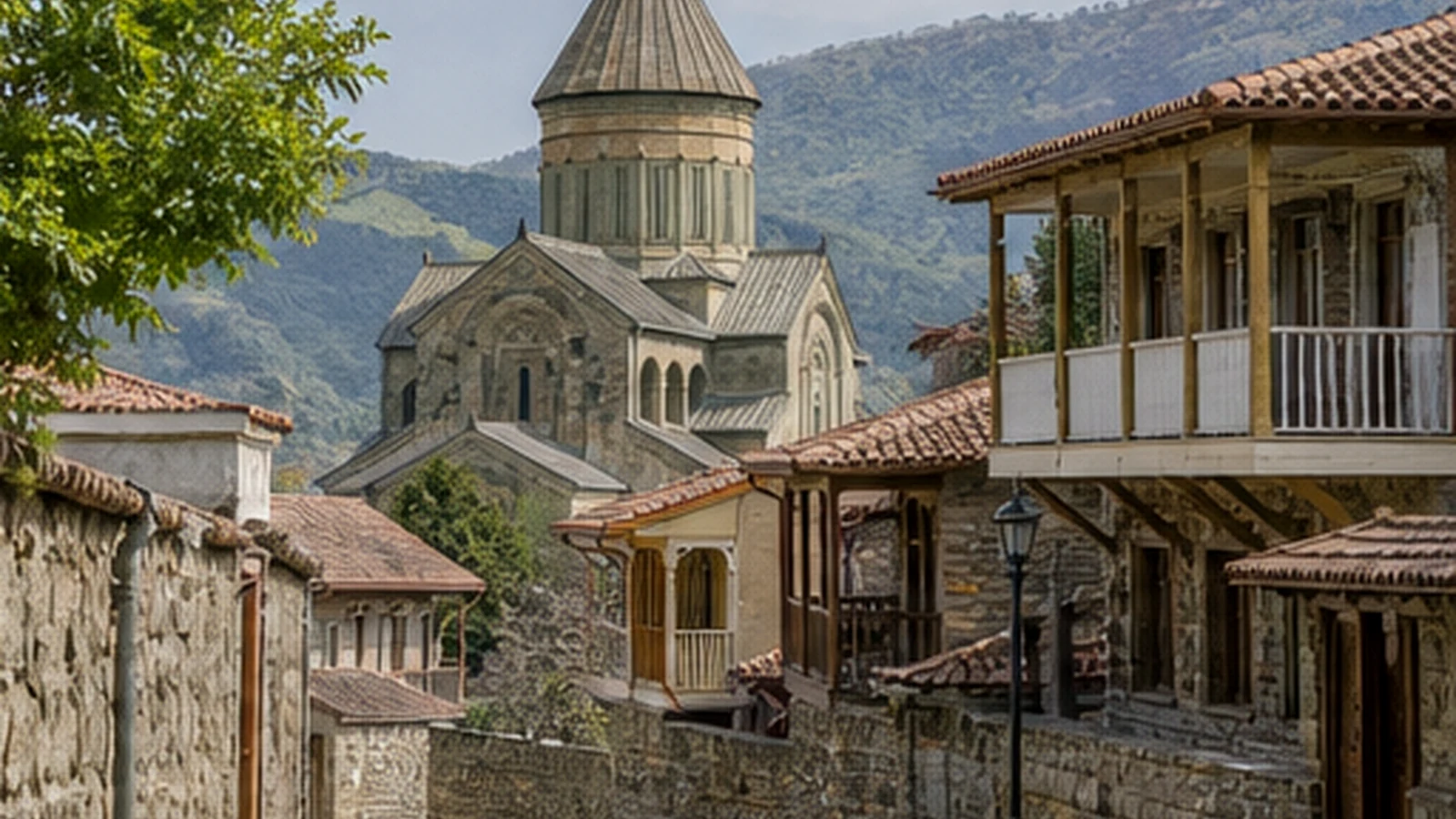
The dress code is enforced at the gate: a headscarf and skirt for women, long trousers for men; wraps are lent at the entrance. Photograph without flash, and not at all during a service. Arrive early in the morning or after 5 pm to avoid the midday tour groups, especially in summer. The streets around the walls have cafés, toilets and cash machines. Allow two hours if you also want to wander the old town and walk five minutes up the street to Samtavro.
How to get there from Tbilisi
Take the S1 motorway (E60) north-west from Tbilisi and leave it at the signed Mtskheta exit after about 20 km; the old road crosses the Mtkvari straight into the centre. That is 25 km and roughly 30 minutes in normal traffic, asphalt all the way, so any car will do. Traffic in the historic core around the cathedral is restricted: leave the car in one of the paid lots on its edge or by the river and walk a few minutes to the walls, which you will see long before you reach them. Fuel stations line the S1.
Click a marker for details. Coloured lines are ready-made road trips.
Nearby places
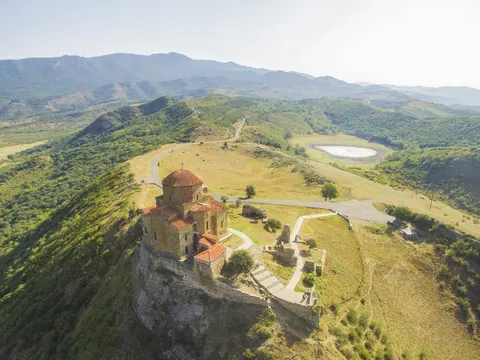
Jvari Monastery
A church of about 600 on a cliff above the meeting of the Aragvi and Mtkvari, with carved princes on its walls and Mtskheta spread out below.
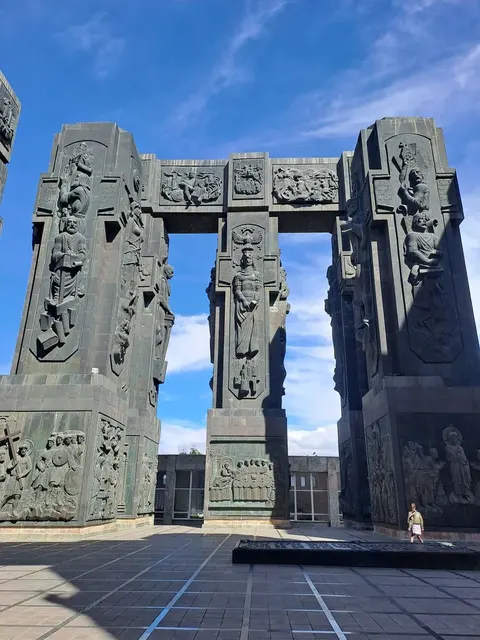
The Chronicle of Georgia
Sixteen pillars up to 35 metres high on Keeni Hill above the Tbilisi Sea: Zurab Tsereteli's unfinished epic of bronze and stone.
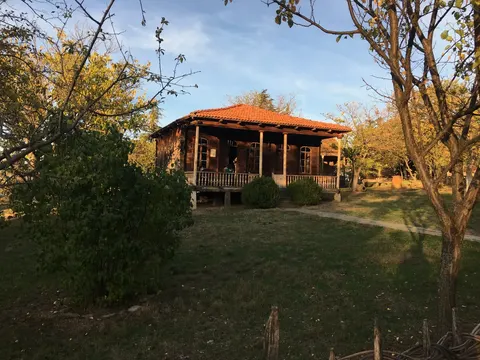
Open Air Museum of Ethnography
A village assembled on a wooded hill above Vake, where a Khevsur tower, an early basilica from Tianeti and a Megrelian maize granary stand as neighbours.
Part of these road trips
- Mtskheta, Uplistsikhe and Ateni Valley 2 days · 230 km
- Grand Classic Georgia Tour 10 days · 1680 km
- Family Georgia in Seven Easy Days 7 days · 820 km
- Mtskheta Heritage Day 1 days · 85 km
Best car for this trip
Guides
- Driving in Georgia: What the Distances Actually Cost You Georgia is a small country with slow roads. Here is what 267 measured drives from Tbilisi say about how long y
Pickup locations
Car Rental in Tbilisi — 18 km (straight line)
Booking and enquiries
The easiest way to reach these places is by car — you pick the route and the stops.