
Rkoni Monastery and Tamar's Bridge
A 7th-century monastery deep in the forested Tedzami gorge, reached by fords and gravel, with a medieval stone bridge that still carries walkers.
- Time needed
- 3 h
- From Tbilisi
- 75 km · 1:45
- Road
- Unpaved sections
- Car needed
- Crossover / SUV
- Season
- May–October
- Entry
- free
Rkoni hides at the far end of the Tedzami gorge, and the drive in — gravel, fords, the forest closing overhead — is the first chapter of the visit.
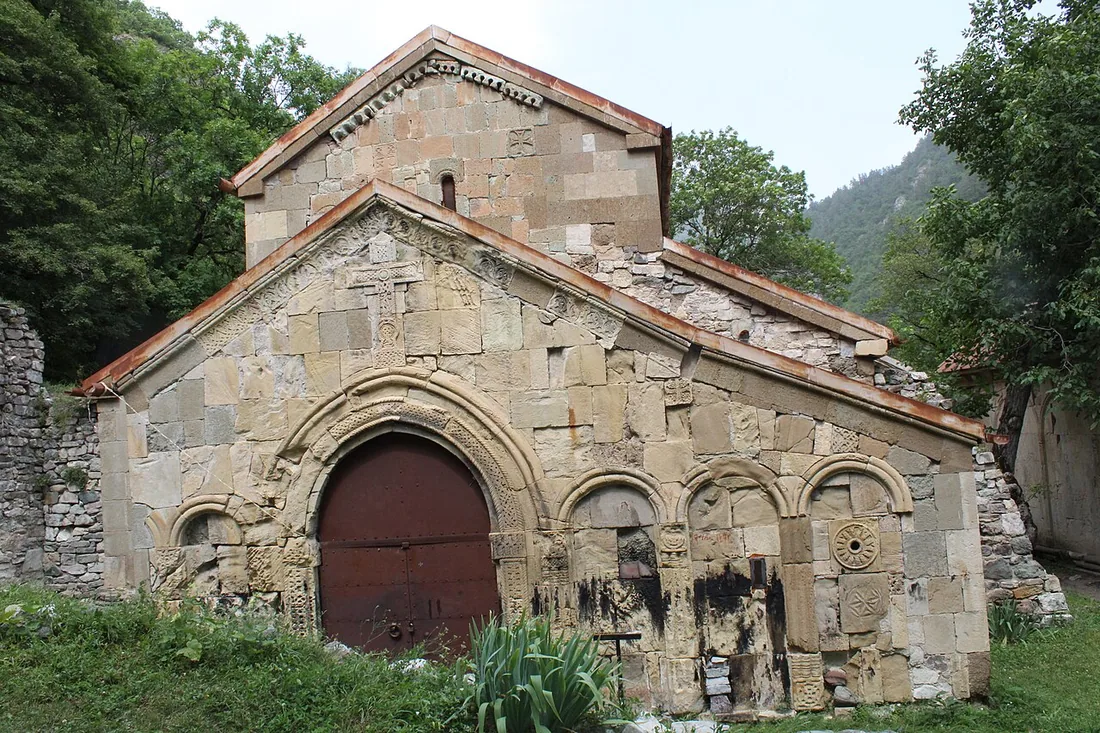
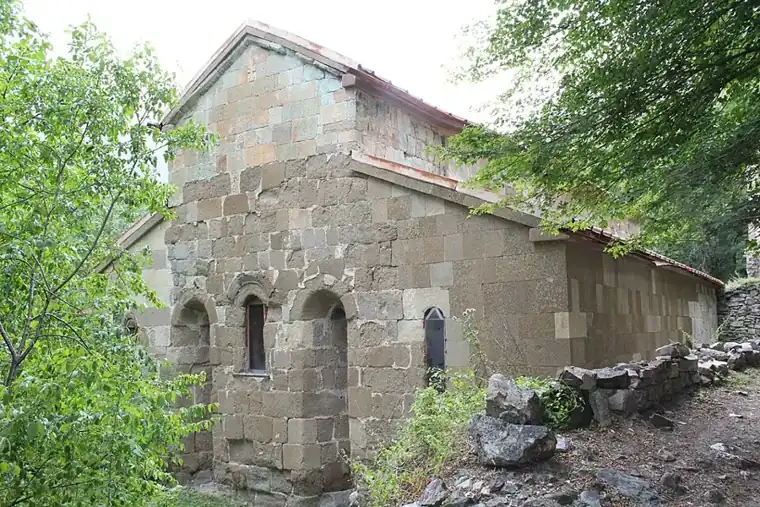
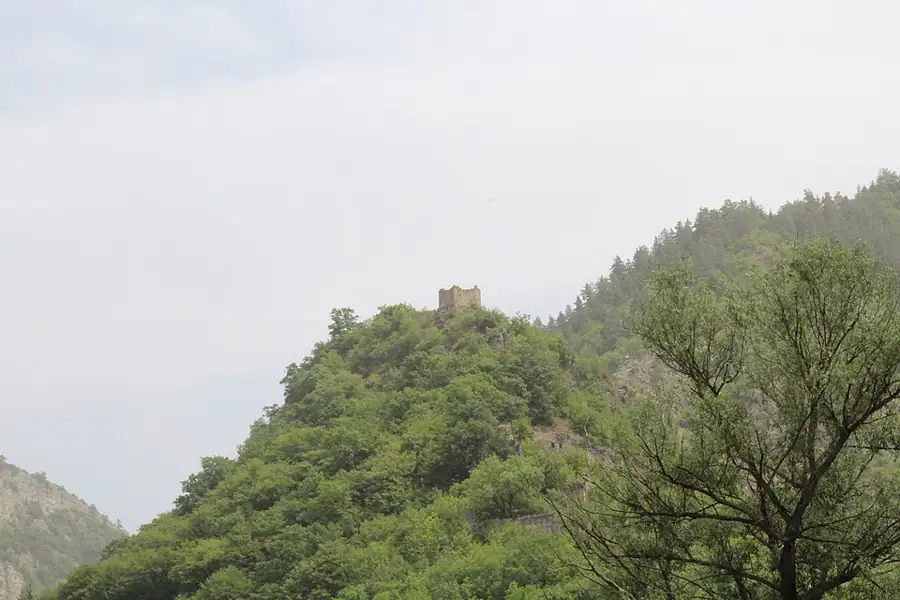
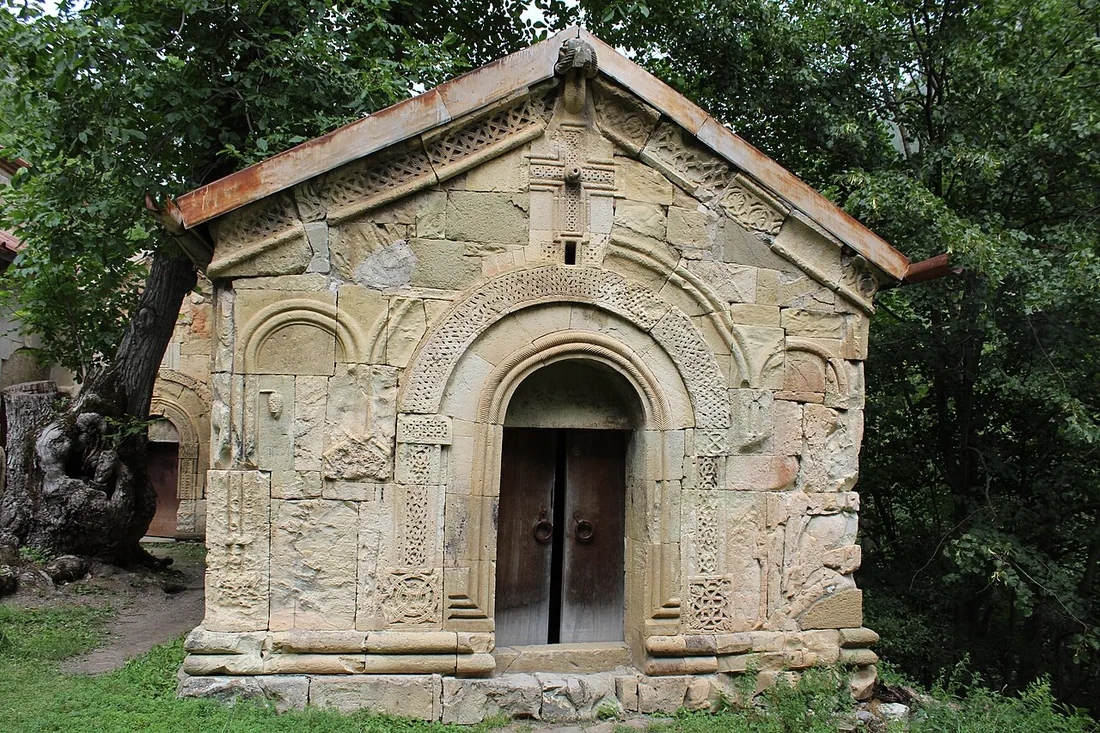
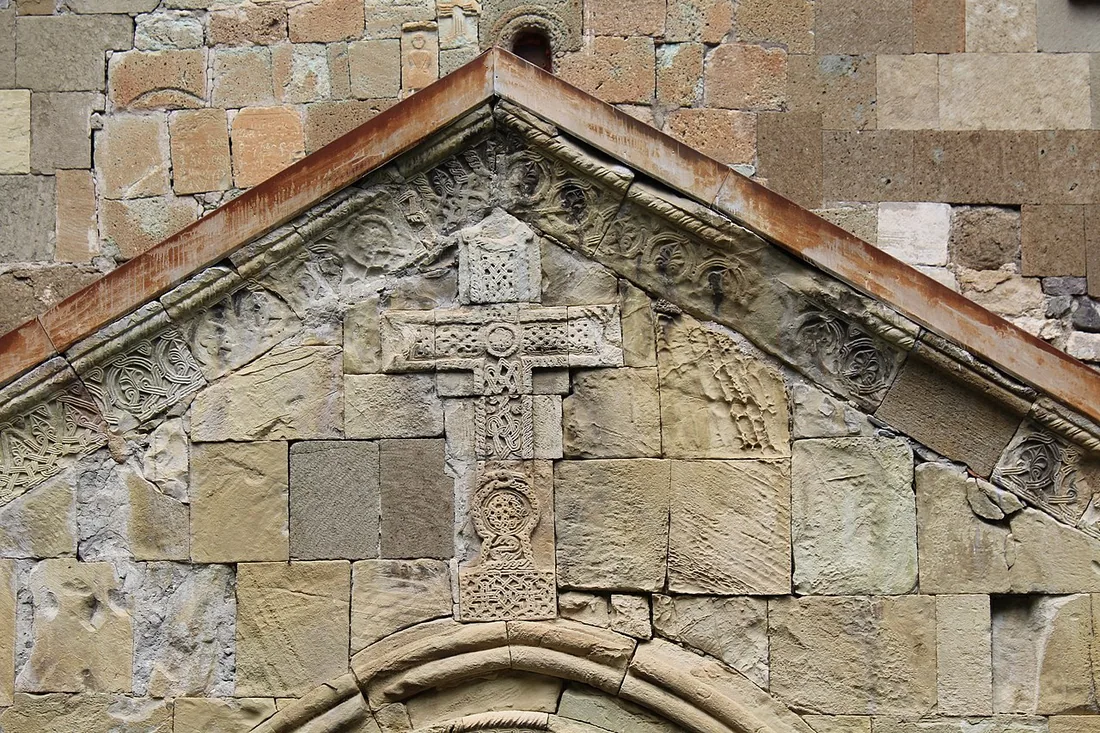
The monastery was founded in the 7th century, probably between 642 and 645, as a house of prayer and a lookout at once: the Arabs were advancing, and this gorge was a road between Shida Kartli, Trialeti and Javakheti. Its heart is the Church of the Dormition, a three-aisled basilica of the later 7th century with near-semicircular arches and a vaulted roof. Fragments of painting survive inside, and, on the south jamb of the entrance, a painted secular figure from no later than the 10th century. South of it stands the 13th–14th-century Church of the Baptist, a hall of cut stone with decorative arcades on three façades. Around them lie a ruined refectory, a later two-storey bell tower and the stump of a defensive tower.
Timur's raiders wrecked the monastery in 1400. It was rebuilt, yet by the 16th and 17th centuries it was slowly emptying. In 1905 its isolation served a very different congregation: revolutionaries set up a secret workshop here to make firearms and explosives out of sight of the Tsar's police.
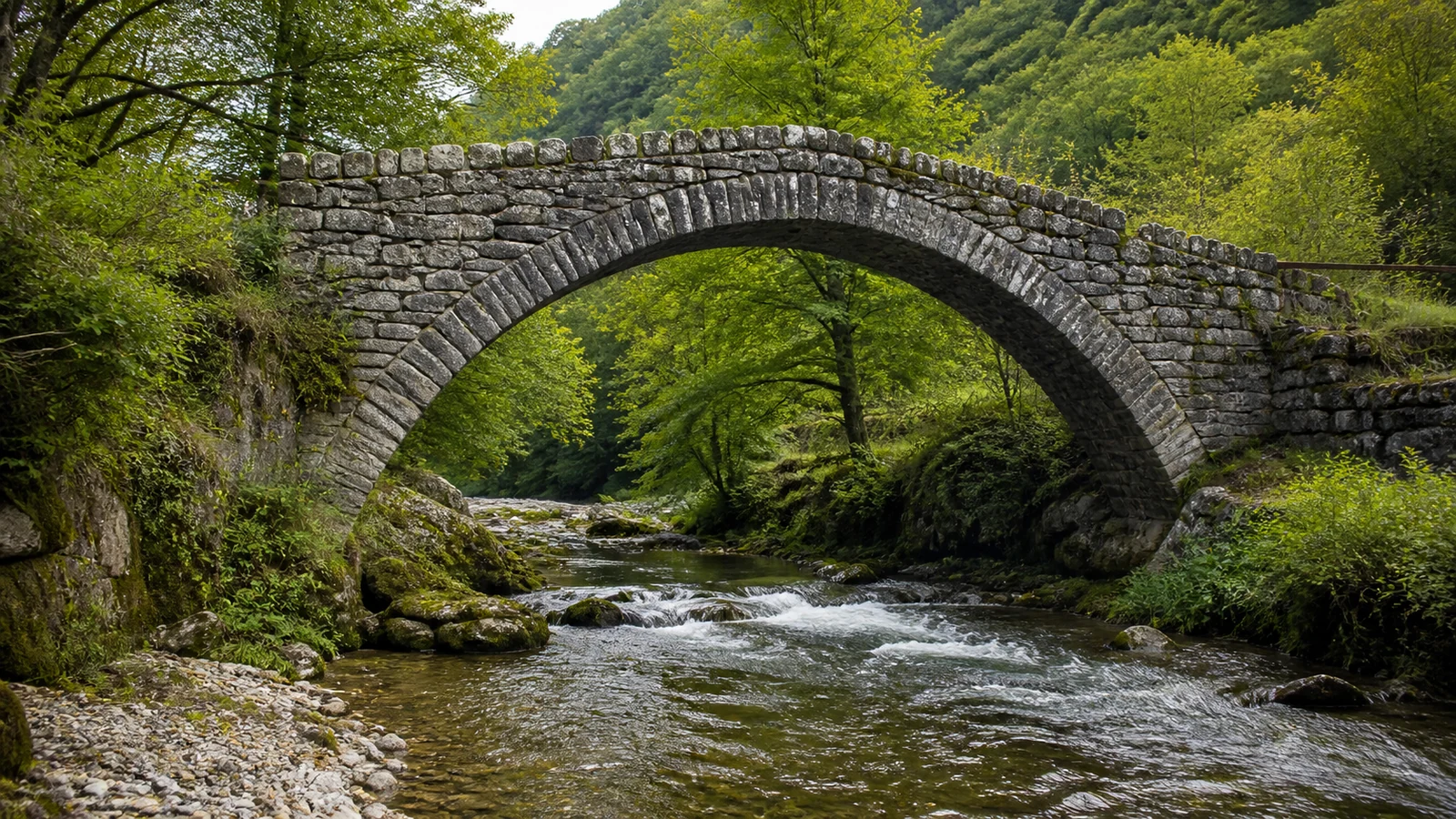
Then there is the bridge. Tamar's Bridge crosses the Tedzami in a single stone arch, 12.5 metres long and 2.2 metres wide, its footings set on living rock, where the old road from Shida Kartli to Trialeti once crossed. It is usually dated to the 12th–13th century. Tradition ties it to Queen Tamar, said to have kept a summer residence nearby; that is a story rather than a record, and many old Georgian bridges carry her name.
Cross it on foot, as monks, merchants and gunsmiths did before you.
Gallery
Practical advice
Allow three hours: about one at the monastery, the rest on the gorge road and the walk to the bridge. After heavy rain and in spring snowmelt the fords can run too deep for a low car — ask in Chachubeti before you commit. Winter often closes the track altogether. Wear proper walking shoes; the paths are stony. There is no shop, café or mobile signal in the gorge, so bring water and food from Kaspi. Dress modestly at the monastery. Late October, when the forest turns, is the finest time.
How to get there from Tbilisi
Take the S1 (E60) motorway west from Tbilisi to the Igoeti junction and turn south into Kaspi — fill up here, the last fuel before the gorge. From Kaspi follow the old road (Sh29) west to Mepiskalaki, where the Sh129 turns south up the Tedzami valley through Chachubeti; the monastery lies about 5.5 km beyond the village. Around 75 km and 1 hour 45 minutes. The final 20 km or so are gravel, with fords and narrow sections: take an SUV, or at the very least a car with good ground clearance. Park on the open ground by the monastery.
Click a marker for details. Coloured lines are ready-made road trips.
Nearby places
Kldekari Fortress
The Baghuashi eyrie on the Trialeti ridge: a 'rock gate' whose lords held the roads for two centuries and fought kings for the kingdom.
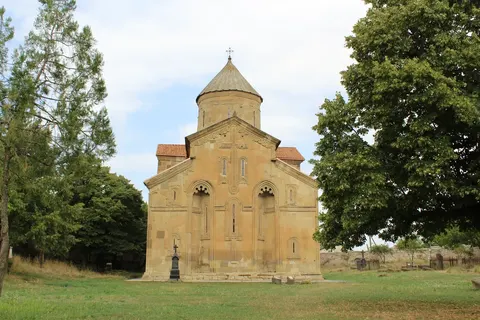
Ertatsminda Cathedral
A 13th-century church south of Kaspi with a carved cross on every façade, 1654 frescoes of its martyr saint and the Saakadze family tombs.
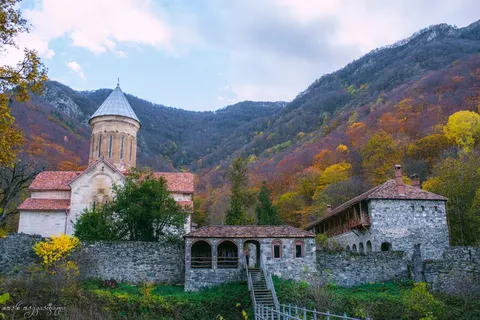
Kvatakhevi Monastery
A Golden Age domed church in white dressed stone at the dead end of a wooded Trialeti gorge, once a scriptorium, part of whose treasury is now in Moscow.
Part of these road trips
- Shida Kartli Monastery Trail 2 days · 310 km
Best car for this trip
Unpaved sections
Guides
- Do You Need a 4x4 in Georgia? We rate the road surface and the minimum car class for all 267 places in our database. 227 of them need nothin
- Winter Driving in Georgia: What Closes, What Opens, Which Car Of the 267 places we map, 161 are in season in winter and 52 are flagged as not reachable year-round. The pass
Pickup locations
Car Rental in Tbilisi — 50 km (straight line)
Booking and enquiries
The easiest way to reach these places is by car — you pick the route and the stops.