
Ertatsminda Cathedral
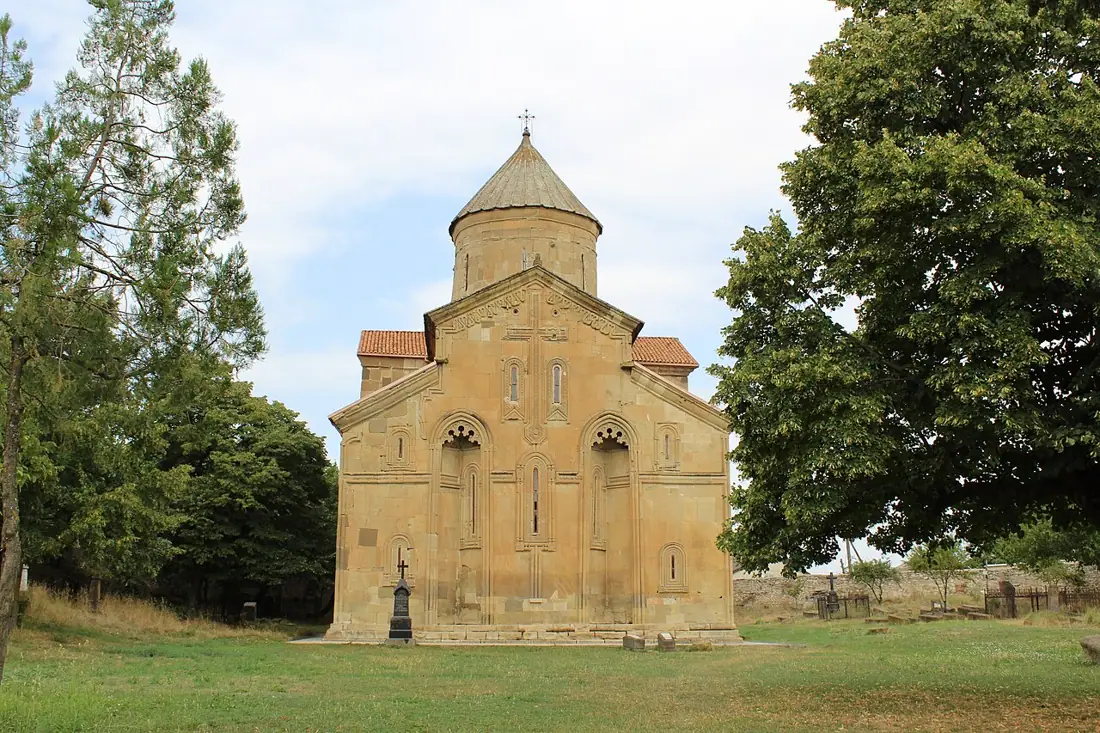
A 13th-century church south of Kaspi with a carved cross on every façade, 1654 frescoes of its martyr saint and the Saakadze family tombs.
- Time needed
- 1 h
- From Tbilisi
- 60 km · 1:10
- Road
- Paved
- Car needed
- Economy class
- Season
- All year
- Entry
- free
Ertatsminda's name hides a saint: centuries of everyday speech wore "Estate-tsminda", Saint Eustathius, down to the name of the village.
The saint is Eustathius of Mtskheta, born in Persia as Gvirobandak, a cobbler and the son of a Zoroastrian priest. He became a Christian, settled in Mtskheta around 541 and was beheaded in Tbilisi around 550 for refusing to renounce his faith. The account of his martyrdom is among the oldest surviving works of Georgian literature.
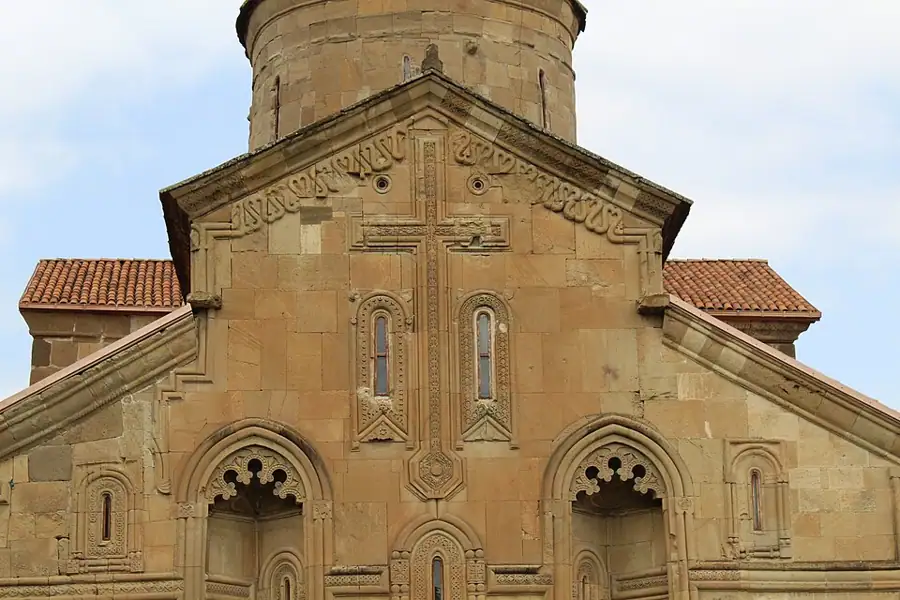
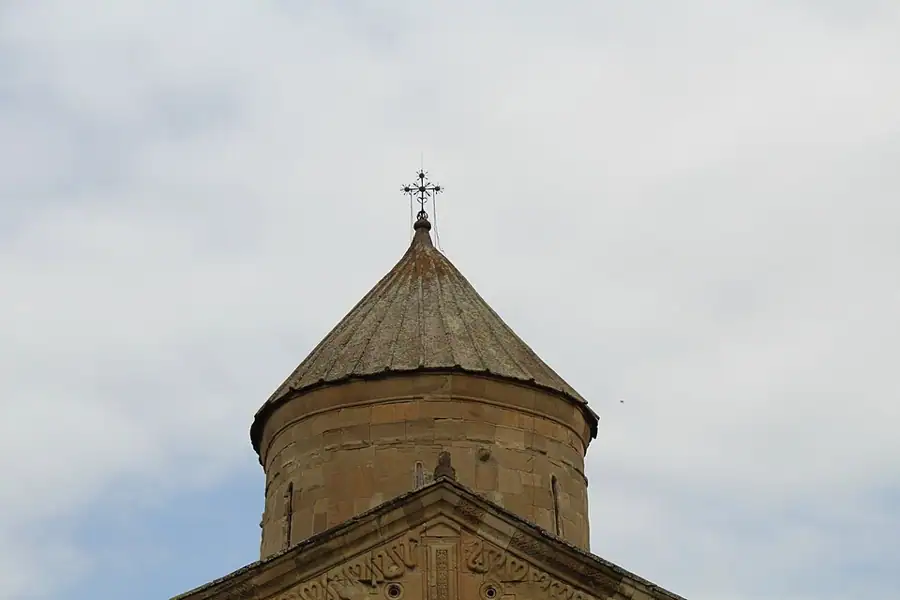
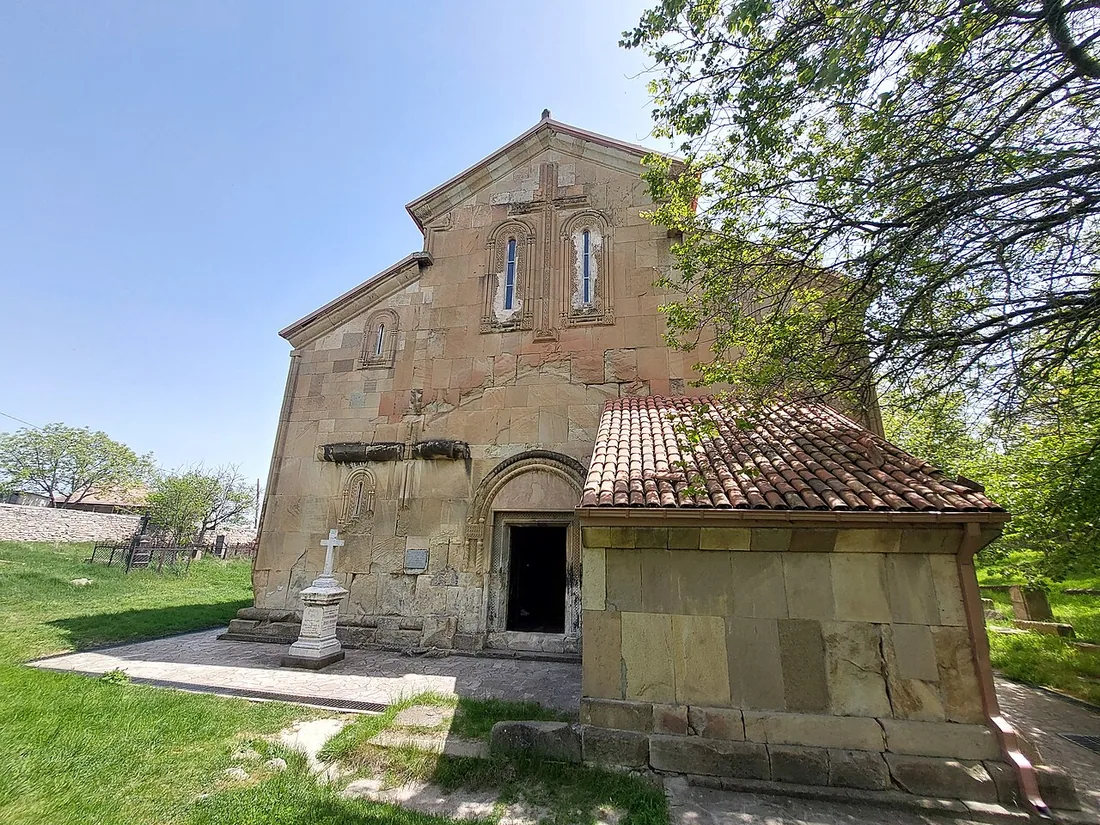
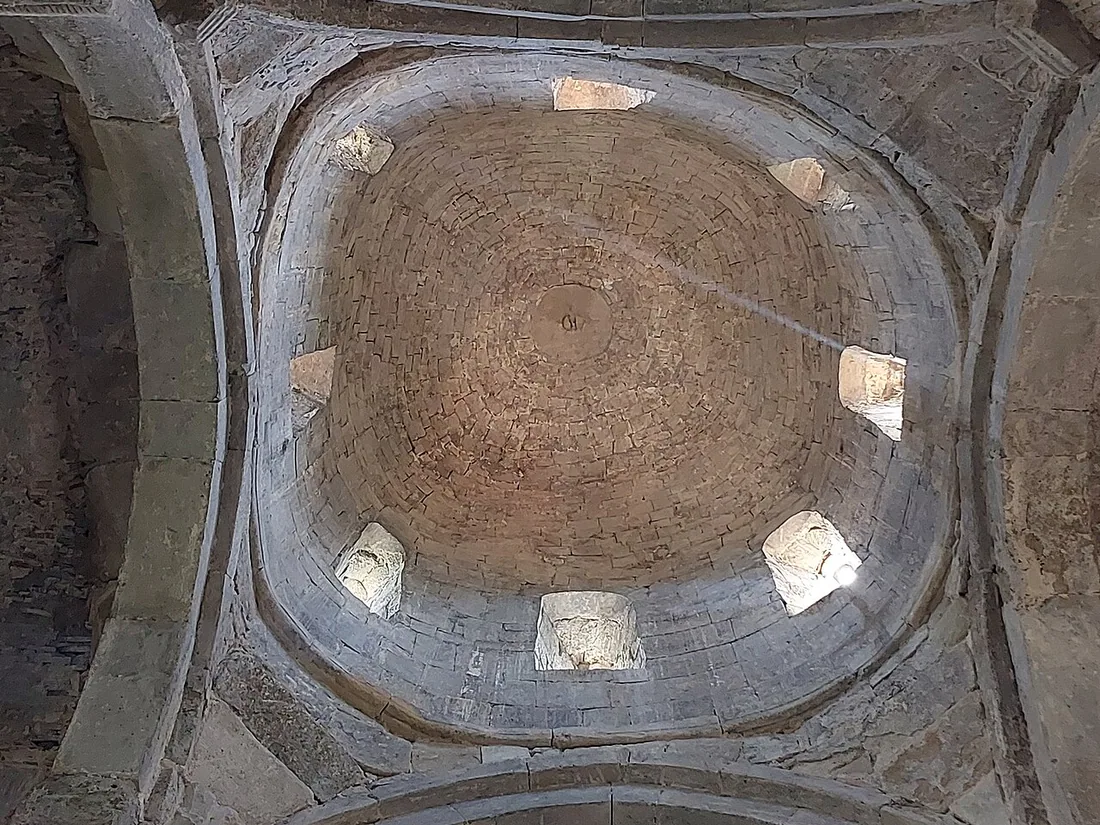
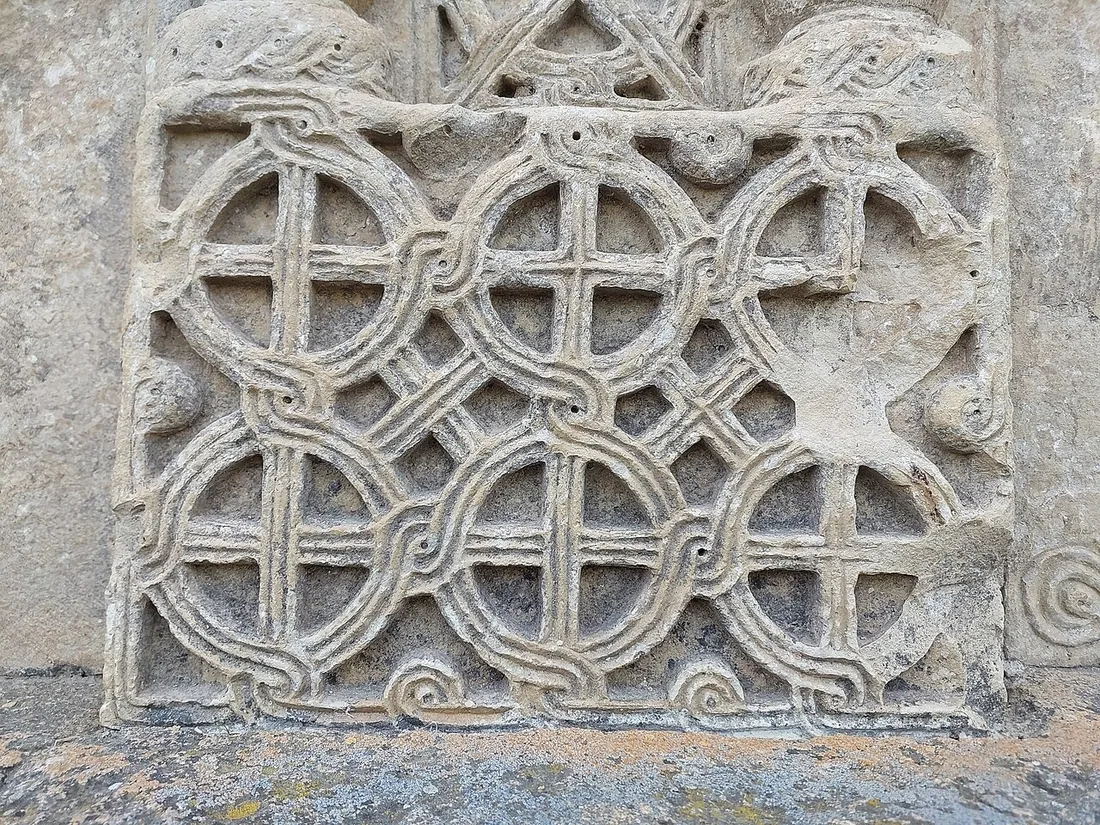
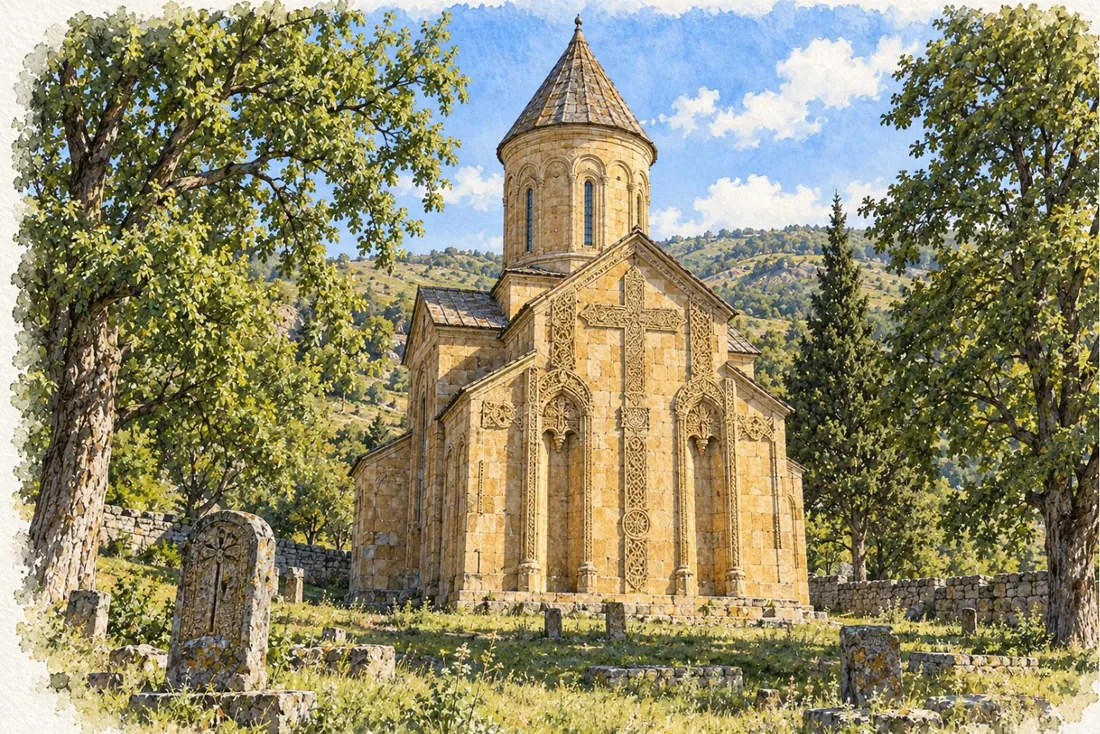
His church went up in the first half of the 13th century and belongs to a family of Golden Age domed churches that includes Ikorta, Pitareti, Betania, Kvatakhevi and Tsughrughasheni. Its signature is the carving. A great ornamented cross descends from the gable of each of the four façades; the east front adds deep, richly worked niches and window surrounds, and the portals on three sides are dressed in stone lace. Look up and the dome seems slightly out of step with the rest. It is noticeably later, and it was restored again in 1951.
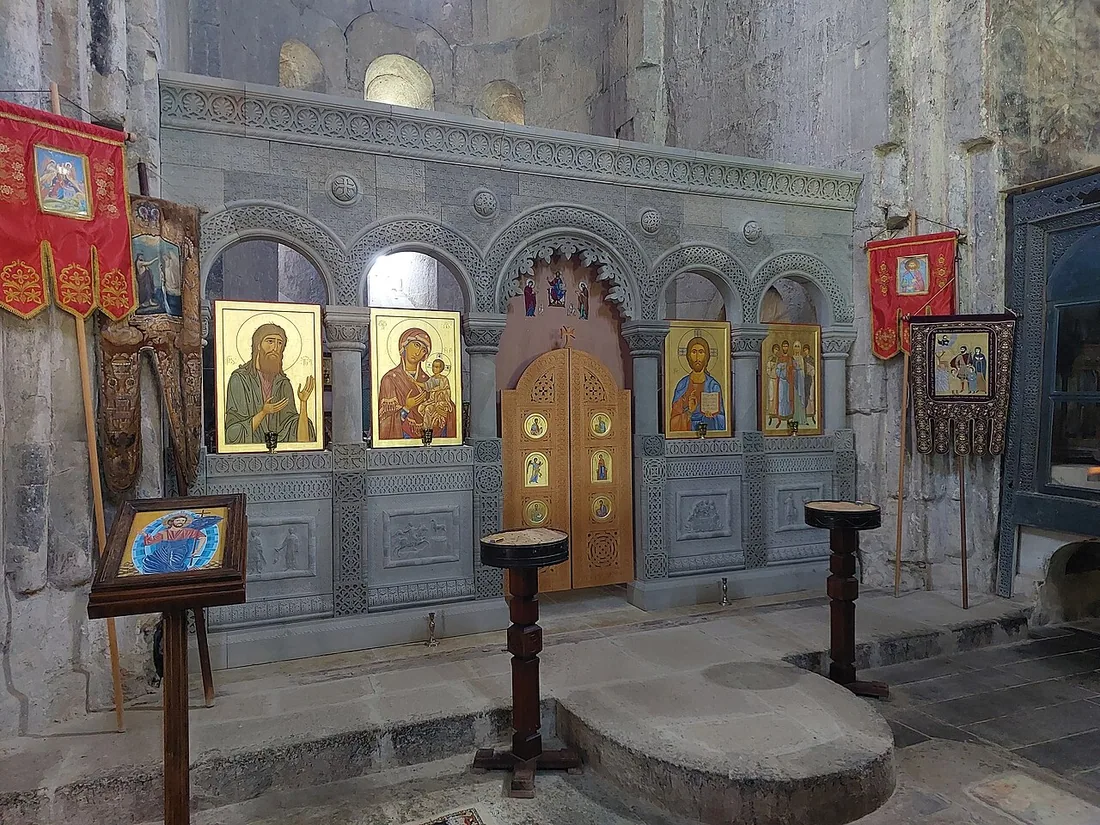
Inside, scenes from the saint's life cover the walls of the cross-arms. An inscription records that they were painted in 1654 by Meletios, a monk of the Georgian Monastery of the Cross in Jerusalem, paid for by Ioram Saakadze. From the early 17th century the church was the burial vault of the Saakadzes and their descendants the Tarkhnishvilis, and their gravestones are still here. Tradition holds that one covers the grave of Paata, the Great Mouravi Giorgi Saakadze's son, who perished in Iran.
A Persian martyr, a painter from Jerusalem and a warlord's grieving family, all under one village dome.
Gallery
Practical advice
Entry is free. The church is in use and usually open; if it isn't, ask at the neighbouring houses. Women should bring a headscarf and a skirt. The ground inside the enclosure is uneven, with stones hidden in the grass. Morning light suits the carved east façade best. The village has no café or toilets, so stop in Kaspi or Mtskheta. The church's feast day, Ertatsmindoba, falls on 3 October (20 September in the old calendar). An hour is plenty.
How to get there from Tbilisi
The quickest way is the old Gori road. Leave Tbilisi on the S1 (E60) towards Mtskheta, switch to the Sh29 along the south bank of the Mtkvari and follow it west through Kavtiskhevi. About 55 km from the centre, turn south onto the Sh129 for the last 4 km; the church stands in the middle of the village. In all about 60 km and an hour and ten minutes, on asphalt throughout, with a narrow, winding final stretch that an economy car handles easily. You can also come via the S1's Igoeti exit and Kaspi. Fuel is available in Mtskheta or Kaspi, and parking in the small square by the church is free.
Click a marker for details. Coloured lines are ready-made road trips.
Nearby places
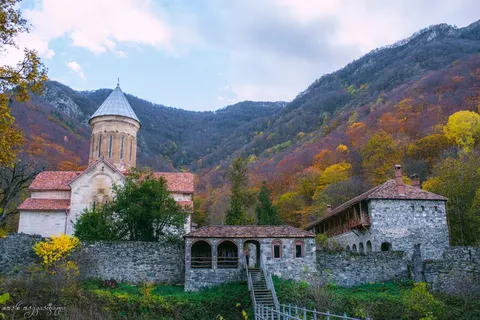
Kvatakhevi Monastery
A Golden Age domed church in white dressed stone at the dead end of a wooded Trialeti gorge, once a scriptorium, part of whose treasury is now in Moscow.
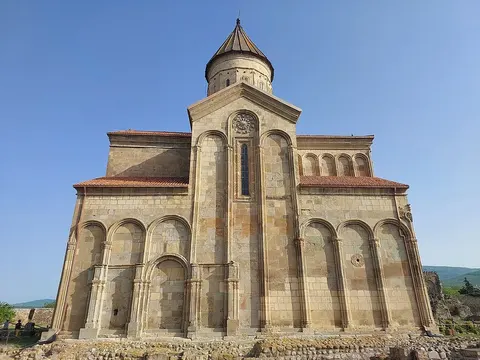
Samtavisi Cathedral
A cathedral of 1030 near Igoeti; its carved east front, a great cross over two stone diamonds, was copied by Georgian masons for generations.
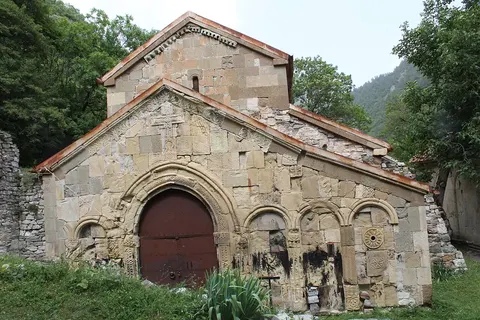
Rkoni Monastery and Tamar's Bridge
A 7th-century monastery deep in the forested Tedzami gorge, reached by fords and gravel, with a medieval stone bridge that still carries walkers.
Best car for this trip
Guides
- Driving in Georgia: What the Distances Actually Cost You Georgia is a small country with slow roads. Here is what 267 measured drives from Tbilisi say about how long y
Pickup locations
Car Rental in Tbilisi — 44 km (straight line)
Booking and enquiries
The easiest way to reach these places is by car — you pick the route and the stops.