
Kintsvisi Monastery
A red-brick Golden Age church in the forest near Kareli, where an angel in lapis-lazuli blue points to Christ's empty tomb.
- Time needed
- 2 h
- From Tbilisi
- 118 km · 2:00
- Road
- Mostly paved
- Car needed
- Crossover / SUV
- Season
- May–October
- Entry
- free
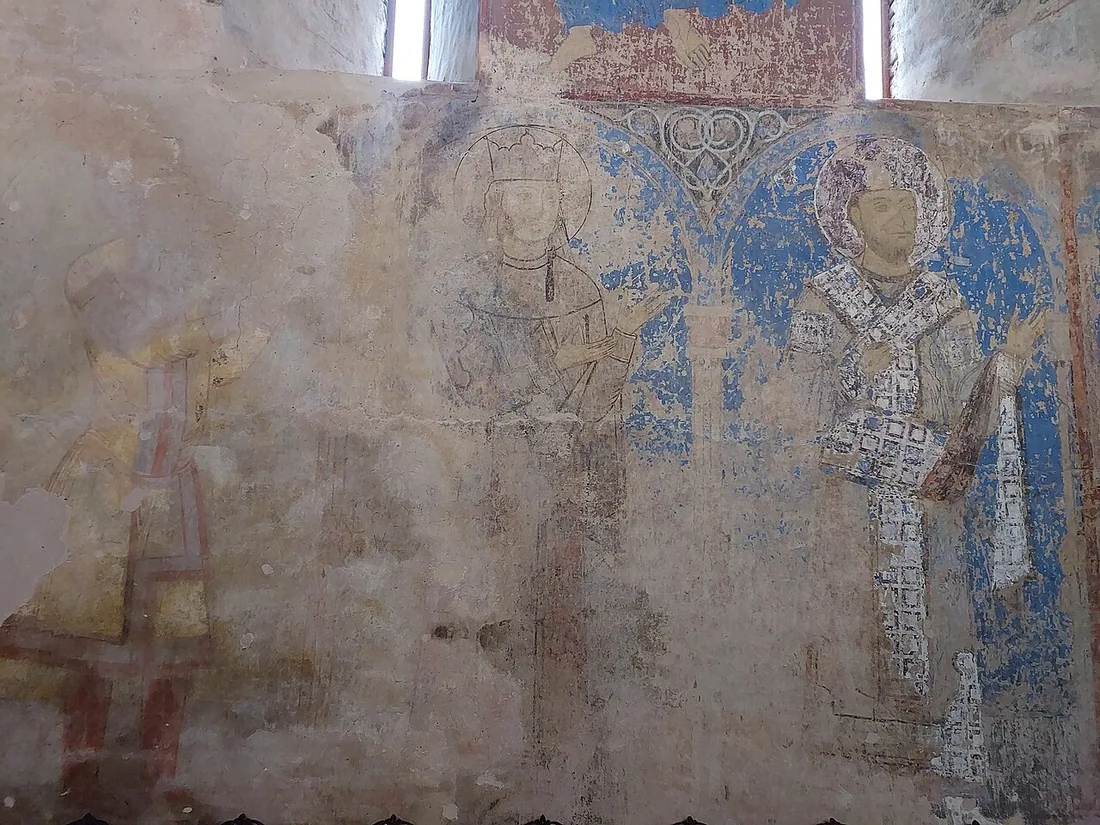
Above a row of royal portraits at Kintsvisi, a seated angel points to Christ's empty tomb, and the tilt of its head has become one of the best-loved images in Georgian painting.
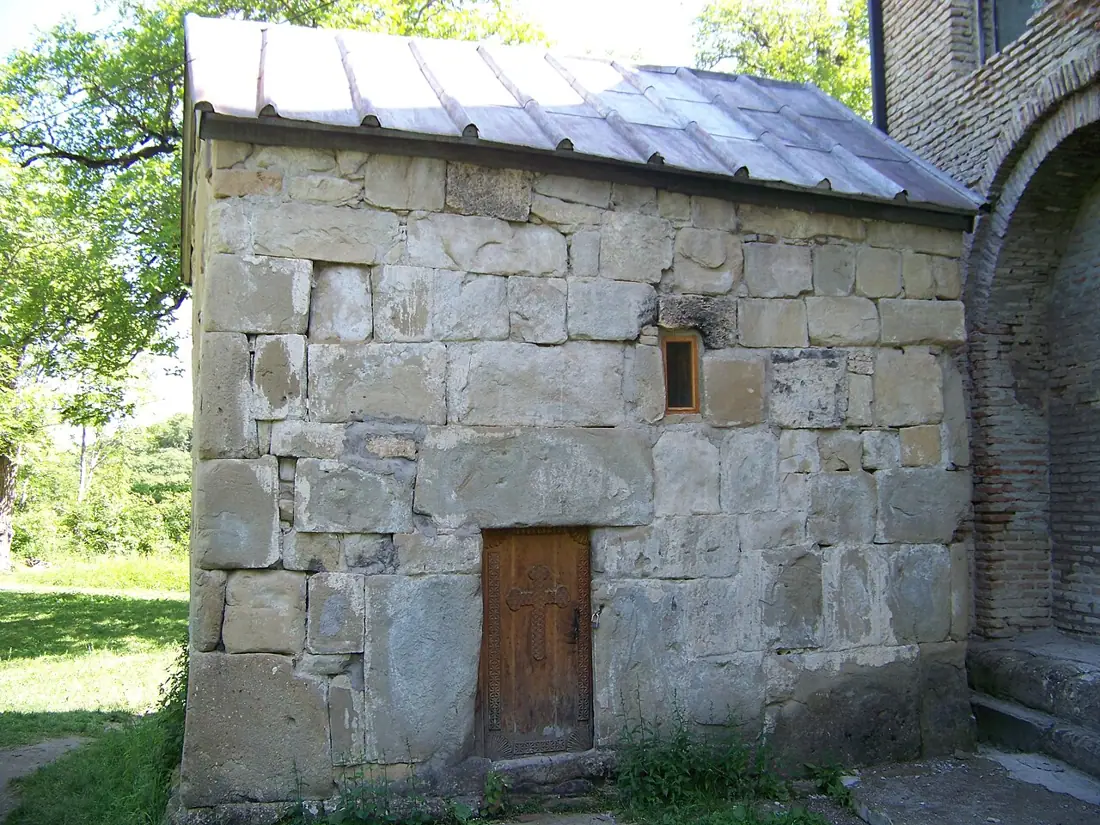
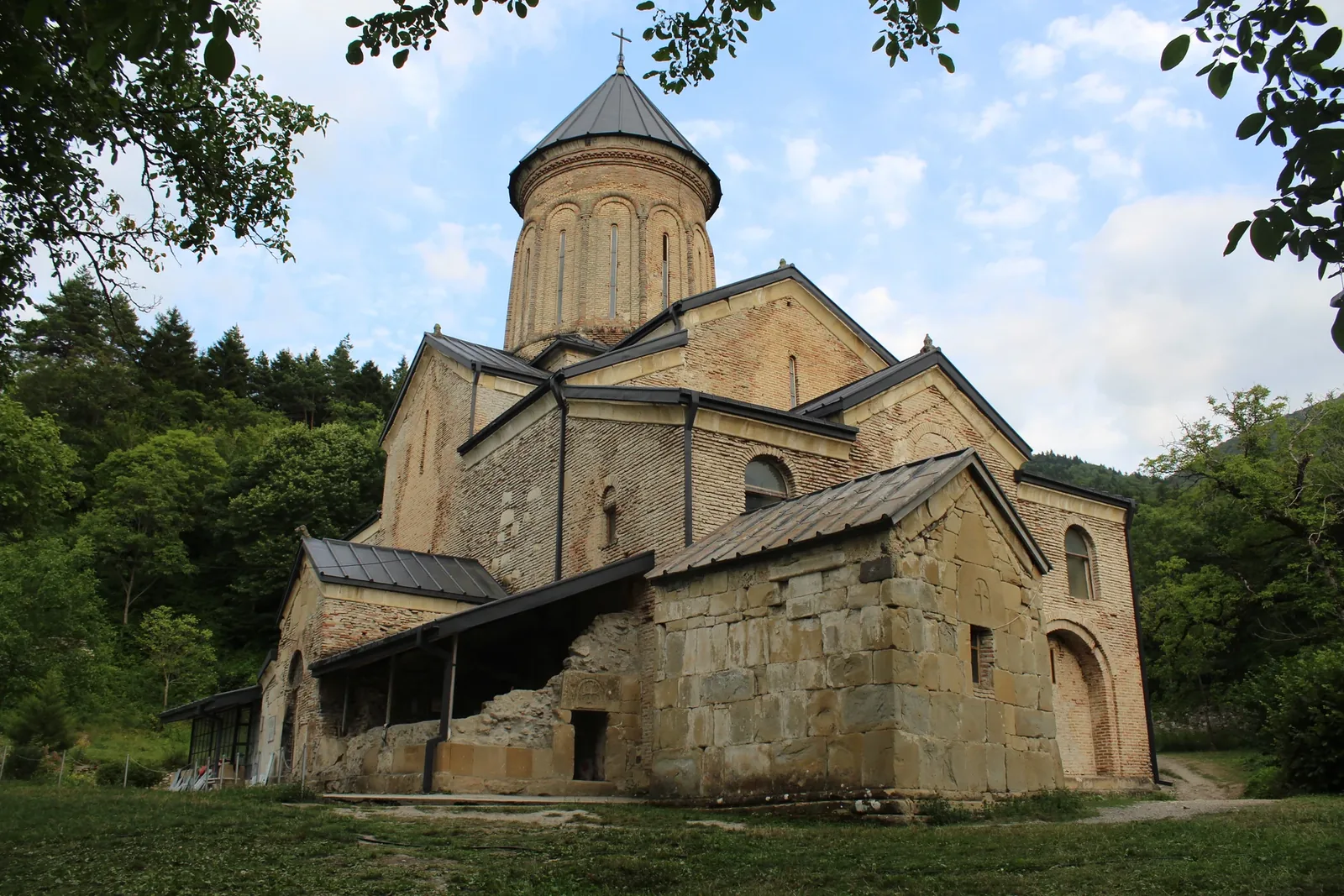
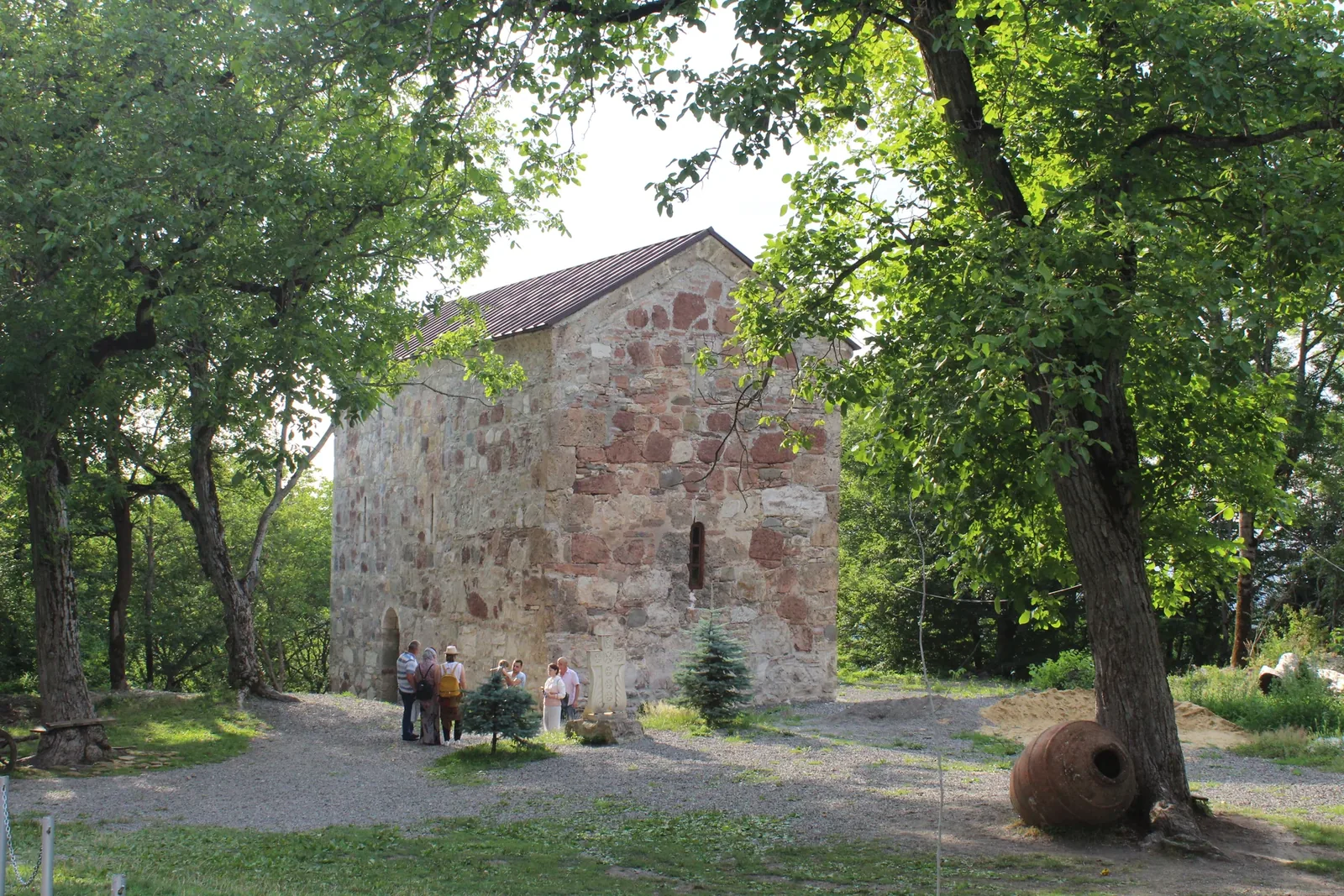
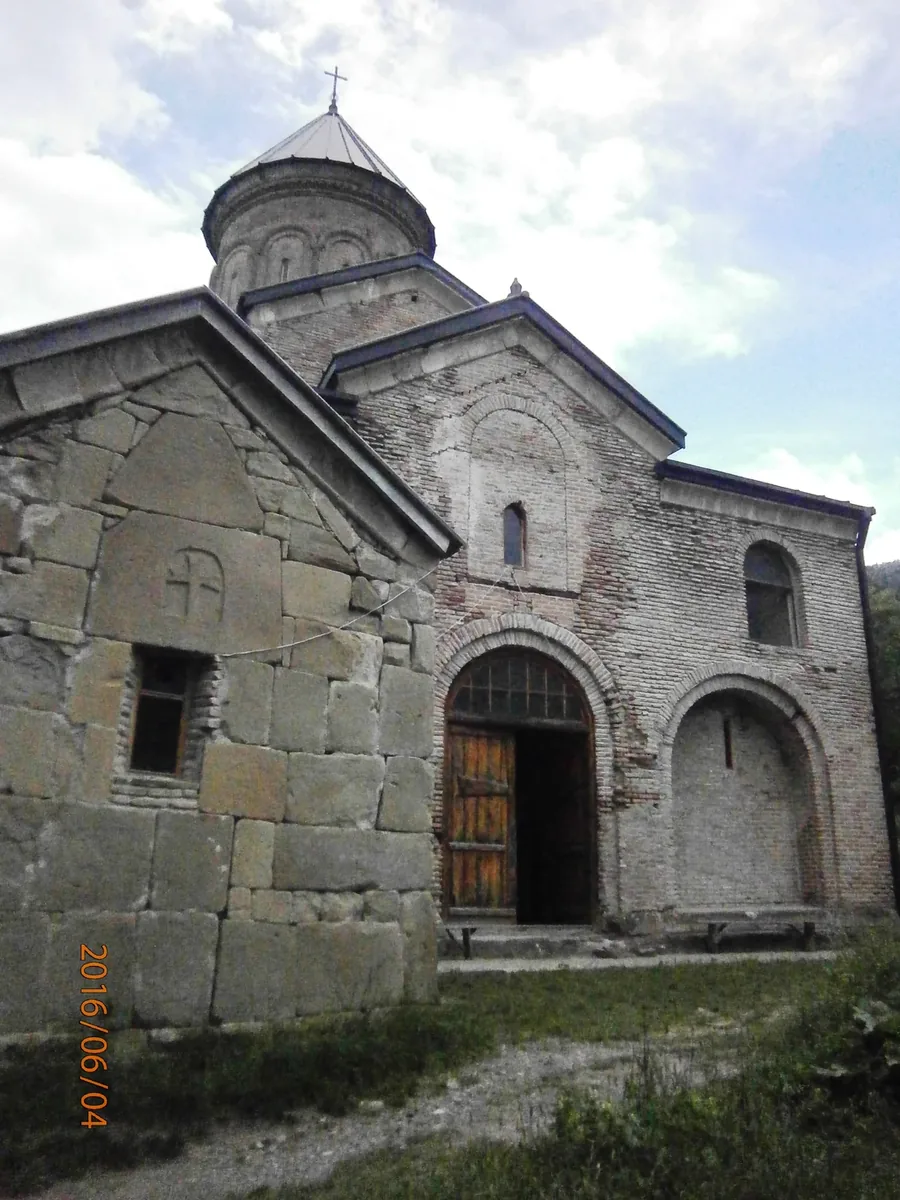
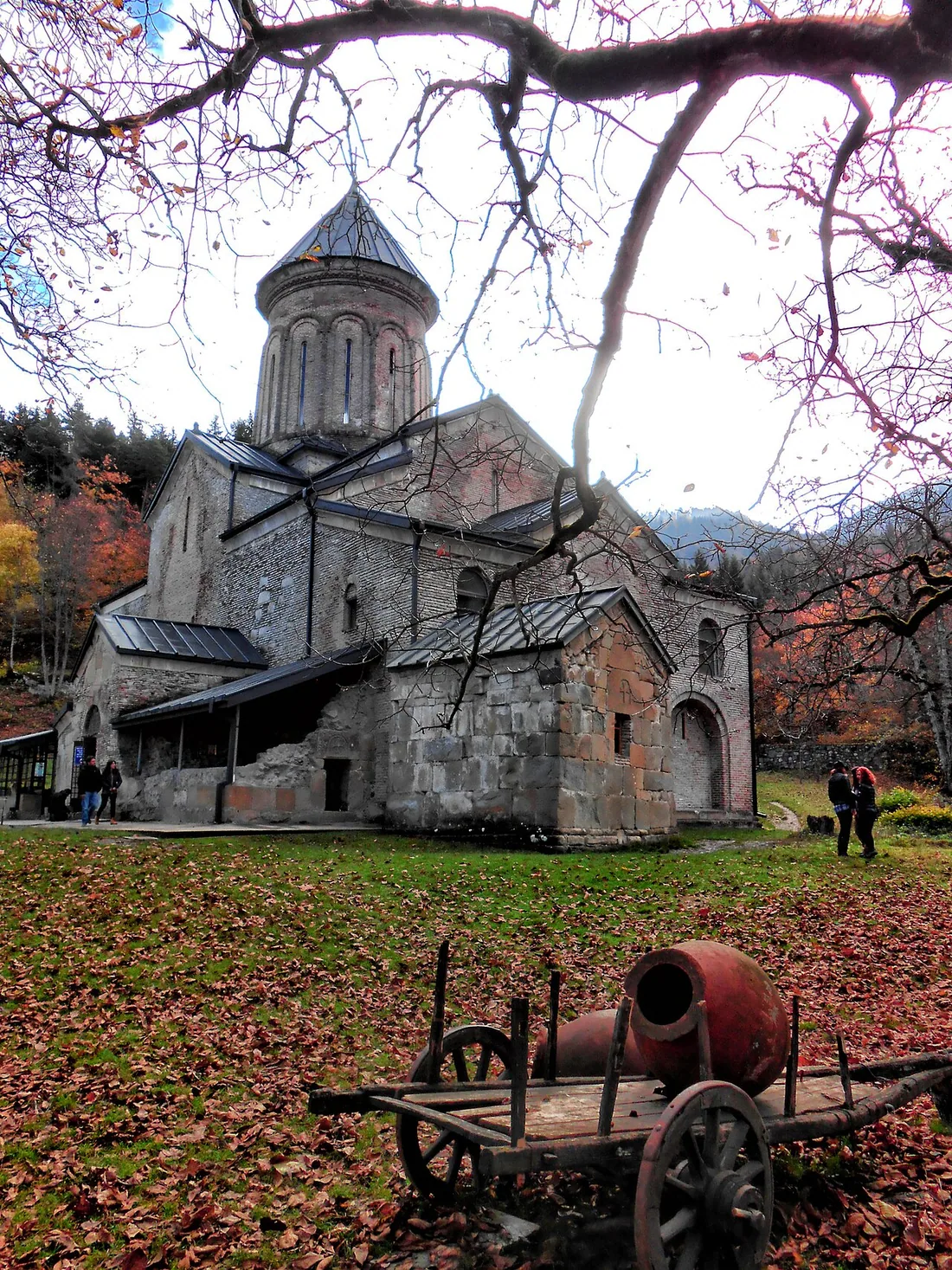
The monastery stands on a forested mountain slope in the Dzama valley, about 10 km from Kareli. Of its three churches, the oldest, 10th–11th-century St Mary's, has almost entirely slid down the hillside; only its apse survives, with an enthroned Virgin and the Communion of the Apostles. The main church of St Nicholas and the tiny chapel of St George beside it date from the early 13th century, the height of Georgia's Golden Age.
St Nicholas is built of red brick, an unusual material for its time, and its twelve-windowed drum once wore a roof of tiles in three colours. Its paintings, finished before 1205, were commissioned by Anton Gnolistavisdze, a royal minister who appears on the south wall holding a model of the church. On the north wall stand three rulers: Giorgi III, his daughter Queen Tamar and her son Giorgi IV Lasha. Above them sits the angel, blue robes on a blue ground. That blue is natural ultramarine ground from lapis lazuli, then rare and costly, and it was spent here without restraint.
Two centuries later a local prince, Zaza Panaskerteli, rebuilt the narthex, had it painted and added his own portrait: a late signature on a Golden Age page.
The interior is lit from the drum and from windows in every arm of the cross, so the colour meets you as soon as you step inside. Eight centuries on, that blue still rules the room.
Gallery
Practical advice
Entry is free. This is a working monastery: cover shoulders and knees, and women should bring a headscarf. If the church is locked, ask at the monks' quarters. A bright day around midday shows the blues at their best; no flash. There is no café or shop, so bring water and food from Kareli. The final forest stretch turns muddy after rain. Allow an hour and a half, a little more if you want to find the ruined apse of St Mary's on the slope.
How to get there from Tbilisi
From Tbilisi follow the S1 (E60) west past Gori for about 100 km to the Kareli exit. Drive through Kareli and take the Kareli–Kintsvisi road (Sh134) south-west into the Dzama valley: the monastery lies south of the motorway, not north, some 17 km from the exit. In all about 118 km and two hours. The motorway is fast; the last kilometres narrow and climb through forest, and the surface can be rough. A crossover or SUV is the sensible choice, especially after rain; in dry weather a careful driver can manage in an ordinary car. Fill up in Gori or Kareli.
Click a marker for details. Coloured lines are ready-made road trips.
Nearby places
Samtsevrisi Church of St George
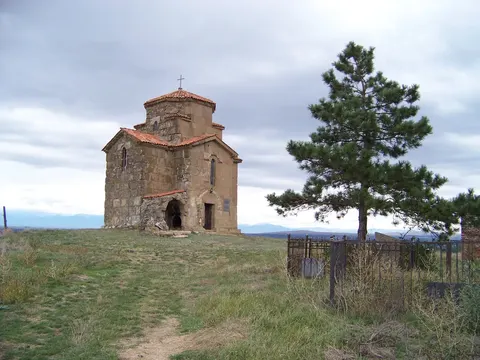
A 7th-century free-cross church barely eleven metres tall that still commands the plain where the Dzama meets the Mtkvari.
Tsromi Church
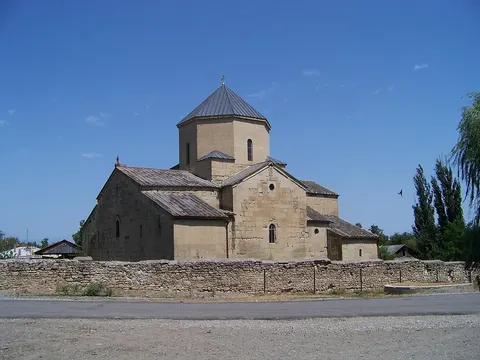
Built in 626–634 for Prince Stepanoz II, Tsromi was the first Georgian church to raise its dome on four free-standing piers.
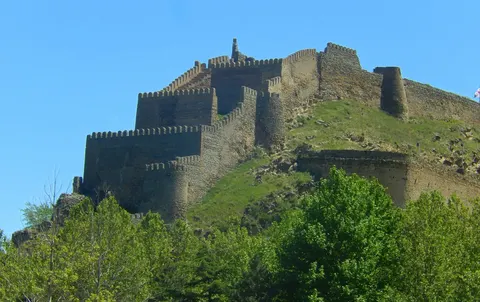
Gori: Fortress and Stalin Museum
A citadel on a rock above the Mtkvari and the Liakhvi, and below it the shrine Gori built to its most notorious son: one town, two views of history.
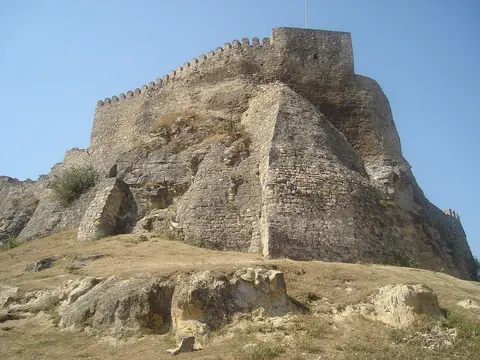
Surami Fortress
A citadel on a rock at the old fork of the roads west over the Likhi range and south to Borjomi, home to one of Georgia's best-known legends.
Part of these road trips
- Shida Kartli Monastery Trail 2 days · 310 km
Best car for this trip
Mostly paved
Guides
- The Best Time to Visit Georgia, Counted Month by Month Georgia does not have one season. It has two countries: a 60% country from November to April and a 99% country
- Driving in Georgia: What the Distances Actually Cost You Georgia is a small country with slow roads. Here is what 267 measured drives from Tbilisi say about how long y
Pickup locations
Car Rental in Tbilisi — 85 km (straight line)
Booking and enquiries
The easiest way to reach these places is by car — you pick the route and the stops.