
Surami Fortress
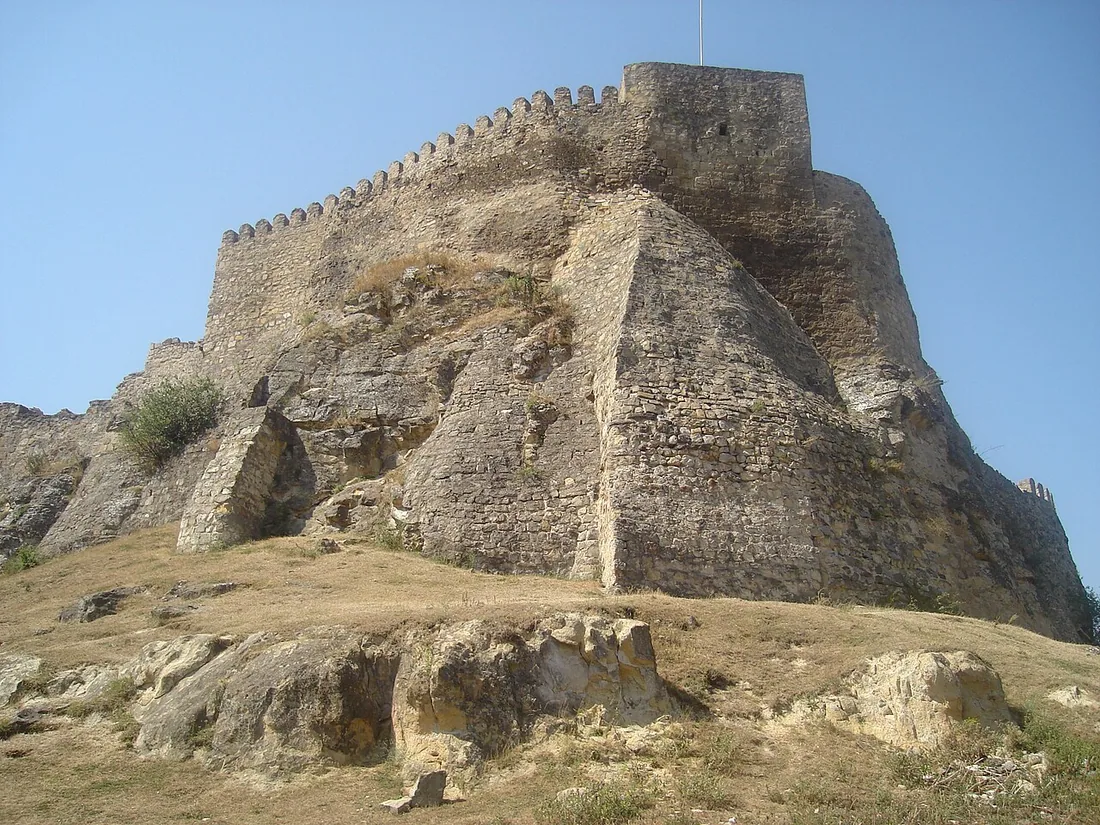
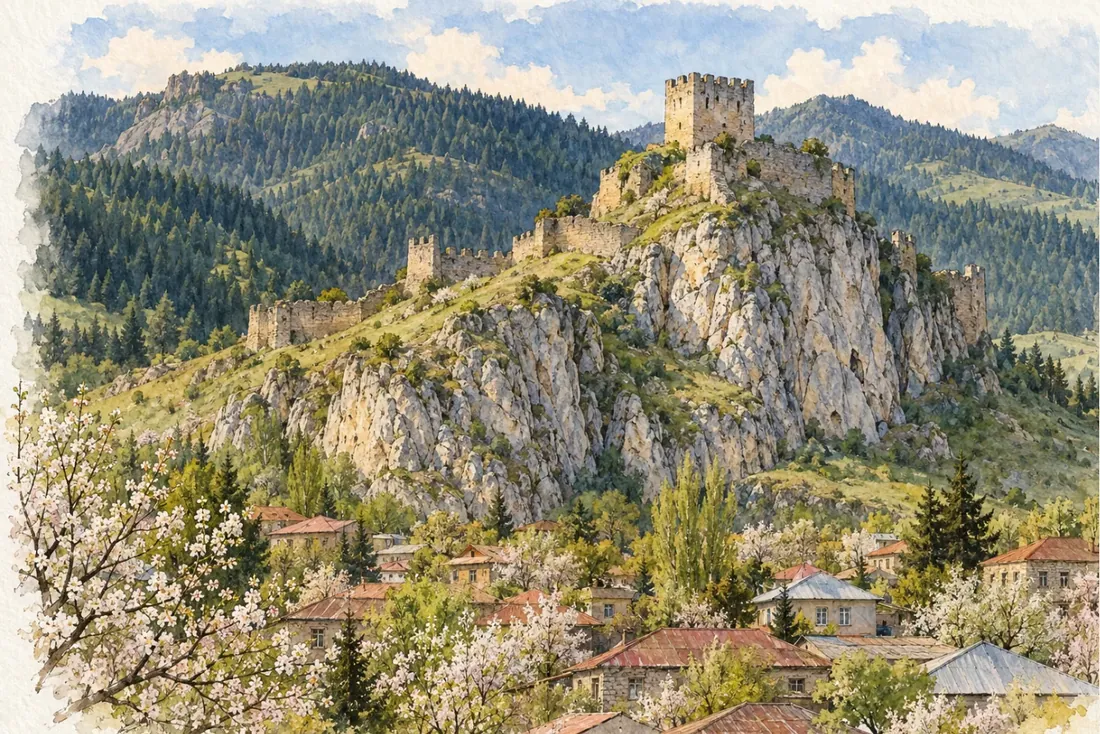
A citadel on a rock at the old fork of the roads west over the Likhi range and south to Borjomi, home to one of Georgia's best-known legends.
- Time needed
- 1 h
- From Tbilisi
- 133 km · 1:45
- Road
- Paved
- Car needed
- Economy class
- Season
- All year
- Entry
- free
Legend says the walls of Surami would not stand until a mother's only son was built into them, and that the stone still weeps his mother's tears.
The story is far older than the book. Daniel Chonkadze made it literature in his 1859 novella The Surami Fortress, and in 1985 Sergei Parajanov and Dodo Abashidze filmed it as The Legend of Suram Fortress. Tradition places young Zurab in the east wall of the inner citadel and tells of a woman in black who comes on moonlit nights to lament: "Fortress of Surami, I look on you with longing; my Zurab is inside, keep him well for me."
Nobody knows who first fortified the rock; the oldest work may be 12th-century. It stands where the old roads parted, one west over the Likhi passes and one south into the Borjomi gorge, and so everyone wanted it. From the 1170s to the late 14th century it was the seat of the eristavs of Kartli, who took the name Surameli, "of Surami". Giorgi Saakadze fortified it against the Persians in 1625; later Rostom, the Safavid-appointed ruler of Kartli, garrisoned it with Iranian troops, and the traveller Jean Chardin found a hundred men here in 1672–73. Prince Givi Amilakhvari held it in revolt in the 1740s; after his surrender in 1745 the Shah had it torn down, and it was rebuilt in 1756.
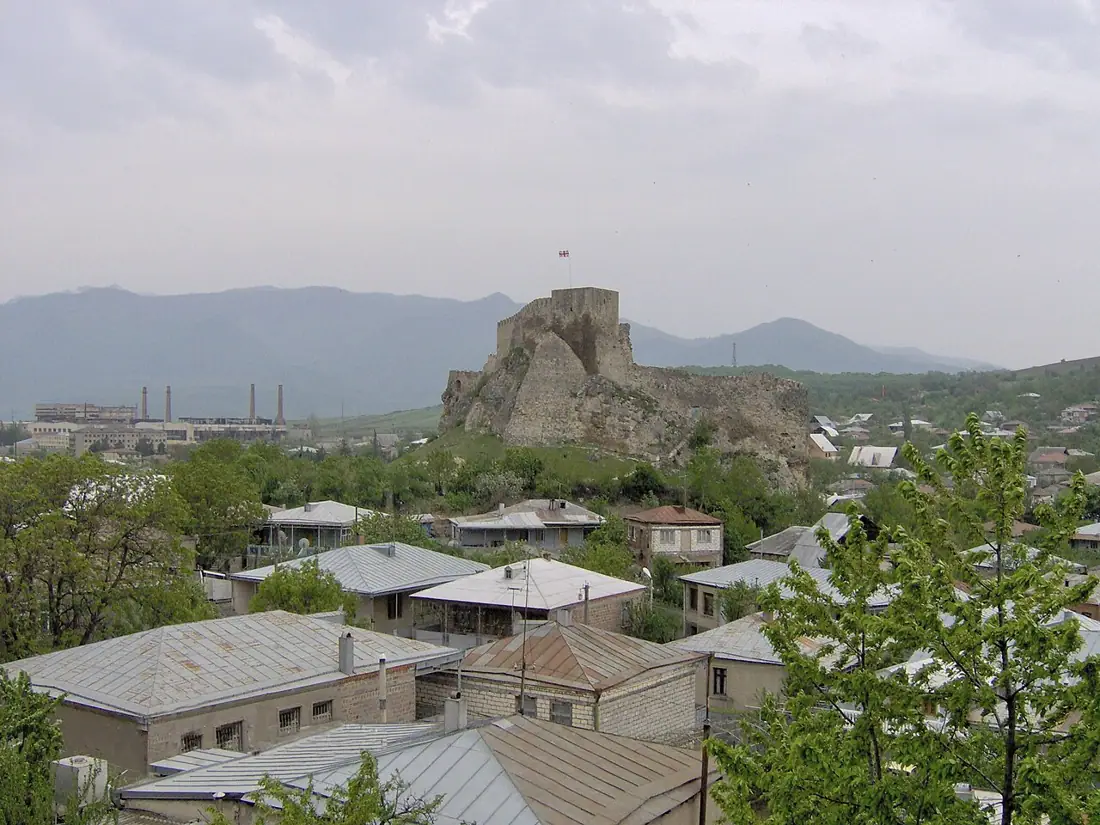
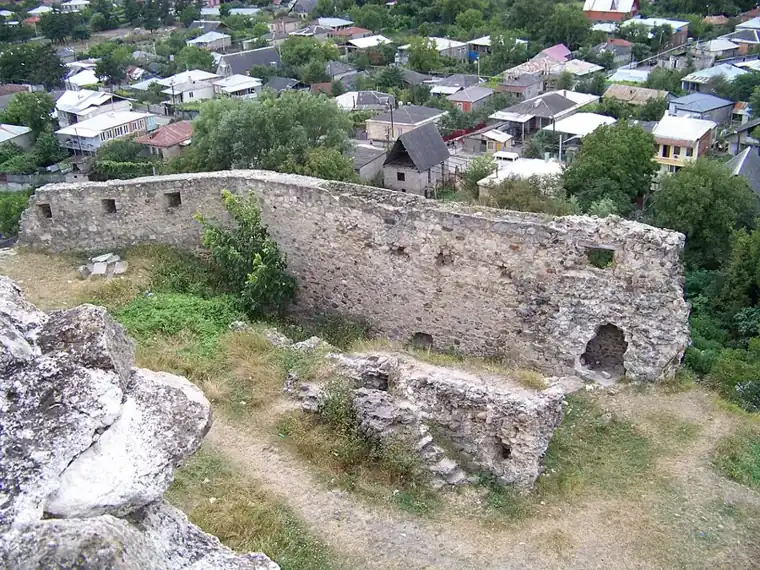
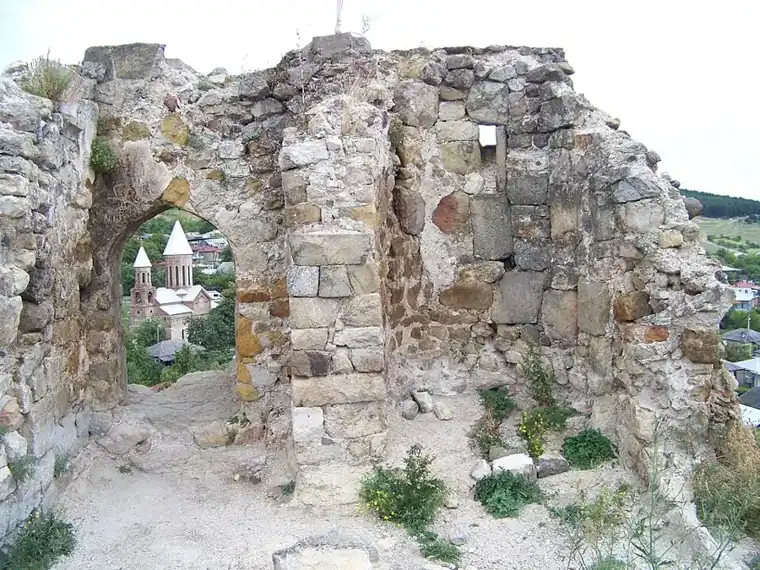
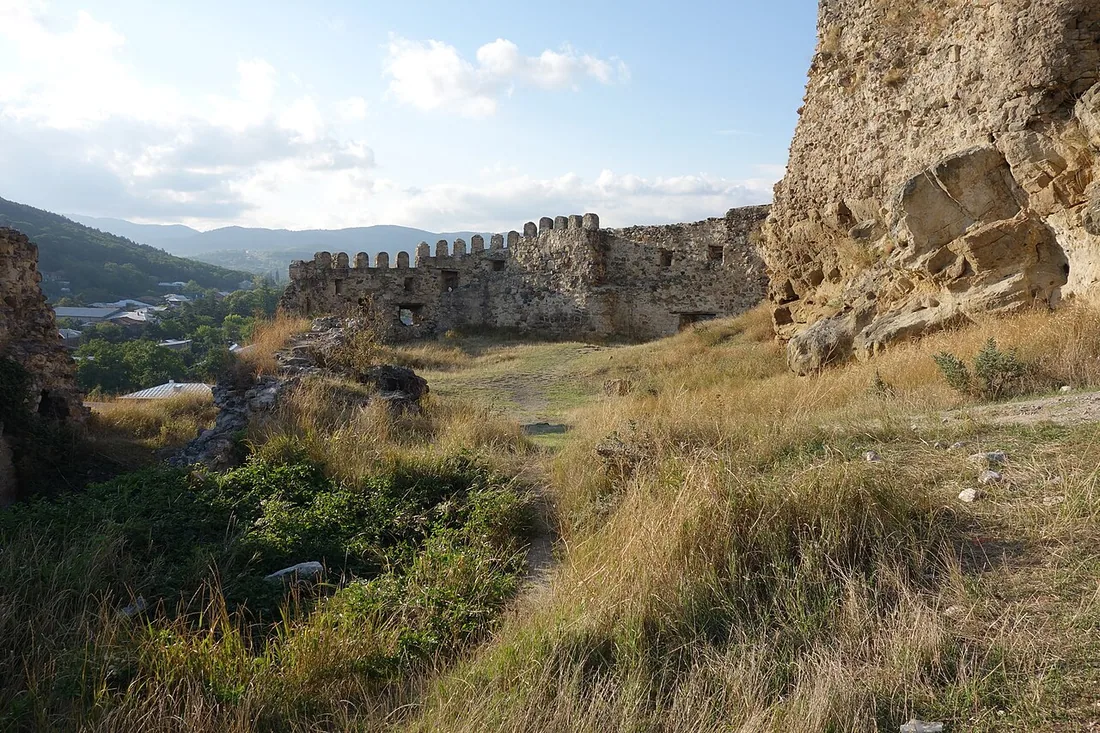
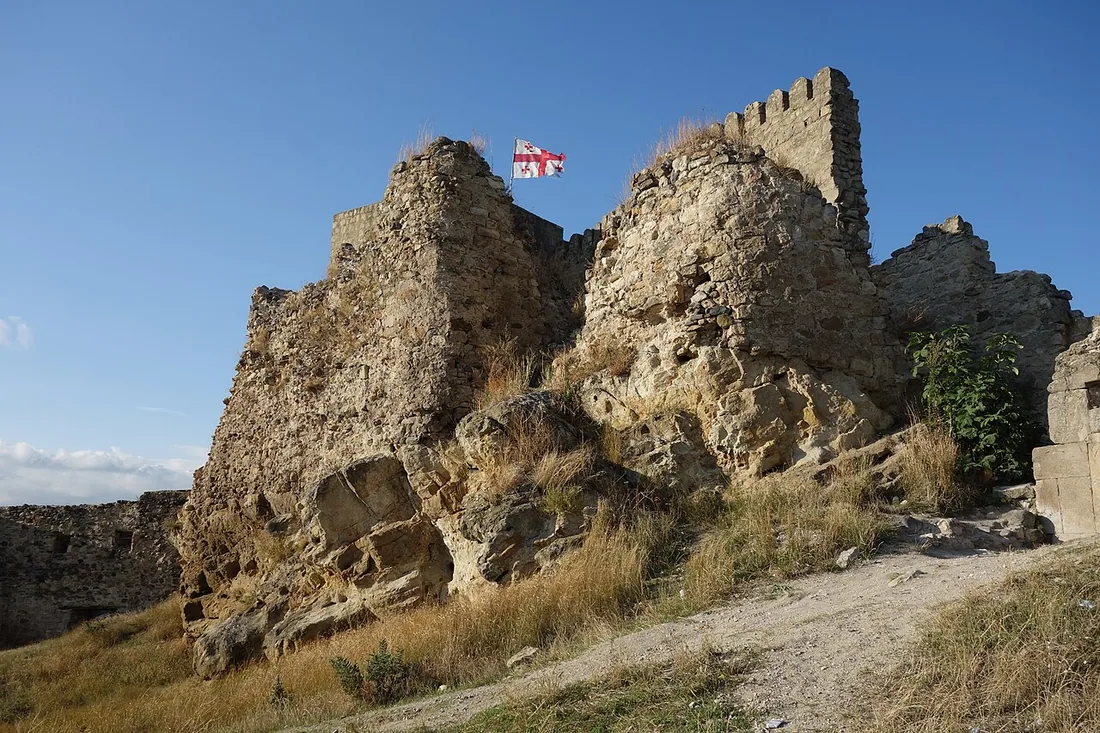
The climb passes rock-cut steps at the north gate, crude early battlements beside the neat rounded merlons of the 17th century, and a pyramidal keep rebuilt from two surviving storeys in the late 1980s. Below, the town spreads out, and the railway threads west towards the pass. Coming down, do as Georgian drivers do and buy nazuki, sweet spiced bread, from the roadside ovens.
Gallery
Practical advice
Entry is free. The climb is short but steep, over rock-cut steps and uneven stone that turn slippery in the wet, and the walls have no railings, so keep children close. There is no café, toilet or shade on the hill, so in summer come early or late. Leave the car in the streets below. Allow an hour, and another if you want to see the Lesya Ukrainka house-museum, where the Ukrainian poet spent her last months in 1913.
How to get there from Tbilisi
Leave Tbilisi on the S1 (E60) heading west and stay on it past Gori and Khashuri, about 130 km, much of it dual carriageway. Take the Surami exit just beyond Khashuri; the town lies 4 km from Khashuri, and the fortress rises on a rocky hill on its northern side, above the Suramula stream. In all about 133 km and an hour and three-quarters. It is asphalt throughout and an economy car is fine in every season, though winter snow on the Likhi slopes can make the town's steep streets slick. Fuel is plentiful in Gori and Khashuri.
Click a marker for details. Coloured lines are ready-made road trips.
Nearby places
Khashuri
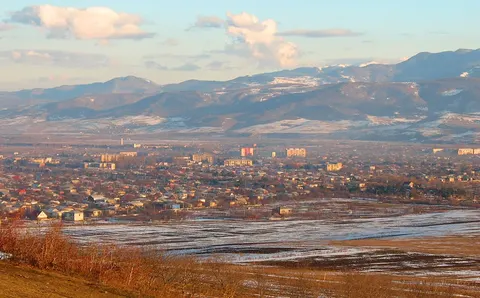
A railway town on the western rim of Shida Kartli, where the main road splits: south to Borjomi, west over the Rikoti pass to the sea.
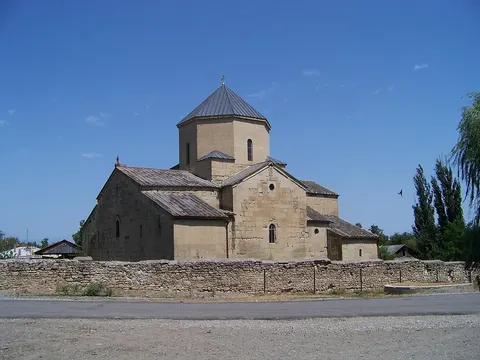
Tsromi Church
Built in 626–634 for Prince Stepanoz II, Tsromi was the first Georgian church to raise its dome on four free-standing piers.
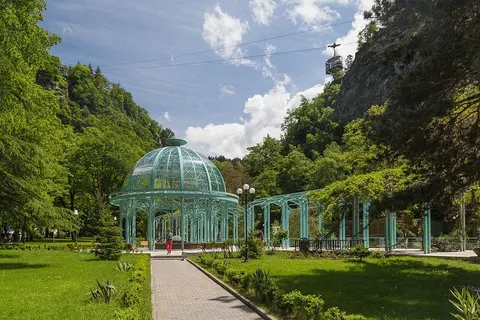
Borjomi Central Park and Mineral Springs
A 19th-century spa park in a narrow wooded gorge, where you fill your own bottle with salty, faintly warm Borjomi water straight from the spring.
Best car for this trip
Guides
- Driving in Georgia: What the Distances Actually Cost You Georgia is a small country with slow roads. Here is what 267 measured drives from Tbilisi say about how long y
Pickup locations
Car Rental in Kutaisi — 76 km (straight line)
Booking and enquiries
The easiest way to reach these places is by car — you pick the route and the stops.