
Ghebi
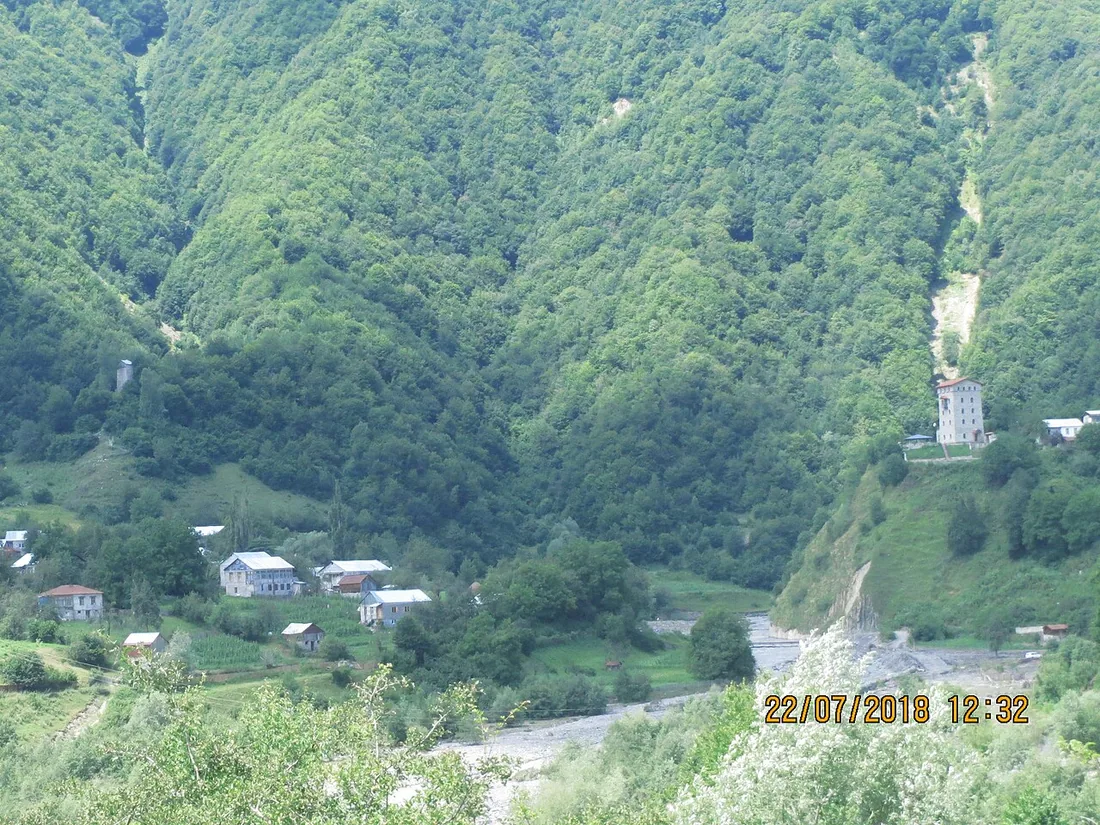
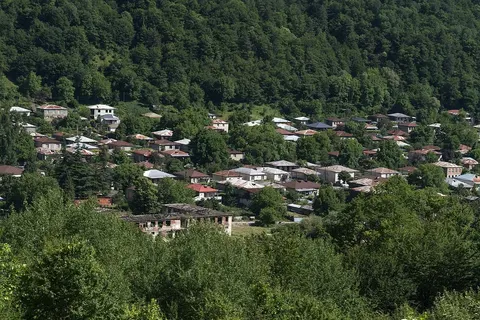
A stone village high on the Rioni, recorded since 1503, where a legend of revolt against the lords is still honoured with funeral bread.
- Time needed
- 1.5 h
- From Tbilisi
- 390 km · 7:00
- Road
- Unpaved sections
- Car needed
- Crossover / SUV
- Season
- May–October
- Entry
- free
In 1901 nearly two thousand people lived in Ghebi; the 2014 census found 296.
The village stands at 1,350 metres on the left bank of the Rioni, about 30 km by road above Oni, deep in upper Racha. Written sources mention it from 1503. In the 18th century Prince Vakhushti described Ghebi as a walled township of towers and battlements, in country he called strong, narrow and hard for any enemy to reach.
Its name has two explanations. In Svan, gheb means a hollow, a sunken place. Local tradition prefers a fugitive: a dyer who killed a man in Lechkhumi, fled into the Racha mountains and carried on his trade here, so that the village took its name from ghebva, 'to dye'. The first settler, it is said, was Khoshita Lobjanidze from Chvesho, who built his tower on the right bank.
The story Ghebi tells most is harder. According to tradition the villagers, free men who would not accept serfdom, rose against their lords, the Arishidzes, under Zviada Lobjanidze. With the help of a bribed steward they killed two Arishidze brothers as they rode home from the hunt. The third set out to ford the Rioni on horseback, and a woman named Doduk begged him to carry her across. In midstream she dragged him from the saddle, and both drowned. She had asked beforehand that, once Arishidze was dead, a ritual loaf be baked for her. The wish is still kept: when someone in Ghebi dies, the family bakes two loaves in Doduk's memory.
Eleven kilometres higher up the Rioni, at Brili, excavations between 1939 and 1961 found traces of metalworking from the 18th century BC to the 4th century AD, long before anyone wrote Ghebi's name down.
Ghebi has lost most of its people. It has not lost Doduk.
Practical advice
Give Ghebi an hour or two on foot. The towers and old stone houses are mostly private, so admire them from the lanes and ask before stepping into a yard or photographing anyone. There is no ATM, pharmacy or fuel beyond Oni: bring cash and supplies. Arrange a bed in advance; Glola, 17 km away, has guesthouses. Mobile signal is unreliable, and even in July the evenings at 1,350 metres are cool. The multi-day trek from Ghebi over the mountains to Zeskho in Lower Svaneti, past the Sasvano lakes, is for equipped hikers with a local guide.
How to get there from Tbilisi
From Tbilisi take the S1 (E60) west to Kutaisi, the Sh17 north through Tkibuli and over the Nakerala pass to Ambrolauri, then the Sh16 up the Rioni to Oni. Stay on the Sh16 through Utsera; at Saglolo, about 19 km beyond Oni, turn left onto the Sh121 and follow it through Chiora for the last 11 km to Ghebi. In all it is about 390 km and some seven hours. The asphalt is good as far as Oni; beyond it the road is narrow and patched, and the final stretch is partly gravel, running beside the river and prone to washouts after heavy rain. An SUV is the sensible class. Oni has the last fuel.
Click a marker for details. Coloured lines are ready-made road trips.
Nearby places
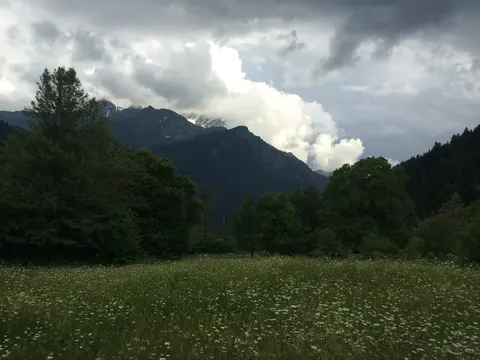
Chiora
The last village before Ghebi on the upper Rioni: 116 people, stone houses, and a name that legend traces to the foxes and martens of a riverside meadow.
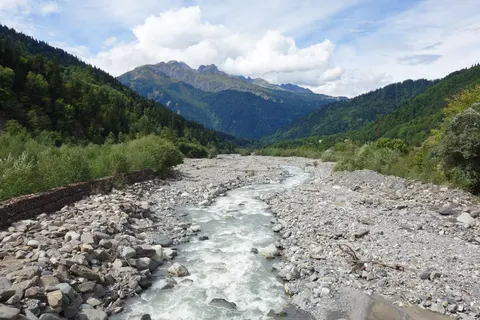
Glola
A village on the Chanchakhi, 5 km below Shovi, with glacier-borne boulders as big as houses and a ruined citadel on a rocky crag.
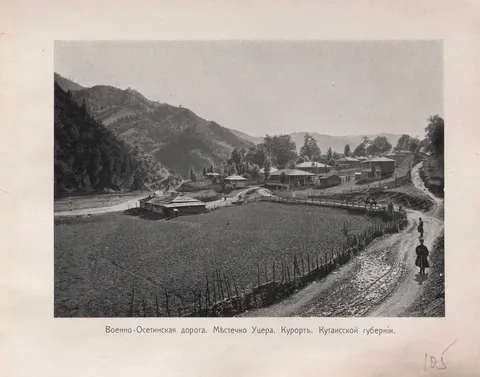
Utsera Mineral Springs
A spa village on both banks of the Rioni, 10 km above Oni, where sparkling, iron-tinged water runs free from pipes among the firs.
Oni
Racha's old ducal seat on the Rioni: a honey-stone synagogue, a museum of 14,000 objects and the last cash machine before the high valleys.
Best car for this trip
Unpaved sections
Guides
- Do You Need a 4x4 in Georgia? We rate the road surface and the minimum car class for all 267 places in our database. 227 of them need nothin
- Winter Driving in Georgia: What Closes, What Opens, Which Car Of the 267 places we map, 161 are in season in winter and 52 are flagged as not reachable year-round. The pass
Pickup locations
Car Rental in Kutaisi — 86 km (straight line)
Booking and enquiries
The easiest way to reach these places is by car — you pick the route and the stops.