
Batsara Reserve
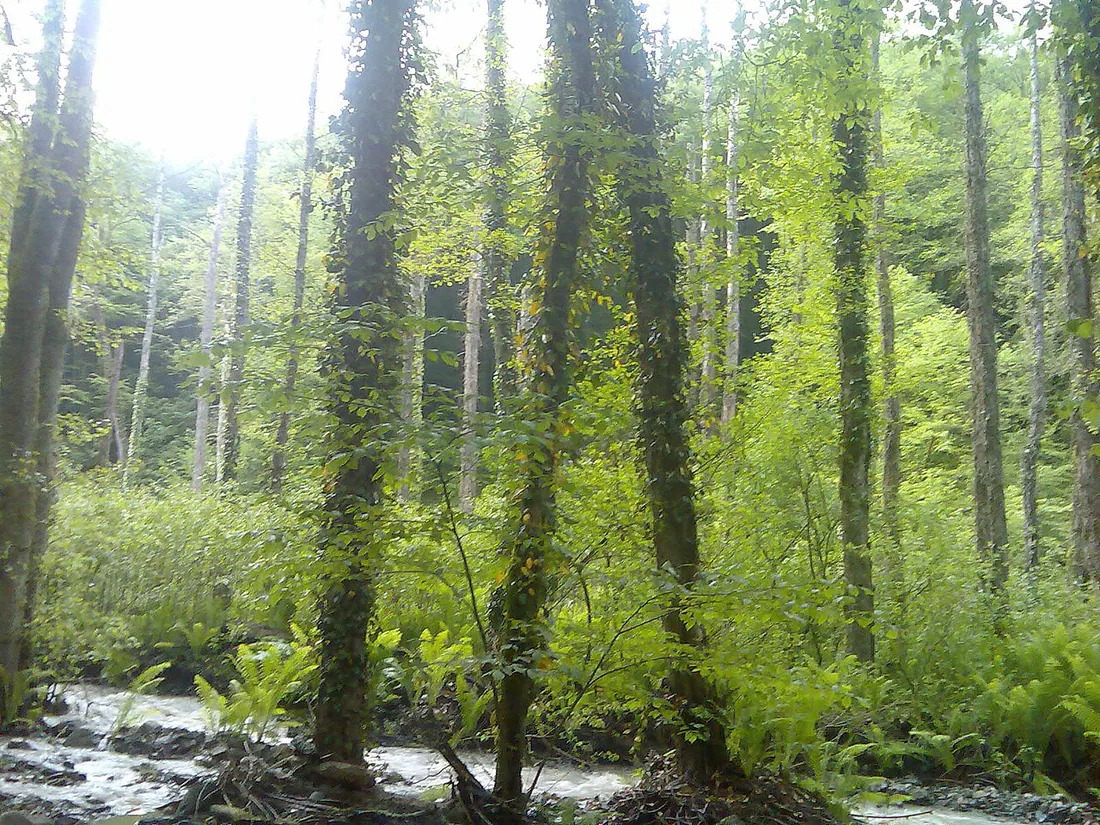
A side gorge of Pankisi shelters the largest yew forest on earth, where a few trees are thought to be some 1,500 years old.
- Time needed
- 6 h
- From Tbilisi
- 140 km · 2:50
- Road
- Unpaved sections
- Car needed
- Crossover / SUV
- Season
- May–October
- Entry
- ~5 ₾
In a side gorge of the Pankisi valley stands the largest yew forest on earth: hundreds of hectares of trees, some of which were already old when Queen Tamar took the throne.
The Batsara river, a right-bank tributary of the Alazani, drops here out of the Caucasus foothills, between 700 and 2,000 metres above sea level. Its value was recognised early. A reserve was declared in 1935, and since 2003 Batsara has formed the strict core of the Batsara-Babaneuri Protected Areas, together with the Babaneuri reserve and the Ilto Managed Reserve. Yew (Taxus baccata) covers some 240 to 270 hectares of the gorge; the species is on Georgia's Red List as endangered, and scientists estimate a few individual trees at around 1,500 years old.
Walking into the grove feels like stepping into a room with the lights off. Yew throws a shade so dense that almost nothing grows beneath it: the floor is a brown mat of fallen needles, the fluted trunks are wrapped in reddish bark, and the air is noticeably cooler than on the track outside. Maple, ash and lime mingle with the yew, remnants, botanists say, of a forest type that has survived in this gorge since the Tertiary.
The animals keep out of sight. Brown bears live here, chamois on the steep ground, roe deer, martens and badgers in the woods; vultures and eagles ride the ridges, and grouse keep to the undergrowth.
This is a strict nature reserve, and you enter only with a permit and a ranger. Across most of Europe, yew was felled for centuries for longbows and fine furniture. At Batsara it has been left to grow at its own pace, one thin ring a year.
Gallery
Practical advice
Arrange the permit in advance with the Agency of Protected Areas or the Batsara-Babaneuri administration in Akhmeta; turning up unannounced will get you nowhere. You go in only with a ranger, and the walk takes a full day. The path follows the river and fords it several times, so wear shoes that drain and dry quickly. Ticks are active from April to July, and there is no mobile signal in the gorge. Every part of the yew except the red flesh around the seed is poisonous: leave the needles and seeds alone and keep an eye on children.
How to get there from Tbilisi
From Tbilisi take the Kakheti Highway (S5) as far as Vaziani, cross the Gombori Pass (Sh38) to Telavi and continue to Akhmeta: about 125 km, all asphalt. From Akhmeta follow the Alazani north towards the Pankisi Gorge. The last part of the remaining 15 km or so to the reserve's edge is gravel and dirt, with several river fords. Allow about 140 km and two hours fifty minutes in all. Rent an SUV, since the fords and ruts need ground clearance. After heavy rain the track may defeat any vehicle, so ring the rangers before you set off. Last fuel is in Akhmeta. If snow closes Gombori in winter, go round via Gurjaani.
Click a marker for details. Coloured lines are ready-made road trips.
Nearby places
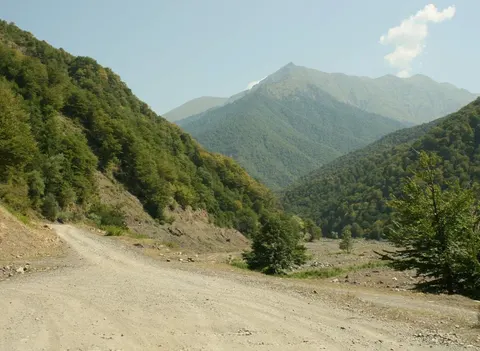
Pankisi Gorge
The upper Alazani valley north of Akhmeta, home for nearly two centuries to the Chechen-speaking Kists: brick mosques, wooded slopes, open doors.
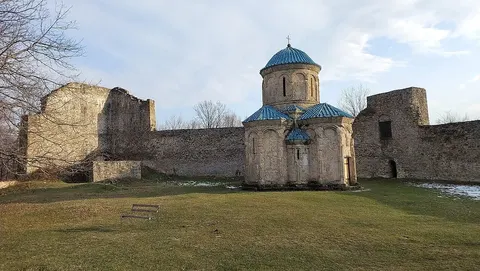
Kvetera Fortress and Church
A small 10th-century church roofed in azure tile, inside the forest citadel on the Akhmeta–Tianeti road that a king once failed to take.
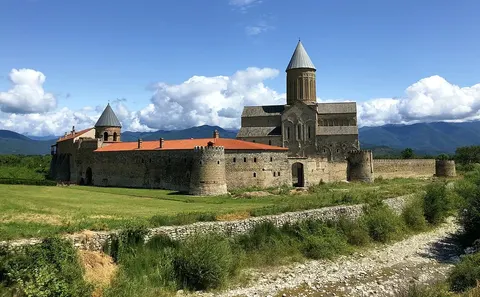
Alaverdi Cathedral
Kvirike III's 11th-century cathedral, over fifty metres tall and alone on the Alazani plain — for nearly a thousand years Georgia's tallest church.
Best car for this trip
Unpaved sections
Guides
- Do You Need a 4x4 in Georgia? We rate the road surface and the minimum car class for all 267 places in our database. 227 of them need nothin
- The Best Time to Visit Georgia, Counted Month by Month Georgia does not have one season. It has two countries: a 60% country from November to April and a 99% country
Pickup locations
Car Rental at Tbilisi Airport — 66 km (straight line)