
Aradeti Fortress
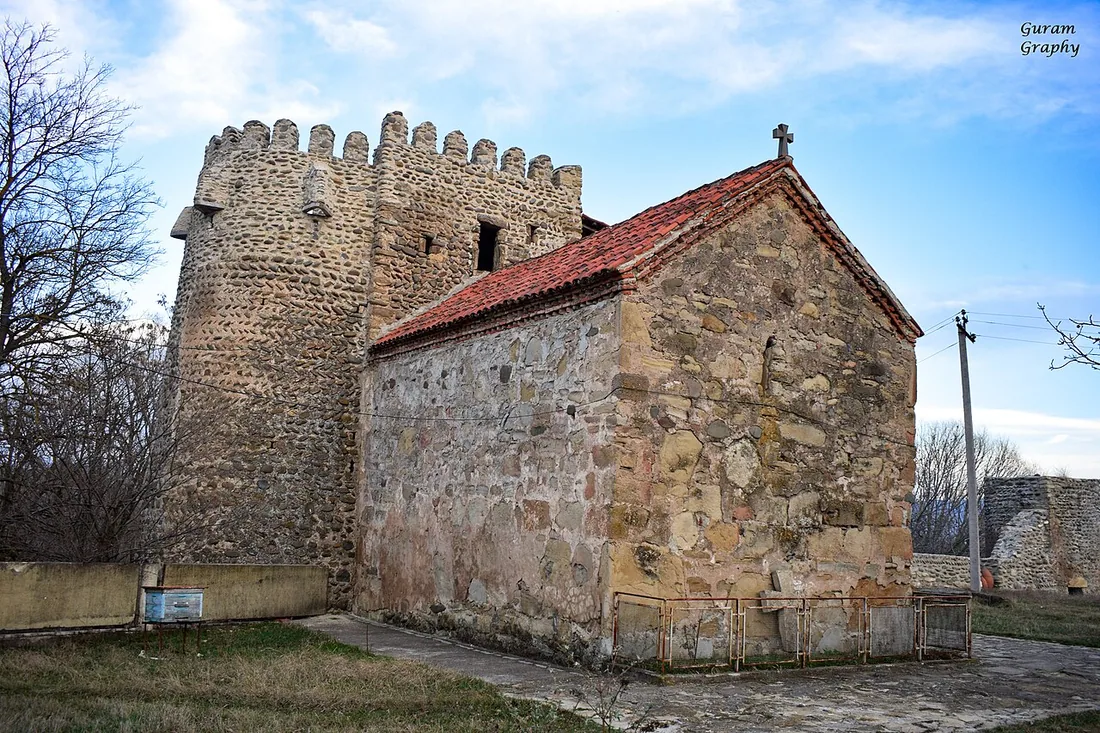
A towered fortress-hall on the Prone river, wrapped around the church Queen Mariam built in 1666, a short hop off the motorway at Kareli.
- Time needed
- 1 h
- From Tbilisi
- 104 km · 1:30
- Road
- Mostly paved
- Car needed
- Economy class
- Season
- All year
- Entry
- free
In 1666 a queen had her name cut into the wall of a small church above the Prone river, and the stone has kept it ever since.
An Asomtavruli inscription on the south façade of the Church of St Saba records that it was built that year at the order of Queen Mariam, born a Dadiani of Samegrelo. Around it rose a fortress-hall, a lord's residence behind walls and towers, possibly held by the Ishkhneli, a noble family from historic Tao. Georgian scholars date the walls to the mid-17th century; another view holds that they came later, in the 18th, as a defence against Lezgin raids. Either way, this was a home built by people who expected to be attacked.
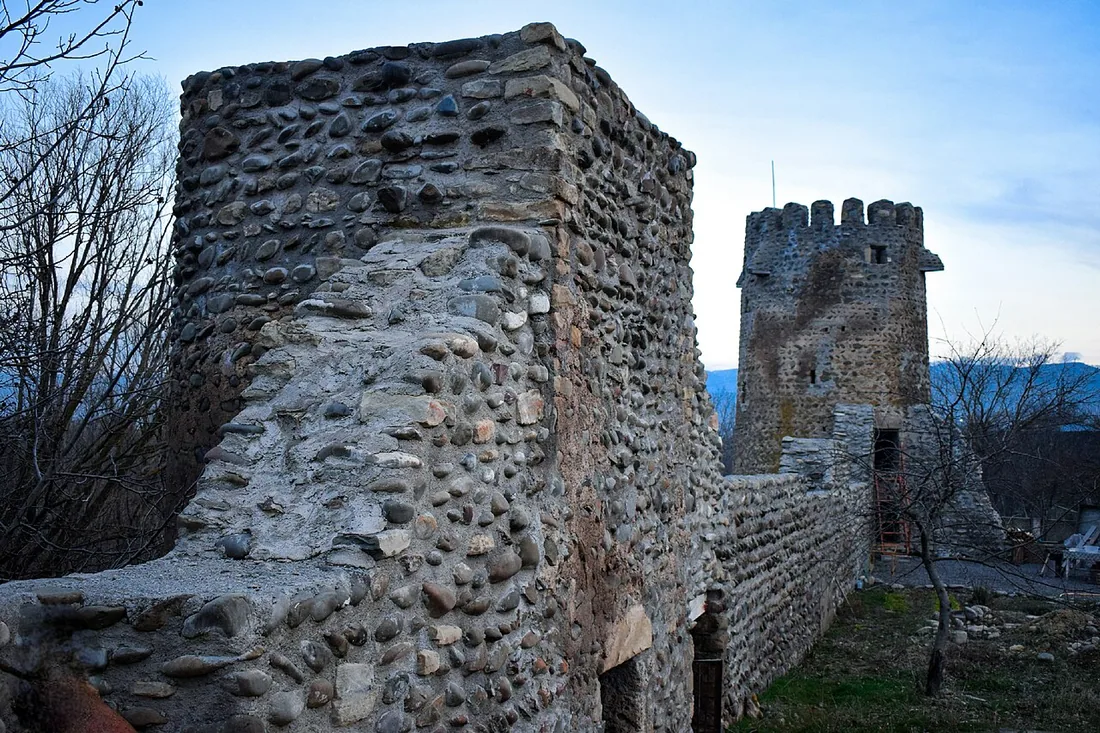
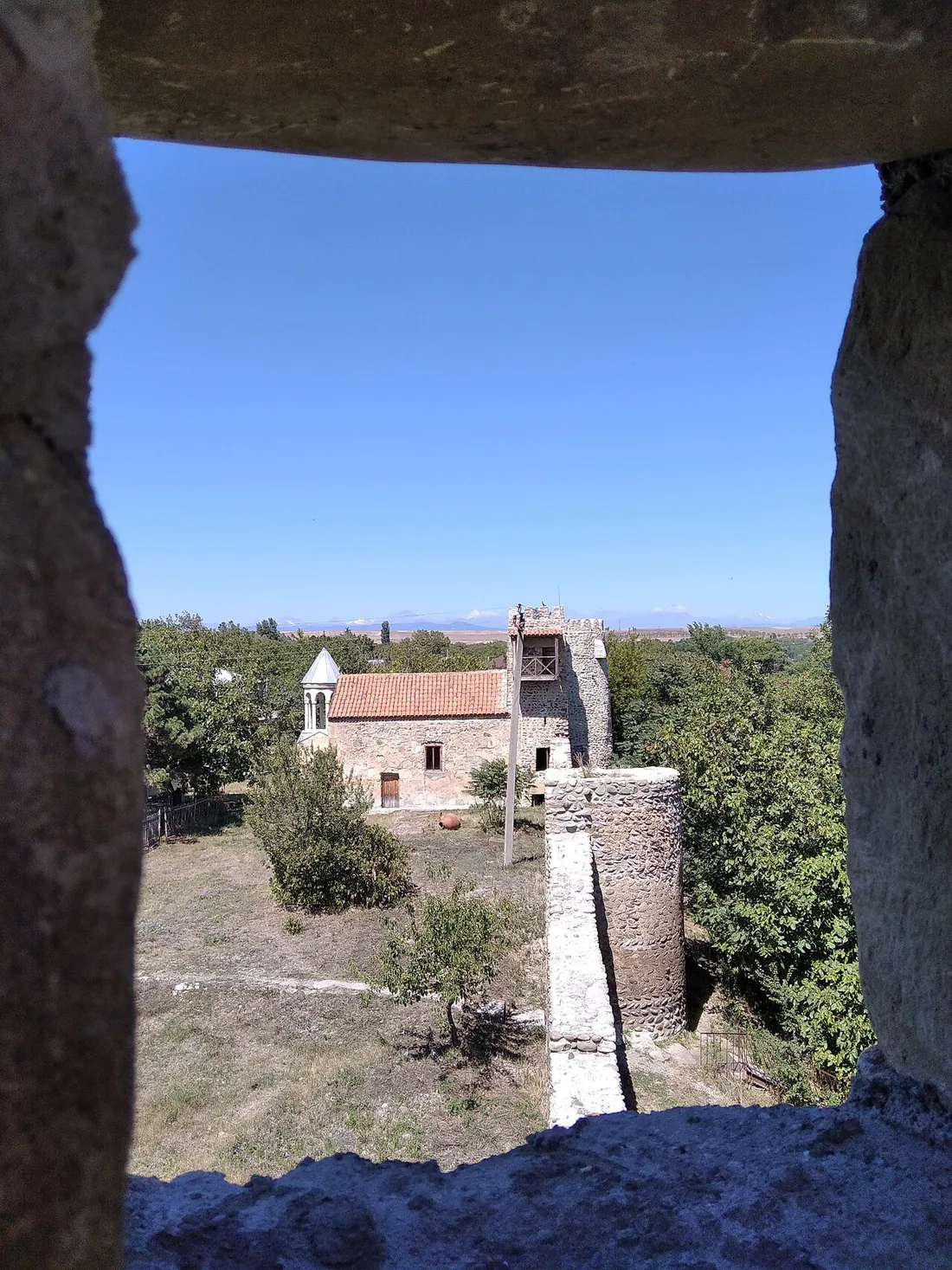
The enclosure is nearly square, about 40 by 40 metres, with walls 1.2 metres thick. The east side survives with four towers. The round one in the south corner rises four storeys: three for living and fighting, and on top an open fighting platform whose parapet carries machicolations and a single cannon port. The church itself (9.35 × 5 m) is whitewashed now, but a fragment of Christ still looks down from the vault.
The name is older than the towers. In August 1483 Qvarqvare II Jaqeli, atabeg of Samtskhe, routed a royal army at Aradeti, one of the blows that broke the united Kingdom of Georgia into rival kingdoms and principalities. Nothing here recalls it: the fortress came almost two centuries later.
The east tower was conserved in 1960 and the whole complex restored in 2020, so old masonry and careful repair stand side by side. Come in the afternoon, when the sun swings onto the south wall and every letter of the queen's inscription grows its own small shadow.
Practical advice
There is no fee, no guard and no café: bring water, and buy anything else in Kareli, a few kilometres away. The last few hundred metres are on dirt and the courtyard is uneven, so wear shoes with grip and stay off crumbling wall-tops, as part of the circuit is still ruin. If the church is open, cover shoulders and knees; women usually cover their hair. An hour is plenty. The afternoon is best, when light falls on the south façade and its inscription. For a half-day in Kareli country, add Urbnisi Cathedral or Kintsvisi Monastery.
How to get there from Tbilisi
104 km, about 1 hour 30 minutes. Leave Tbilisi west on the S1 (E60) motorway past Mtskheta and Gori, and after about 100 km take the Kareli exit. You need not enter the town: at the roundabout by the exit join the Sh203 (Kareli–Agara) west for about 2.5 km, then turn right and drive half a kilometre north into Aradeti; the fortress stands in the village, on the right bank of the Prone. Asphalt runs to the village, then a few hundred metres of dirt to the walls. Any economy car manages it in dry weather; after rain, take it slowly. Fuel is plentiful on the S1 and in Kareli.
Click a marker for details. Coloured lines are ready-made road trips.
Nearby places
Ruisi Cathedral
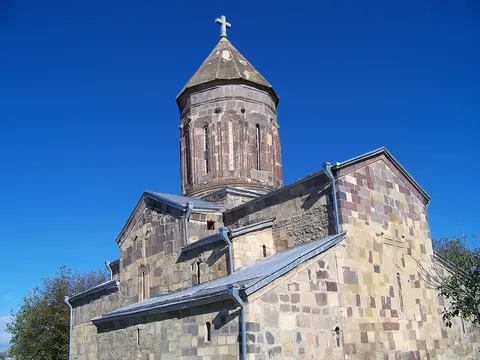
It crowned a boy-king, hosted David the Builder's council, fell to Timur and rose again: Ruisi's patched, polychrome walls keep every entry.
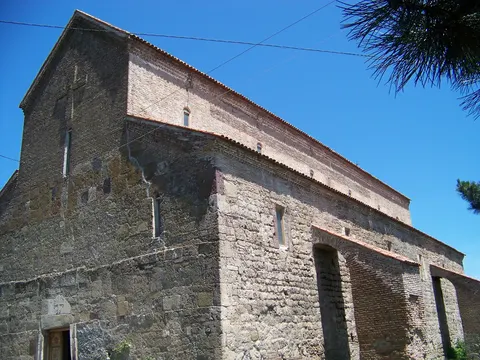
Urbnisi Cathedral
A long, low basilica of c. 500–600 in what was once ancient Iberia's second city, where David the Builder's church council met in 1103.
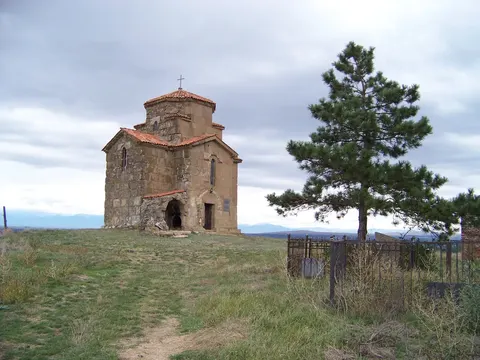
Samtsevrisi Church of St George
A 7th-century free-cross church barely eleven metres tall that still commands the plain where the Dzama meets the Mtkvari.
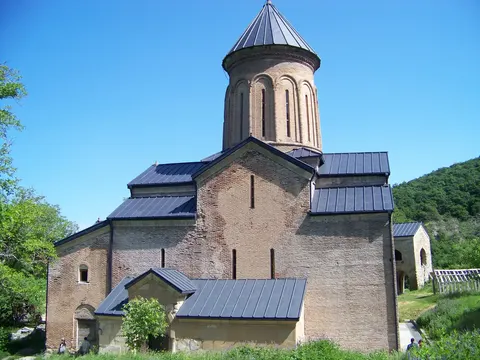
Kintsvisi Monastery
A red-brick Golden Age church in the forest near Kareli, where an angel in lapis-lazuli blue points to Christ's empty tomb.
Best car for this trip
Mostly paved
Guides
- Driving in Georgia: What the Distances Actually Cost You Georgia is a small country with slow roads. Here is what 267 measured drives from Tbilisi say about how long y
Pickup locations
Car Rental in Tbilisi — 87 km (straight line)
Booking and enquiries
The easiest way to reach these places is by car — you pick the route and the stops.