
Urbnisi Cathedral
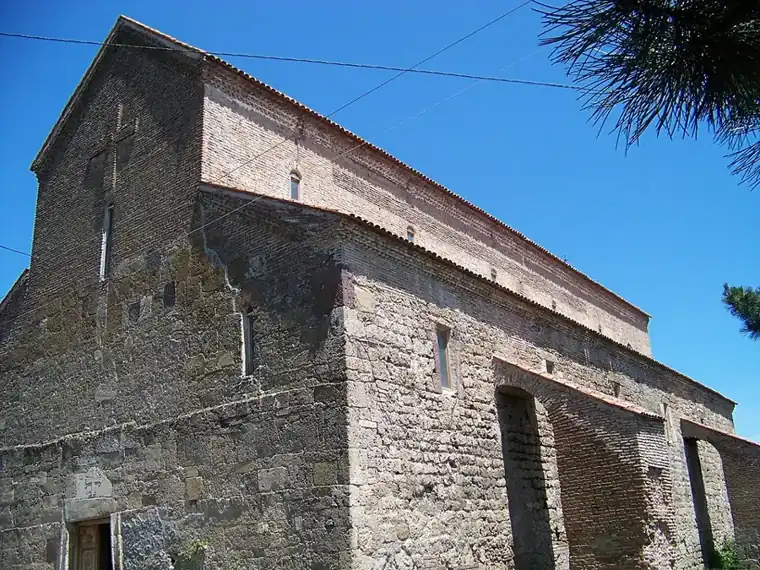
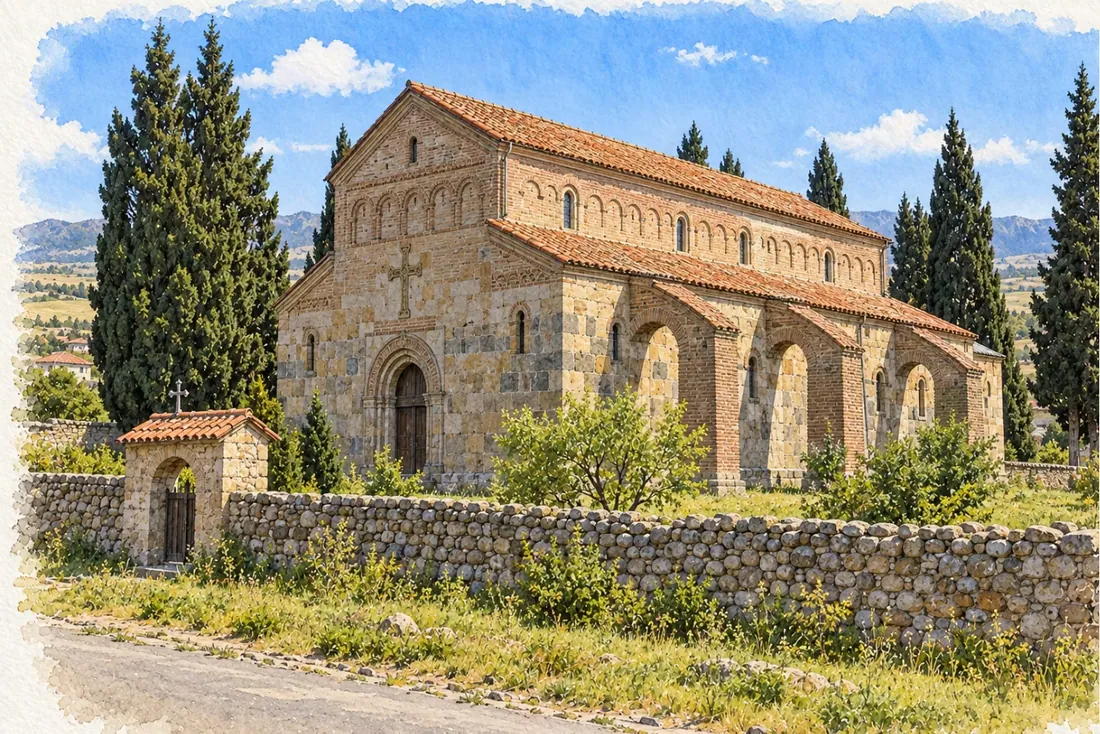
A long, low basilica of c. 500–600 in what was once ancient Iberia's second city, where David the Builder's church council met in 1103.
- Time needed
- 1 h
- From Tbilisi
- 96 km · 1:20
- Road
- Paved
- Car needed
- Economy class
- Season
- All year
- Entry
- free
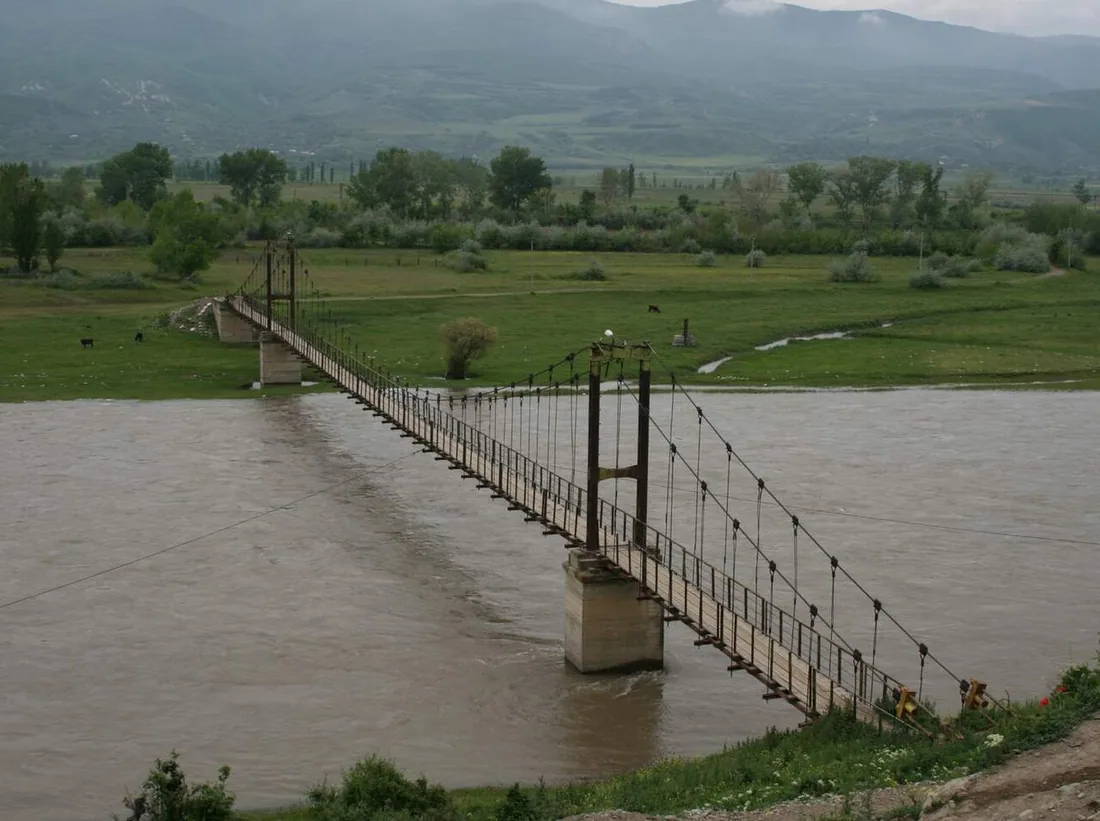
Long before it had a cathedral, Urbnisi was a city — the second of ancient Iberia after Mtskheta — and the ground here still keeps the marks of a siege.
The village sits on a high left bank of the Mtkvari. People lived here by the third millennium BC; by the fourth century BC Urbnisi was a walled town with baths, pagan sanctuaries and even a Jewish house of worship. Burnt buildings and round catapult stones tell of a siege and sack around the third century BC. Christian Urbnisi became a bishop's seat behind a wall of 25 towers, which did not stop the Arab commander Marwan taking it in the 730s. The city shrank to a village; the cathedral kept its bishop.
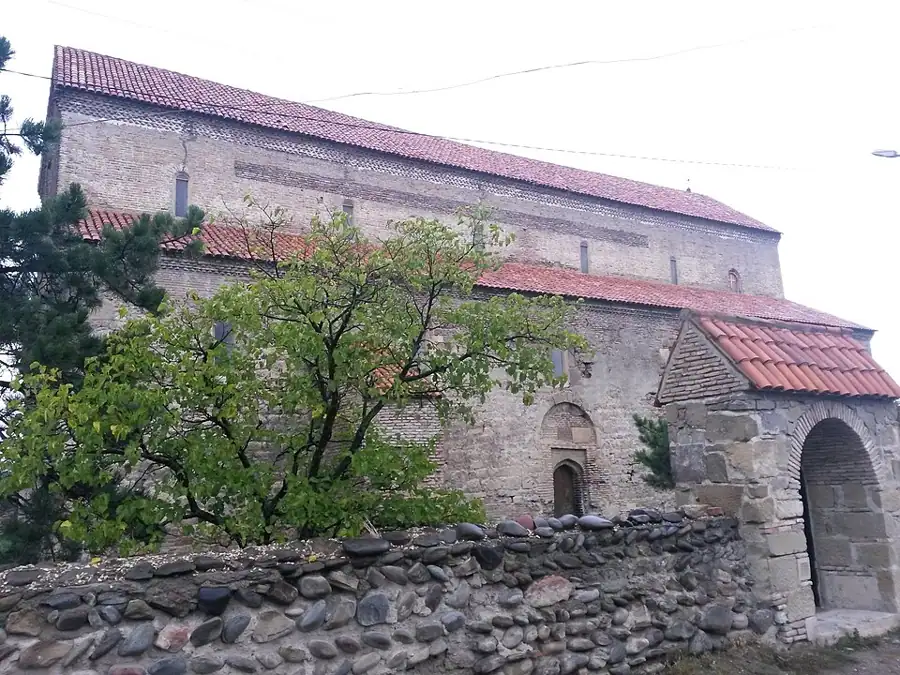
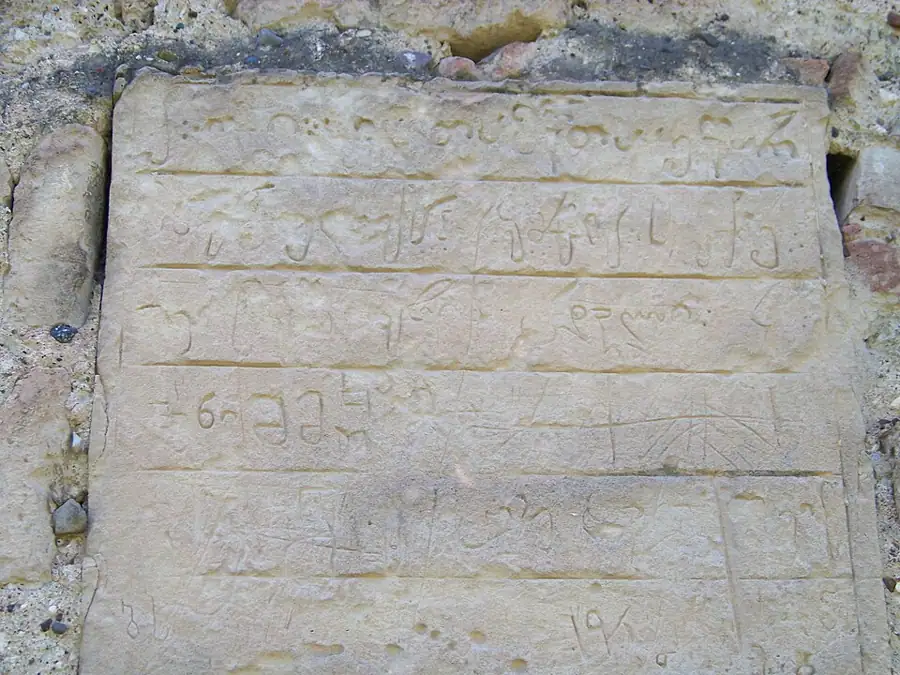
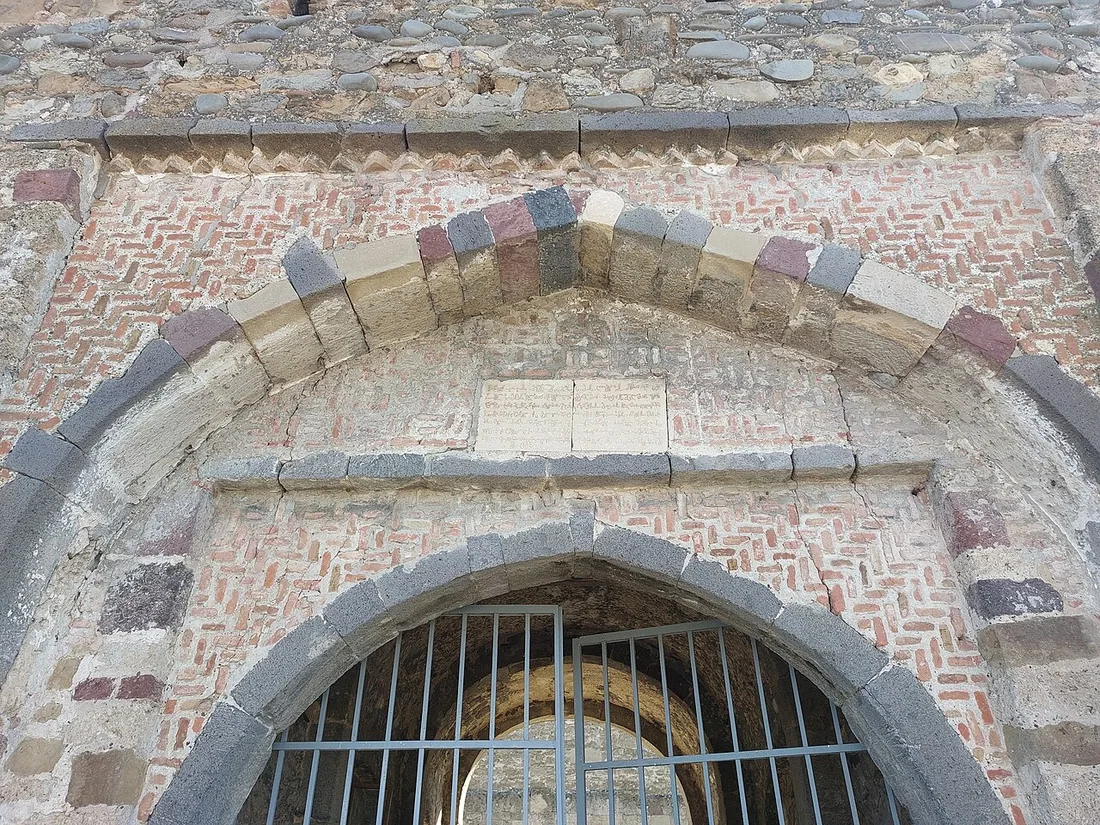
The Sioni is a three-aisled basilica, 32 by 22 metres. On its north wall an asomtavruli inscription names the builders, one Konstanti and Father Mikel, and its lettering dates the church to around 500, though some accounts say a century later. The walls read like strata: neat sandstone below, rougher stone and brick above from repairs, the largest in 1668. Inside, two rows of cruciform piers and brick arches divide the nave into five bays under a brick barrel vault — a low, wide room that holds you horizontally rather than lifting you upward.
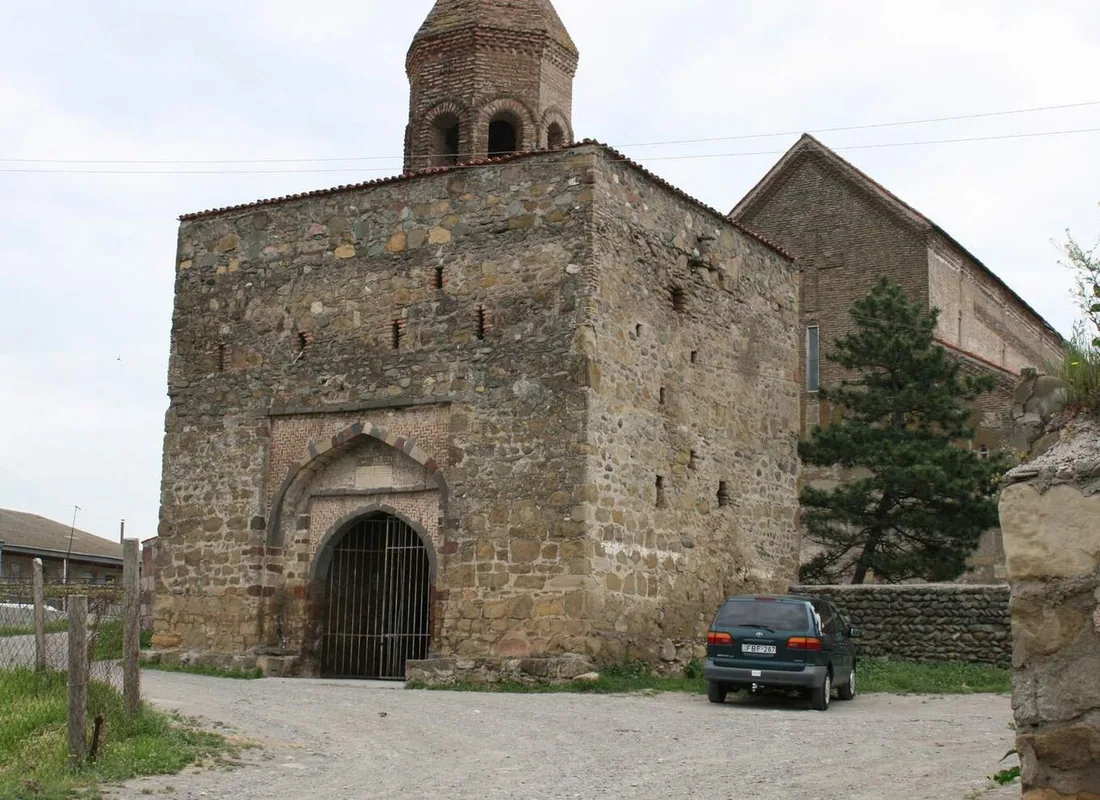
Look for the brick crosses in the east and west façades and, on the north side, a stone carved with a cross and, beneath it, a small horse. The gate-tower to the west was raised in 1706 by order of King Vakhtang VI and Queen Rusudan.
In 1103 David the Builder called the church council that met here and at Ruisi, purging venal bishops and binding the church to the crown. Armies passed through Urbnisi on their way somewhere else; the basilica simply stayed.
Gallery
Practical advice
An hour is plenty, and Ruisi is only 7 km away by road — see both in one outing. The Sioni is a working church: shoulders and knees covered, headscarves for women. The yard is flat and shaded by old trees, easy for older visitors; in winter the stone interior is properly cold. The small shop in the village will do for water, but for lunch head to Gori or Kareli. Walk the outside first, slowly: the inscriptions and the carved horse are easy to miss.
How to get there from Tbilisi
Take the S1 (E60) motorway west from Tbilisi past Gori, about 94 km of fast dual carriageway, and leave it at the junction for Ruisi and Urbnisi. From the roundabout a short local road (Sh136) runs about a kilometre south into Urbnisi. Around 96 km and 1 hour 20 minutes in all. The village asphalt is narrow and potholed on the bends, so take it slowly. Fuel in Gori or Kareli. Free gravel parking in front of the churchyard wall; an economy car is enough all year round.
Click a marker for details. Coloured lines are ready-made road trips.
Nearby places
Ruisi Cathedral
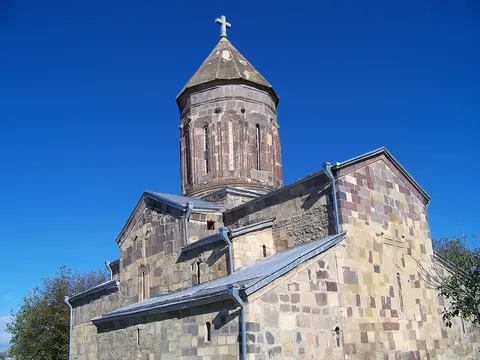
It crowned a boy-king, hosted David the Builder's council, fell to Timur and rose again: Ruisi's patched, polychrome walls keep every entry.
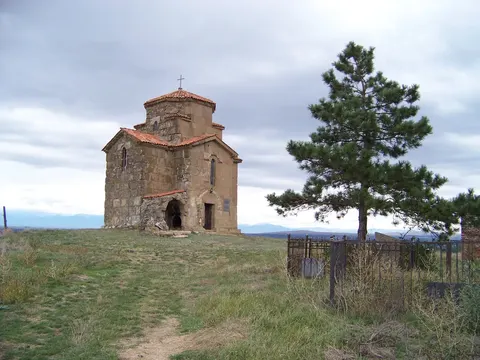
Samtsevrisi Church of St George
A 7th-century free-cross church barely eleven metres tall that still commands the plain where the Dzama meets the Mtkvari.
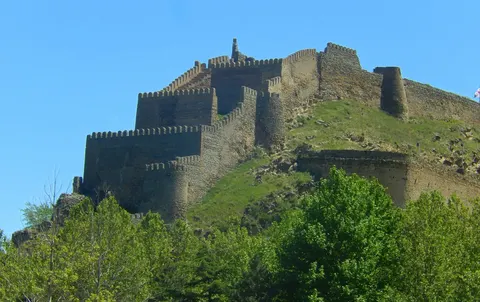
Gori: Fortress and Stalin Museum
A citadel on a rock above the Mtkvari and the Liakhvi, and below it the shrine Gori built to its most notorious son: one town, two views of history.
Best car for this trip
Guides
- Driving in Georgia: What the Distances Actually Cost You Georgia is a small country with slow roads. Here is what 267 measured drives from Tbilisi say about how long y
Pickup locations
Car Rental in Tbilisi — 77 km (straight line)
Booking and enquiries
The easiest way to reach these places is by car — you pick the route and the stops.