
Ruisi Cathedral
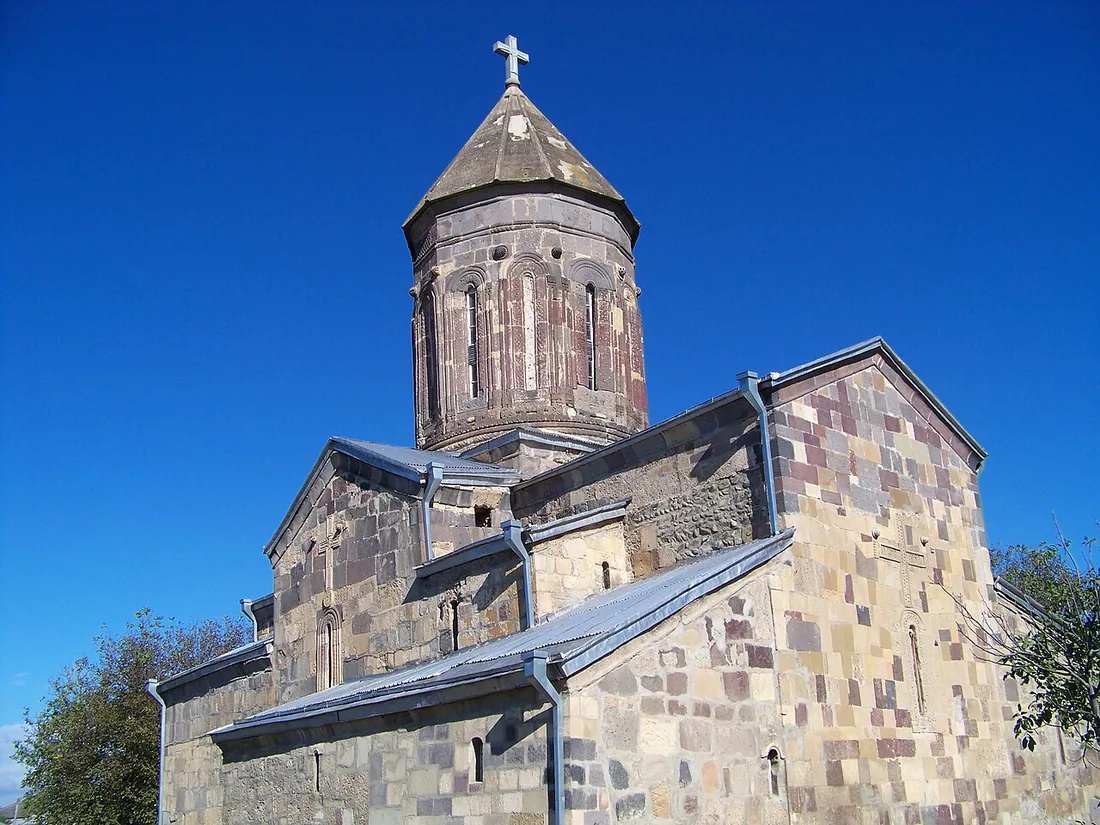
It crowned a boy-king, hosted David the Builder's council, fell to Timur and rose again: Ruisi's patched, polychrome walls keep every entry.
- Time needed
- 1 h
- From Tbilisi
- 99 km · 1:20
- Road
- Paved
- Car needed
- Economy class
- Season
- All year
- Entry
- free
Ruisi has been burnt, shaken and rebuilt so often that its walls read like a ledger of Georgian history — and most of the entries are signed.
The oldest stones, of the 8th or 9th century, survive around the altar; the church was remodelled in the 10th and 11th centuries. In 1055 the powerful Duke Liparit of Kldekari had the boy who would become King George II crowned here. The bishops of Ruisi bore the title Mroveli, and one of them, Leonti, is credited with compiling the 11th-century corpus of the Georgian chronicles. In 1103 David the Builder convened his great church council here and at nearby Urbnisi; it removed bishops who had bought or inherited their sees and bound the church to the crown.
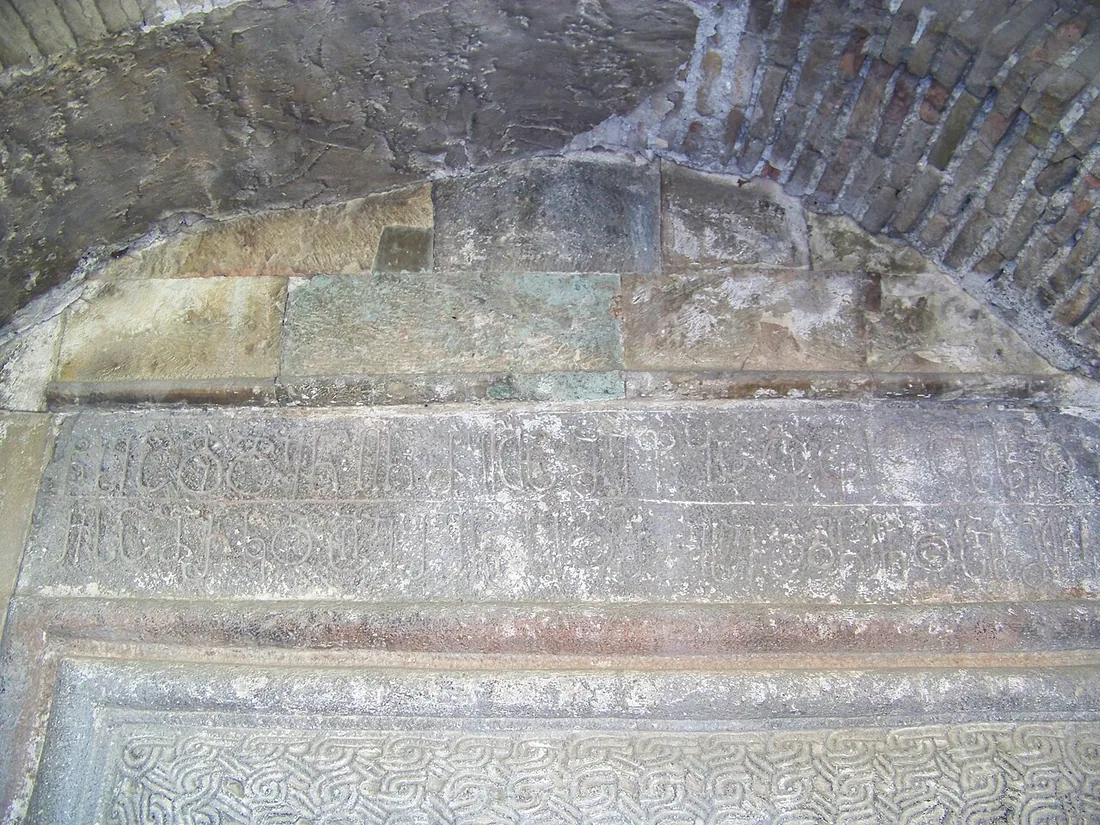
Timur's armies all but destroyed the cathedral in 1400. King Alexander I (r. 1412–1442) rebuilt it, raising a special tax for Ruisi and Mtskheta; an inscription on the west façade honours him, and one on the south names the architect, Shalva. Bishop Dionise Laradze renewed it in the 16th century, Queen Mariam of Kartli in the 1660s. In 1695 King Alexander IV of Imereti, held prisoner at Ruisi, was killed and buried in this church. The Gori earthquake of 1920 broke it again; repairs followed in 1936–38 and 1950–53.
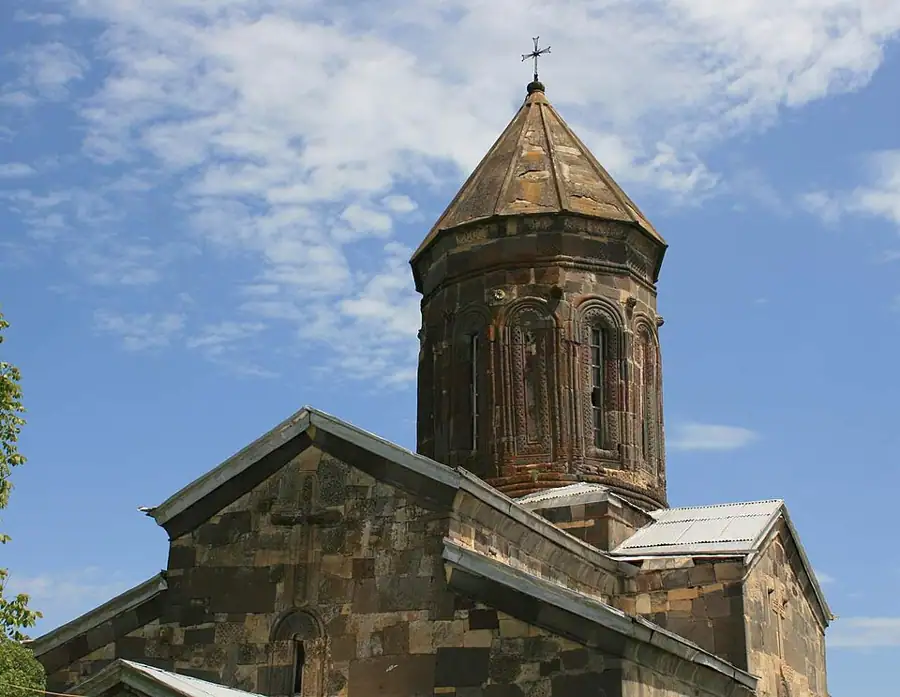
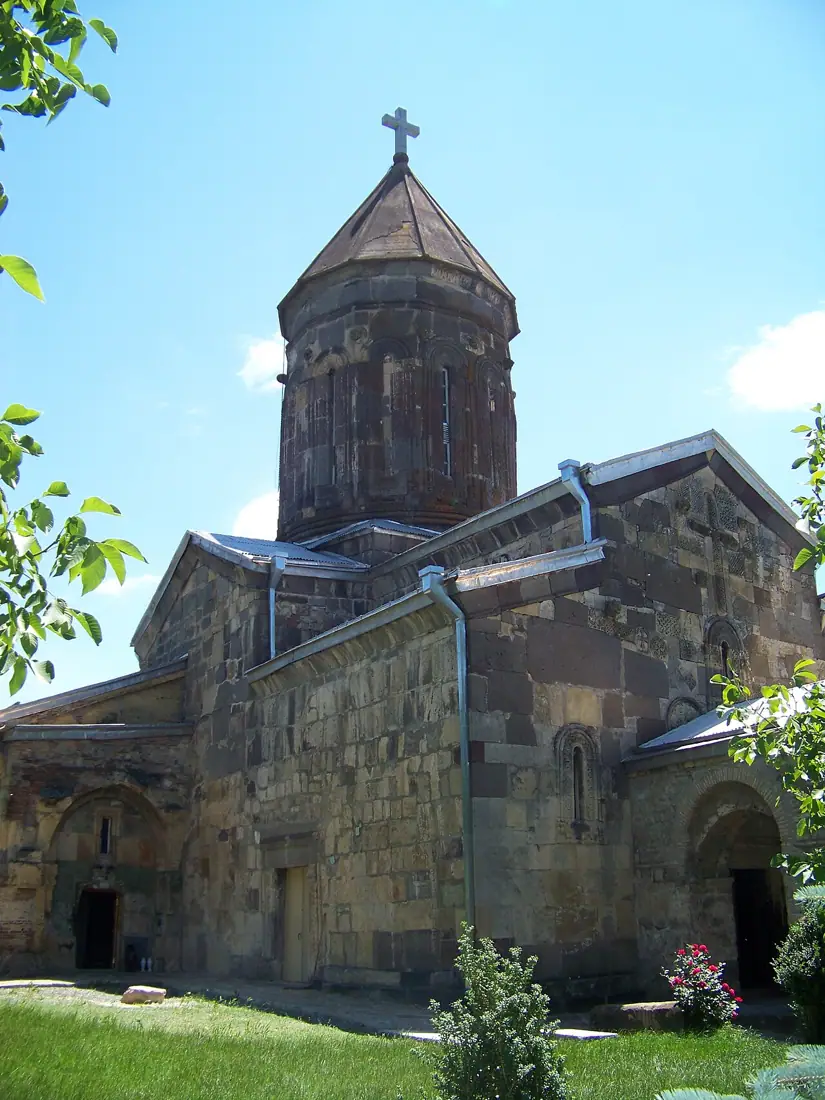
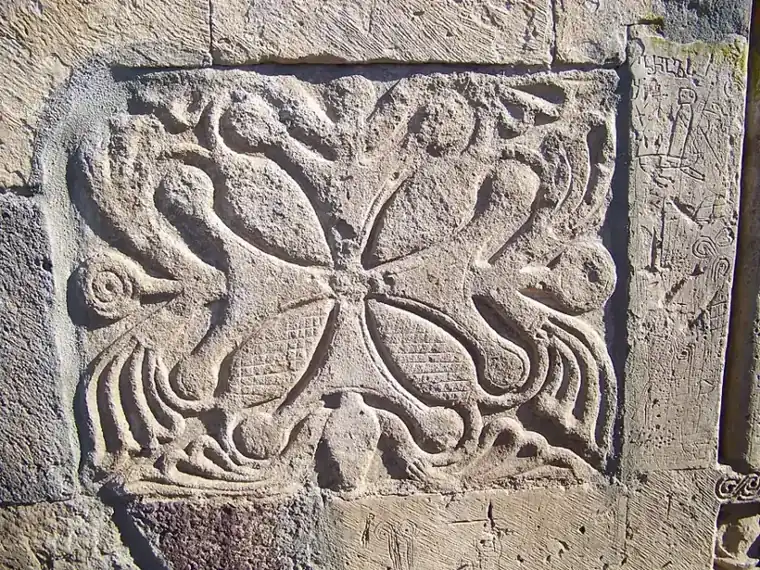
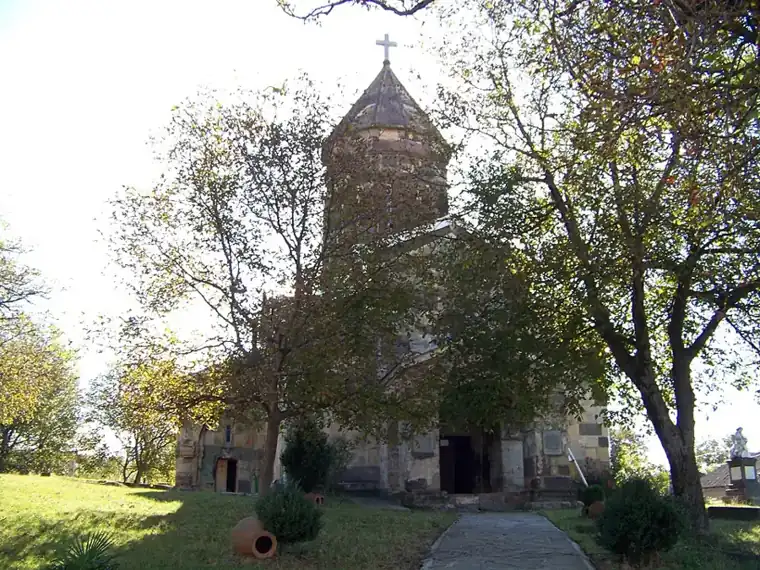
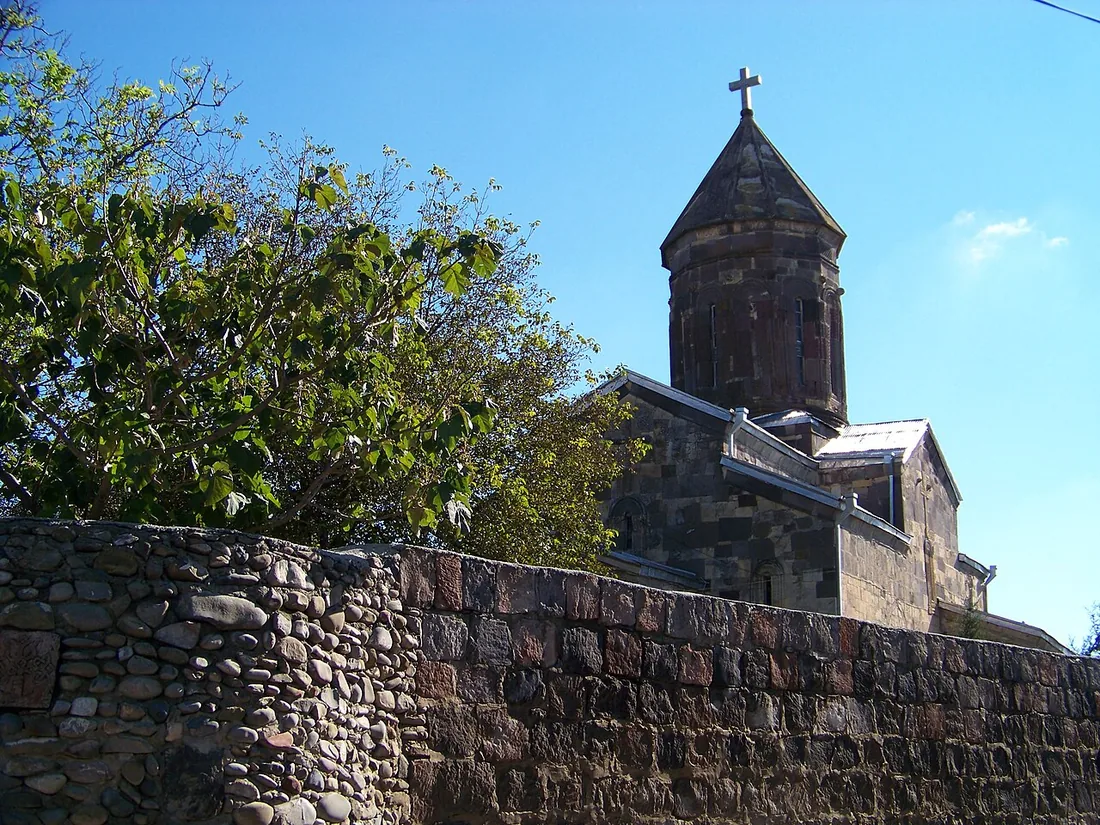
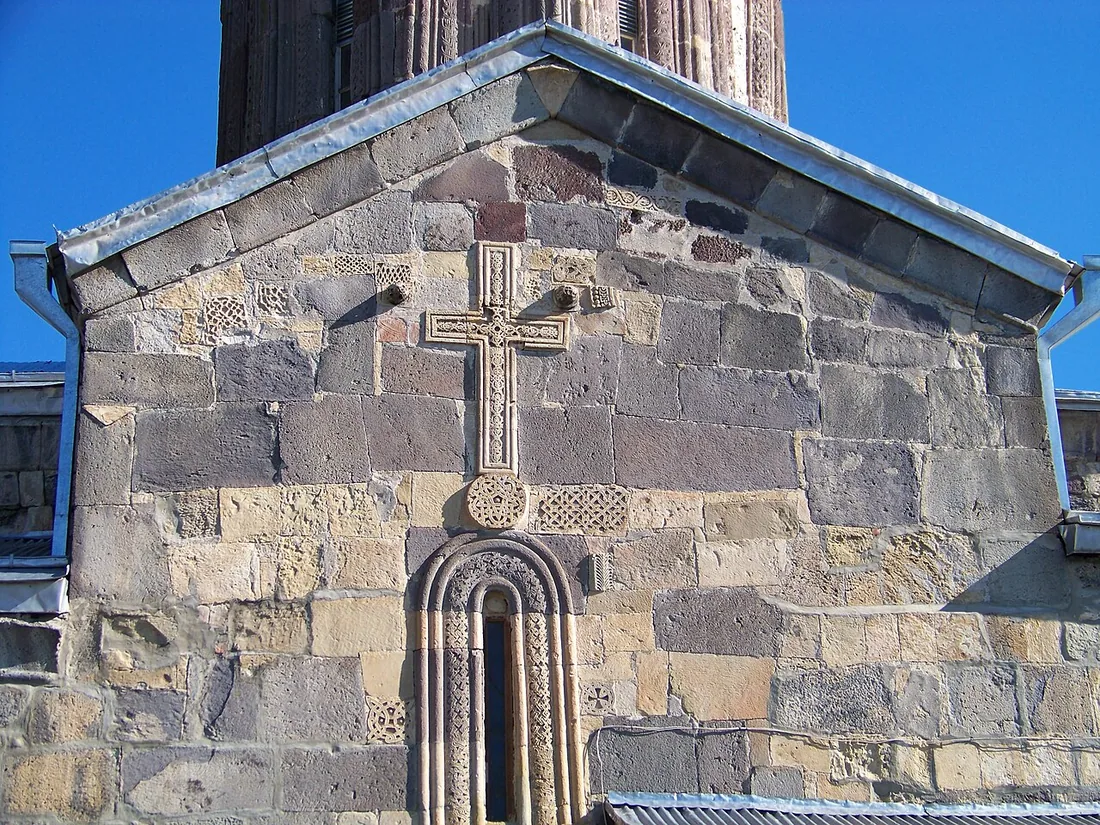
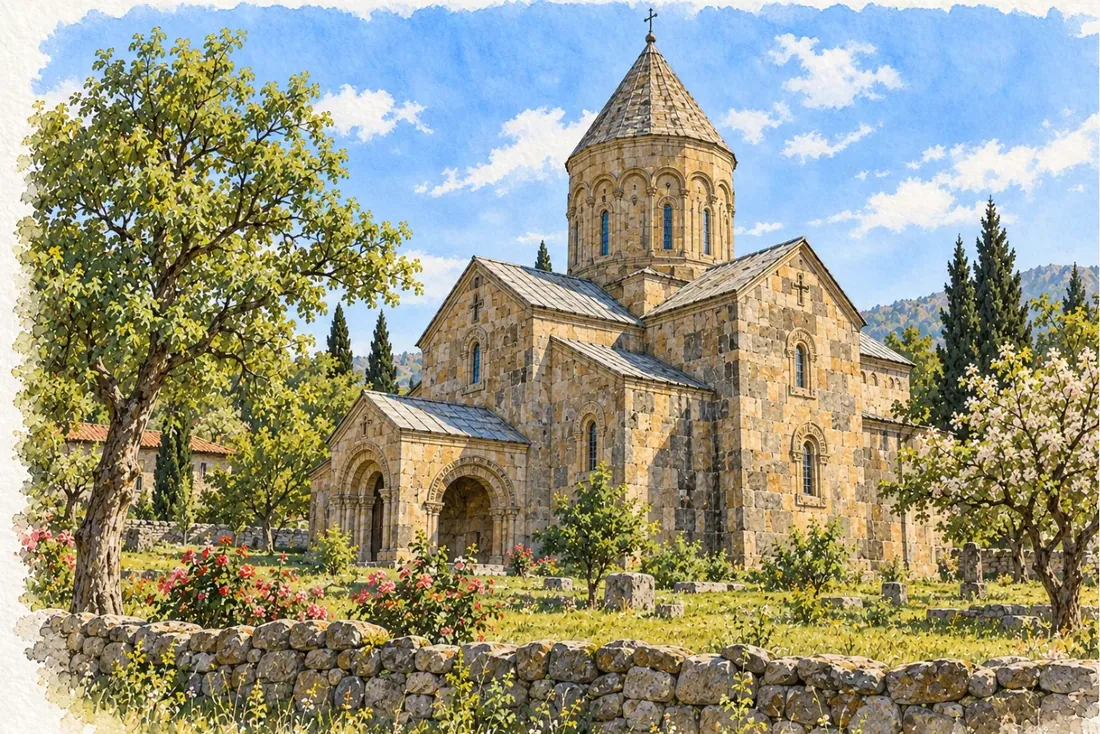
What stands is a cross-in-square church, 27.3 by 19.6 metres and 23.3 metres high, its tall twelve-sided drum pierced by twelve windows. The walls are polychrome — sandstone patched with basalt, limestone and brick — and the carving gathers thickly round doors and windows. Inside, a carved wooden iconostasis of 1781 screens the sanctuary, and faint late-medieval frescoes survive. A 17th-century bell tower of three storeys serves as the gate.
Stand at the west door and count the centuries in the stone: nobody here ever gave up on this building.
Gallery
Practical advice
Give it 45 minutes to an hour, and pair it with Urbnisi, 7 km away by road: an early basilica and a later domed church, both tied to the same council. Ruisi is the seat of the Urbnisi–Ruisi eparchy and a busy working church — cover shoulders and knees, bring a headscarf, and expect services on Sunday mornings; a weekday afternoon is better for studying the iconostasis. The interior is cold and damp in winter. The village has a small shop but no café; eat in Gori.
How to get there from Tbilisi
Take the S1 (E60) motorway west from Tbilisi past Gori, about 96 km of fast dual carriageway; the cathedral's drum is visible just north of the road. Leave at the junction for Ruisi and Urbnisi and follow the short local road (Sh135) about a kilometre into the village. Around 99 km and 1 hour 20 minutes in all. Cattle wander the village lane, so go gently. Fuel in Gori or Kareli. Free parking on the open square before the cathedral; an economy car is fine all year round.
Click a marker for details. Coloured lines are ready-made road trips.
Nearby places
Urbnisi Cathedral
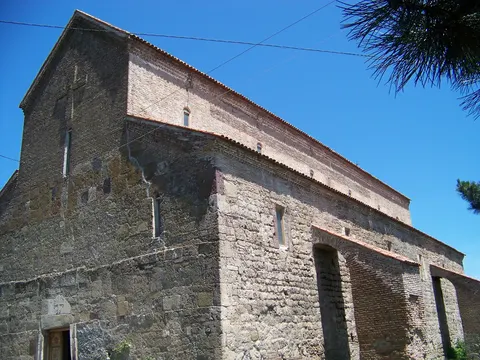
A long, low basilica of c. 500–600 in what was once ancient Iberia's second city, where David the Builder's church council met in 1103.
Samtsevrisi Church of St George
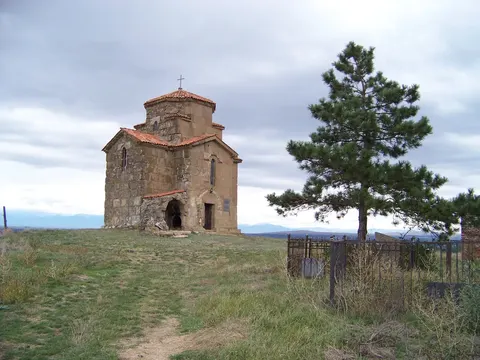
A 7th-century free-cross church barely eleven metres tall that still commands the plain where the Dzama meets the Mtkvari.
Kintsvisi Monastery
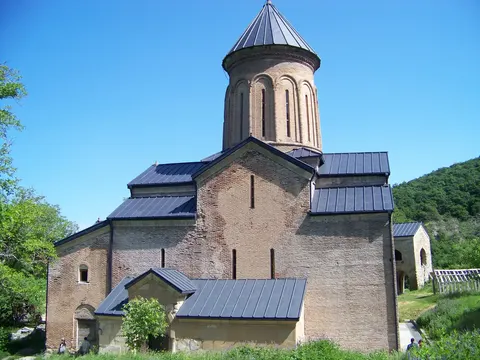
A red-brick Golden Age church in the forest near Kareli, where an angel in lapis-lazuli blue points to Christ's empty tomb.
Best car for this trip
Guides
- Driving in Georgia: What the Distances Actually Cost You Georgia is a small country with slow roads. Here is what 267 measured drives from Tbilisi say about how long y
Pickup locations
Car Rental in Tbilisi — 80 km (straight line)
Booking and enquiries
The easiest way to reach these places is by car — you pick the route and the stops.