
Anatori Crypts
Slate burial vaults on a bluff above the Arghuni near Shatili: bones behind iron grilles, a plague legend everyone tells, and a quieter truth scholars suggest.
- Time needed
- 0.5 h
- From Tbilisi
- 155 km · 5:00
- Road
- Unpaved sections
- Car needed
- Off-road 4x4
- Season
- June–September
- Entry
- free
At Anatori the bones are real. The story everybody tells about them may not be.
Ask in Shatili and you will hear it. In some past century, and nobody says which, a merchant carried the plague, zhami in Georgian, into the village of Anatori. The sick rose from their beds and walked to a bluff where two rivers meet. Some threw themselves into the current; others crawled into stone huts built for the purpose and lay down on slate shelves beside the dead, so that the village might live. Some retellings even have them walling themselves in, stone by stone.
The ethnographer Shorena Kurtsikidze, co-author of a book on the customs of the Shatili borderland, says there is no evidence for any of it. Above-ground stone necropolises, where the dead were laid out rather than buried, were widespread just across the border in Chechnya and Ingushetia, and Anatori may be the only Georgian example of the same rite. Why people chose it is not known for certain; one theory holds that it was a way of showing respect to the land. She admits that, without more evidence, everyone can only speculate.
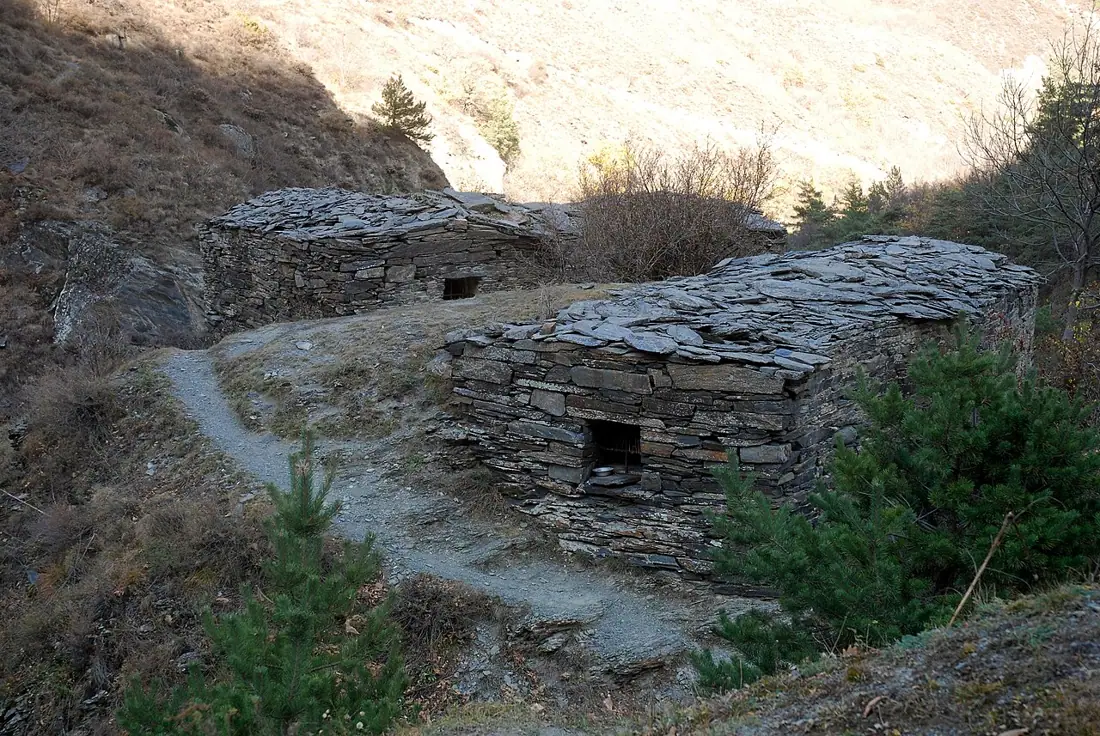
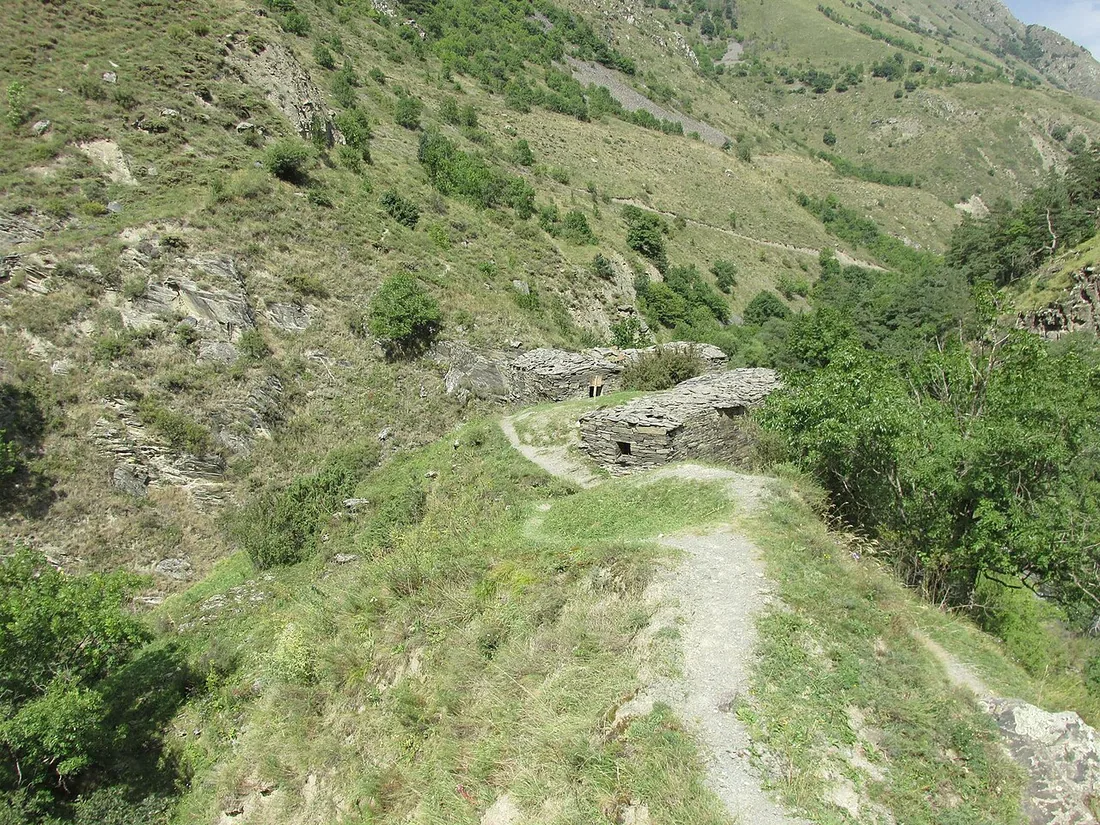
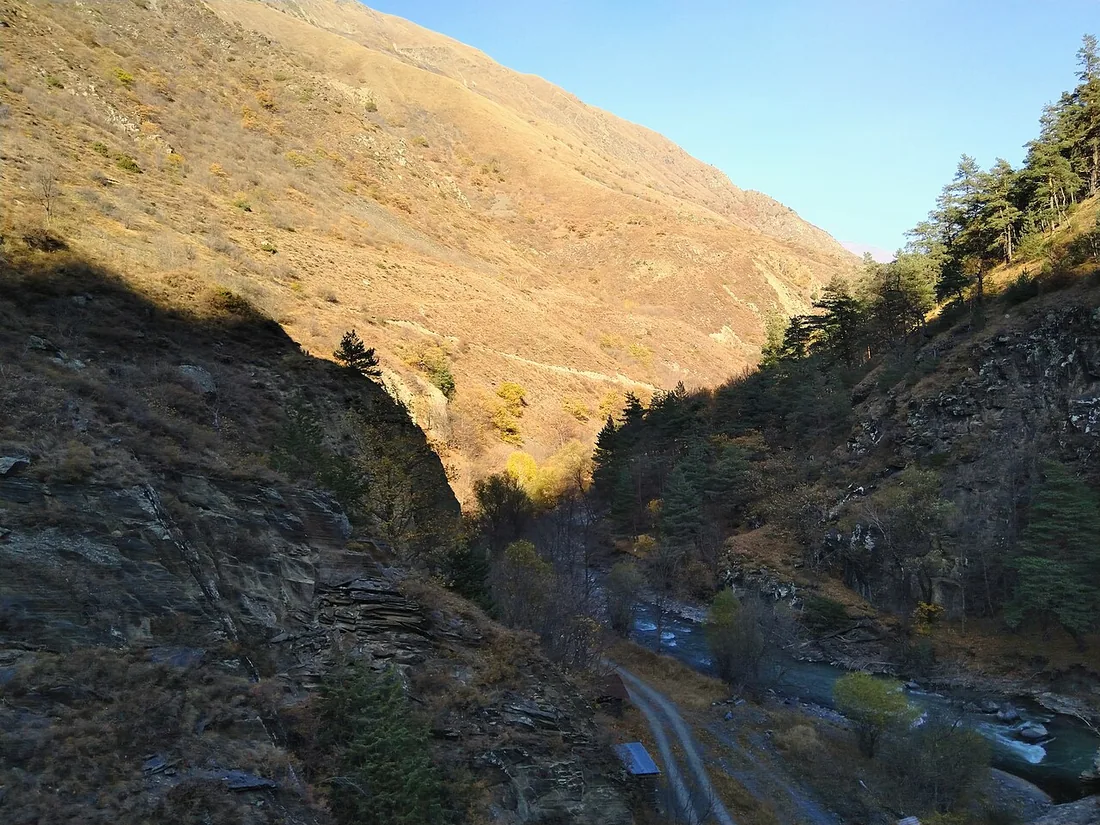
What you see is plain and unsettling. A few rectangular vaults of stacked slate stand on the bluff about three kilometres beyond Shatili, on the road to Mutso, close to the Chechen border. Through small openings you can see the shelves, the skulls and the long bones. Iron grilles cover the openings now, fitted after bones began to vanish; one story tells of a visitor who crossed the river and left with a sack of skulls.
Stay at the grille a minute longer than feels comfortable. Whether plague or custom brought them here, the dead of Anatori do not need a legend to deserve your silence.
Gallery
Practical advice
Look, but do not enter the vaults or touch anything: this is a cemetery and holy ground for the Khevsurs. Twenty to thirty minutes is enough, so pair it with Shatili, a village of some 60 stone towers whose people were moved down to the lowlands by the Soviet authorities in the early 1950s; only 22 people lived there at the 2014 census. This is a border zone: carry your passport and expect document checks. There are no cafés or toilets at the site; the nearest are in Shatili's guesthouses. Do not fly a drone this close to the border.
How to get there from Tbilisi
From Tbilisi take the Georgian Military Highway (E117) to Zhinvali, then the Sh26 up through Barisakho and over the Datvisjvari Pass (2,676 m) down into the Arghuni gorge to Shatili. From there Anatori is another 3 km along the track to Mutso: about 155 km and five hours in all, with roughly the last 50 km on unpaved mountain road. This is a side track beyond Shatili: you need a real high-clearance 4x4. There is no fuel after Barisakho, so leave with a full tank. The pass is open only from about June to October, depending on snow. Do not try it as a day trip: sleep in Shatili.
Click a marker for details. Coloured lines are ready-made road trips.
Nearby places
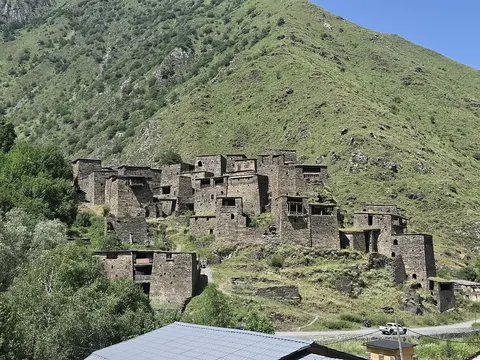
Shatili
More than sixty flat-roofed towers fused into one wall in the Argun gorge near the Chechen border — Khevsureti's fortress-village, reachable only in summer.
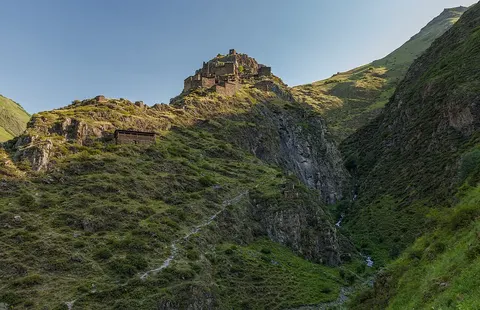
Mutso
A medieval fortress-village of dry-laid schist on a crag above the Ardoti valley, 11 km beyond Shatili — saved from ruin and honoured by Europa Nostra.
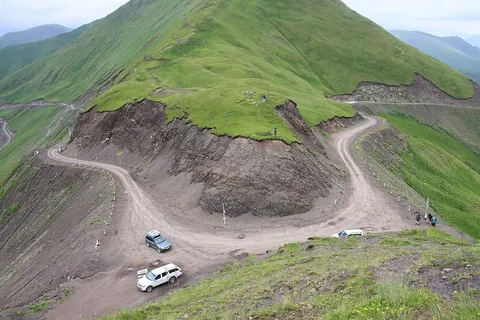
Datvisjvari Pass
The 2,680-metre gravel pass on the Caucasus watershed that splits Khevsureti in two: the only road to Shatili, open only in the warm months.
Best car for this trip
Unpaved sections
Guides
- Do You Need a 4x4 in Georgia? We rate the road surface and the minimum car class for all 267 places in our database. 227 of them need nothin
- Winter Driving in Georgia: What Closes, What Opens, Which Car Of the 267 places we map, 161 are in season in winter and 52 are flagged as not reachable year-round. The pass
Pickup locations
Car Rental at Tbilisi Airport — 113 km (straight line)
Booking and enquiries
The easiest way to reach these places is by car — you pick the route and the stops.