Sololaki and its Art Nouveau Entrances
A nineteenth-century merchants' district under the ridge, where the best of it is inside the stairwells.
- Time needed
- 1.5 h
- From Tbilisi
- 2 km · 0:10
- Road
- Paved
- Car needed
- Economy class
- Season
- All year
- Entry
- free
In Sololaki the facades are not the point; what matters is behind the doors. The district lies south of Freedom Square at the foot of the Sololaki ridge, on ground that was once the khan's gardens — the name itself comes from the water channels that irrigated them.
In the late nineteenth century, when Baku oil and Caucasian trade brought money into Tbilisi, the city's wealthy families built their houses here: Mantashev, Aramiants, Sarajishvili, Melik-Azarian. They followed European fashion, first eclectic historicism and then Art Nouveau, and they spent most of the budget where guests would see it — on the entrance hall and the stairs.
The usual walking route covers Lado Asatiani, Amaghleba, Machabeli and Geronti Kikodze streets. Inside the stairwells you will find:
-
painted walls and ceilings, usually faded and partly fallen away
-
coloured glass in the roof lantern above the stairwell, throwing patterns down the steps
-
cast-iron balustrades and tiled floors that still carry the maker's stamp
On Machabeli Street stands David Sarajishvili's mansion, built in the early 1900s and now the Writers' House, with the best-preserved interior in the district.
One warning. These are private homes, not museums. Over the last decade many entrances have had keypad locks fitted, precisely because of the flow of visitors. If a door is open, go in quietly, do not ring apartment bells, and do not film in the corridors. Some residents are welcoming, some are tired of it, and both reactions are fair.
The reason these stairwells are in the state they are in is straightforward. In the 1920s the Soviet authorities nationalised the large apartments and divided them: several families to a flat, one room each. The shared space — which is exactly the staircase, the entrance hall and the glass above it — belonged to nobody, and so nobody maintained it. That went on for eighty years. Some entrances have been restored recently through private effort and small city grants, but most are still waiting, and a few have simply lost their glass.
Gallery
Practical advice
An hour and a half is enough for an unhurried walk. Expect half the doors to be locked; that is normal, not a failure. The best light for the stained glass is between about ten and one. The streets are cobbled and slightly sloped, and the pavements are narrow and lined with parked cars. Coffee and toilets are easy to find along Lado Asatiani. The district comes alive with bars in the evening, but by then getting inside a stairwell is much harder.
How to get there from Tbilisi
Sololaki sits directly behind Freedom Square, ten minutes from the centre — and it is one of the hardest districts in Tbilisi to park in. The streets are narrow, mostly one-way and parked solid on both sides; residents struggle to stop outside their own front doors. The sensible approach is the paid underground car park at Freedom Square and then walking up, since the district has to be seen on foot anyway. If you do park on the street, use the metered bays on Lado Asatiani and read the signs. A small economy car is the only reasonable choice here.
Click a marker for details. Coloured lines are ready-made road trips.
Nearby places
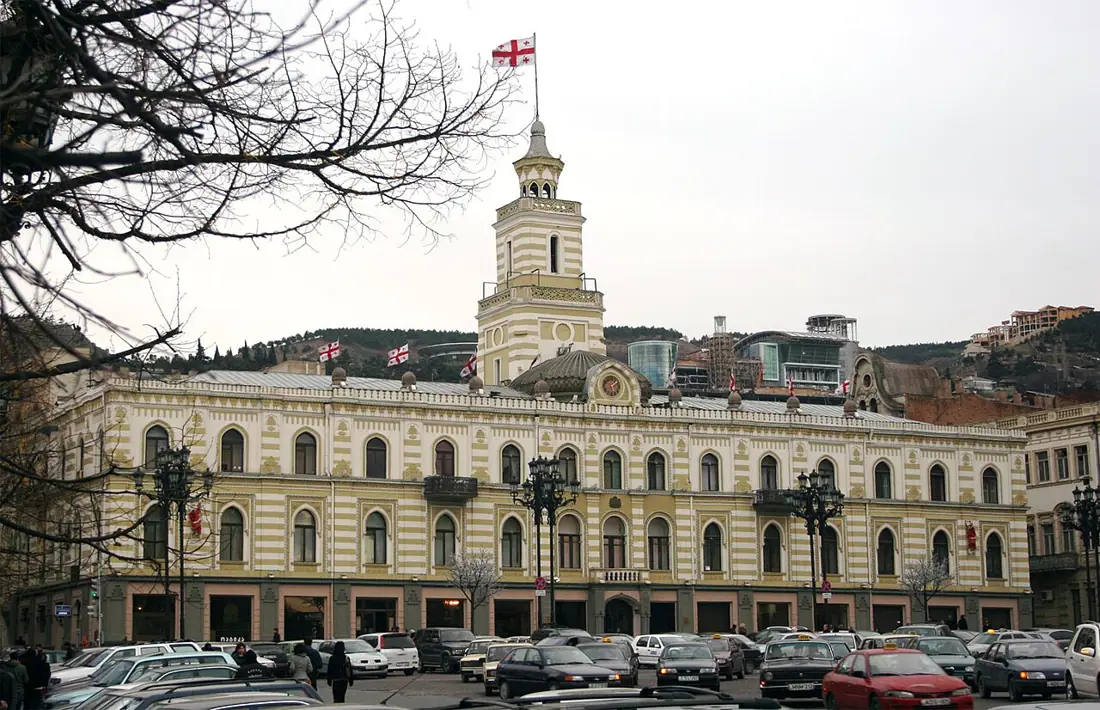 Town
TownFreedom Square and the Old Parliament
The city's central square, renamed five times, each renaming marking the arrival of a different regime.
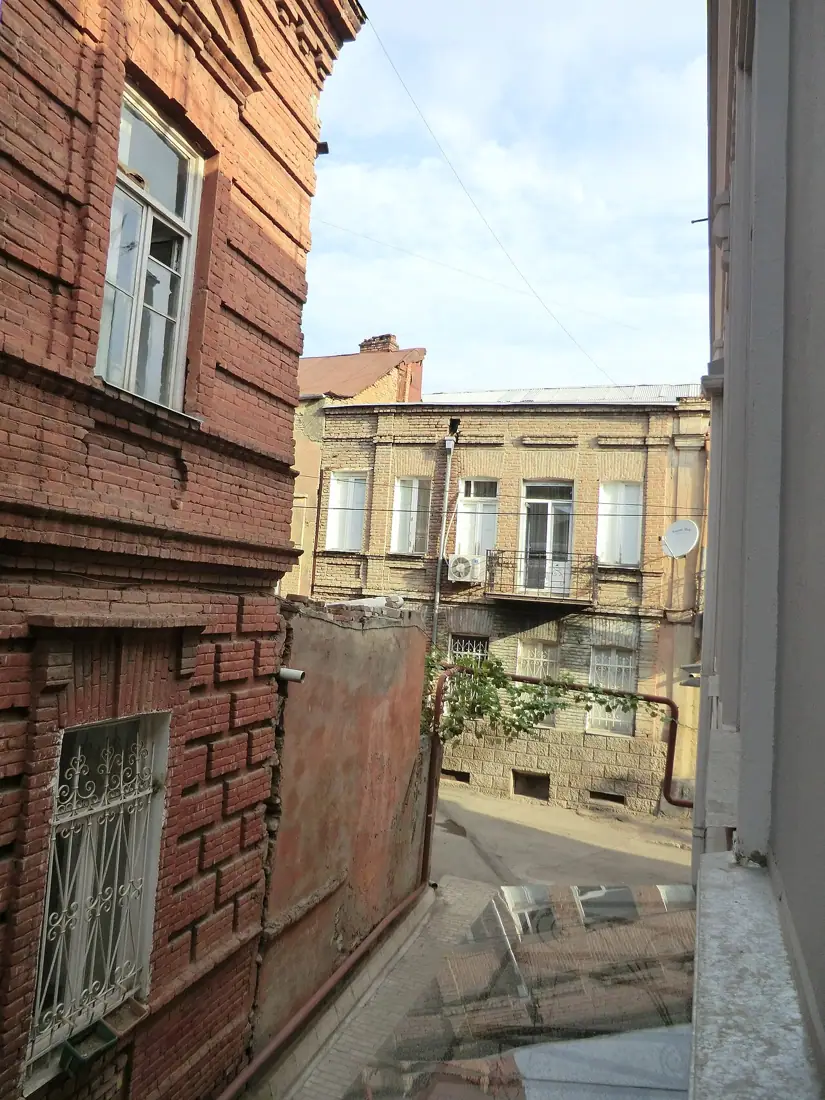 Town
TownBetlemi Quarter and the Stairs
A pedestrian quarter climbing the ridge below Narikala, with stone stairs, two churches and an old fire temple.
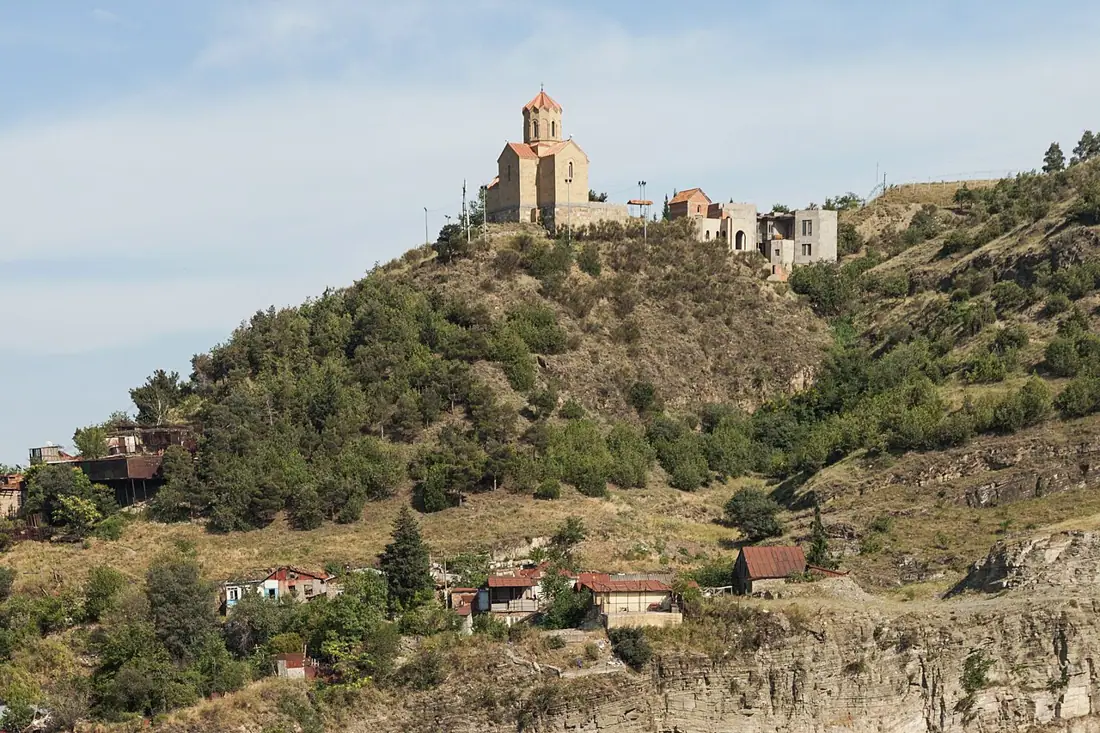 Fortress
Narikala Fortress
A 4th-century citadel on the ridge above the Old Town — the defining silhouette of Tbilisi and its best viewpoint.
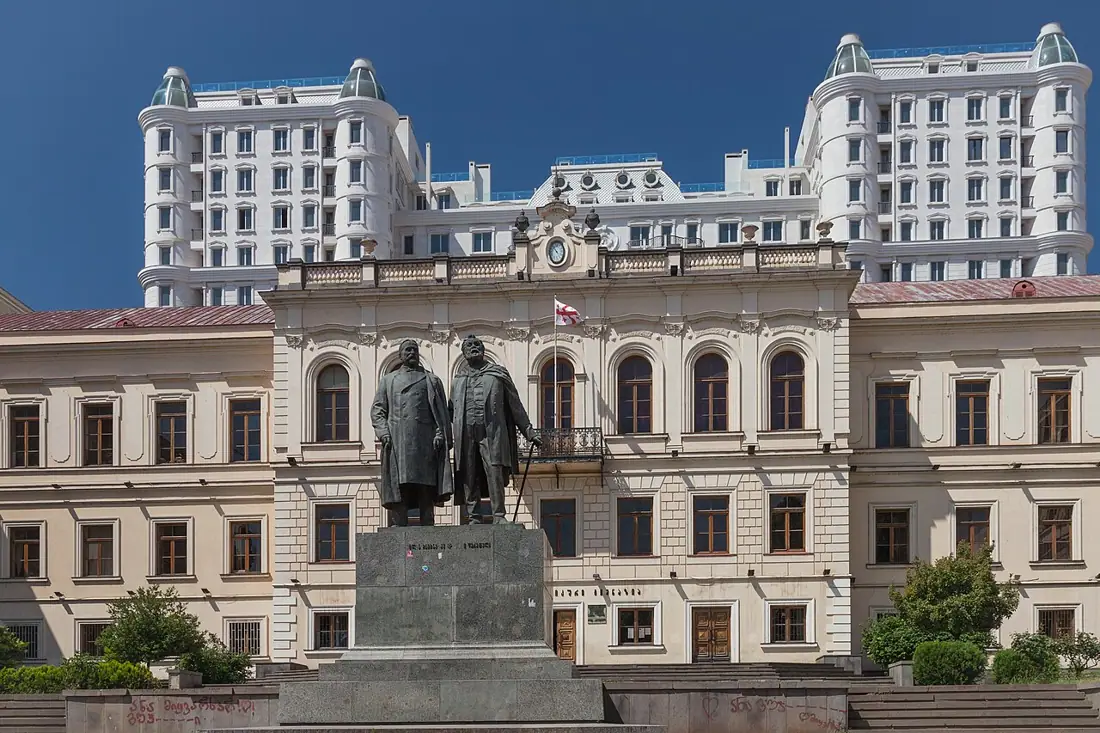 Town
TownRustaveli Avenue
Tbilisi's main street: a kilometre and a half of plane trees, opera, parliament and political memory.