Freedom Square and the Old Parliament
The city's central square, renamed five times, each renaming marking the arrival of a different regime.
- Time needed
- 0.5 h
- From Tbilisi
- 2 km · 0:10
- Road
- Paved
- Car needed
- Economy class
- Season
- All year
- Entry
- free
If Tbilisi has a middle, this is it. The square appeared in the early nineteenth century outside the old city walls, and it has been renamed five times since: Yerevan Square, then Paliashvili, then Beria, then Lenin, and finally Freedom.
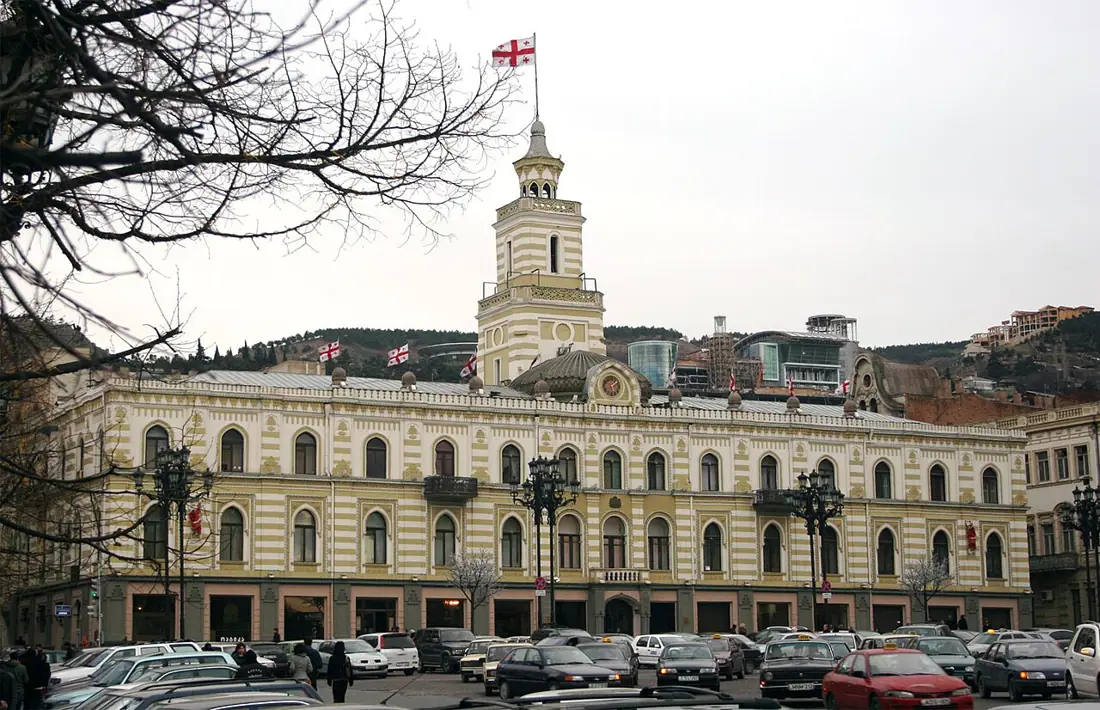
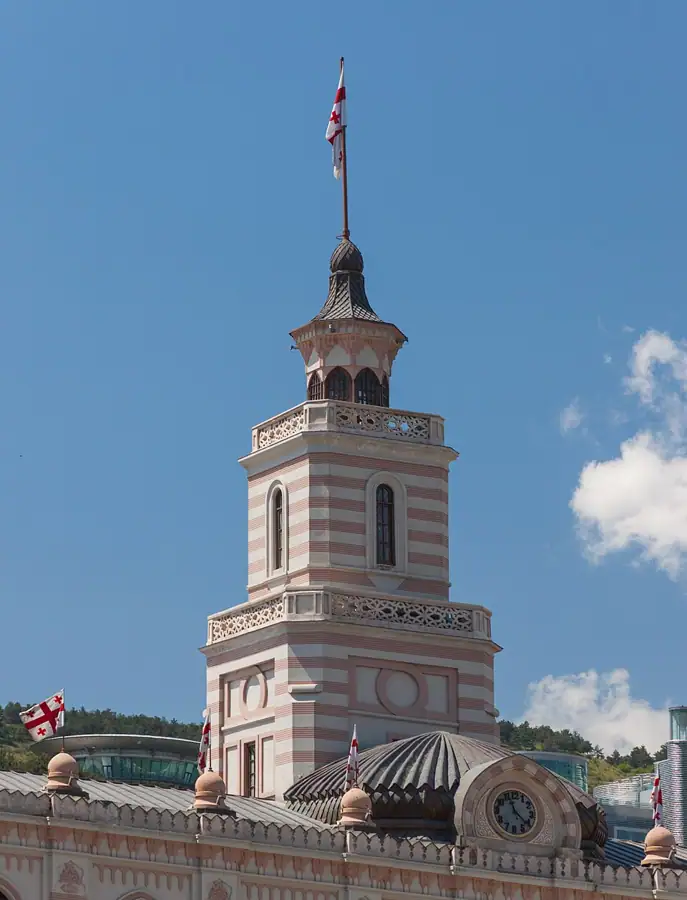
At the centre, since 2006, stands a gilded St George spearing the dragon by Zurab Tsereteli, on a column some thirty-five metres high. Before it there was a statue of Lenin, taken down overnight in August 1990. On the south side is City Hall, an 1870s Moorish-style building with a clock tower — one of the most recognisable facades in the city, and still the mayor's office.
The square also carries one very specific piece of history. On 26 June 1907 Bolsheviks led by Kamo, with Stalin somewhere in the planning, ambushed a bank convoy here with bombs and gunfire; dozens of people were killed and the money went to fund the party. The mass protests of 1989, of 2003, and of most years since have crossed the same paving.
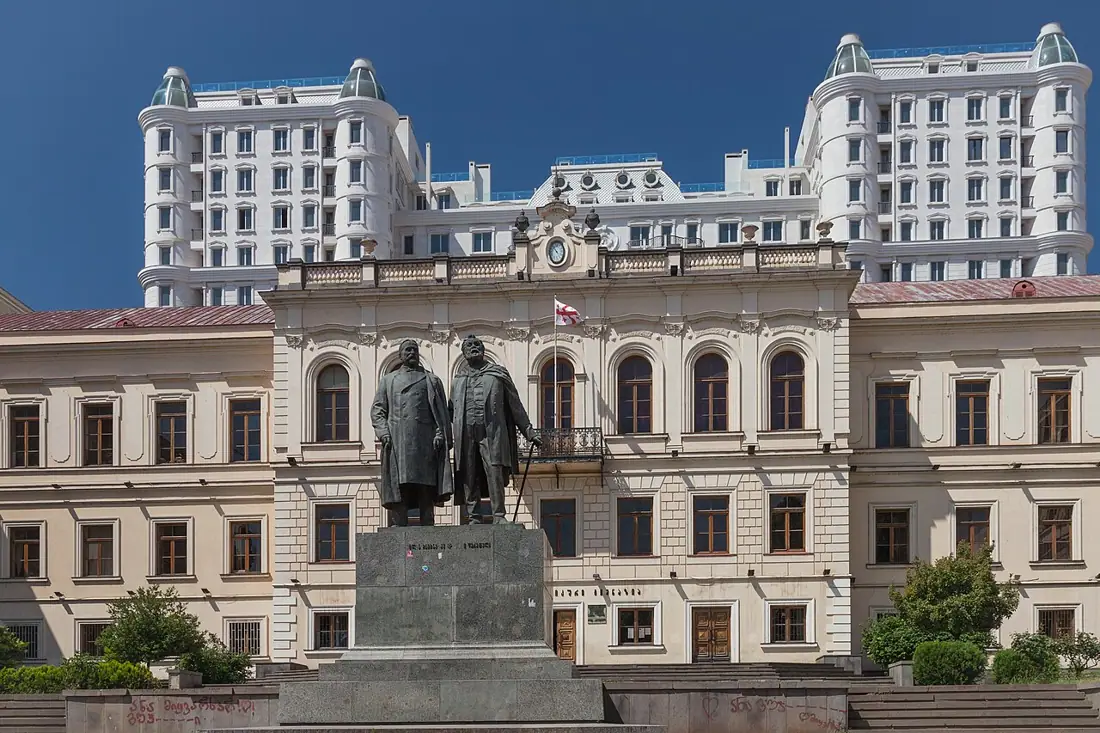
Walking up towards Rustaveli, the Old Parliament appears on the right: a long colonnade above a wide flight of steps. This was the Supreme Soviet, then the chamber where independence was declared in 1991, and the building the Rose Revolution walked into in November 2003. Parliament was moved to Kutaisi in 2012 and later partly moved back, so the building is in use and not open to visitors — you look at it from the pavement.
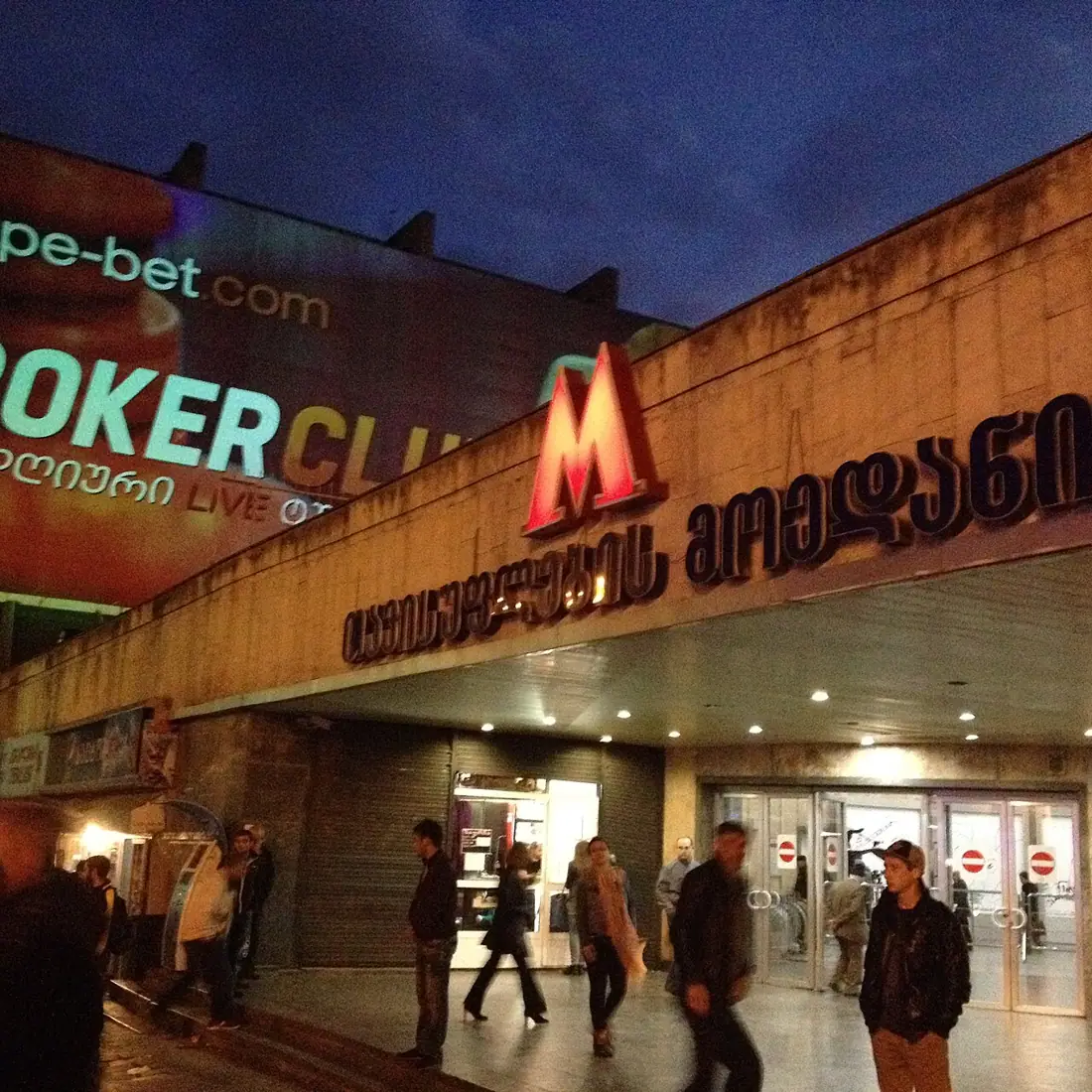
The square itself is a place you pass through rather than linger in: a traffic knot where the old town, the avenue and the metro all meet.
One more recent episode belongs here: in May 2005, during a speech by the American president George W. Bush, a live grenade was thrown from the crowd towards the platform and failed to detonate. On an ordinary day the square's one real quality is its openness: after the narrow lanes of the old town, this is the only place in the centre where you see a wide piece of sky.
Gallery
Practical advice
Half an hour covers it — this is a junction, not a destination. There are no surface crossings; every side is reached through pedestrian tunnels lined with small shops and currency changers, and the stairs are awkward with a pushchair or wheelchair. Liberty Square metro station, a tourist information point and plenty of cash machines are all here. Toilets are in the underpass and in nearby cafes. In summer the square offers almost no shade, so cross it early or late.
How to get there from Tbilisi
Every main avenue in Tbilisi meets here, so driving to the square is easy and stopping at it is not. There is no parking on the square itself. Use the paid underground car park beneath the shopping centre, entered from the Fred Bern side, or the metered bays on Pushkin and Lermontov streets. The city's paid zones require a permit; hire cars usually carry one, but confirm with the rental company. Fuel is available about a kilometre away along Baratashvili. An economy car is enough, and a small one parks far more easily here.
Click a marker for details. Coloured lines are ready-made road trips.
Nearby places
 Town
TownRustaveli Avenue
Tbilisi's main street: a kilometre and a half of plane trees, opera, parliament and political memory.
 Town
TownSololaki and its Art Nouveau Entrances
A nineteenth-century merchants' district under the ridge, where the best of it is inside the stairwells.
 Museum
Georgian National Museum
The flagship museum on Rustaveli Avenue — Colchian gold, the Dmanisi hominids and the Soviet Occupation hall.
Dry Bridge Market
An open-air flea market where two centuries of the country's household objects are laid out on folding tables.