Betlemi Quarter and the Stairs
A pedestrian quarter climbing the ridge below Narikala, with stone stairs, two churches and an old fire temple.
- Time needed
- 1.5 h
- From Tbilisi
- 3 km · 0:15
- Road
- Paved
- Car needed
- Economy class
- Season
- All year
- Entry
- free
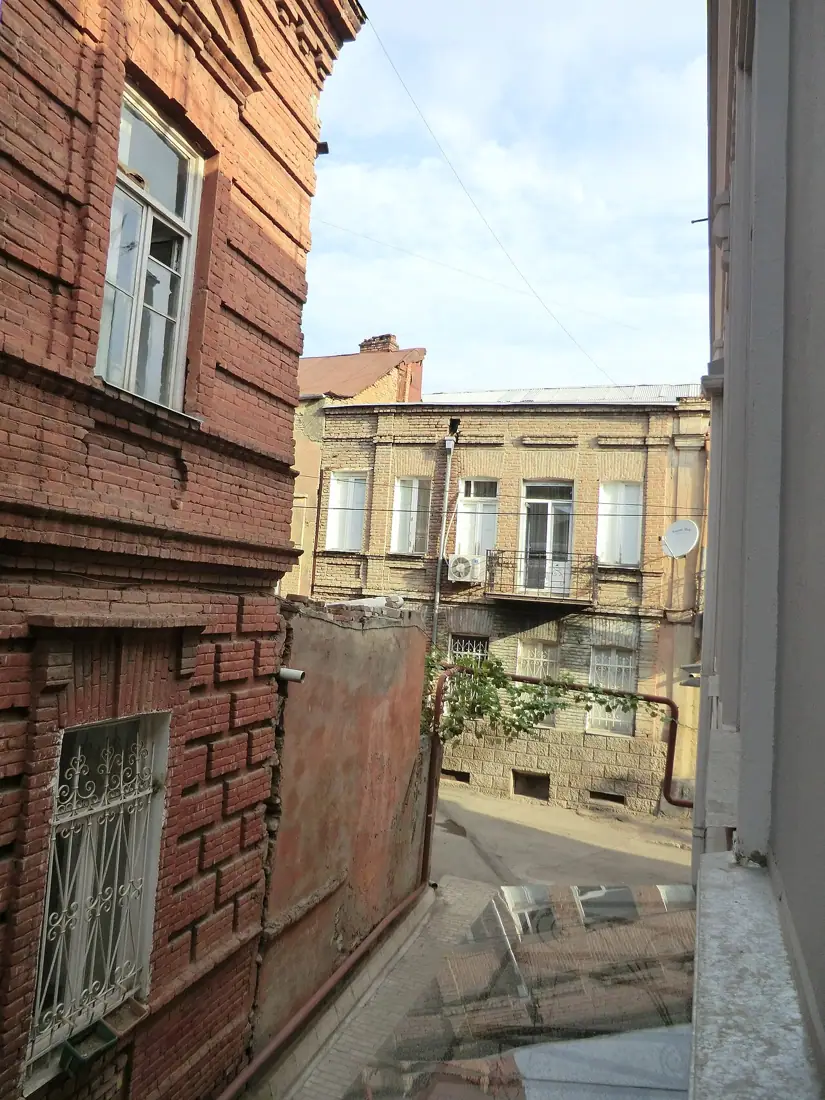
Betlemi is the part of old Tbilisi that cars cannot reach. The quarter — also called Kldisubani, the cliff district — is built on the steep slope below Narikala, and its main thoroughfare is in fact a long flight of stone steps climbing from Asatiani Street.
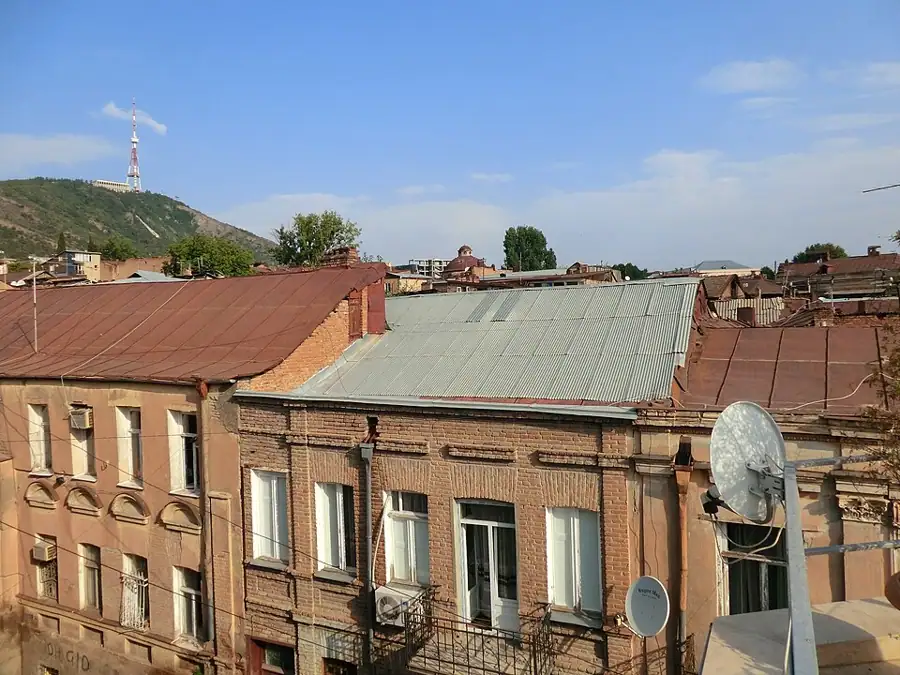
As you climb, the sound of the city changes in stages: first the traffic disappears, then the tourist cafes, and what is left is balconies, washing lines and cats. Some houses have been restored; others are still held up by timber props. This is a lived-in neighbourhood, not an open-air museum, and it has the untidiness that goes with that.
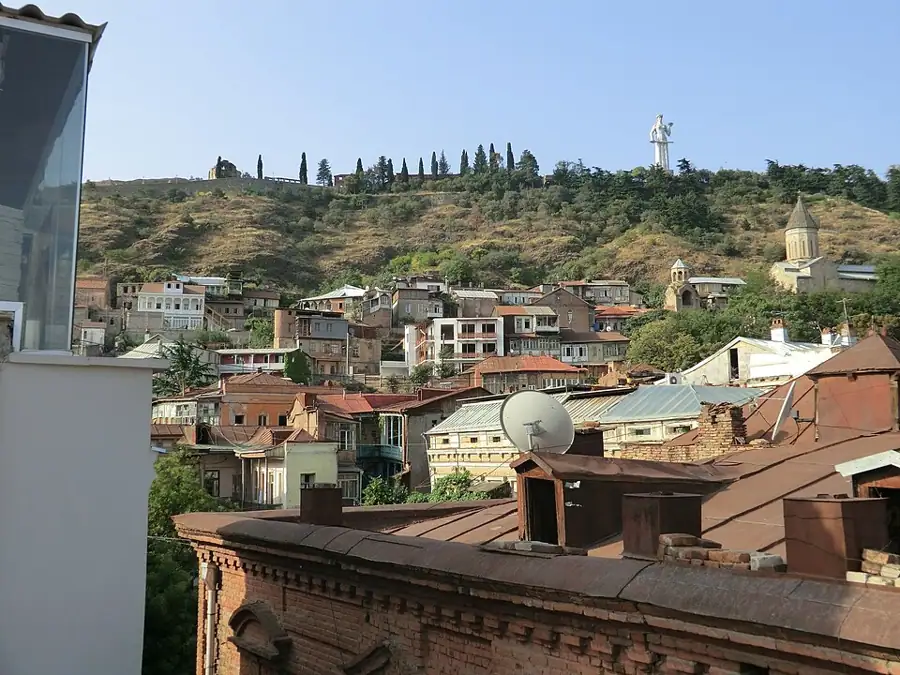
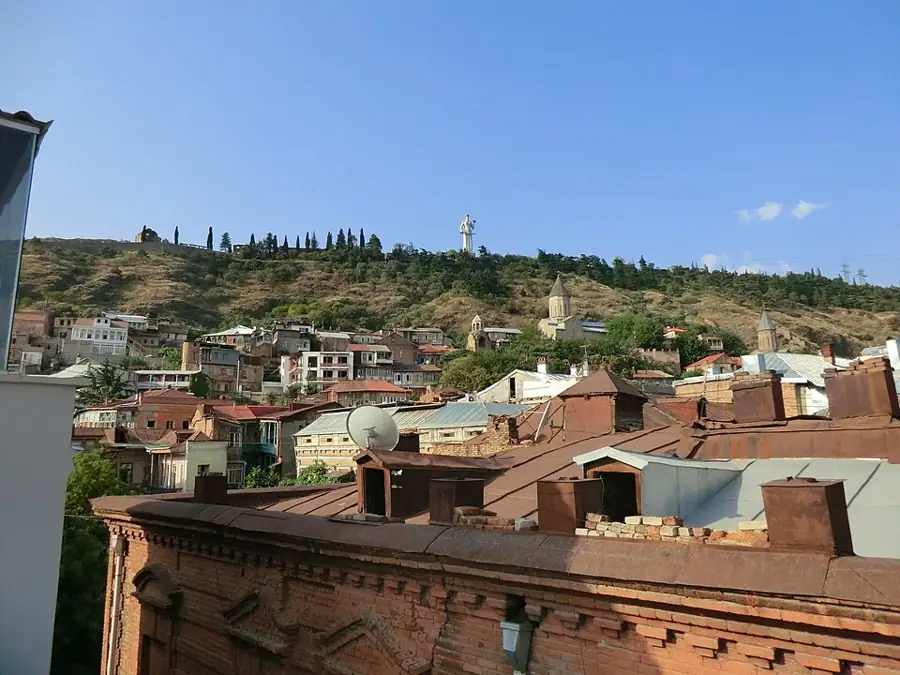
At the top of the steps stand two churches, Upper and Lower Betlemi. Both were originally Armenian churches and both were transferred to the Georgian Orthodox Church in the 1990s. In front of Upper Betlemi is a small terrace — probably the best free view in the city over the roofs of the old town towards Metekhi and Sameba.
Nearby, on Gomi Street, stands the Ateshgah, a brick structure understood to be a Zoroastrian fire temple. Its date is disputed: the core may go back to late antiquity, while what you see is considerably later rebuilding. It is one of very few such buildings left anywhere in the region. It is normally locked, and visitors look at it from the yard outside.
From Betlemi a path continues straight up to the walls of Narikala and to the upper gate of the Botanical Garden.
Above Betlemi, on the crest of the Sololaki ridge, stands Kartlis Deda, the Mother of Georgia: a twenty-metre aluminium figure put up in 1958 for the city's fifteen-hundredth anniversary, by the sculptor Elguja Amashukeli. She holds a bowl of wine in one hand and a sword in the other — wine for a guest, steel for an enemy. From Betlemi the path to her takes about twenty minutes and runs along the walls of Narikala, which makes the obvious way to finish the climb.
Gallery
Practical advice
Allow about an hour and a half with stops. This is a genuine climb: the stairs are long, the treads uneven and handrails intermittent, so weigh it up if knees or heart are an issue. In summer do the ascent early or late and carry water; there is very little shade. It is impossible with a wheelchair and awkward with a pushchair. People live here — walking into courtyards or photographing through windows is not welcome. Toilets and cafes are only down in Abanotubani.
How to get there from Tbilisi
You cannot drive up into Betlemi: parts of the street are stairs and the rest is too narrow for two cars to pass. Leave the car below. The easiest options are the paid parking at Gorgasali Square or the car park in Rike Park across the river, twelve to fifteen minutes' walk away over the bridge. Coming from the Sololaki side there are metered bays on Lado Asatiani Street, though they are almost always taken during the day. A good alternative: take the cable car up to Narikala and walk down the Betlemi stairs, which removes the climb entirely.
Click a marker for details. Coloured lines are ready-made road trips.
Nearby places
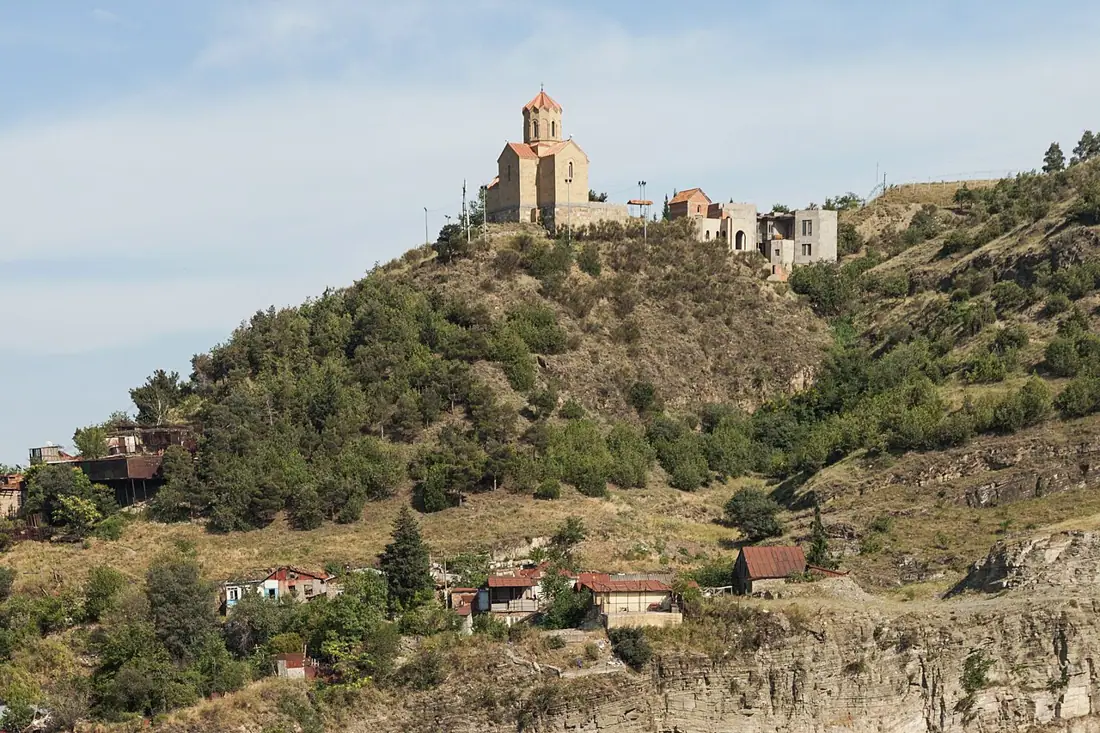 Fortress
Narikala Fortress
A 4th-century citadel on the ridge above the Old Town — the defining silhouette of Tbilisi and its best viewpoint.
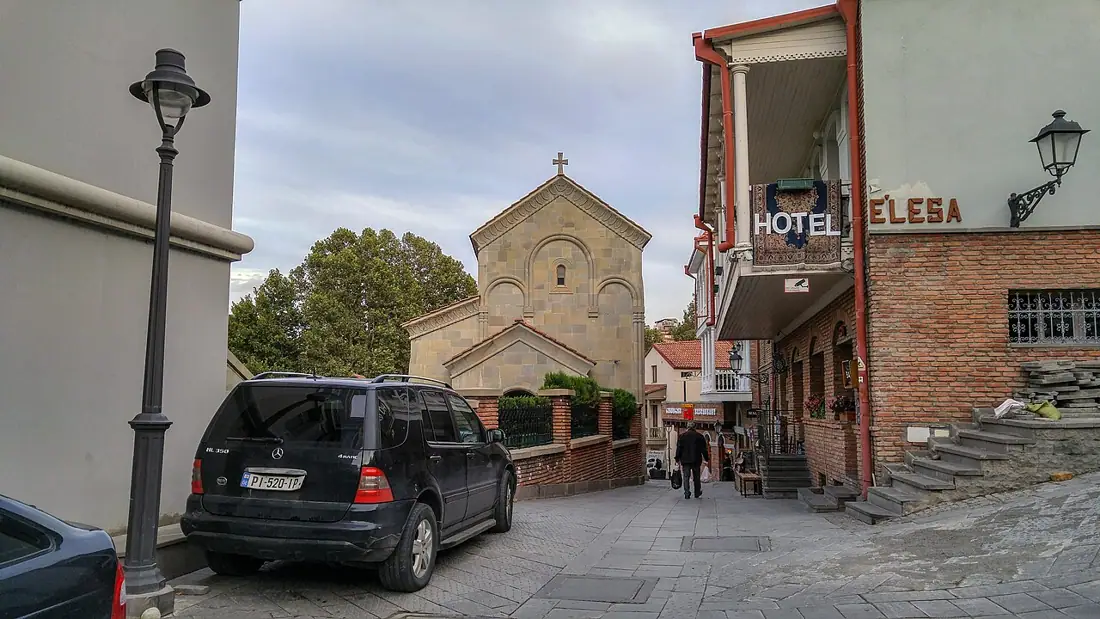 Spa resort
Abanotubani and the Sulphur Baths
The birthplace of Tbilisi — brick-domed sulphur bathhouses in the heart of the Old Town.
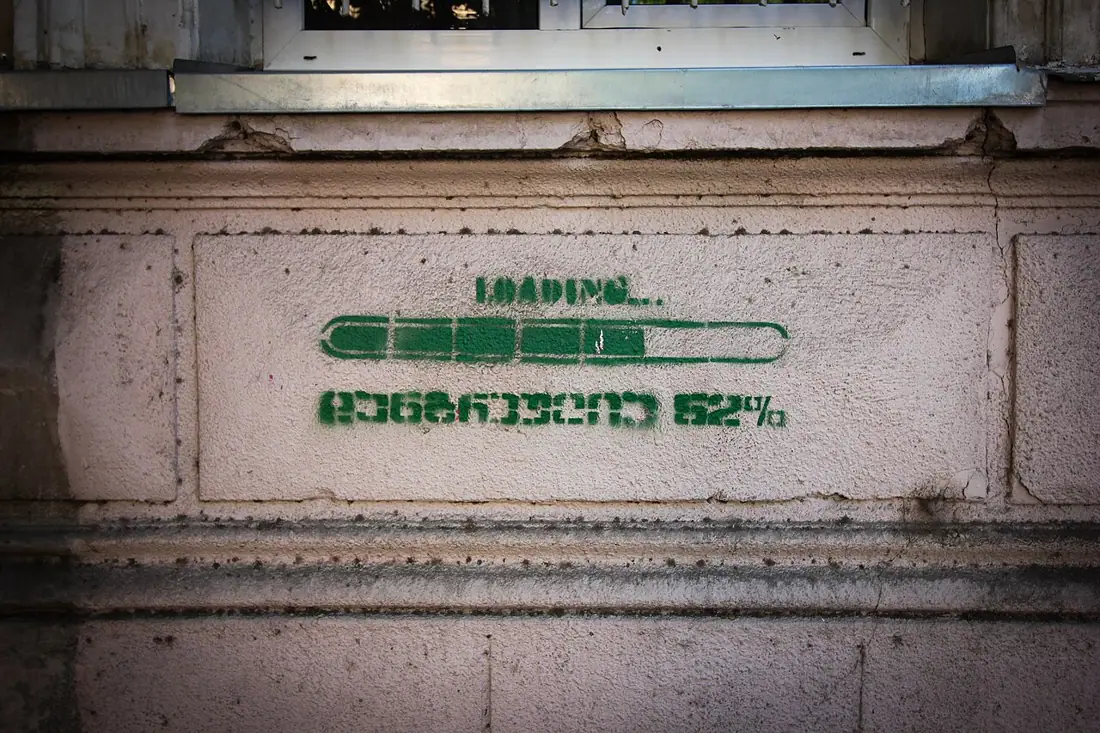 Town
TownSololaki and its Art Nouveau Entrances
A nineteenth-century merchants' district under the ridge, where the best of it is inside the stairwells.
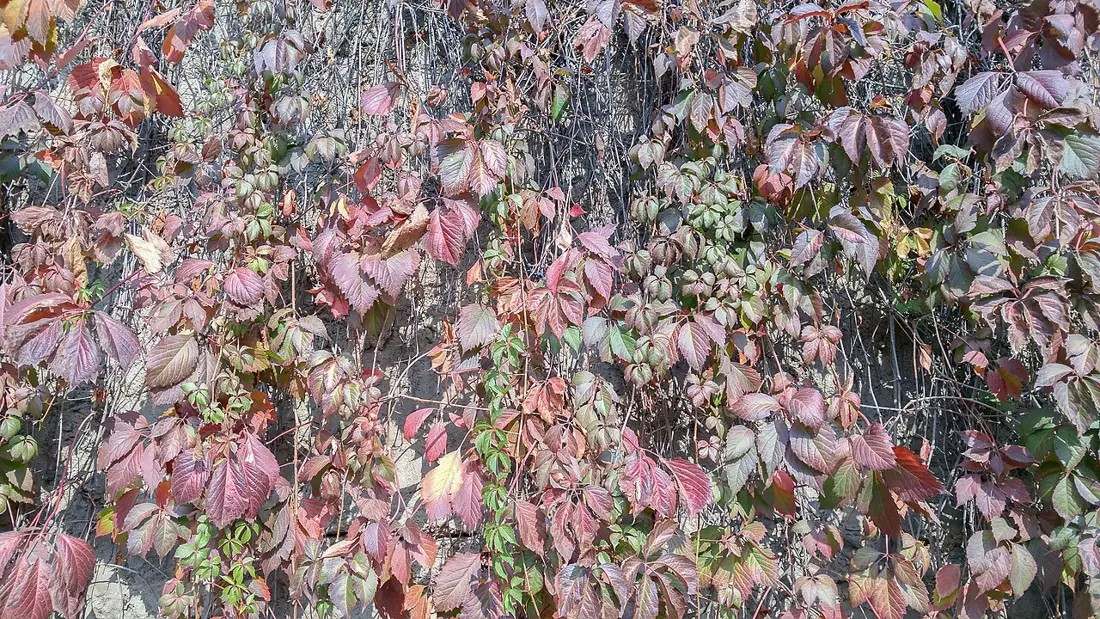 Nature
Tbilisi Botanical Garden
A garden in the ravine behind Narikala, ending at a waterfall — complete silence ten minutes from the centre.