Narikala Fortress
A 4th-century citadel on the ridge above the Old Town — the defining silhouette of Tbilisi and its best viewpoint.
- Time needed
- 2 h
- From Tbilisi
- 3 km · 0:15
- Road
- Paved
- Car needed
- Economy class
- Season
- All year
- Entry
- free
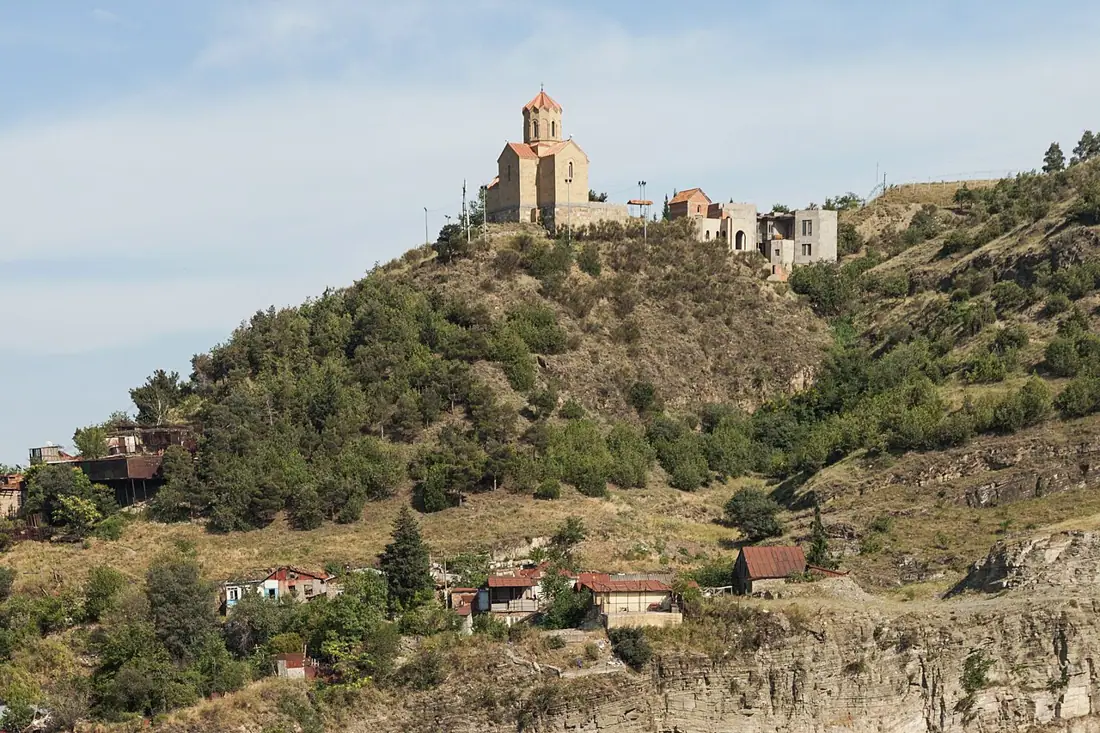
Narikala is the visual anchor of Tbilisi. Its stone walls run along the Sololaki ridge, visible from almost every corner of the city and floodlit after dark. The first citadel here dates to the 4th century, when a Persian stronghold guarded the crossing of the Mtkvari. Arabs, Seljuks, Mongols and Persians each added a layer; what stands today is largely 16th and 17th century masonry on much older foundations.
In 1827 lightning struck a powder magazine inside the walls and the explosion destroyed a large part of the fortress. That is why Narikala is a half-ruin rather than a restored castle — and that unfinished, weathered quality is exactly what makes it photogenic.
What you actually see up there:
- Two tiers of curtain wall with towers and walkable ledges, opening a full panorama over the city
- St Nicholas Church in the inner courtyard, rebuilt in the 1990s on medieval foundations
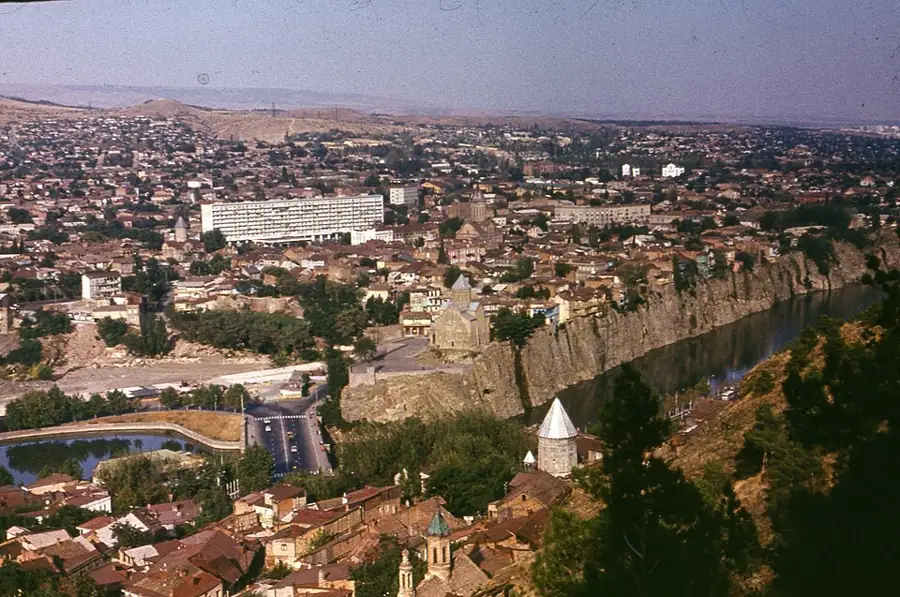
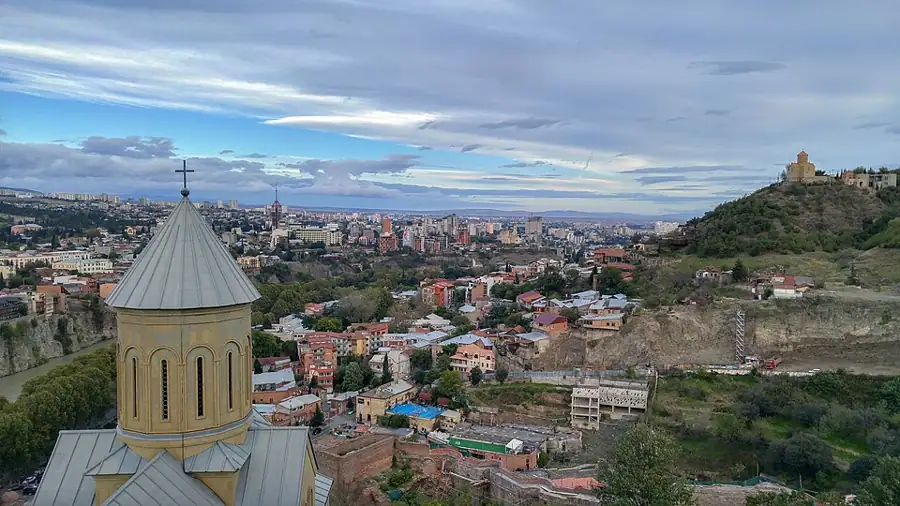
- A single sweeping view that takes in Abanotubani, the river bridges, Metekhi and the Sameba cathedral
- The upper gate of the Botanical Garden on the far slope, with a path down to its waterfall
- The aluminium Kartlis Deda (Mother of Georgia) statue, a twenty-minute ridge walk away
There is no ticket office and no closing time. Narikala is an open hillside where sitting on a warm stone and watching the roofs below counts as a full programme.
Gallery
Practical advice
Come before 9 in the morning or in the hour before sunset — at midday the stone radiates heat and there is almost no shade. A good pattern is up by cable car from Rike Park and down on foot into Abanotubani, which gives you two completely different perspectives. Wear shoes with grip: the worn steps and wall tops are genuinely slippery when wet. Railings are missing in places, so keep small children close. Toilets and cafés are down in Abanotubani.
How to get there from Tbilisi
The fortress is ten to fifteen minutes from the city centre by car, but there is effectively no parking at the walls themselves. Two sensible options: leave the car near Gorgasali Square or in the paid lot in Abanotubani and walk up the cobbled lanes, or park at Rike Park and take the cable car across the river. The third approach, the narrow road over the Sololaki ridge above the Botanical Garden, is steep and clogged with tour buses in summer. Any car will do — you are inside the city, so fuel and road surface are non-issues.
Click a marker for details. Coloured lines are ready-made road trips.
Nearby places
 Spa resort
Abanotubani and the Sulphur Baths
The birthplace of Tbilisi — brick-domed sulphur bathhouses in the heart of the Old Town.
 Museum
Georgian National Museum
The flagship museum on Rustaveli Avenue — Colchian gold, the Dmanisi hominids and the Soviet Occupation hall.
 Monastery
Holy Trinity Cathedral (Sameba)
The vast Sameba cathedral on Elia Hill — Georgia's largest church and the city's second landmark after Narikala.