Rustaveli Avenue
Tbilisi's main street: a kilometre and a half of plane trees, opera, parliament and political memory.
- Time needed
- 2 h
- From Tbilisi
- 2 km · 0:10
- Road
- Paved
- Car needed
- Economy class
- Season
- All year
- Entry
- free
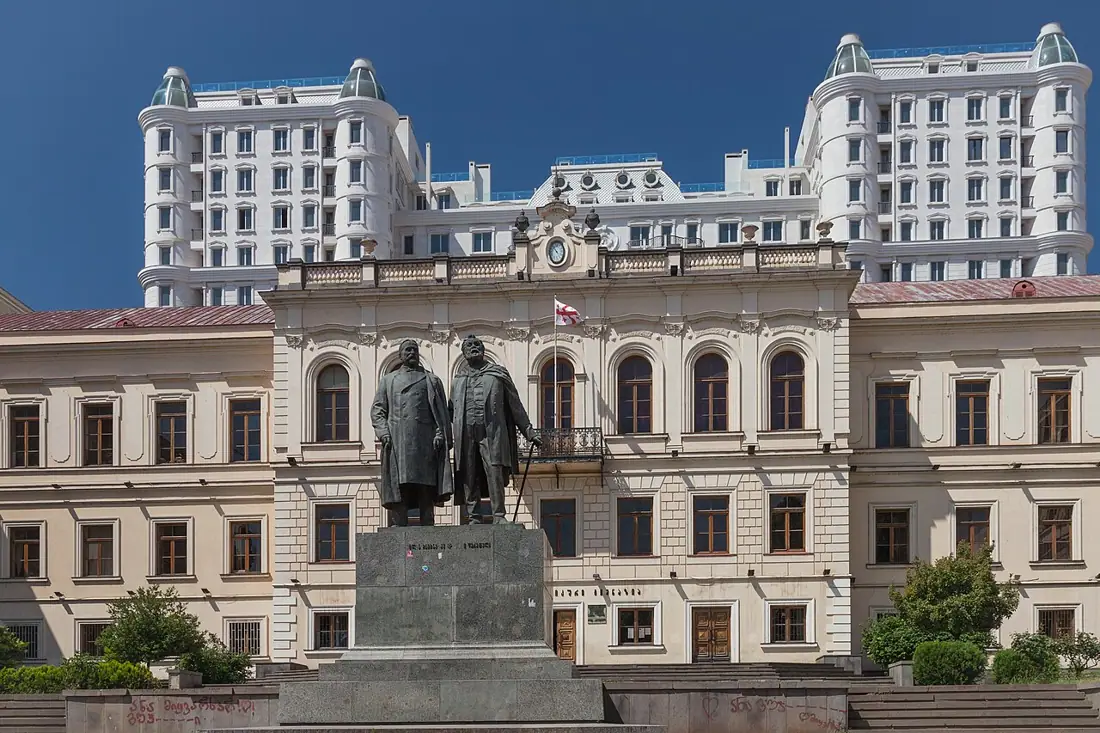
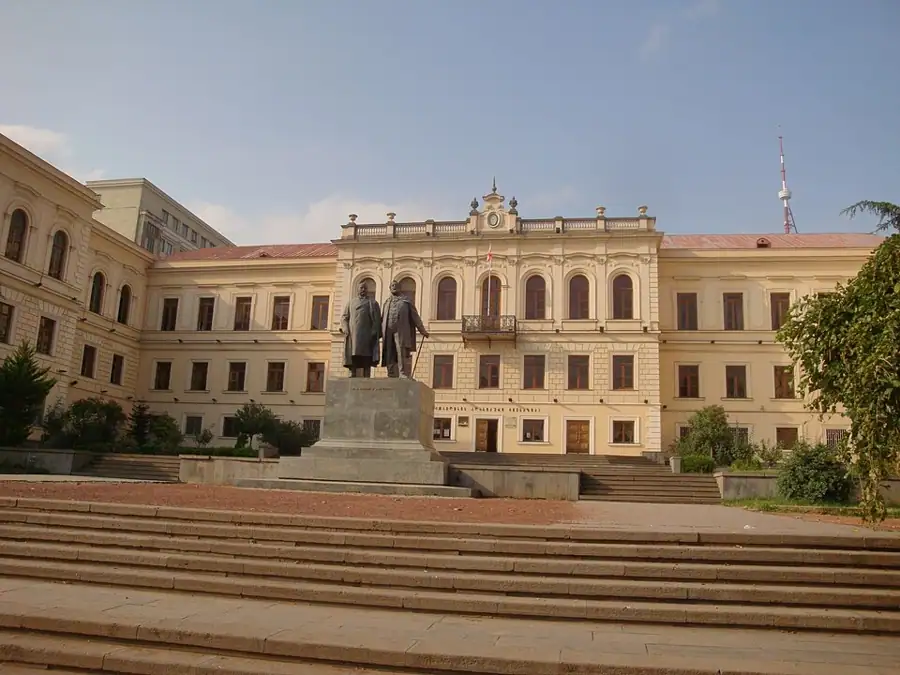
Rustaveli Avenue is the spine of the modern city. It was laid out in the 1850s along the road that ran out of the old town, and until 1918 it carried the name of a Russian viceroy. From Freedom Square to Rustaveli Square is about 1.5 km, wide enough for two rows of plane trees, and nearly every building on it was put up to impress somebody.
Walking up from Freedom Square you pass the Georgian National Museum, then the Parliament building with its long colonnade, finished in the early 1950s. The pavement in front of it is the most politically charged ground in the country: on 9 April 1989 Soviet troops broke up a peaceful hunger strike here and twenty-one people died, most of them women. A restrained memorial marks the spot, and the railings are still where banners get tied.
A little further stands Kashveti Church of St George, built in white stone between 1904 and 1910, its facade copied from eleventh-century Samtavisi. Inside, the apse was painted in 1947 by Lado Gudiashvili — work that cost him his teaching post and his party card. Opposite is the Rustaveli Theatre, a heavy decorated pile of 1901, and beyond it the Opera and Ballet Theatre, a Moorish-revival building of the 1890s that burned in 1973 and was rebuilt.
The avenue is an easy walk but not a quiet one: it is also the city's busiest through road, and traffic runs hard along both sides. It improves in the evening, when the facades are lit and the plane trees no longer have to do the work of shade. If there is a demonstration the whole avenue closes; in Tbilisi that is a normal event rather than an incident, and it is worth stopping to watch.
One detail that no map shows: the avenue only looks flat. It climbs steadily but very gently from Freedom Square towards Rustaveli Square, which is why walking it in one direction is noticeably easier than in the other. The plane trees were planted in the 1930s, and in July they are the only reason the avenue is walkable at all in the afternoon; without them the pavement on the sunny side is unusable from noon until six.
Gallery
Practical advice
Two hours is enough for the walk if you do not go into a museum. The gradient is gentle and the walking is easy, but most crossings are underpasses with stairs and no lifts. Dress rules apply inside Kashveti. Toilets are easiest to find in cafes and in the shopping centre at the Freedom Square end. Most museums close on Mondays. On protest days traffic stops completely, so a car is useless — plan to be on foot.
How to get there from Tbilisi
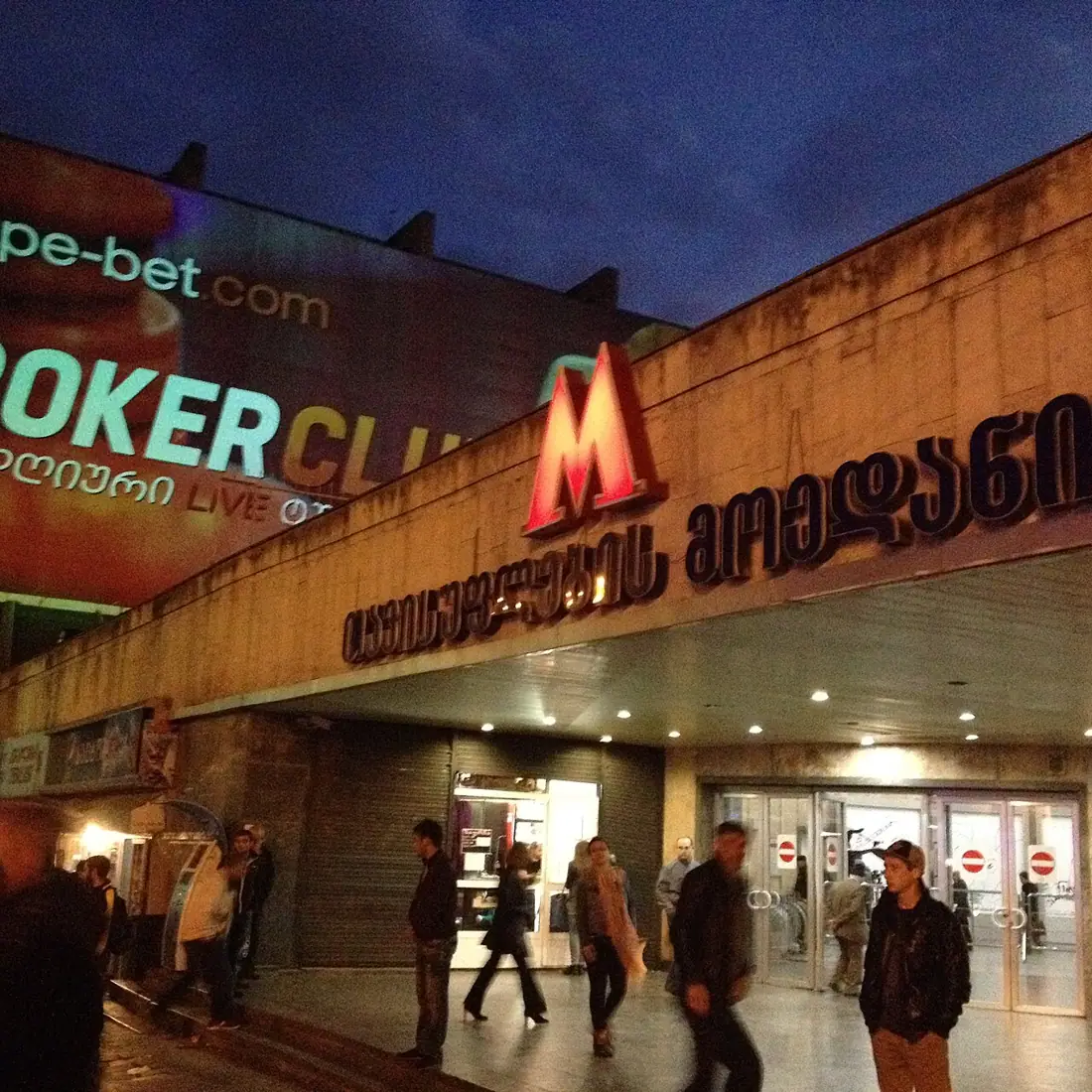
It is 2 km and ten minutes from the centre, but the problem is not the driving, it is parking. Stopping on Rustaveli itself is prohibited and tow trucks do work. The reliable option is the paid underground car park under the shopping centre at Freedom Square, or metered bays on Chitadze and Lermontov streets; the city's paid zones need a permit, which rental cars normally already carry. Better still, leave the car at your hotel and take the metro: Liberty Square and Rustaveli stations sit at either end of the avenue. An economy car is fine.
Click a marker for details. Coloured lines are ready-made road trips.
Nearby places
 Museum
Georgian National Museum
The flagship museum on Rustaveli Avenue — Colchian gold, the Dmanisi hominids and the Soviet Occupation hall.
 Town
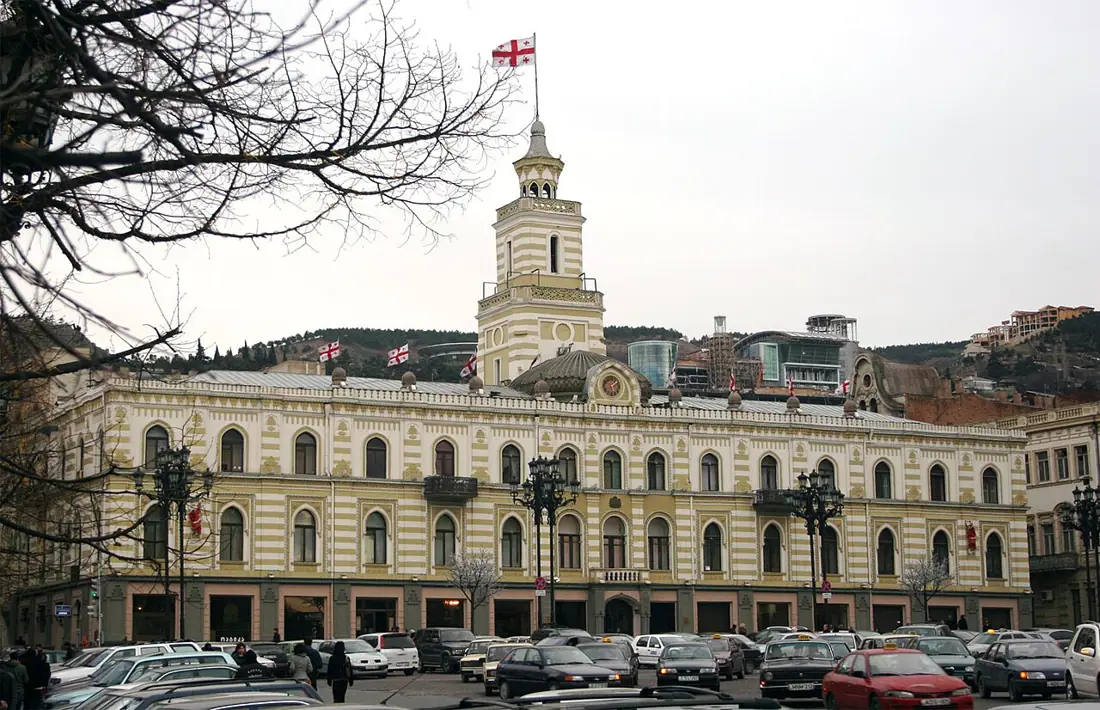
TownFreedom Square and the Old Parliament
The city's central square, renamed five times, each renaming marking the arrival of a different regime.
 Town
TownSololaki and its Art Nouveau Entrances
A nineteenth-century merchants' district under the ridge, where the best of it is inside the stairwells.
 Nature
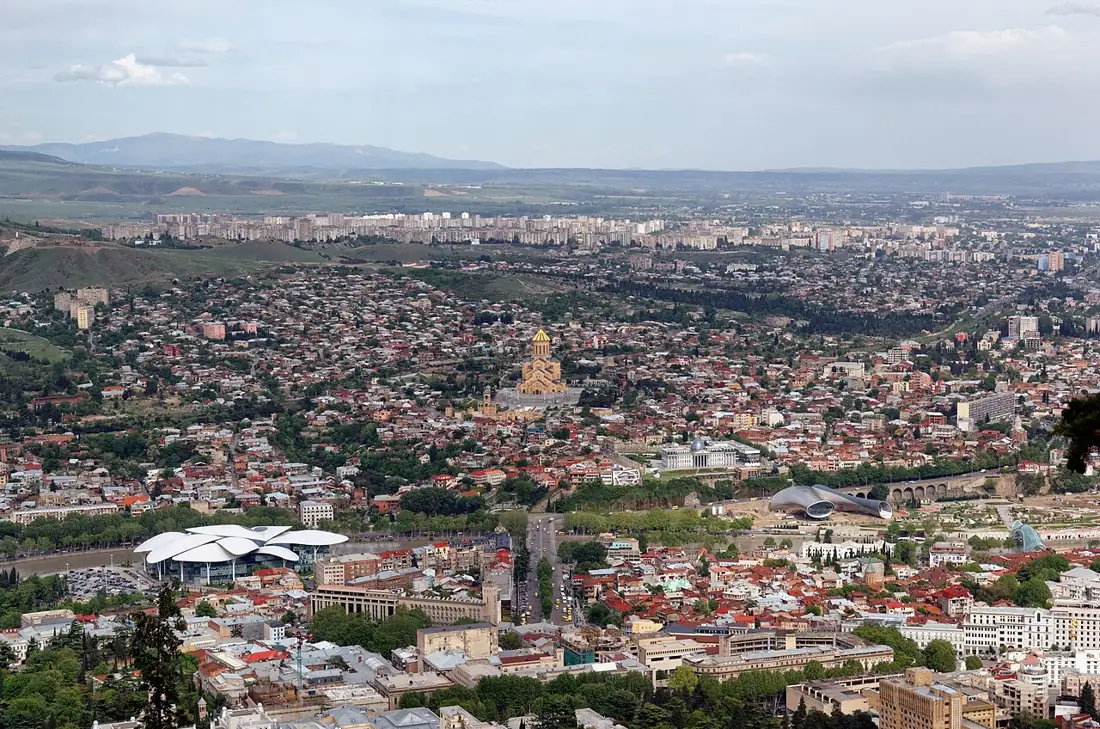
Mtatsminda Park and Funicular
A hilltop amusement park above the city, reached by a 1905 funicular, with the widest panorama of Tbilisi.