Gabriadze Theatre and Clock Tower
A deliberately crooked brick tower with an angel, and the small marionette theatre beside it on Shavteli Street.
- Time needed
- 0.5 h
- From Tbilisi
- 3 km · 0:15
- Road
- Paved
- Car needed
- Economy class
- Season
- All year
- Entry
- free
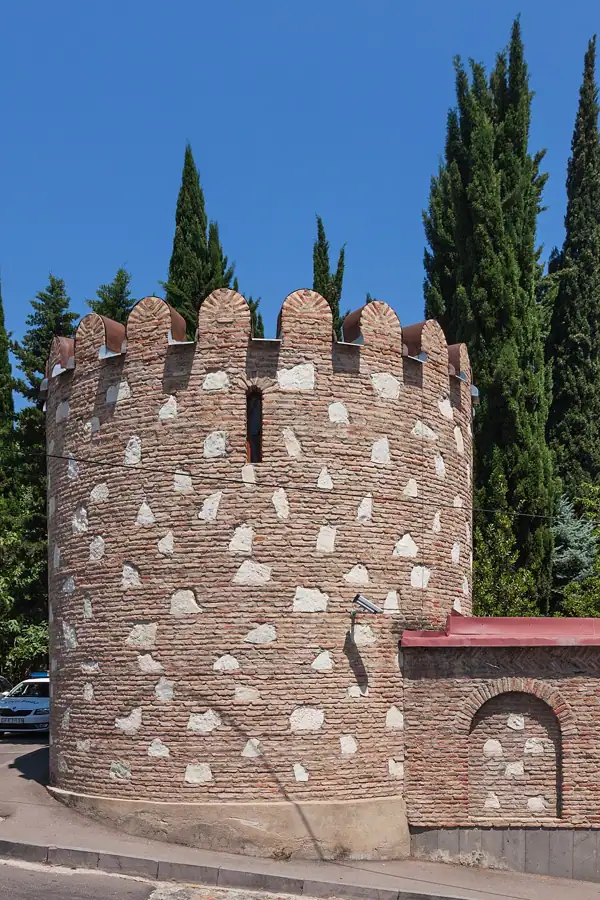
This is the only building in Tbilisi that leans on purpose. The clock tower was built in 2010 by Rezo Gabriadze — painter, screenwriter and founder of the puppet theatre next door — on the narrow line of Shavteli Street. It is assembled from old brick, salvaged tiles and fragments of mosaic, and it looks as though it has stood for centuries, though it is younger than most of the people looking at it.
On the hour a door opens and an angel comes out to strike the bell with a hammer. Twice a day, at noon and at seven in the evening, a small window higher up opens for a fifty-second puppet scene: a whole life from birth to old age, without a word spoken.
The theatre beside it was founded in 1981. The hall is very small, around eighty seats, and the stage is roughly the size of a dining table. It stages Gabriadze's own plays — The Battle of Stalingrad, Ramona, Autumn of My Springtime — which tell stories of war, love and loss with puppets forty centimetres high, and which have toured half the world's festivals. Performances are in Georgian with surtitles. Gabriadze died in 2021; the theatre continues.
The tower is free and visible from the street, so there is always a small crowd in front of it, thickest about five minutes before the hour. There is a cafe in the theatre courtyard, and Anchiskhati Basilica stands a few doors along the same street, so the two fit naturally into one short walk.
Gabriadze was not only a puppeteer. He wrote the screenplays for two of the best-known Soviet comedies, Mimino and Kin-dza-dza!, and his small sculptures are scattered through several cities, including St Petersburg. The theatre cafe and its interiors are his work too: painted walls, odd furniture and details that follow the same logic as the tower — nothing straight, everything deliberate. Even if the hall is sold out, the cafe and the tower together give a clear sense of how his mind worked.
Gallery
Practical advice
Half an hour is enough for the tower if you wait for the puppet scene. Arrive at 11:55 or 18:55 for the full show; at other hours you only get the angel. For a performance, book ahead — the hall is tiny and often sells out weeks in advance, and latecomers are not admitted. The street is narrow and crowded, so keep an eye on your bag. Toilets are in the cafe. Performances usually run about ninety minutes with no interval.
How to get there from Tbilisi
Shavteli Street is narrow and partly pedestrian, so driving into it is pointless. Approach from Baratashvili Bridge or Erekle II Street and leave the car in the lower car park at Rike Park on the other bank: across the Bridge of Peace it is a seven-minute walk, and it is the nearest properly organised parking. The alternative is metered bays on the Baratashvili rise. For an evening performance there is normally space in the Rike car park. An economy car is enough.
Click a marker for details. Coloured lines are ready-made road trips.
Nearby places
 Monastery
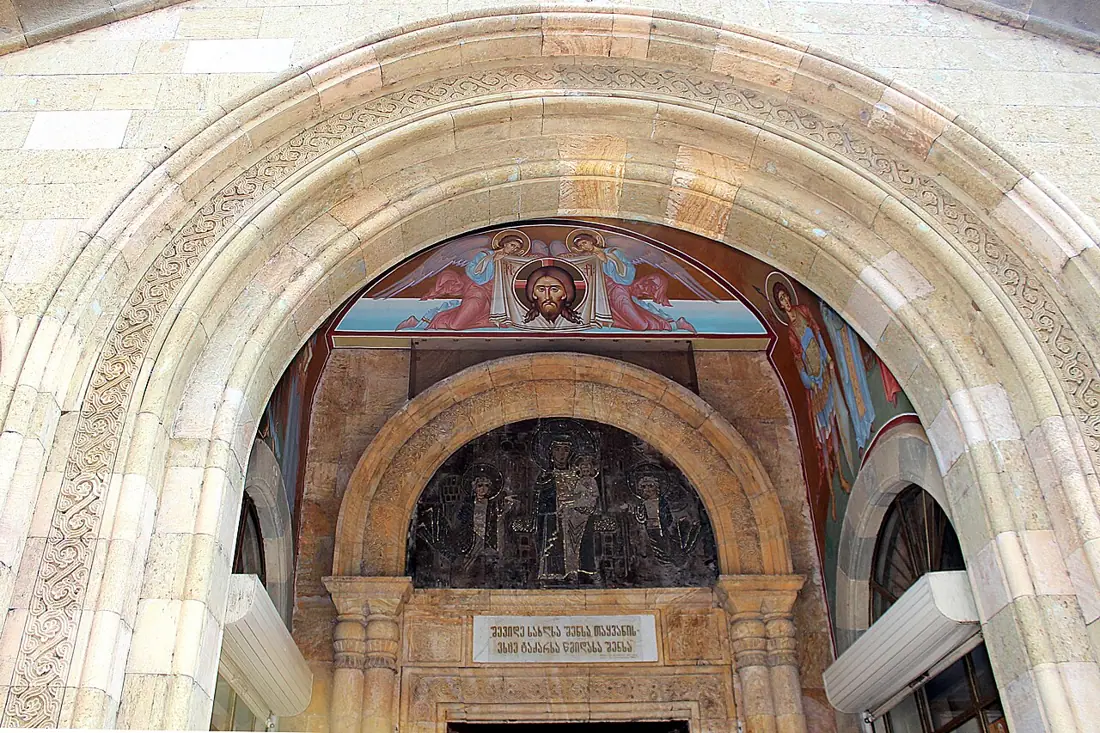
Anchiskhati Basilica
The oldest surviving church in Tbilisi — a sixth-century three-nave basilica on Shavteli Street.
 Nature
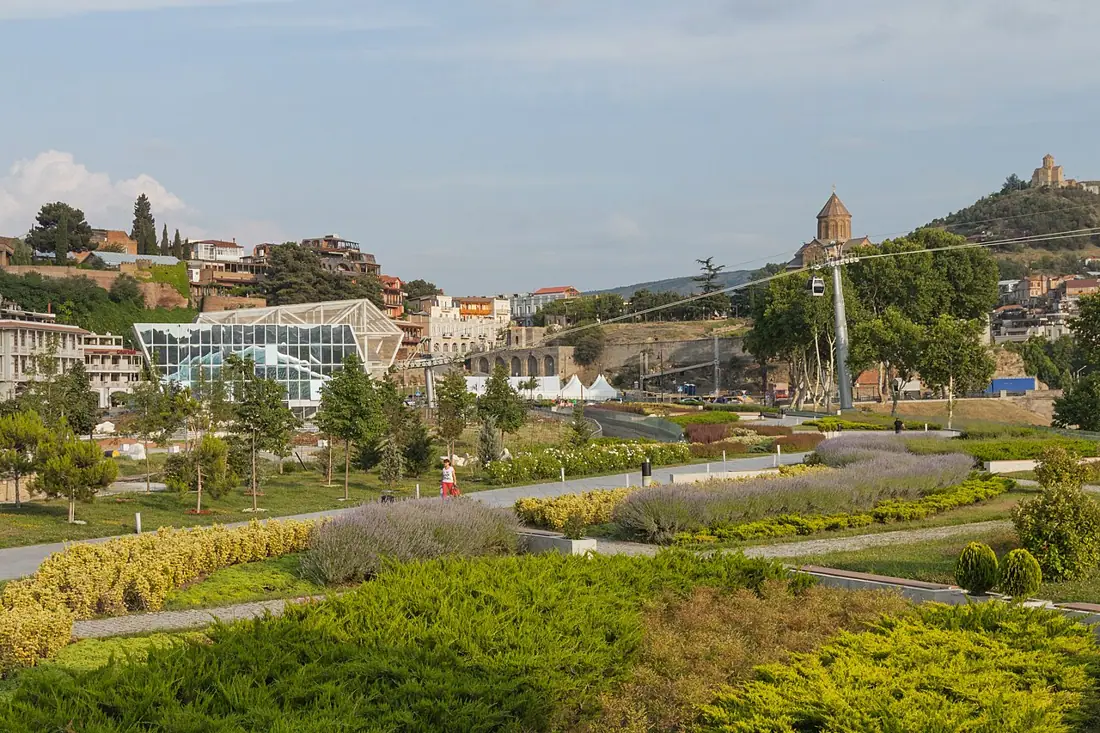
Bridge of Peace and Rike Park
A glass and steel footbridge over the Mtkvari and the park at its far end, with the cable car station.
 Monastery
Sioni Cathedral
The old cathedral on the bank of the Mtkvari, where the grapevine cross of St Nino is kept.
Dry Bridge Market
An open-air flea market where two centuries of the country's household objects are laid out on folding tables.