Bridge of Peace and Rike Park
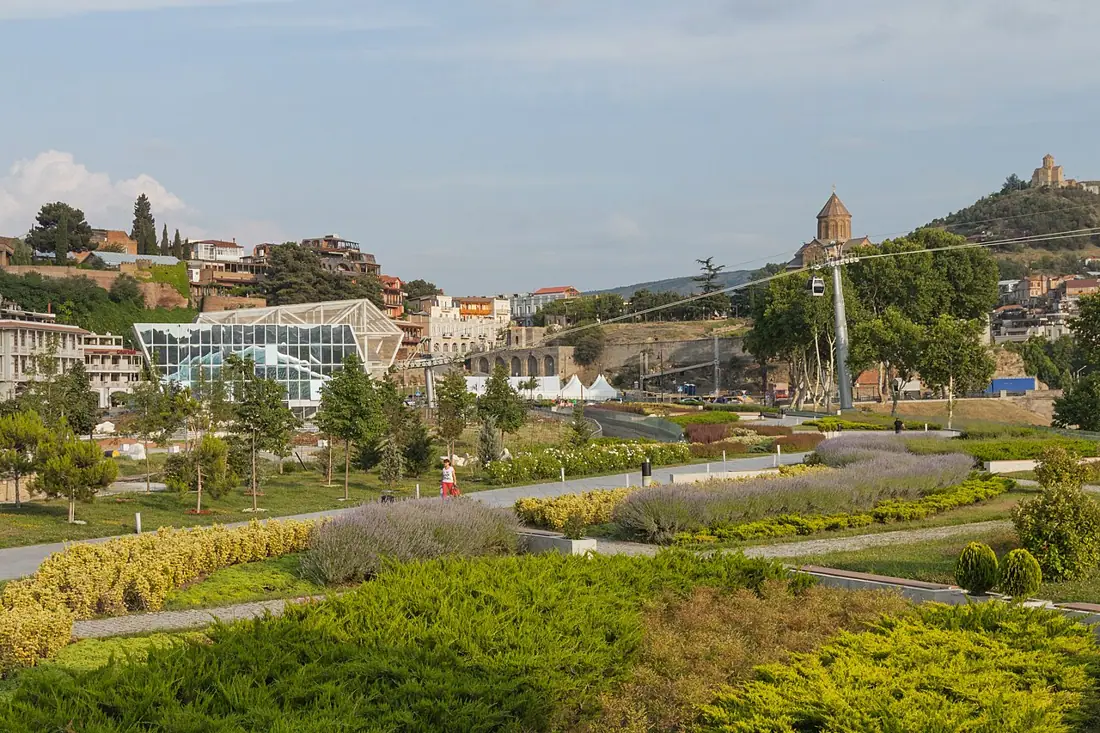
A glass and steel footbridge over the Mtkvari and the park at its far end, with the cable car station.
- Time needed
- 1 h
- From Tbilisi
- 3 km · 0:15
- Road
- Paved
- Car needed
- Economy class
- Season
- All year
- Entry
- free
The Bridge of Peace is the most argued-about modern structure in Tbilisi. It opened in May 2010, designed by the Italian architect Michele De Lucchi: about 150 metres long, a steel frame under a curving glass canopy. At night thousands of LEDs light up, and the programme spells out, in Morse code, the names of the chemical elements that make up the human body — a detail almost nobody notices.
Locals gave it a set of unflattering nicknames within a week. Functionally, though, it works: walking between the old town and the left bank became far easier once it opened.
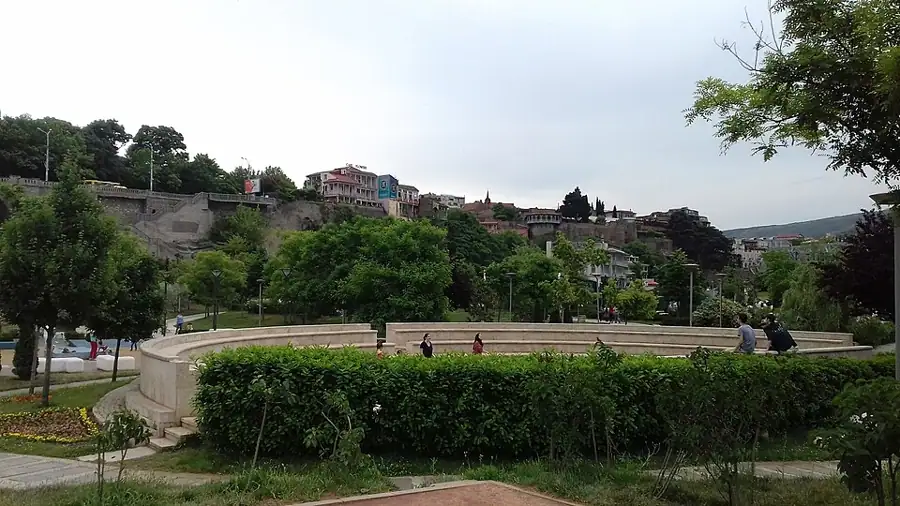
At the far end lies Rike Park, laid out in the same years on what had been an industrial strip of riverbank. It contains:
-
the lower station of the cable car, which lifts you to Narikala in two or three minutes
-
a musical fountain and an oversized chessboard
-
two enormous steel tubes — an unfinished concert and exhibition hall, also by De Lucchi, which never opened and stands empty
-
the domed former presidential palace on the slope above
The park is a short stop rather than a day out: the grass is thin and there is little shade. Its value is logistical, since the bridge, the cable car, the car park and the riverside walks on both banks all converge here. In the evening, when the lighting comes on and the Metekhi cliff is floodlit, it is one of the best places to stand in the city.
The bridge is not a stand-alone object but part of a political programme. Between roughly 2008 and 2012 the government deliberately built modern, transparent structures across Georgia — glass police stations, the mushroom-canopied Public Service Hall on the left bank by Massimiliano Fuksas, this bridge. The message was transparency and a turn westwards. Whether that was good for the city or simply alien to old Tbilisi is still argued in Georgian newspapers, and you can form your own view in ten minutes here.
Gallery
Practical advice
An hour covers the bridge, a loop of the park and the ride up. The cable car takes the ordinary city transport card, which you can buy at the station window; it does not accept coins. The glass deck of the bridge is slippery in rain. In summer the park has almost no shade and is uncomfortable at midday. There are toilets in the park and cafes at both ends. Ramps on both sides make it usable with a pushchair or wheelchair.
How to get there from Tbilisi
From the centre cross to the left bank by Baratashvili or Metekhi bridge and drop into the lower car park at Rike Park. This is the only large, properly organised parking anywhere near the old town: paid, and usually with space in the morning. From it the bridge, the sulphur baths, Metekhi and the cable car are all on foot. Do not try to leave a car in the narrow lanes of Erekle II or Shavteli on the right bank. Fuel is available towards Avlabari. An economy car is entirely sufficient.
Click a marker for details. Coloured lines are ready-made road trips.
Nearby places
 Monastery
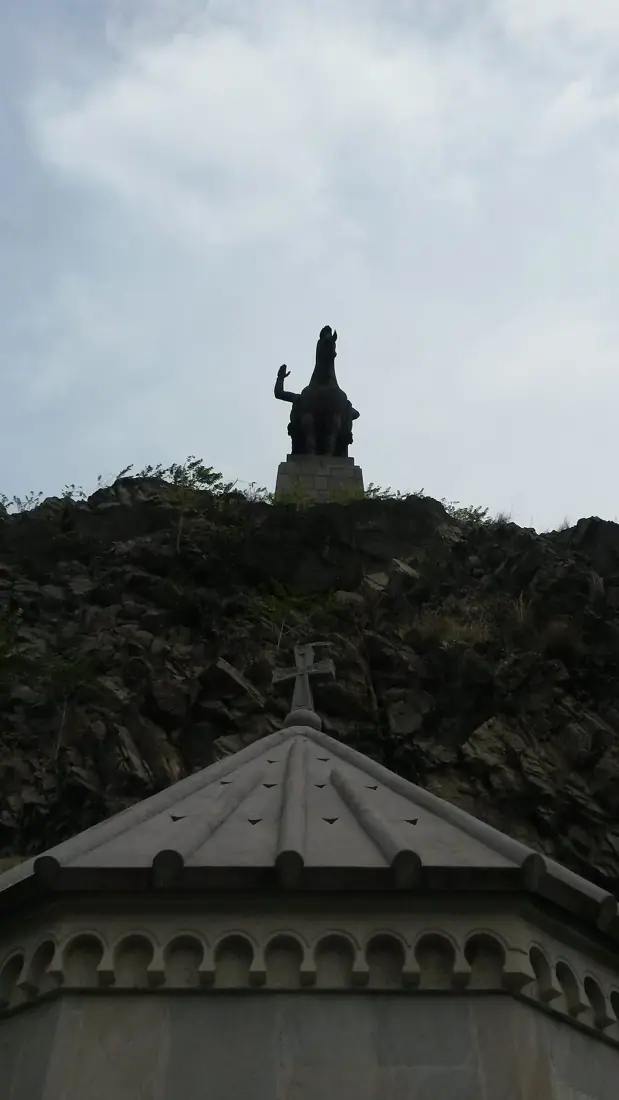
Metekhi Church
A thirteenth-century church on the cliff beside the Gorgasali statue, with the best view of old Tbilisi.
 Fortress
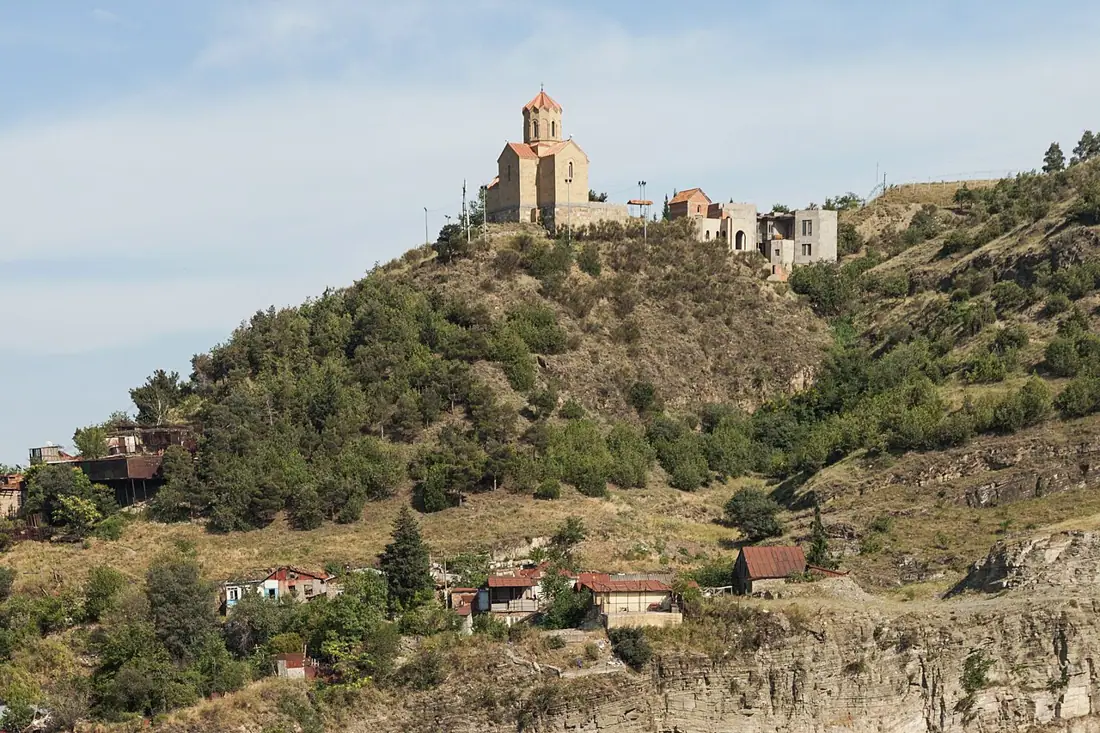
Narikala Fortress
A 4th-century citadel on the ridge above the Old Town — the defining silhouette of Tbilisi and its best viewpoint.
 Monastery
Anchiskhati Basilica
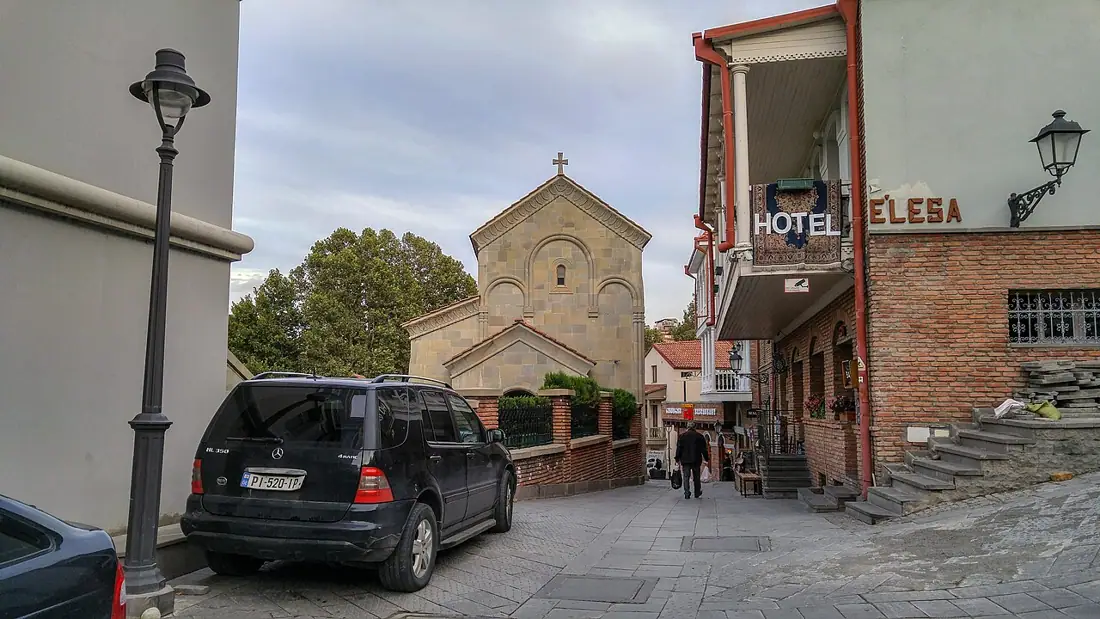
The oldest surviving church in Tbilisi — a sixth-century three-nave basilica on Shavteli Street.
 Spa resort
Abanotubani and the Sulphur Baths
The birthplace of Tbilisi — brick-domed sulphur bathhouses in the heart of the Old Town.