Dry Bridge Market
An open-air flea market where two centuries of the country's household objects are laid out on folding tables.
- Time needed
- 1 h
- From Tbilisi
- 2 km · 0:10
- Road
- Paved
- Car needed
- Economy class
- Season
- All year
- Entry
- free
The Dry Bridge is a bridge with no water under it. It was built in the mid-nineteenth century over a side channel of the Mtkvari that separated Madatov Island; the channel was filled in during the 1930s, leaving the bridge high and dry.
The market appeared in the early 1990s, and its origin is not a cheerful one. After the collapse of the Soviet Union, with wages and pensions simply gone, people came here to sell the contents of their flats. What is now a tourist attraction began as a market of last resort, and a certain amount of what is on the tables still comes from someone's family cupboard.
On offer today:
-
Soviet medals, badges, watches and cameras
-
porcelain, silverware, samovars, old banknotes and coins
-
Georgian cloisonné enamel jewellery, daggers, carpets
-
vinyl records, old books, and family photographs sold by strangers
Beyond the bridge, in Dedaena Park, painters sell canvases, and below there is a row of furniture and woodwork.
Two practical truths. First, a large share of the "antiques" are reproductions, particularly the daggers, the orders and the icons; buy because you like the object, not because you believe the story. Second, taking a genuinely old item out of Georgia requires a permit from the Ministry of Culture for anything over fifty years, and the seller will not sort that out for you. Bargaining is expected, and the first price is almost always reduced.
If anything here is worth buying, it is usually something small and specific: a real pair of Georgian cloisonné earrings, a Soviet camera that still takes pictures, a poster from a Georgian film of the 1970s, a hand-painted porcelain cup. Large furniture and carpets are harder both to carry home and to export. The market works simultaneously as three things: a place to shop, an open-air museum of Soviet material culture, and a fairly blunt exhibit about what happened to household wealth in the 1990s.
Gallery
Practical advice
An hour is enough unless you are hunting for something specific. The market is at its fullest at weekends between about ten and two; in bad weather trade collapses, and in winter half the tables never appear. Bring cash in small notes — almost no one takes cards. Keep your bag in front of you in the crowd. Ask before photographing a seller; many mind. Toilets are in the surrounding cafes, and the only shade is under the trees.
How to get there from Tbilisi
The market is central, a ten-minute walk from Freedom Square, so the sensible approach is on foot or by metro. If you do drive, there are metered zone bays along Nikoloz Baratashvili and on Chitadze Street, and the underground car park at Freedom Square is eight to ten minutes' walk away. The lanes immediately around the bridge are taken over by stalls at weekends and driving into them is pointless. An economy car is enough.
Click a marker for details. Coloured lines are ready-made road trips.
Nearby places
 Town
TownRustaveli Avenue
Tbilisi's main street: a kilometre and a half of plane trees, opera, parliament and political memory.
 Town
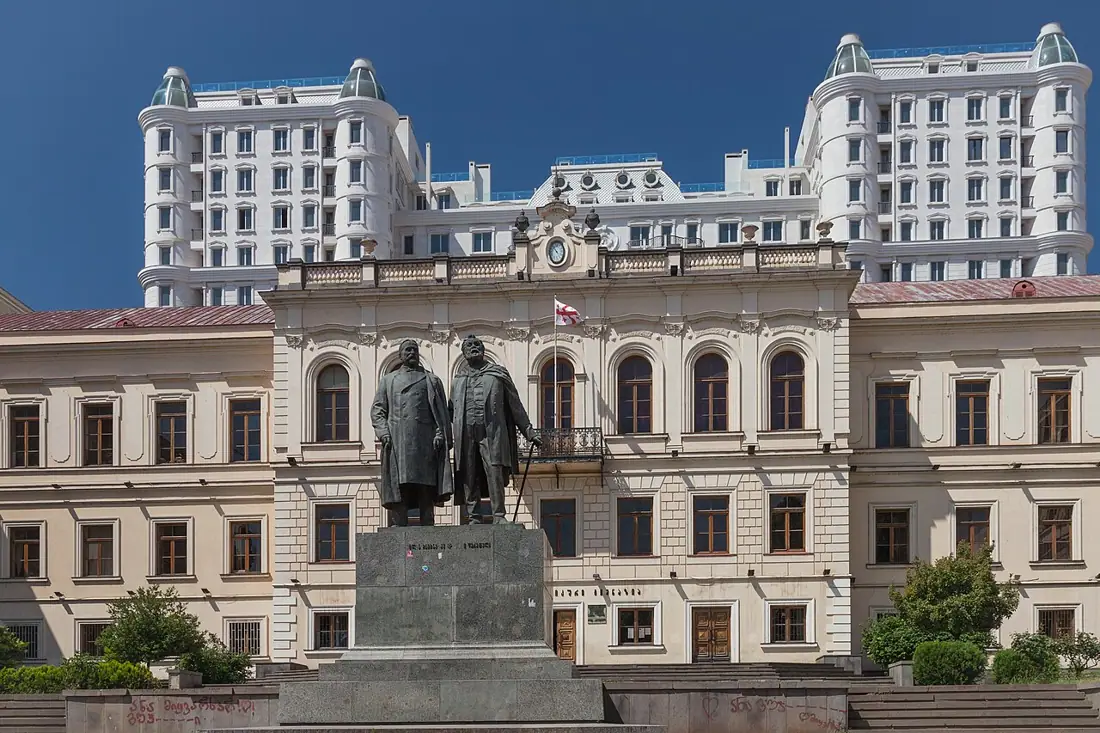
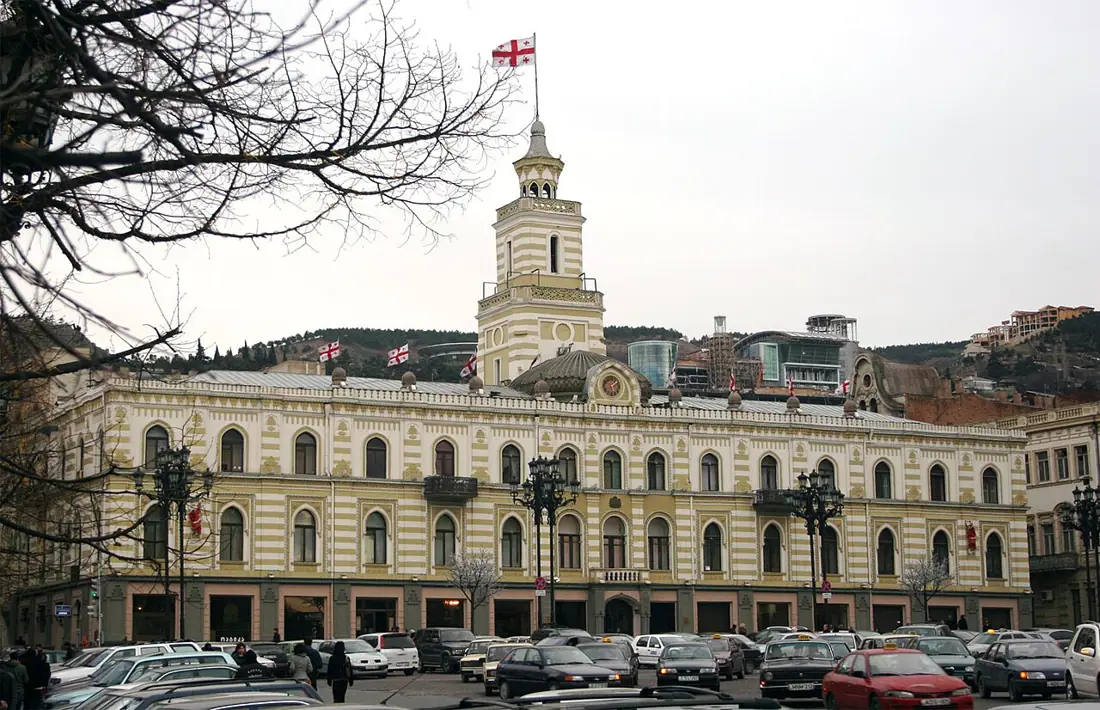
TownFreedom Square and the Old Parliament
The city's central square, renamed five times, each renaming marking the arrival of a different regime.
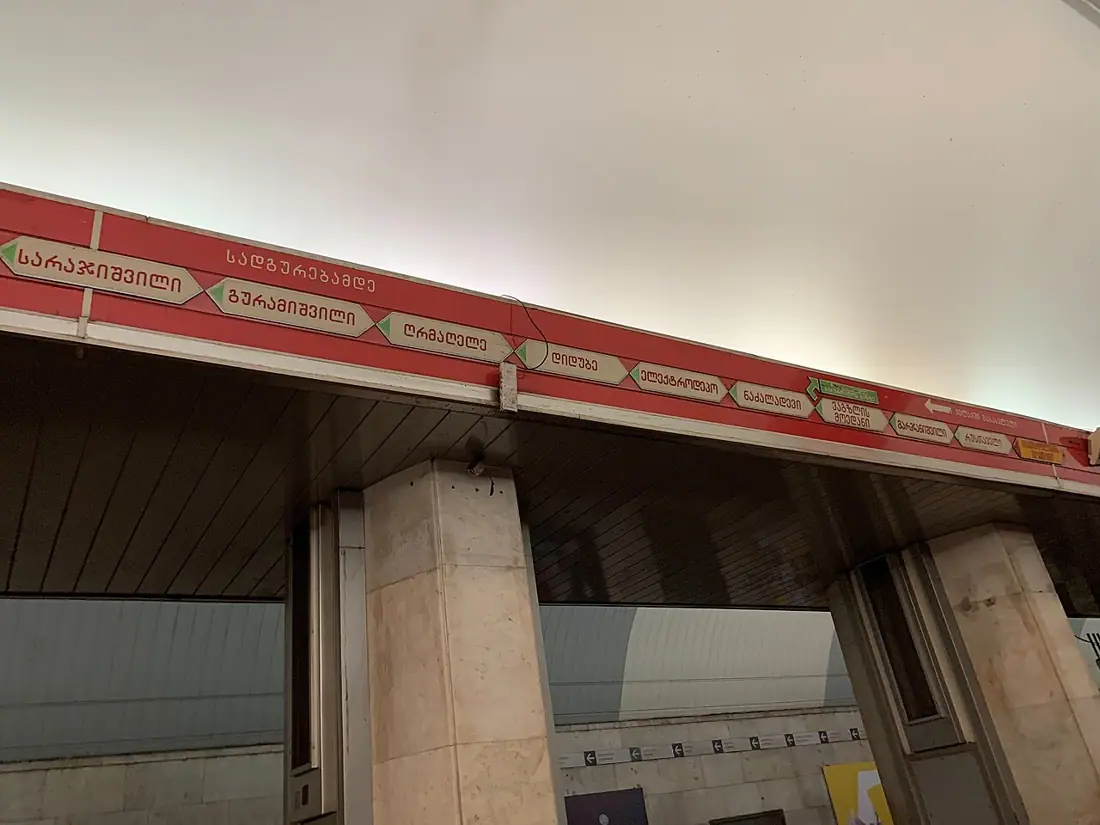 Town
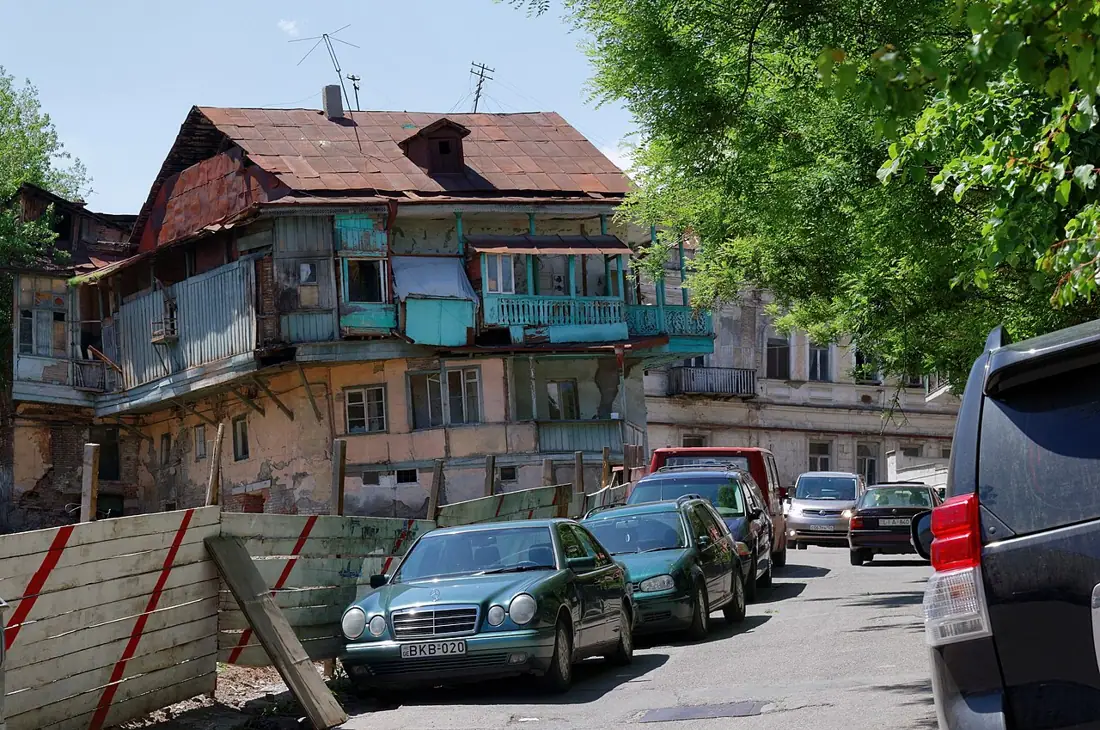
TownFabrika and the Marjanishvili District
A Soviet sewing factory turned into a courtyard of bars and studios, and the old German quarter around it.
 Monastery
Anchiskhati Basilica
The oldest surviving church in Tbilisi — a sixth-century three-nave basilica on Shavteli Street.