Sioni Cathedral
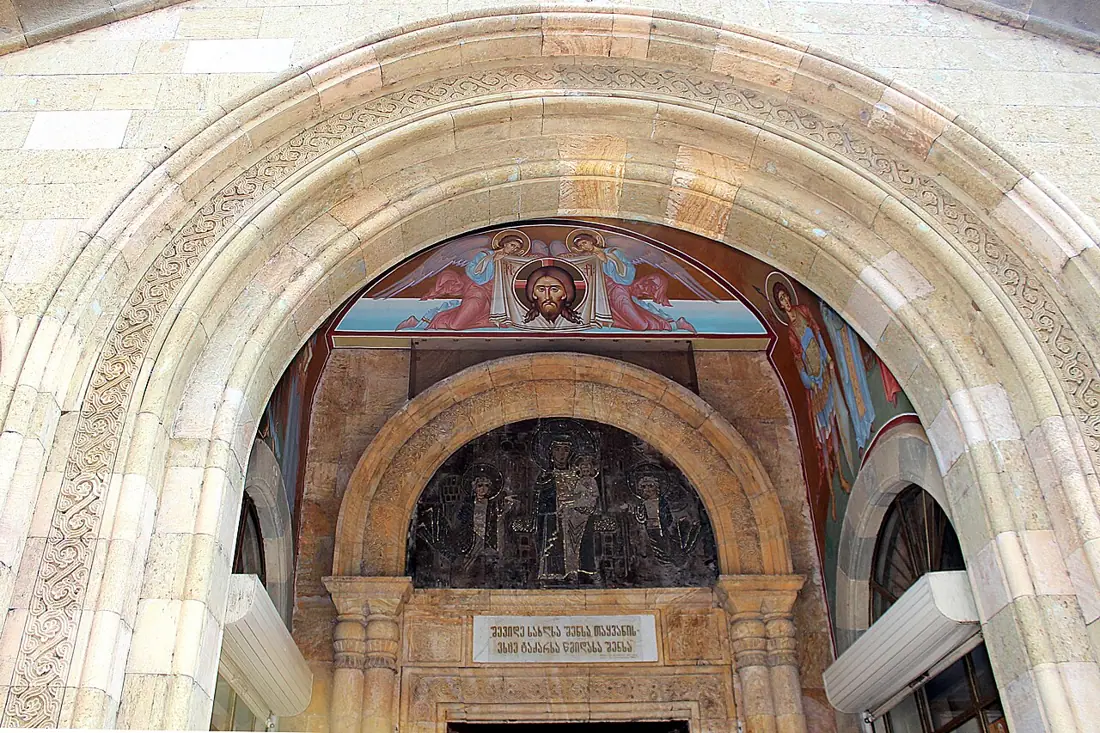
The old cathedral on the bank of the Mtkvari, where the grapevine cross of St Nino is kept.
- Time needed
- 0.5 h
- From Tbilisi
- 3 km · 0:15
- Road
- Paved
- Car needed
- Economy class
- Season
- All year
- Entry
- free
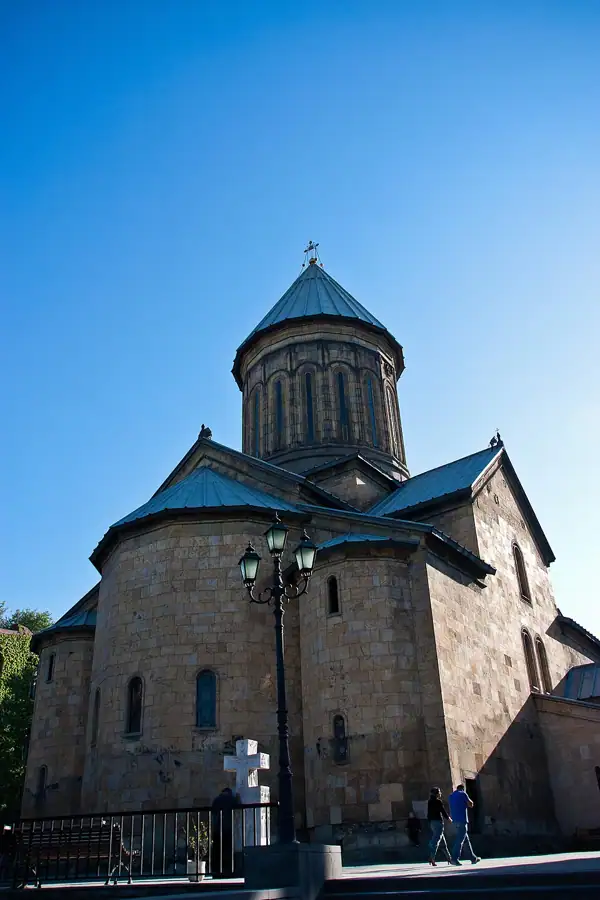
Sioni is the church Tbilisi has rebuilt more often than any other. It stands on the right bank of the Mtkvari in a knot of narrow streets, and from outside it looks almost modest — until you realise the building has been wrecked and put back up in nearly every century of its existence.
The first church here went up in the sixth or seventh century. Then came the Arabs, Jalal ad-Din in 1226, Timur, and the Persians. The core of what stands now is thirteenth century, but the dome, much of the walling and the facade details were rebuilt between the seventeenth and nineteenth centuries. The invasion of Agha Mohammad Khan in 1795 damaged it again.
Two things hold the attention inside. The first is the cross of St Nino, made of grapevine and, by tradition, bound with the saint's own hair; it sits in a silver case near the altar on the north side. The second is the wall painting, carried out in the 1850s by the Russian artist Grigory Gagarin over older frescoes — a decision Georgian art historians still argue about.
Across the street stands a free-standing brick bell tower of 1425, the oldest surviving in Tbilisi, and beside it a second, three-storey tower from the early nineteenth century.
Until Sameba was consecrated in 2004, Sioni was the patriarchal cathedral. It is quieter now than Sameba, and far darker: even at midday it depends on candlelight, which gives it a completely different feeling from the huge new church across the river.
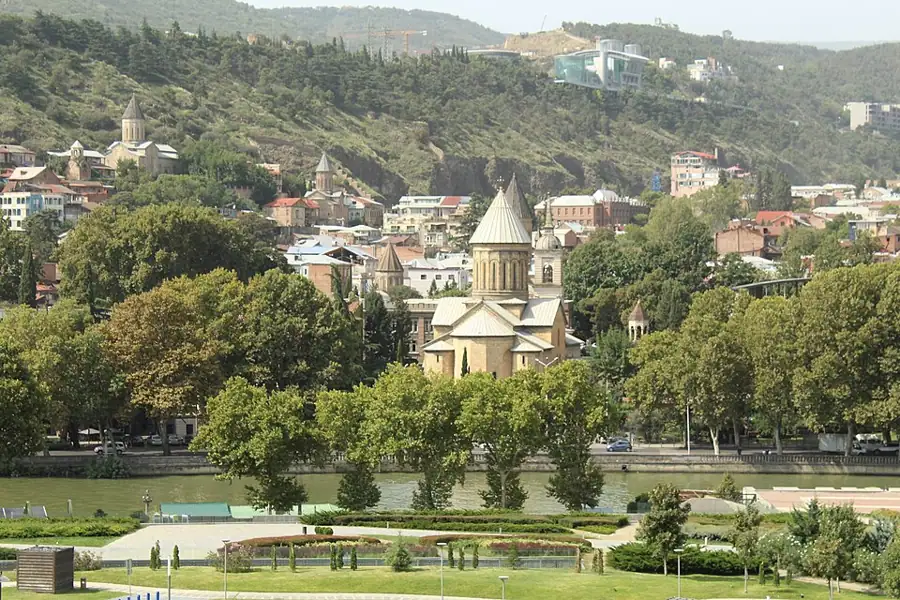
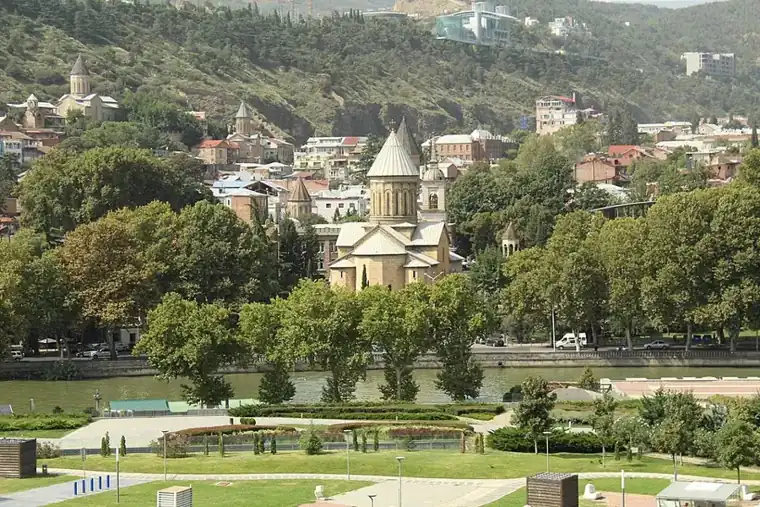
From outside the cathedral is faced in yellow tufa and the dome belongs to a nineteenth-century restoration, which is why it looks newer than it is. Sioni is also hemmed in: houses come right up to the walls, and there is no vantage point close by from which the whole building can be seen at once. The only place it reads as a single mass is from the opposite bank of the river, near Metekhi bridge.
Gallery
Practical advice
Thirty minutes is enough. This is a working cathedral: women need a headscarf and a long skirt or a wrap, men long trousers, and both are kept free by the door. Photography during services is unwelcome and often simply not allowed. There are a few steps at the entrance. The interior is genuinely dark and your eyes need a minute or two to adjust. There are no toilets in the cathedral; the nearest are in the cafes around Sioni Street. It is a comfortable stop in winter, since the building holds its warmth.
How to get there from Tbilisi
You are in the old town, which means driving here is easy and parking is not. Come down from Freedom Square along Kote Abkhazi Street; Sioni Street itself is narrow and partly pedestrian. The realistic option is the paid parking around Gorgasali Square, or the lot beneath Meidan, both about five minutes' walk from the cathedral. There are also metered bays along Baratashvili. Leaving a car in the lanes near the church usually ends with a tow truck. A small economy car is a real advantage in this quarter.
Click a marker for details. Coloured lines are ready-made road trips.
Nearby places
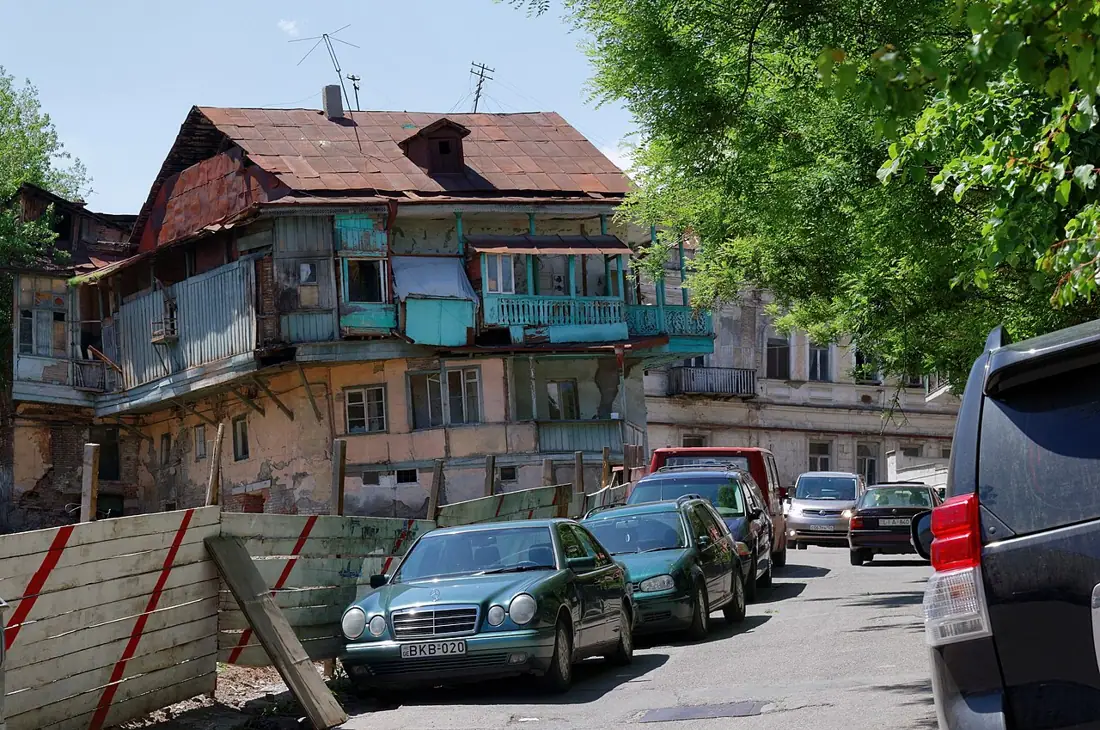 Monastery
Anchiskhati Basilica
The oldest surviving church in Tbilisi — a sixth-century three-nave basilica on Shavteli Street.
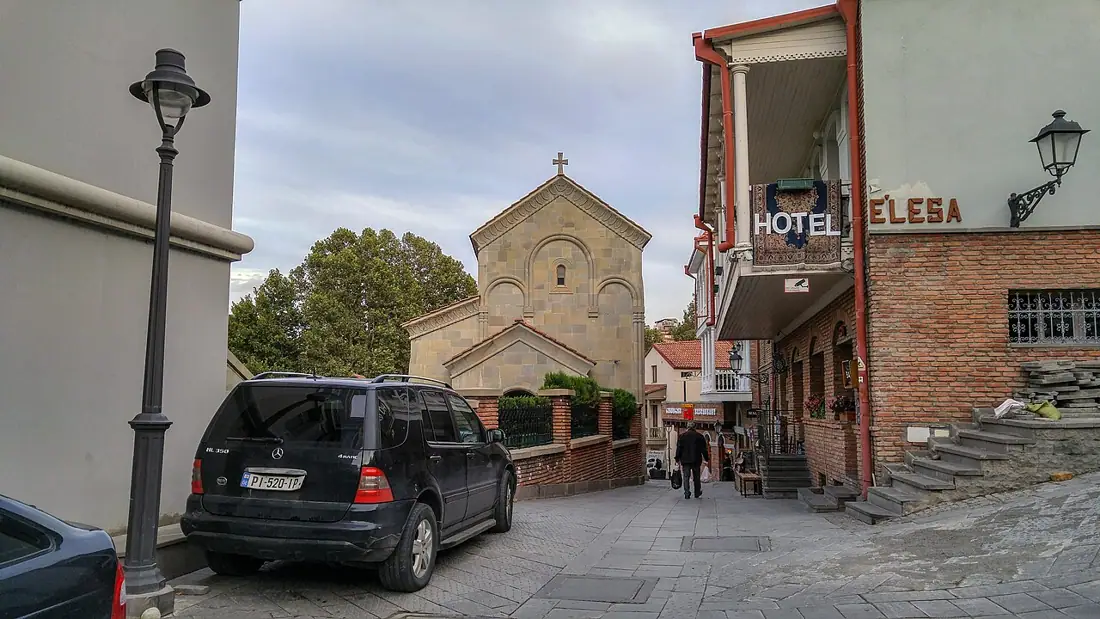 Spa resort
Abanotubani and the Sulphur Baths
The birthplace of Tbilisi — brick-domed sulphur bathhouses in the heart of the Old Town.
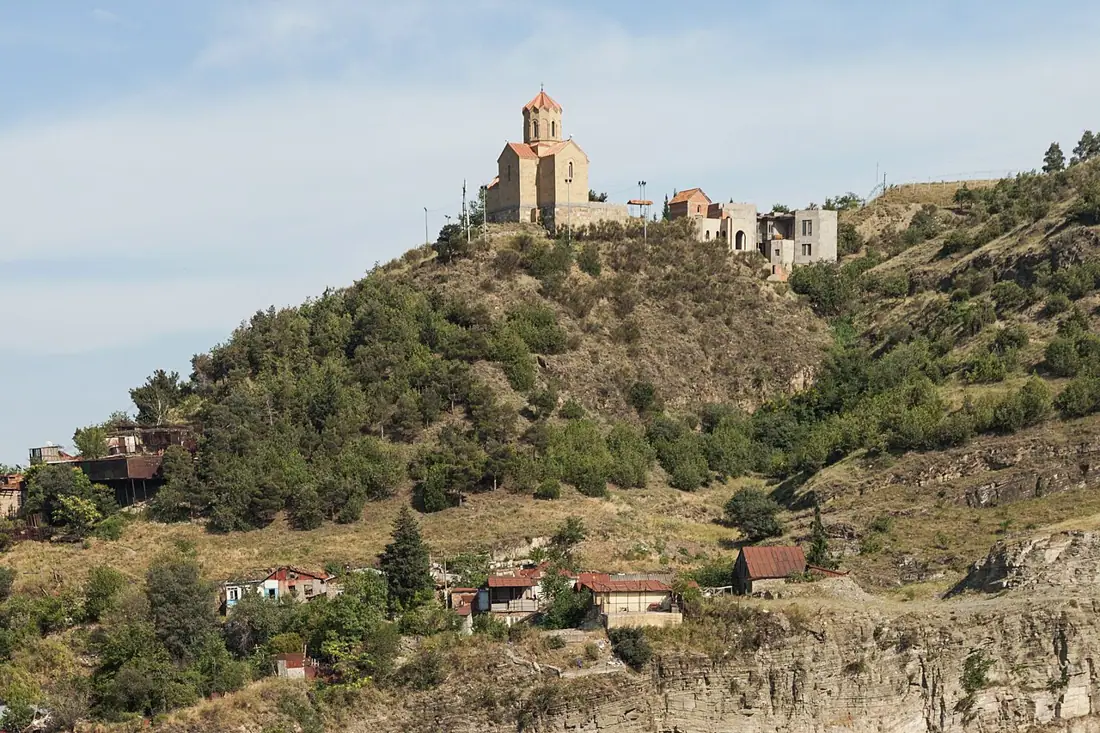 Fortress
Narikala Fortress
A 4th-century citadel on the ridge above the Old Town — the defining silhouette of Tbilisi and its best viewpoint.
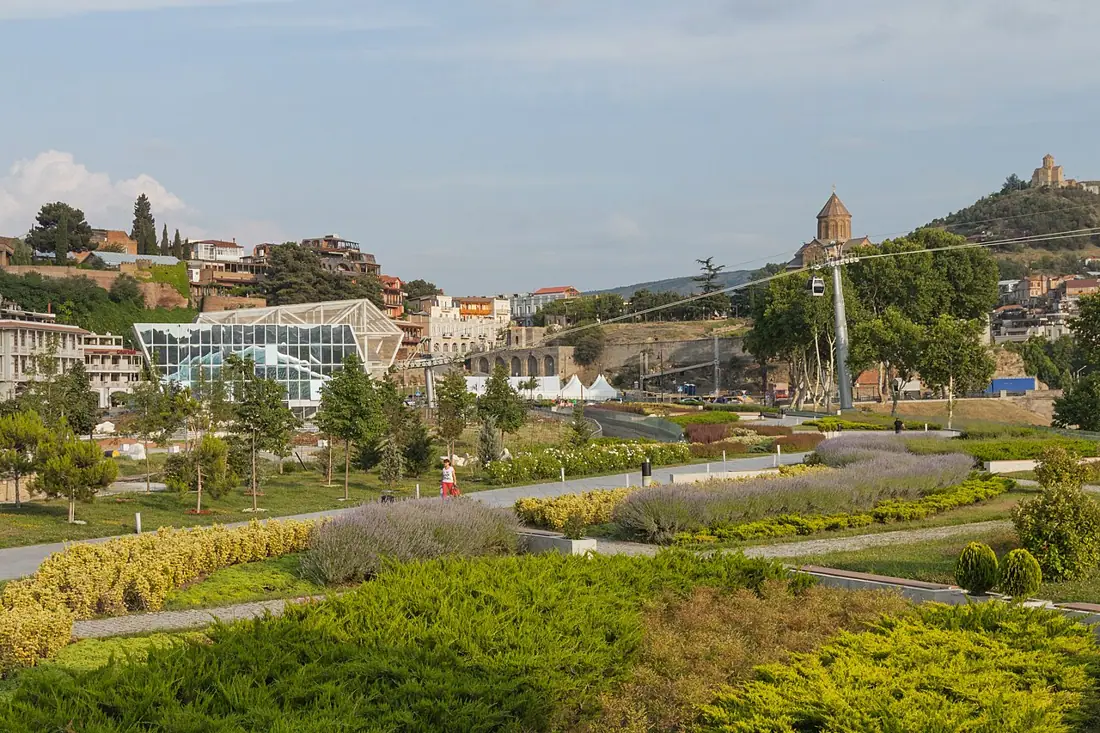 Nature
Bridge of Peace and Rike Park
A glass and steel footbridge over the Mtkvari and the park at its far end, with the cable car station.