Anchiskhati Basilica
The oldest surviving church in Tbilisi — a sixth-century three-nave basilica on Shavteli Street.
- Time needed
- 0.5 h
- From Tbilisi
- 3 km · 0:15
- Road
- Paved
- Car needed
- Economy class
- Season
- All year
- Entry
- free
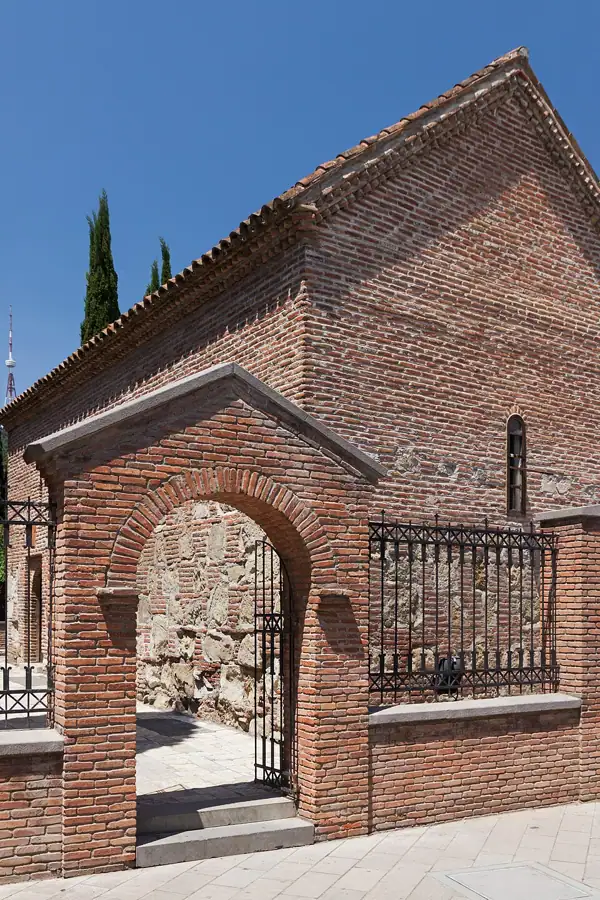
This is the oldest building in Tbilisi still doing the job it was built for. Anchiskhati was raised in the sixth century by King Dachi, son of Vakhtang Gorgasali, after the capital moved from Mtskheta to Tbilisi. It is easy to walk past: a low, broad shape wedged into narrow Shavteli Street, with none of the height that later Georgian churches use to announce themselves.
The plan is a three-nave basilica with no dome, built in courses of stone and brick. It was originally dedicated to the Virgin. The present name arrived in the seventeenth century, when the icon of the Saviour from Ancha monastery in Klarjeti — territory by then under Ottoman control — was brought here for safety. The icon itself is now in the state art collection; the church holds a copy.
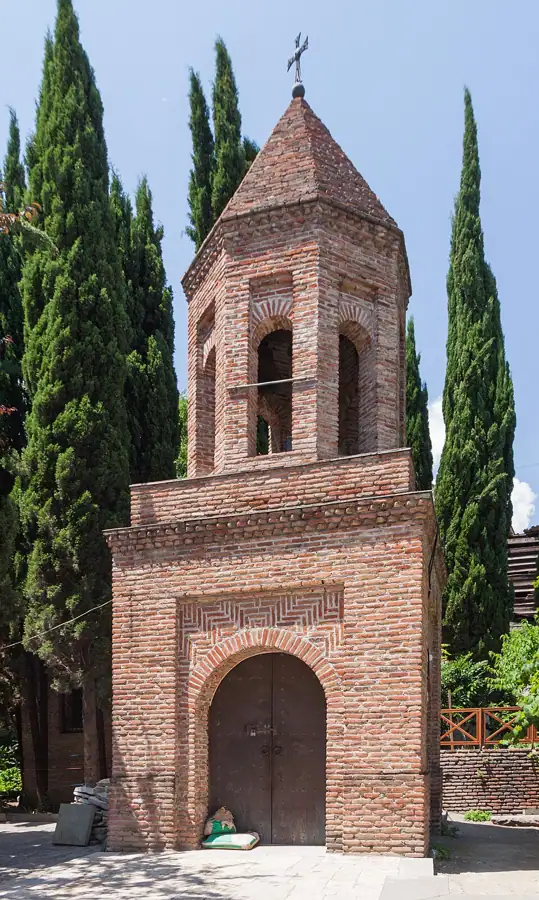
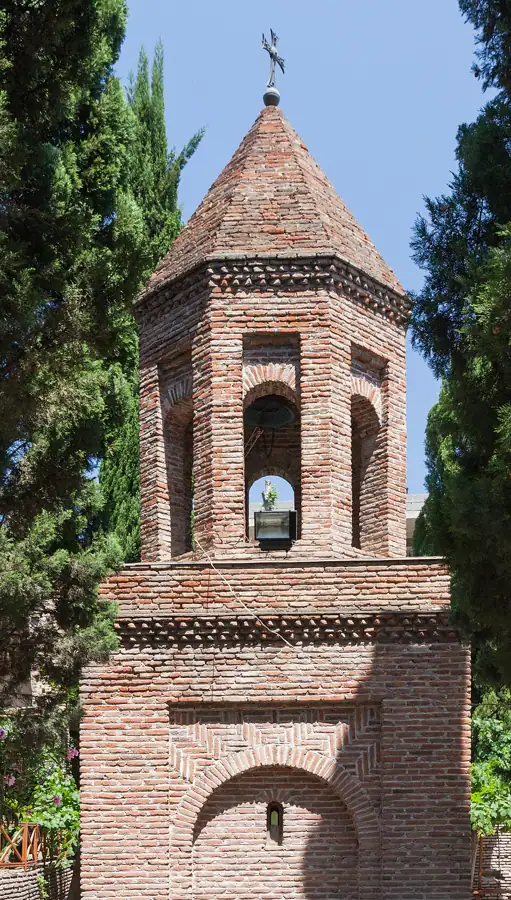
At the gate stands a brick bell tower built in 1675 by Catholicos Domenti, and it is nearly as interesting as the church. In the nineteenth century a dome was added to the basilica; the restoration of the 1950s and 60s removed it and returned the building to its original form.
Inside is a low, dark, very quiet space with fragments of nineteenth-century painting on the walls. The reason many people come back, though, is sound. The Anchiskhati Choir, which sings the old Georgian polyphonic liturgy, is based in this church. Catching them at an ordinary service is a matter of luck, but if you do, it is one of the best things to hear in the city.
The polyphony you may hear here is older than the building itself: Georgian folk and liturgical polyphonic singing was proclaimed by UNESCO in 2001 a masterpiece of the oral and intangible heritage of humanity. The basilica is an ideal container for it. A low, rectangular stone room lets the voices press against the walls and stay dense, instead of dispersing upward the way they do under a large dome. Even a few singers rehearsing in an empty church fill it completely.
Gallery
Practical advice
Twenty to thirty minutes. The church is small and fills up during services; you can go in, but not move around or photograph. Dress rules apply — headscarf and long skirt for women, long trousers for men. The doorway is low, so mind your head. There are no toilets; the nearest are in the cafes along Shavteli. In a noisy old town this is one of the few genuinely quiet corners, and it pairs naturally with the Gabriadze clock tower a few steps away.
How to get there from Tbilisi
Shavteli Street is narrow and effectively pedestrian, so do not try to drive into it. Approach from Baratashvili Bridge or Erekle II Street and leave the car in the metered bays on Baratashvili rise, or in the lower car park at Rike Park, from where the Bridge of Peace brings you straight across to the church in seven or eight minutes. Pushing into the inner lanes of the old town almost always ends in a dead end or a fine. An economy car and some patience are all you need.
Click a marker for details. Coloured lines are ready-made road trips.
Nearby places
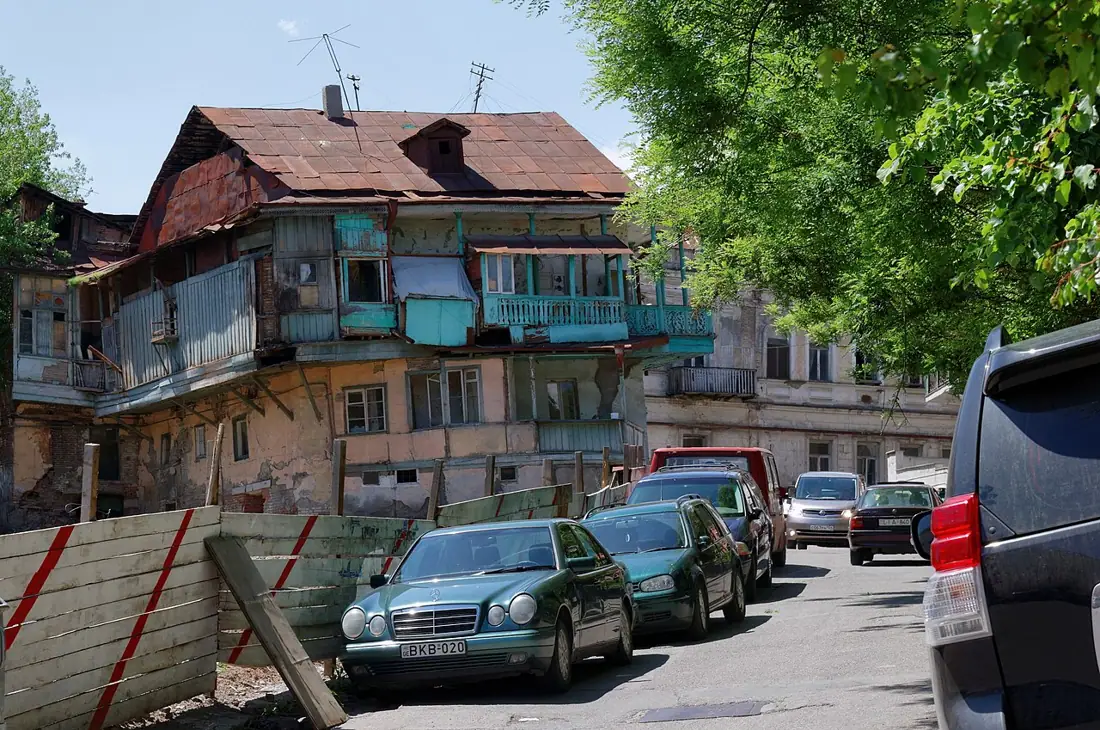 Town
TownGabriadze Theatre and Clock Tower
A deliberately crooked brick tower with an angel, and the small marionette theatre beside it on Shavteli Street.
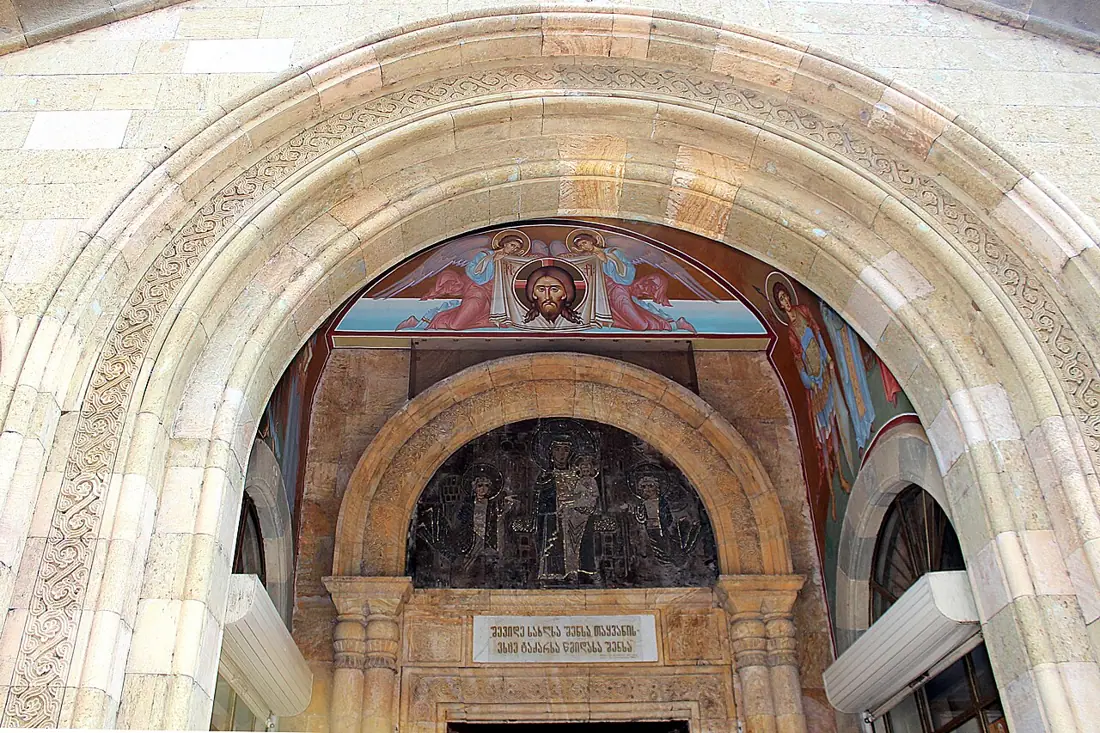 Monastery
Sioni Cathedral
The old cathedral on the bank of the Mtkvari, where the grapevine cross of St Nino is kept.
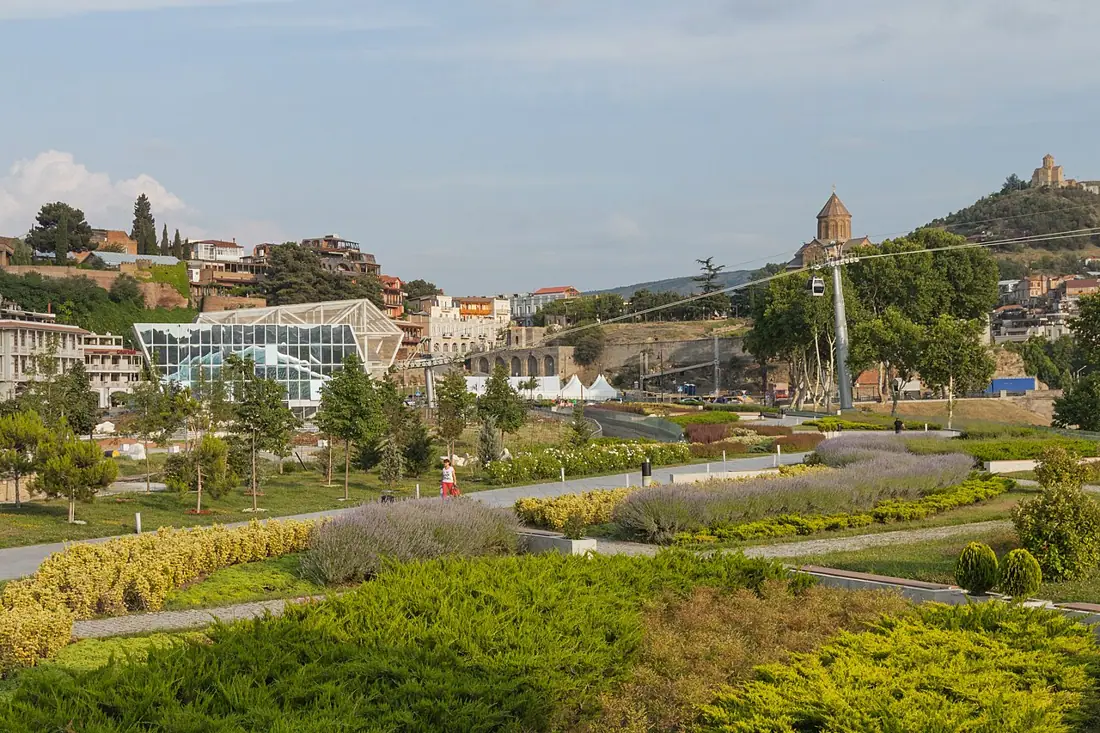 Nature
Bridge of Peace and Rike Park
A glass and steel footbridge over the Mtkvari and the park at its far end, with the cable car station.
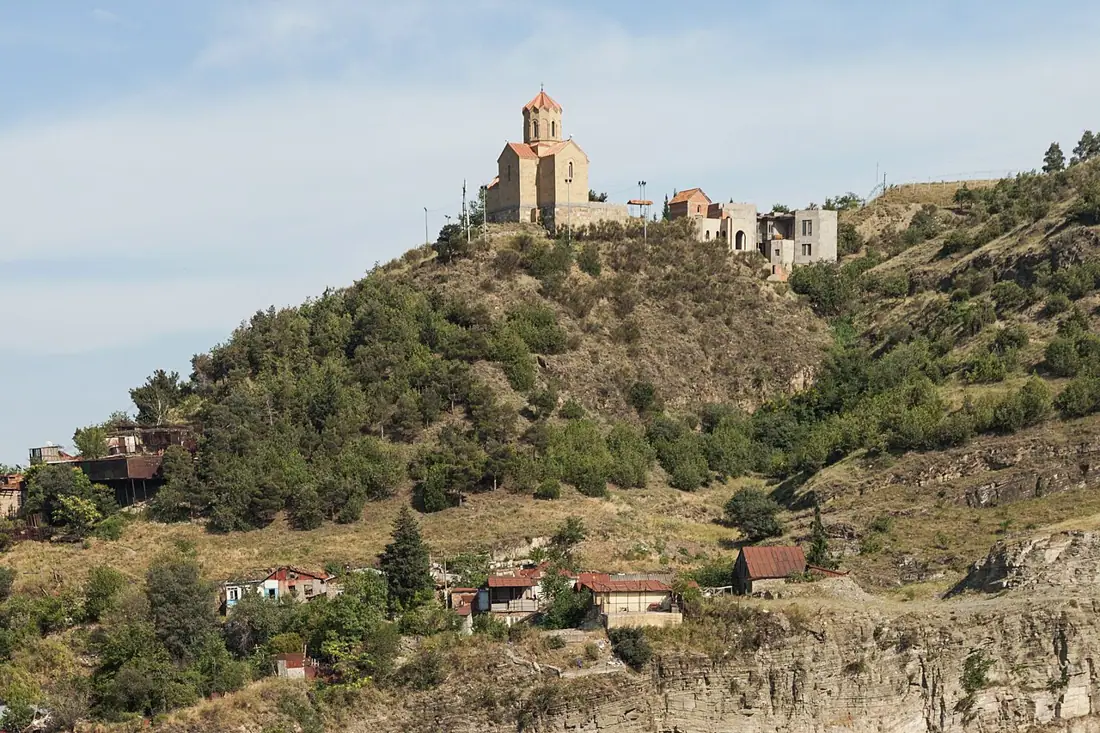 Fortress
Narikala Fortress
A 4th-century citadel on the ridge above the Old Town — the defining silhouette of Tbilisi and its best viewpoint.