
Uplistsikhe
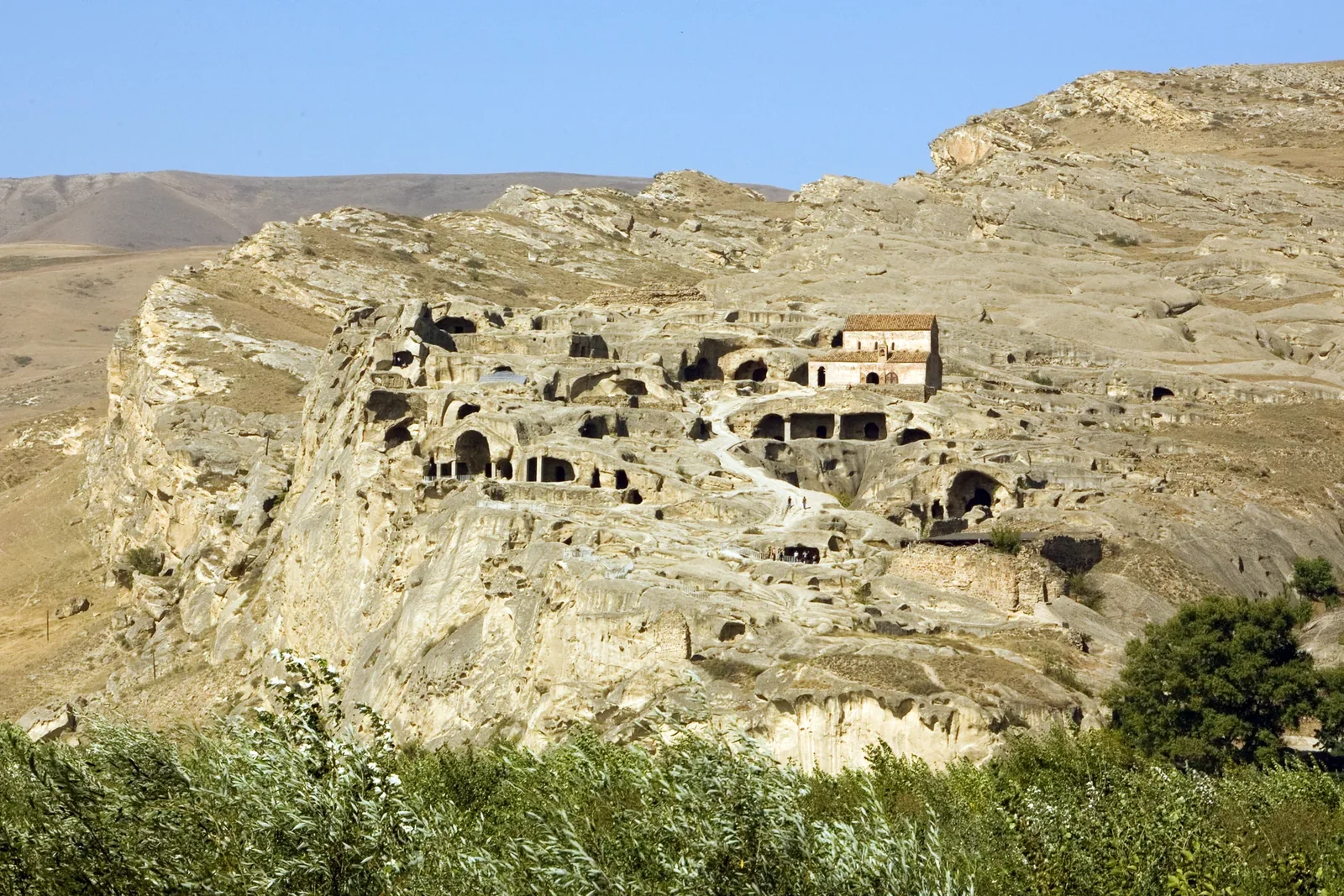
A town cut into a sandstone ridge above the Mtkvari: rock halls, a stone main street, wine presses and a tunnel to the river, lived in for three millennia.
- Time needed
- 2 h
- From Tbilisi
- 100 km · 1:30
- Road
- Paved
- Car needed
- Economy class
- Season
- All year
- Entry
- check locally
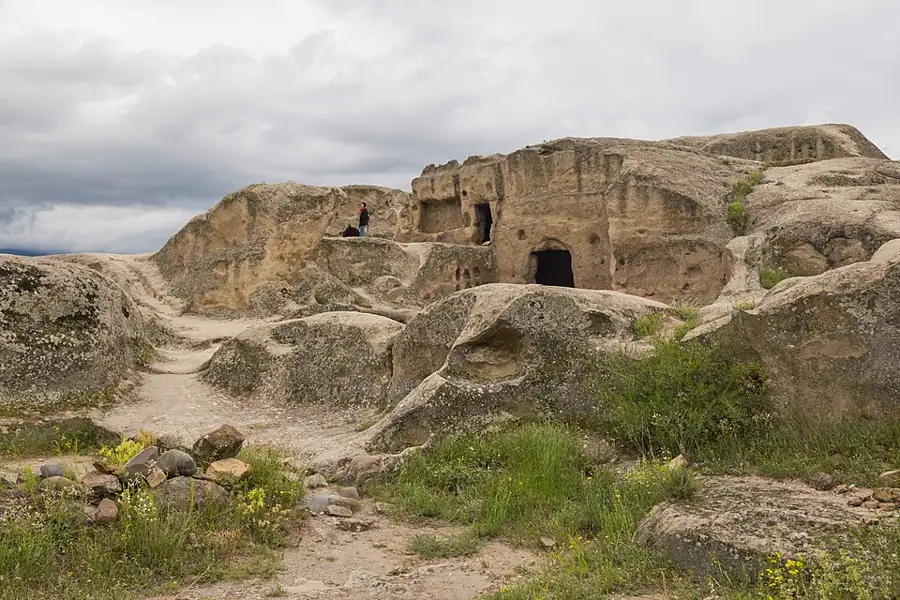
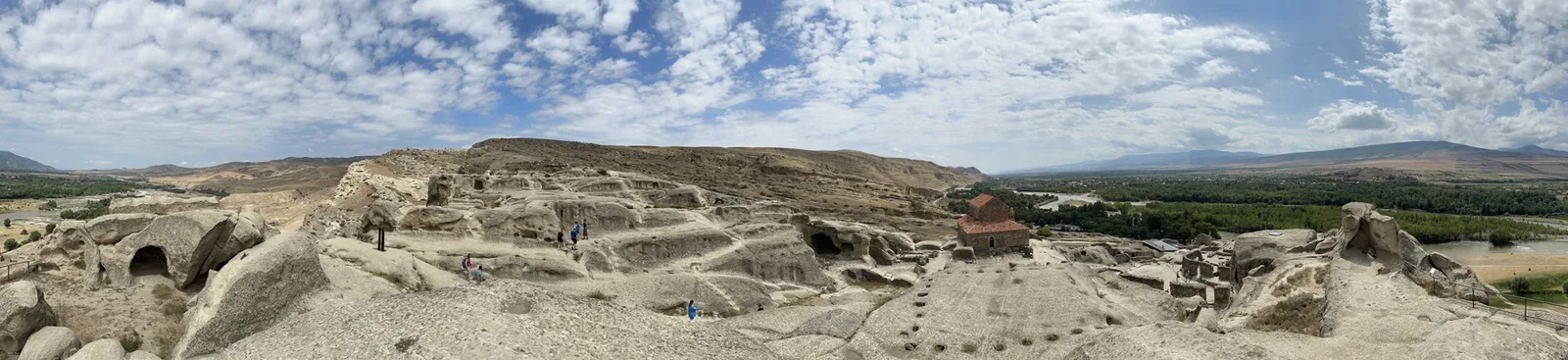
Uplistsikhe was not built so much as carved: its halls, streets and wine presses were hollowed out of a single sandstone ridge.
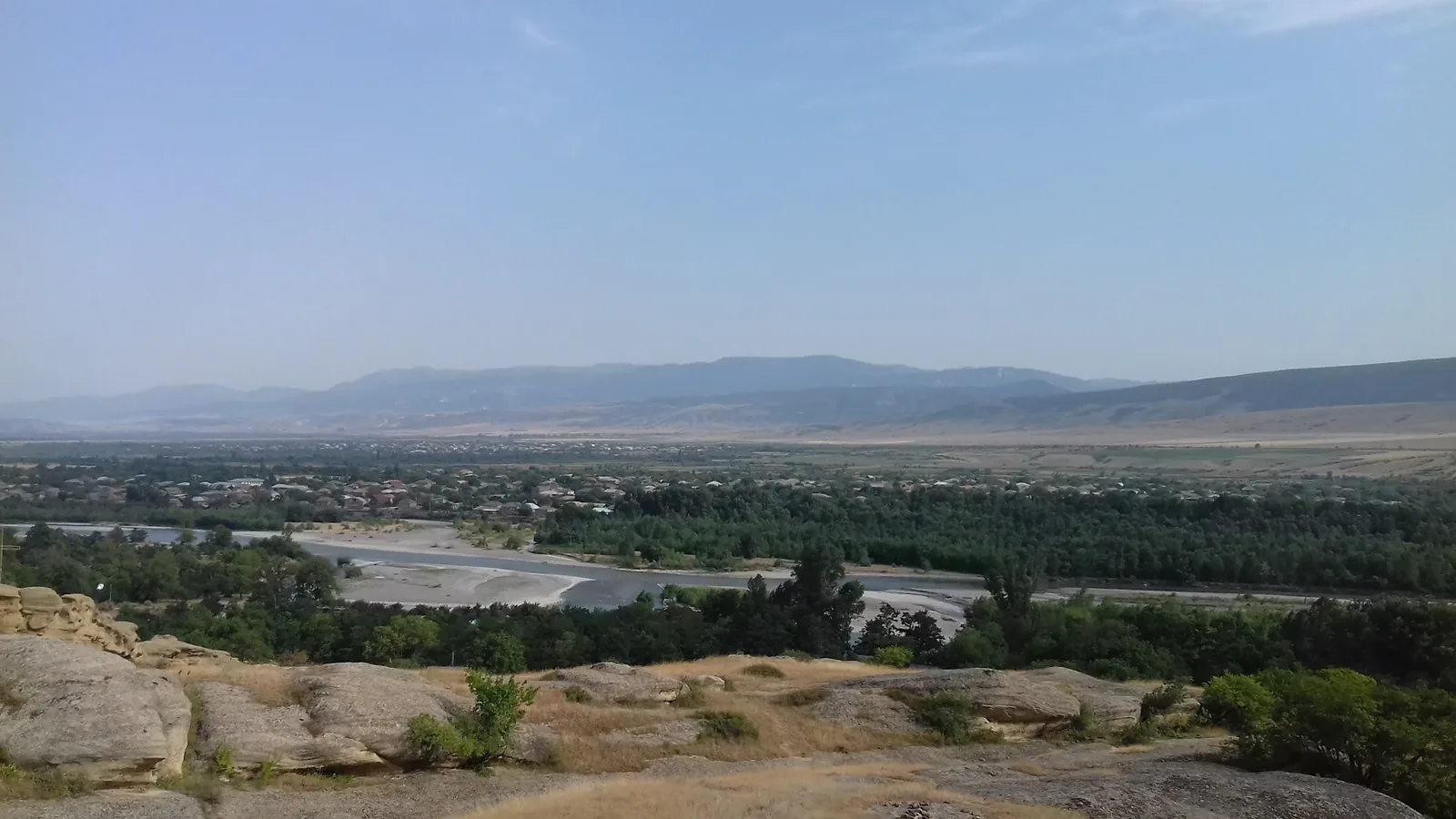
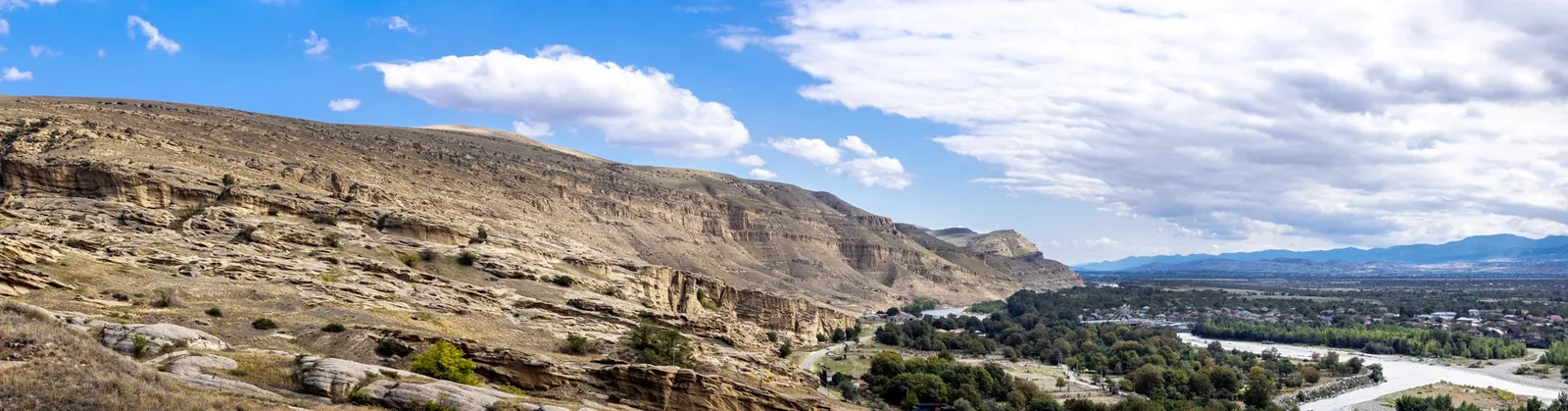
It stands on the high left bank of the Mtkvari, about 10 km east of Gori. The first traces of people here date from the end of the 2nd millennium BC, and the rock town grew over the centuries that followed into one of the chief political and religious centres of Kartli, the kingdom classical writers called Iberia. The name means "the lord's fortress": the upali, head of the tribes of inner Kartli, had his seat here. Medieval chroniclers gave the town a founder from legend, Uplos, son of Mtskhetos and grandson of Kartlos.
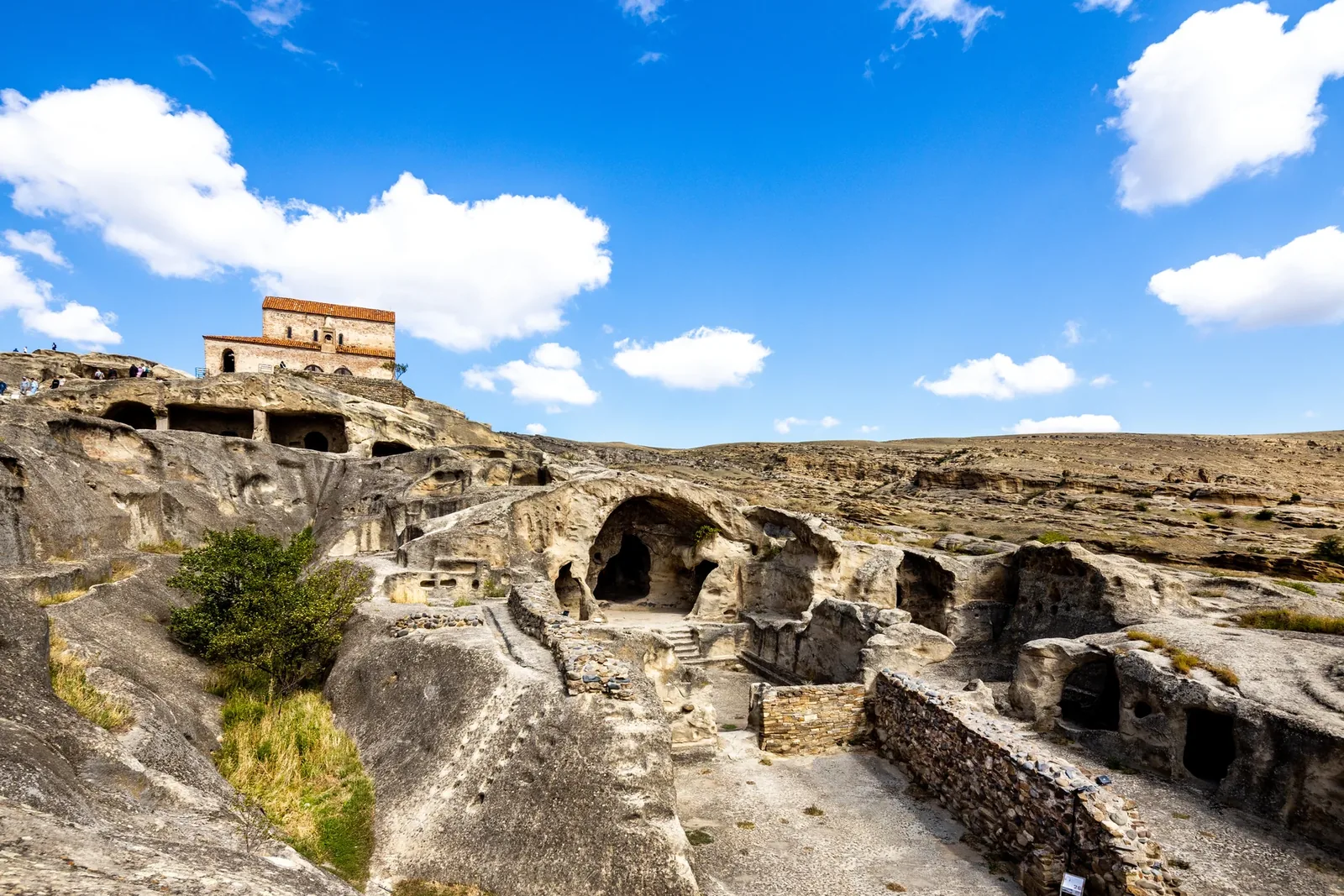
When Kartli turned Christian in the early 4th century, Uplistsikhe yielded its religious primacy to Mtskheta but lived on as a town. A first basilica was built in the 6th century, and while Arabs held Tbilisi in the 8th–10th centuries it became a Georgian stronghold again; the brick three-church basilica on the summit dates from then. The Mongol invasions ended its life as a fortress, and afterwards it served only as a refuge. An earthquake in 1920 destroyed its most fragile parts. Since 2007 it has been on UNESCO's Tentative List.
What to look for:
- the main street winding through the heart of the town
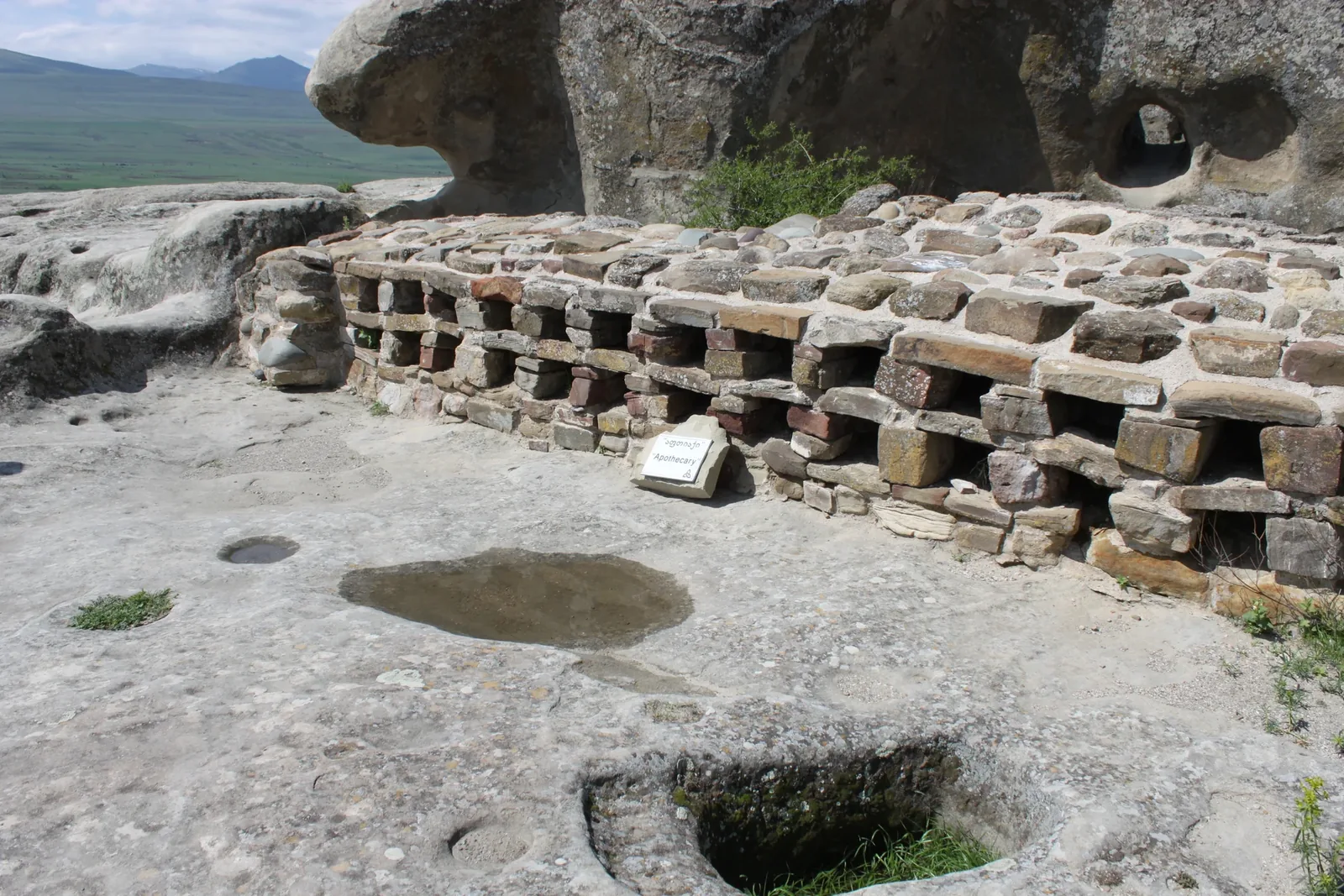
- the great hall of the upper town, its semicircular vault carved with octagonal coffers
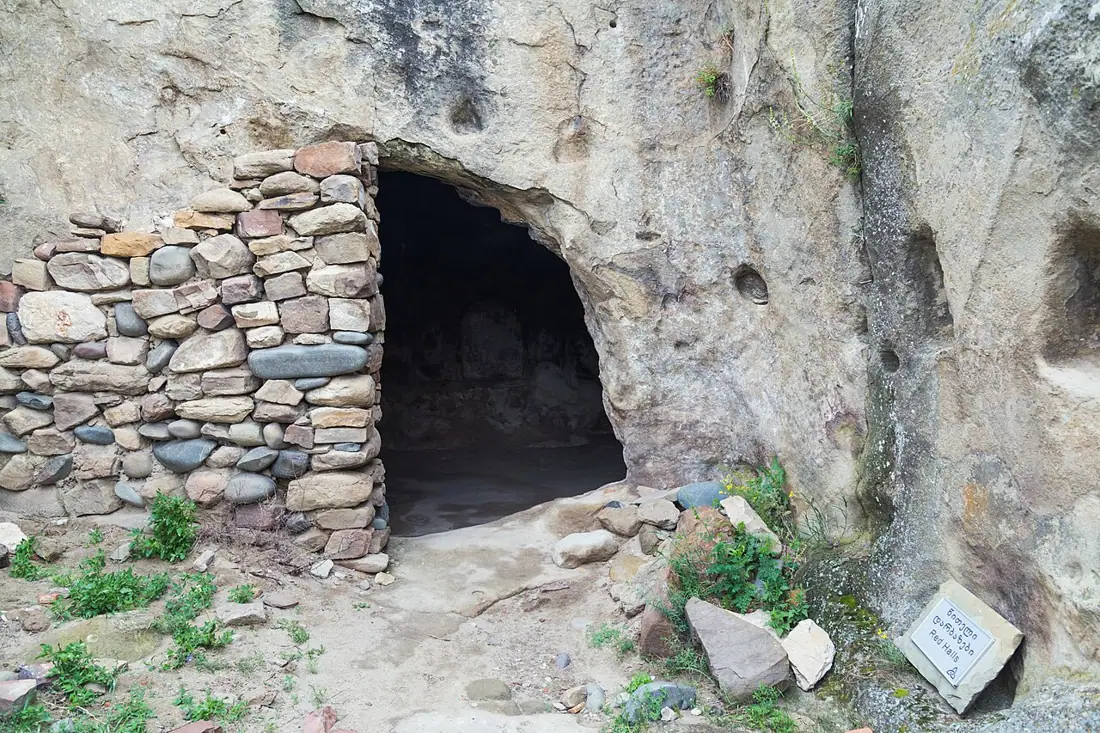
- ceilings cut to imitate wooden beams
- rock-cut wine presses and cellars
- the tunnel down to the river, the town's water supply under siege
Legend says the slaves who cut the town were given picks with one iron face and one of gold: whoever wore the iron away went free and kept the gold.
In the last hour of light the sandstone turns the colour of bread crust, and the empty doorways fill with shadow.
Gallery
Practical advice
There is almost no shade, and the pale rock throws the heat back at you, so in July and August come at opening time or in the last two hours before closing. The stone is polished by countless feet and slippery in rain; wear shoes with grip. Steps are steep and railings intermittent, so keep children close. Tickets, toilets and a small café are at the visitor centre by the car park; check the current fee there. Local guides wait at the entrance and are worth hiring, but agree the price first. Allow two hours.
How to get there from Tbilisi
Take the E60 (S1) motorway west from Tbilisi to Gori, about 85 km. Uplistsikhe lies about 10 km east of the town on the far side of the Mtkvari. In Gori, follow Stalin Avenue south across the river, turn left and drive east through Khidistavi to Uplistsikhe village, then cross the bridge to the car park below the rock. In all it is about 100 km and roughly an hour and a half. The last stretch is narrow village asphalt, fine for an economy car in any season. Fuel and food are plentiful in Gori.
Click a marker for details. Coloured lines are ready-made road trips.
Nearby places
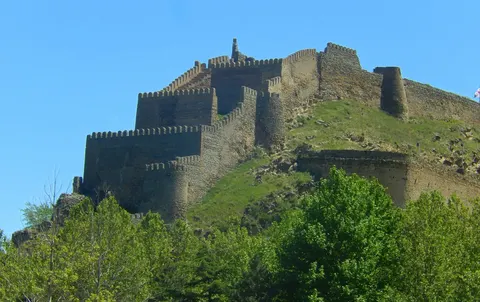
Gori: Fortress and Stalin Museum
A citadel on a rock above the Mtkvari and the Liakhvi, and below it the shrine Gori built to its most notorious son: one town, two views of history.
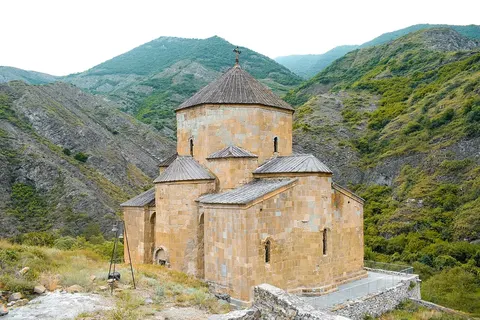
Ateni Sioni Church
A 7th-century church on a cliff above the Tana, where the script on every Georgian shop sign first appears in a dated inscription.
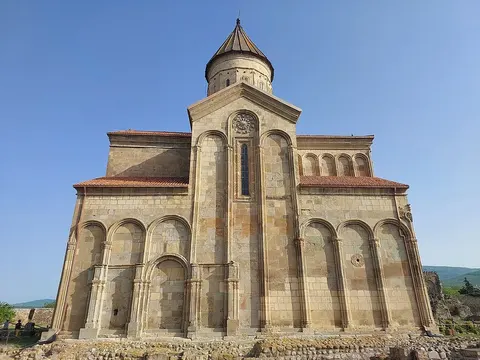
Samtavisi Cathedral
A cathedral of 1030 near Igoeti; its carved east front, a great cross over two stone diamonds, was copied by Georgian masons for generations.
Part of these road trips
- Imereti: Caves and Canyons 3 days · 640 km
- Mtskheta, Uplistsikhe and Ateni Valley 2 days · 230 km
- Grand Classic Georgia Tour 10 days · 1680 km
- Shida Kartli Monastery Trail 2 days · 310 km
Best car for this trip
Guides
- Driving in Georgia: What the Distances Actually Cost You Georgia is a small country with slow roads. Here is what 267 measured drives from Tbilisi say about how long y
Pickup locations
Car Rental in Tbilisi — 58 km (straight line)
Booking and enquiries
The easiest way to reach these places is by car — you pick the route and the stops.