
Udabno Monastery, Guria
A half-cave monastery of St John the Baptist on the wooded slope of Mount Amaghleba, once Guria's school and library; not the Udabno of David Gareja.
- Time needed
- 1 h
- From Tbilisi
- 280 km · 4:15
- Road
- Unpaved sections
- Car needed
- Crossover / SUV
- Season
- May–October
- Entry
- free
Udabno means “desert”, yet nothing here is dry: springs run down the slope, the forest crowds in, and a small church sits half inside the mountain.
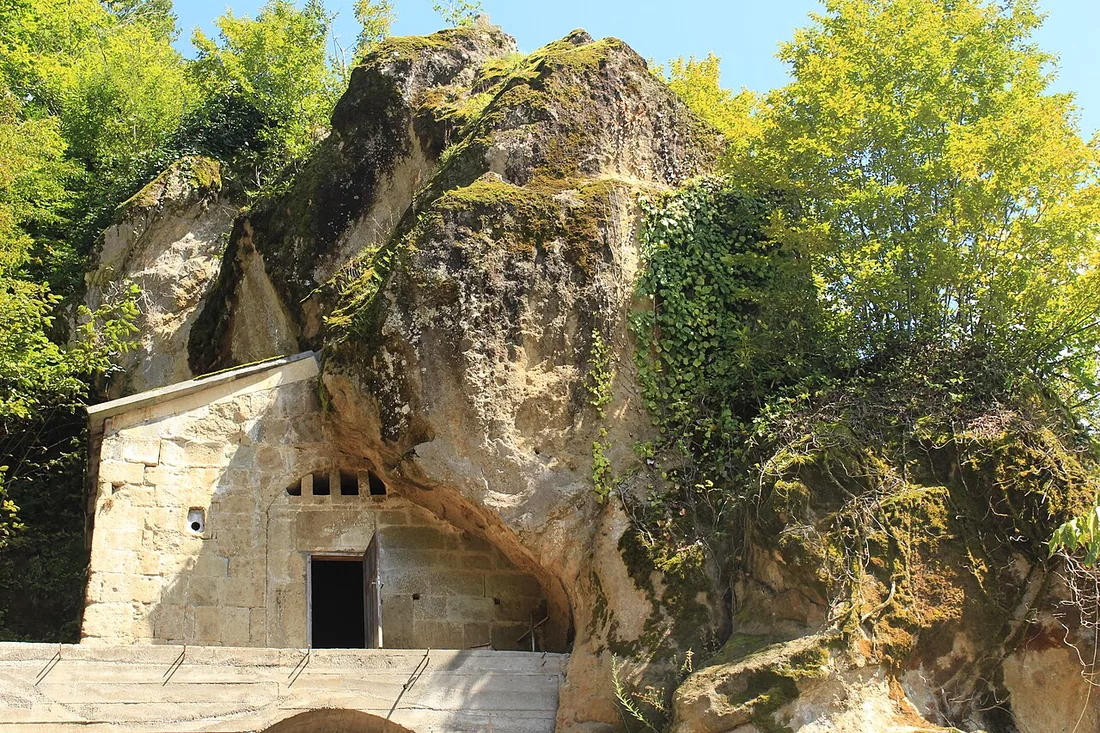
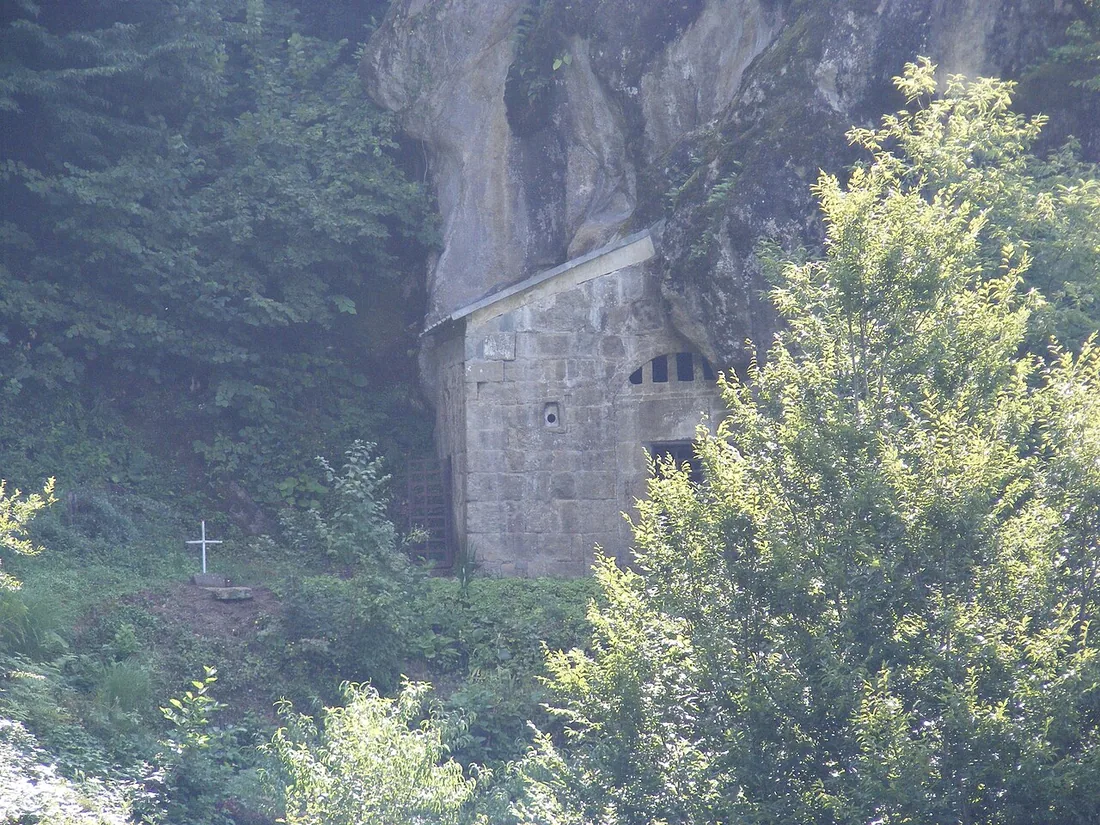
The name describes a way of life, not a landscape: the “desert” was the solitude a hermit chose. The monastery of St John the Baptist stands on the steep slope of Mount Amaghleba north of the village of Shuaganakhlebi, and it is among the oldest in Guria. How old, nobody can say: some scholars place the rock church in the 6th century, others in the 9th–10th, and rebuilding with reused stone has blurred the evidence. The rock church's east and south sides are living rock; the builders raised only the west wall and half the north one, in well-dressed pale ashlar carved with reliefs. Four more caves lower down have apse-shaped ends and were probably chapels, which is why people called Udabno “the Vardzia of Guria”.
This was a place of books. Abbot Ioseb Tuskia copied the Shemokmedi Gulani here, and in the 19th century, when the villages had no schools, boys came to learn scripture, languages, chant and calligraphy. The historian Dimitri Bakradze saw about ten of them at their letters, and credited Tuskia, an 18th-century abbot, with founding the monastery; the rock church says otherwise. Its greatest treasure, the 9th-century Udabno Mravaltavi, was identified by Akaki Shanidze in 1920 and is ranked beside the Sinai Mravaltavi of 864.
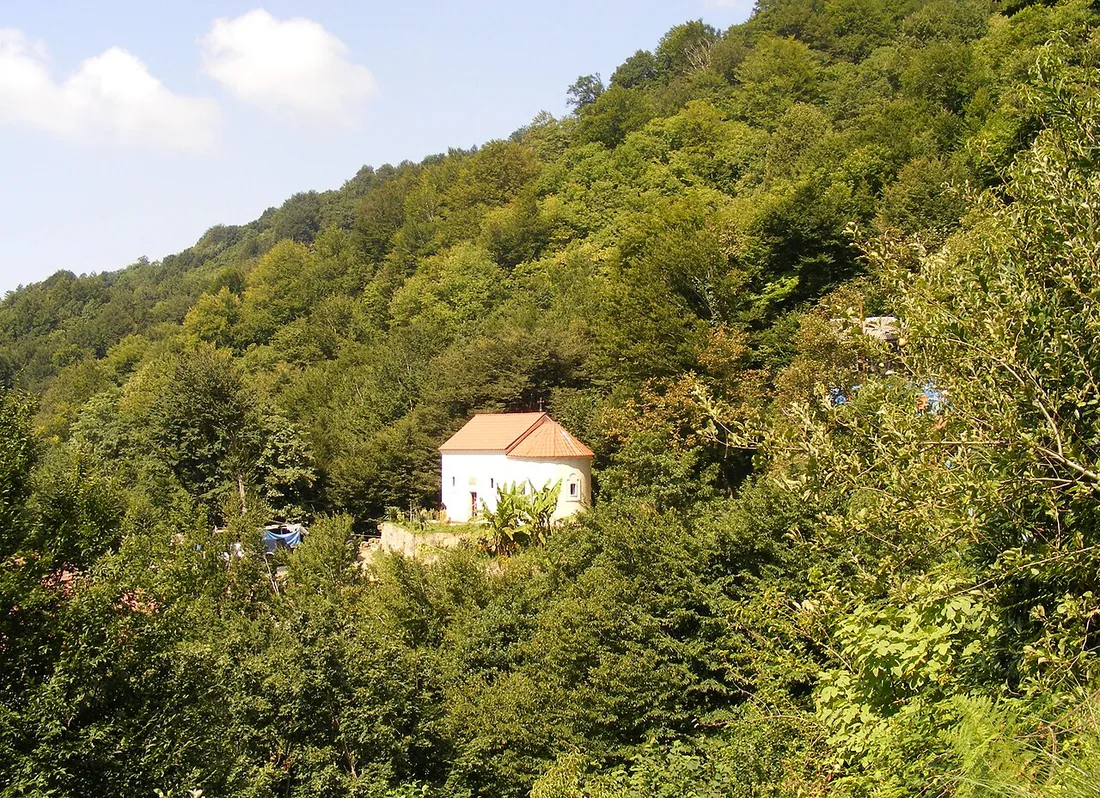
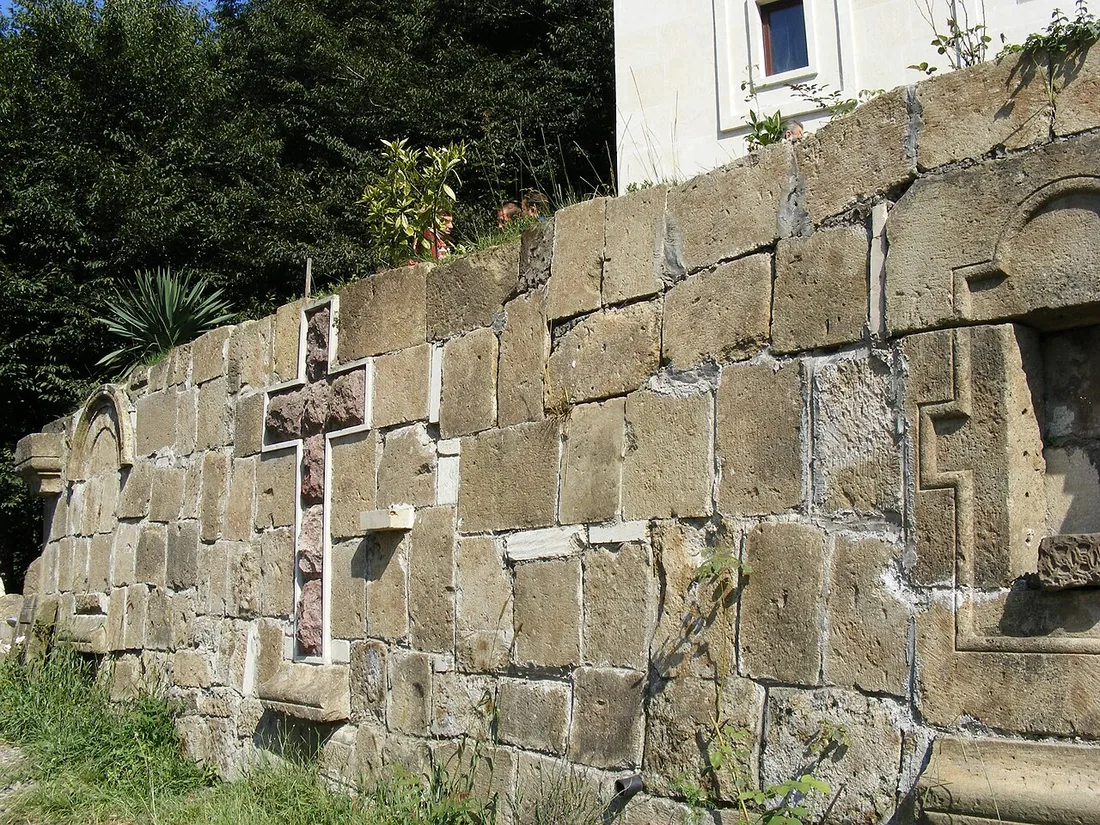
In 1958 local authorities pulled down most of the church of 1858, which stood 200 metres upslope, for building stone. Manuscripts, books and icons perished; only a silver-covered icon of St John and the incomplete Mravaltavi survived. In 2006 the last walls made way for a new church, and the old stones went into its retaining wall. They are still holding something up.
Gallery
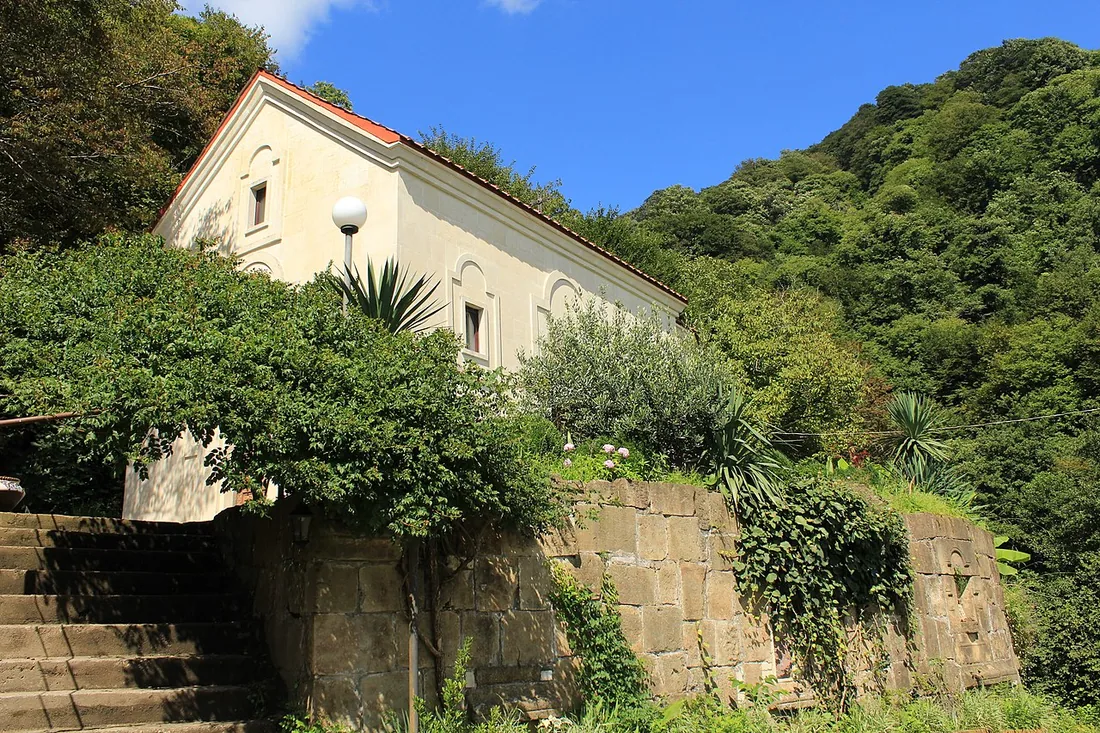
Practical advice
Entry is free. This is a working monastery: long trousers for men, a skirt and headscarf for women, and quiet voices near the cells. From where the track ends, a short but steep path climbs to the rock church; after rain, and Guria has plenty, it is slippery, so wear proper shoes and bring a torch for the caves. The monastery is open all year, but in winter and after heavy rain the unpaved final stretch can turn to deep mud, so ask in Chokhatauri before driving up and be ready to walk the last part. Allow an hour. There is no shop or café, so buy food and water in Chokhatauri. A warning for your navigator: type “Udabno” carelessly and it will send you to David Gareja on the far side of the country.
How to get there from Tbilisi
From Tbilisi it is about 280 km, some four and a quarter hours of driving. Take the S1 (E60) west past Kutaisi to Samtredia, follow the S12 south for a few kilometres, then turn onto the Sh2 through Sajavakho to Chokhatauri. In town pick up the Sh83 towards Zomleti; after about three kilometres turn north onto a local road that climbs the slope past the village of Shua Amaghleba to the monastery, roughly six and a half kilometres from the centre. The last stretch is unpaved and poorly documented, so an SUV is the sensible choice, especially after rain. Park where the track ends and walk up. Chokhatauri has the last fuel.
Click a marker for details. Coloured lines are ready-made road trips.
Nearby places
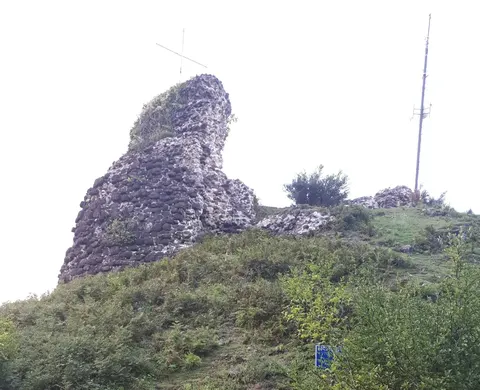
Telefisi Fortress (Tolebi)
A broken 6th-century wall on a steep hill above the Rioni plain — the Telephis where Byzantium and Persia fought for western Georgia.
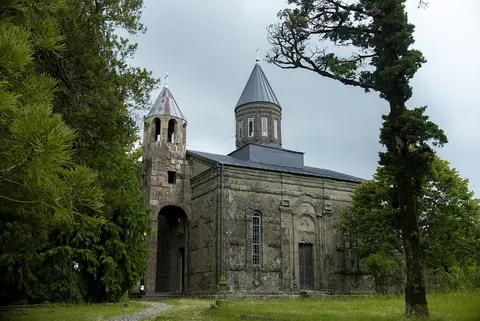
Sameba–Jikheti Convent
A convent on Nigoiti hill whose site, tradition says, was chosen by three doves, and where, the nuns say, the liturgy never stopped, even under Soviet rule.
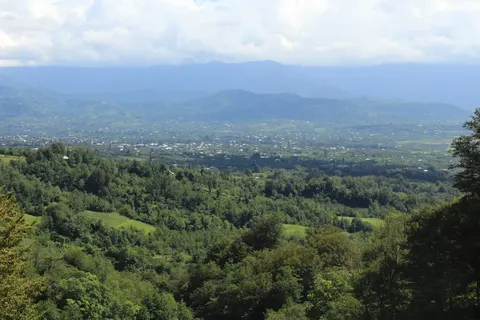
Chokhatauri
A small Gurian town where the plain meets the mountains: the last fuel before Bakhmaro, and a past of garrisons, revolts and tea.
Best car for this trip
Unpaved sections
Guides
- Do You Need a 4x4 in Georgia? We rate the road surface and the minimum car class for all 267 places in our database. 227 of them need nothin
- The Best Time to Visit Georgia, Counted Month by Month Georgia does not have one season. It has two countries: a 60% country from November to April and a 99% country
Pickup locations
Car Rental at Kutaisi Airport — 25 km (straight line)