
Telefisi Fortress (Tolebi)
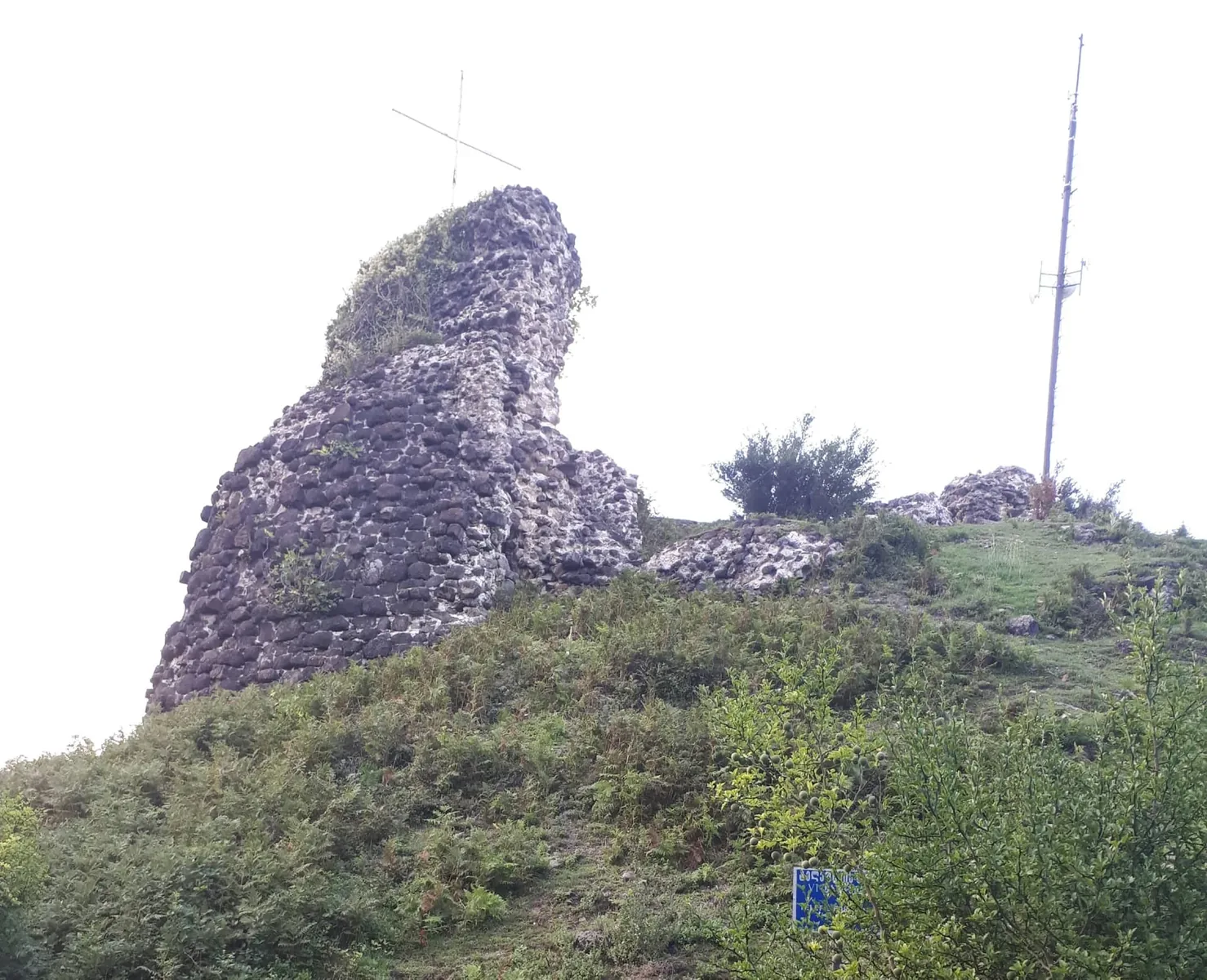
A broken 6th-century wall on a steep hill above the Rioni plain — the Telephis where Byzantium and Persia fought for western Georgia.
- Time needed
- 1 h
- From Tbilisi
- 263 km · 3:55
- Road
- Mostly paved
- Car needed
- Crossover / SUV
- Season
- All year
- Entry
- free
In the 550s a Persian general so old and lame that he had to be carried among his troops on a litter drove a stronger Byzantine army off this hill, and the whole Byzantine front on the Rioni fell back.
This was the Lazic War, the long struggle between Byzantium and Sasanian Persia for Lazica, the kingdom of western Georgia; the frontier between the two empires ran past this fortress. Telephis, as the Greek historians call it, was the Byzantines' most forward stronghold. Word had gone round that the Persian commander Mihr-Mihroe — Mermeroes to the Greeks — was gravely ill; instead he struck, and by a stratagem forced the Byzantine and Lazic troops out of Telephis and neighbouring Ollaria and into retreat down the Phasis, today's Rioni. Procopius and Agathias both mention the fortress; the year is given variously as 553, 554 or 555. Mihr-Mihroe died of illness at Mtskheta soon after.
For centuries nobody was sure where Telephis stood. Marie Brosset and Ivane Javakhishvili placed it at Telepa in Upper Imereti; in 1935 an expedition led by Simon Qaukhchishvili, with the help of Akaki Shanidze, found it here, on a hill above the Khevistskali stream in Tolebi, in historic Guria. In later centuries the fort belonged to the Chiladze princes and then to the district of Sajavakho.
The hill is steep and can be climbed only from the south-east; its northern face is broken rock. The walls once enclosed about two hectares: dressed square blocks below, river cobbles above, a blind tower against the south-western wall, and on the west eleven courses of square brick set in mortar over a wall 3.6 metres thick. Today expect one tall, jagged fragment and low stumps half-lost in bracken.
Stand beside it and look over the Rioni lowland: whoever held this hill watched the river road.
Practical advice
Allow about an hour. There are no facilities and little or no interpretation on site, so read up before you go and bring water. The climb is short but steep; wear long trousers against brambles and, in the warm months, check for ticks afterwards. After rain the clay path turns slick. Stay off the surviving wall — the fragment leans and the mortar is crumbling. Combine it with Zando monastery at Gamochinebuli or the Sameba monastery at Jikheti nearby. Late afternoon gives the ruin the most shape against the sky.
How to get there from Tbilisi
From Tbilisi take the S1 (E60) west past Gori, Khashuri, Zestaponi and Kutaisi to the Samtredia roundabout, about 247 km. Turn onto the S12 towards Lanchkhuti and drive about ten kilometres south-west; beyond Vazisubani turn left onto the local road for Tolebi and Kvemo Nogha, some three kilometres more — about 263 km and just under four hours in all. The fortress stands on a hill at the north-eastern edge of Zemo Tolebi; the final approach is on foot, from the south-east. Village lanes are narrow and muddy after rain, so an SUV is the comfortable choice. Refuel in Samtredia.
Click a marker for details. Coloured lines are ready-made road trips.
Nearby places
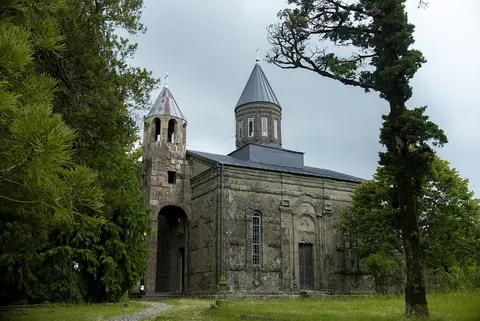
Sameba–Jikheti Convent
A convent on Nigoiti hill whose site, tradition says, was chosen by three doves, and where, the nuns say, the liturgy never stopped, even under Soviet rule.
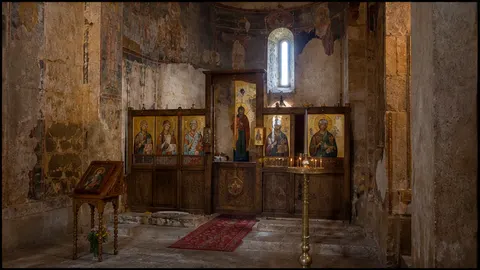
Zando St George Monastery
A small domeless church of 1519 on a hazel-wooded hill south of Samtredia, where on clear days the view reaches Lake Paliastomi and Poti.
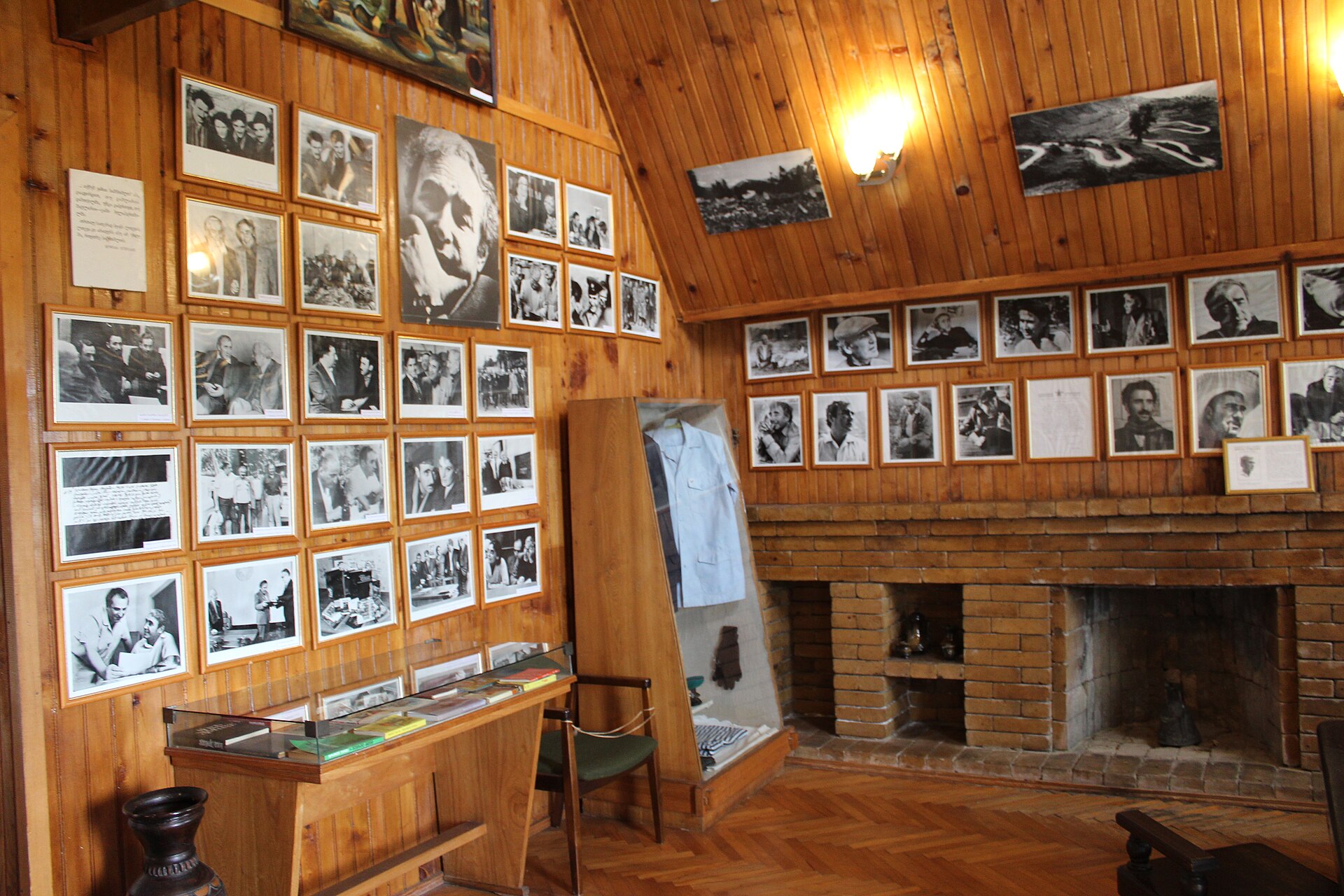
Nodar Dumbadze House Museum
A memorial museum in Zenobani, the Gurian hill village where Nodar Dumbadze grew up with his grandparents after the 1937 purges took his parents.
Vani Archaeological Museum
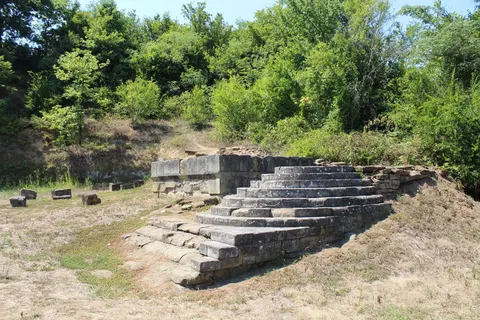
A Colchian city-sanctuary burned in the 1st century BC: hilltop walls and altars above a museum of gold diadems, Greek pottery and bronze.
Best car for this trip
Mostly paved
Guides
- Driving in Georgia: What the Distances Actually Cost You Georgia is a small country with slow roads. Here is what 267 measured drives from Tbilisi say about how long y
Pickup locations
Car Rental at Kutaisi Airport — 23 km (straight line)