
Chokhatauri
A small Gurian town where the plain meets the mountains: the last fuel before Bakhmaro, and a past of garrisons, revolts and tea.

- Time needed
- 2 h
- From Tbilisi
- 277 km · 4:00
- Road
- Paved
- Car needed
- Economy class
- Season
- All year
- Entry
- free
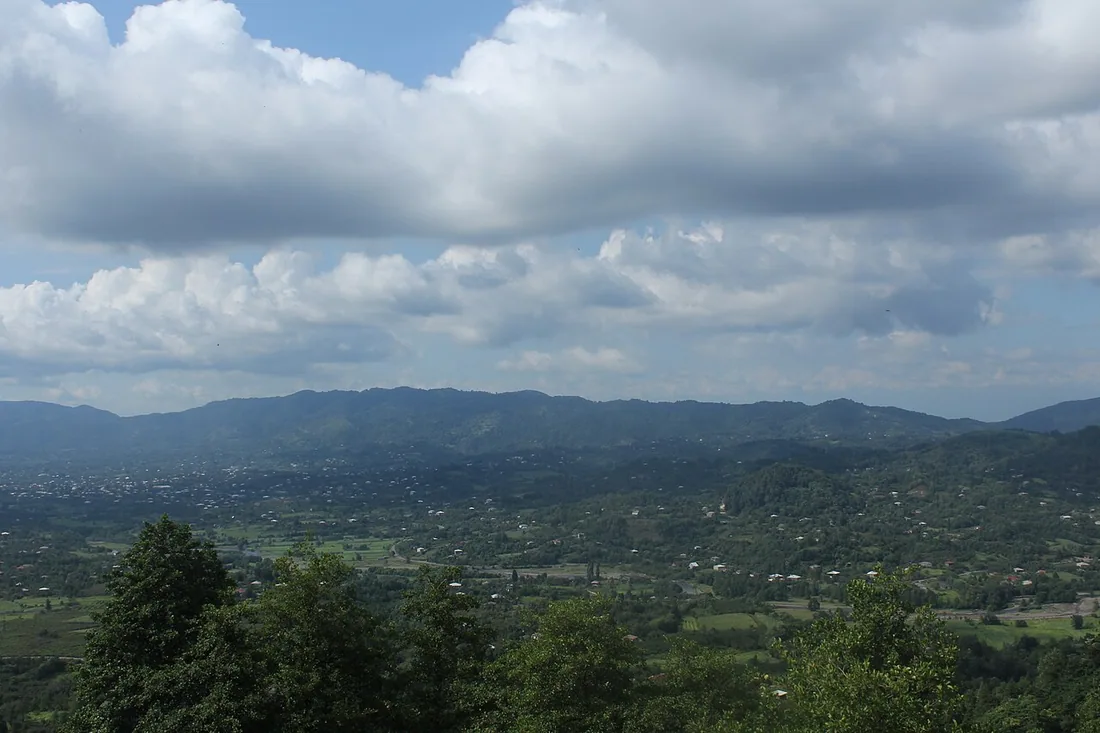
Chokhatauri is where Guria stops being flat. The town lies at the foot of the Guria range, on the right bank of the Supsa at about 150 metres, and from here the roads climb into the mountains: one up the Gubazeuli valley towards Bakhmaro, another towards Nabeghlavi.
The name comes from a family, the Chakhatarashvilis, and until the 1870s "Chakhatauri" meant a settlement south-east of today's town, where the Tetrighele stream meets the Supsa. In 1810, under an agreement between the Principality of Guria and the Russian Empire, a Russian garrison was posted here. From April to August 1820, during the Imeretian uprising, Gurian rebels fought imperial troops on this ground, and after their defeat the fortified towers were torn down. A new military road then carried the name to the present site at the mouth of the Oskojuri stream. In February 1906, as the Gurian Republic was crushed, a punitive force burned twenty houses in nearby Aketi.
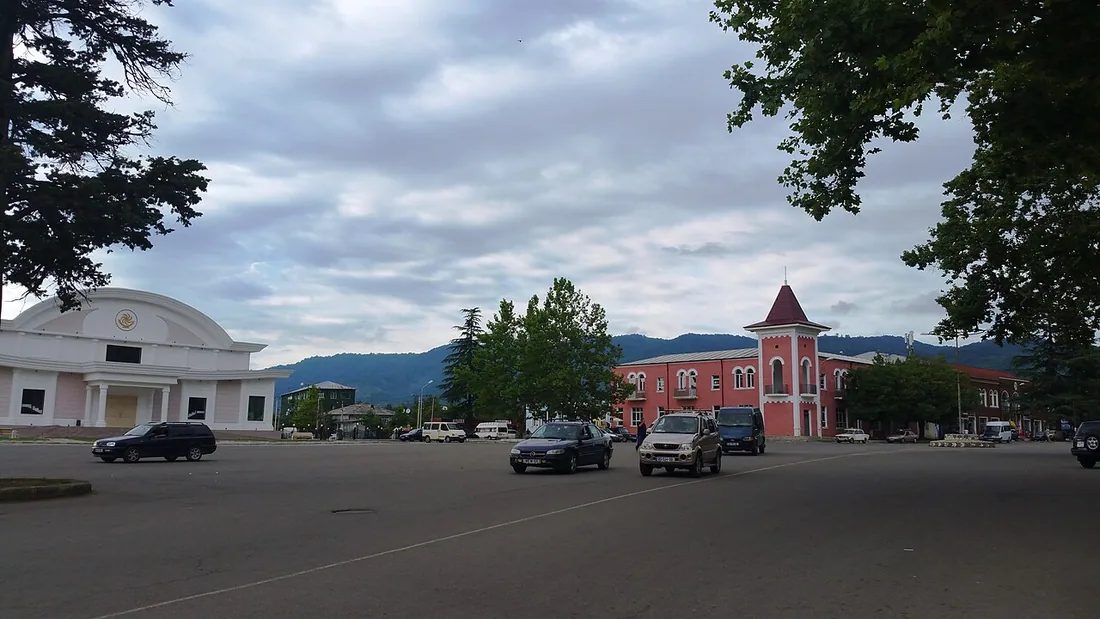
The Soviet decades left a heavier mark than you might expect: four tea factories, a winery, a branch of the Kutaisi car plant. In town: - the Nikoloz Berdzenishvili Museum of Local Lore, opened in 1958 and named after the historian - the salmon-pink building with the clock tower and red pyramid roof, the town's landmark - a few surviving oda houses, the traditional wooden homes of western Georgia - the Supsa riverbank, cool on a summer evening
Chokhatauri is not a destination in itself, but it has the last proper supermarket, cash machine and filling station before Bakhmaro. Fill the tank, buy the bread, and look up: the road ahead is long, steep and rough.
Gallery

Practical advice
An hour or two. The town's real job is logistics: before Bakhmaro or Nabeghlavi, fill up, draw cash and buy water and food here, because above the town shops all but vanish. The market is busiest in the morning; in autumn look for hazelnuts, honey and churchkhela. Hotels are few, so book ahead in July and August if you plan an early start up the mountain. Parking in the centre is free. The Nodar Dumbadze museum at Zenobani is about nine kilometres away, just off the Bakhmaro road at Khidistavi, and worth an hour on the way.
How to get there from Tbilisi
From Tbilisi take the S1 (E60) west past Kutaisi to Samtredia, follow the S12 south for about seven kilometres, then turn onto the Sh2, which runs through Sajavakho to Chokhatauri — 277 km, about four hours. It is asphalt the whole way: fast, largely dual carriageway on the S1, then a two-lane country road for the last twenty-odd kilometres. Fuel in Kutaisi, Samtredia and Chokhatauri itself, which has the last proper station on the Bakhmaro road. An economy car is entirely sufficient as far as the town; for the climb to Bakhmaro you will want an SUV or 4x4.
Click a marker for details. Coloured lines are ready-made road trips.
Nearby places
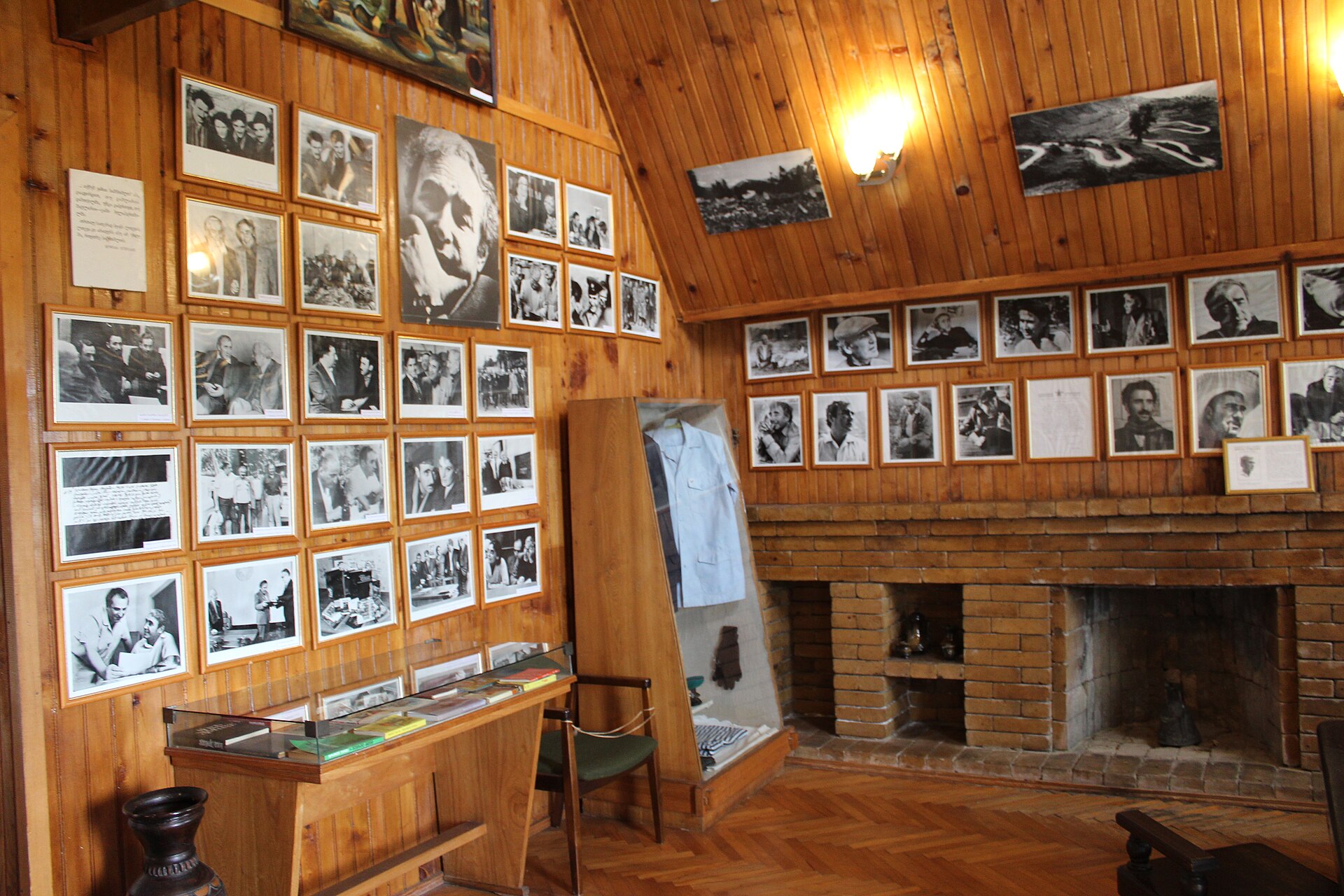
Nodar Dumbadze House Museum
A memorial museum in Zenobani, the Gurian hill village where Nodar Dumbadze grew up with his grandparents after the 1937 purges took his parents.
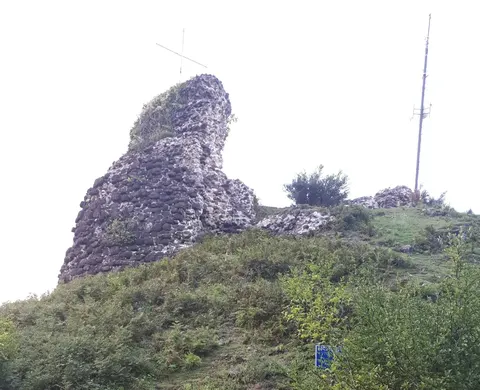
Telefisi Fortress (Tolebi)
A broken 6th-century wall on a steep hill above the Rioni plain — the Telephis where Byzantium and Persia fought for western Georgia.
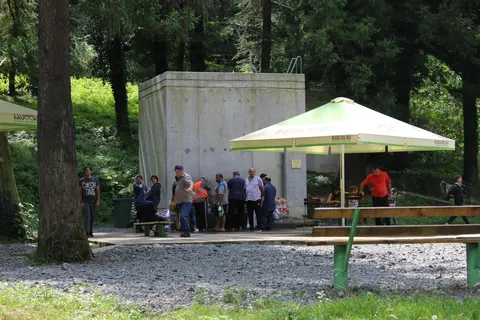
Nabeghlavi
The Gurian valley village behind Georgia's market-leading mineral water: a spring found in 1905, tradition says, by buffalo who knew better.
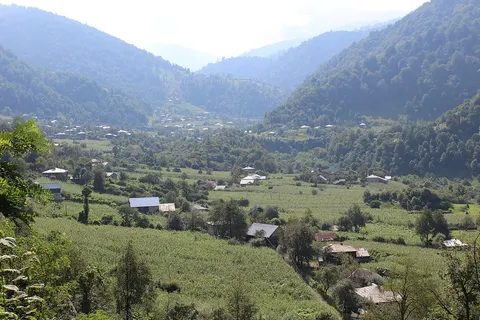
Zoti
A Gurian mountain village of Adjarian settlers on the Bakhmaro road, with a painted wooden mosque of 1904 that few drivers ever step into.
Best car for this trip
Guides
- Driving in Georgia: What the Distances Actually Cost You Georgia is a small country with slow roads. Here is what 267 measured drives from Tbilisi say about how long y
Pickup locations
Car Rental at Kutaisi Airport — 27 km (straight line)