
Sameba–Jikheti Convent
A convent on Nigoiti hill whose site, tradition says, was chosen by three doves, and where, the nuns say, the liturgy never stopped, even under Soviet rule.
- Time needed
- 1 h
- From Tbilisi
- 275 km · 4:00
- Road
- Mostly paved
- Car needed
- Economy class
- Season
- All year
- Entry
- free
Tradition says the nuns of Jikheti let three doves choose where to build again, and the birds came down here, on Nigoiti hill, beside a spring.
Their first convent, dedicated to the Myrrh-bearing Women, stood in an almost inaccessible spot on Jikheti mountain. The name comes from jikha, "fortress" in the Zan language, a hint that a castle once crowned the summit. Oral tradition dates the first church to the reign of Queen Tamar; by the nineteenth century only ruins were left, and the nuns, the legend goes, were worn down by the lack of water.
The documented story begins in 1886, when the nun Elene Mgaloblishvili settled here. The princely Machutadze family gave land, and in 1896, under Ilarion Menabde of Ozurgeti, the stone Church of the Presentation of the Mother of God was completed. Elene led the community until 1914, and the convent ran a school that taught reading and writing, housekeeping and handicrafts. In 1905 the hieromonk Iona sent an Iveron icon of the Mother of God from Mount Athos; it is still in the church, venerated as miraculous.
According to the convent's history, the liturgy here never ceased, not even in the atheist decades of Soviet rule — so the state ended up registering the convent as a village. At the 2014 census it had 21 inhabitants, all living within its walls.
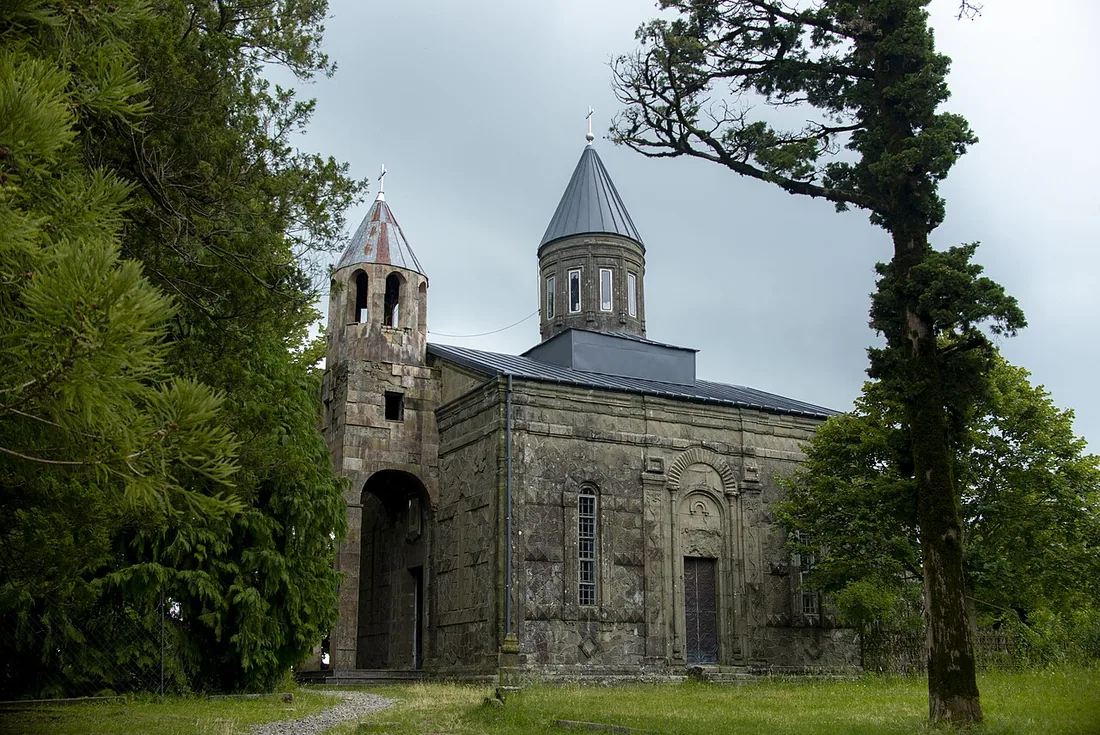
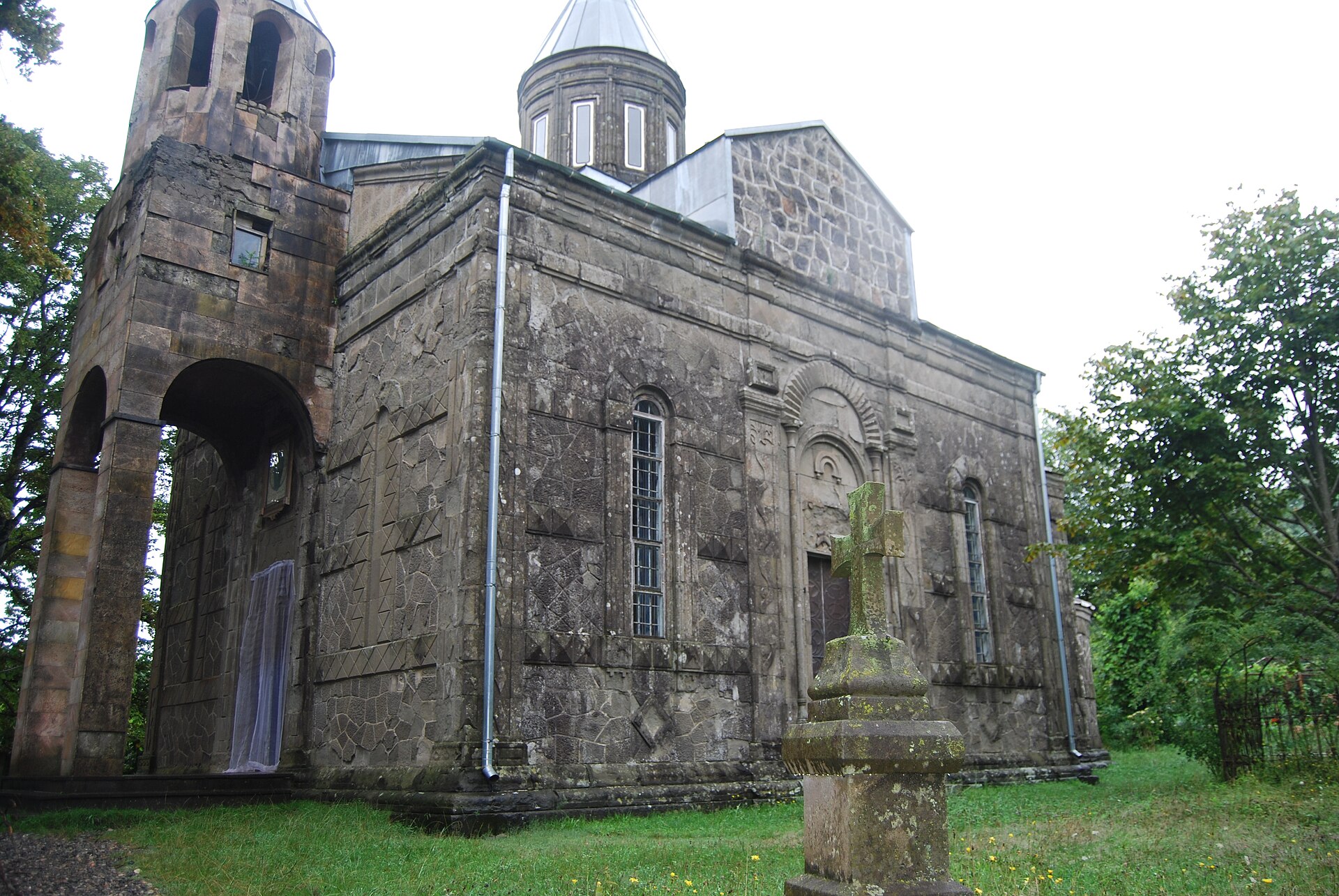
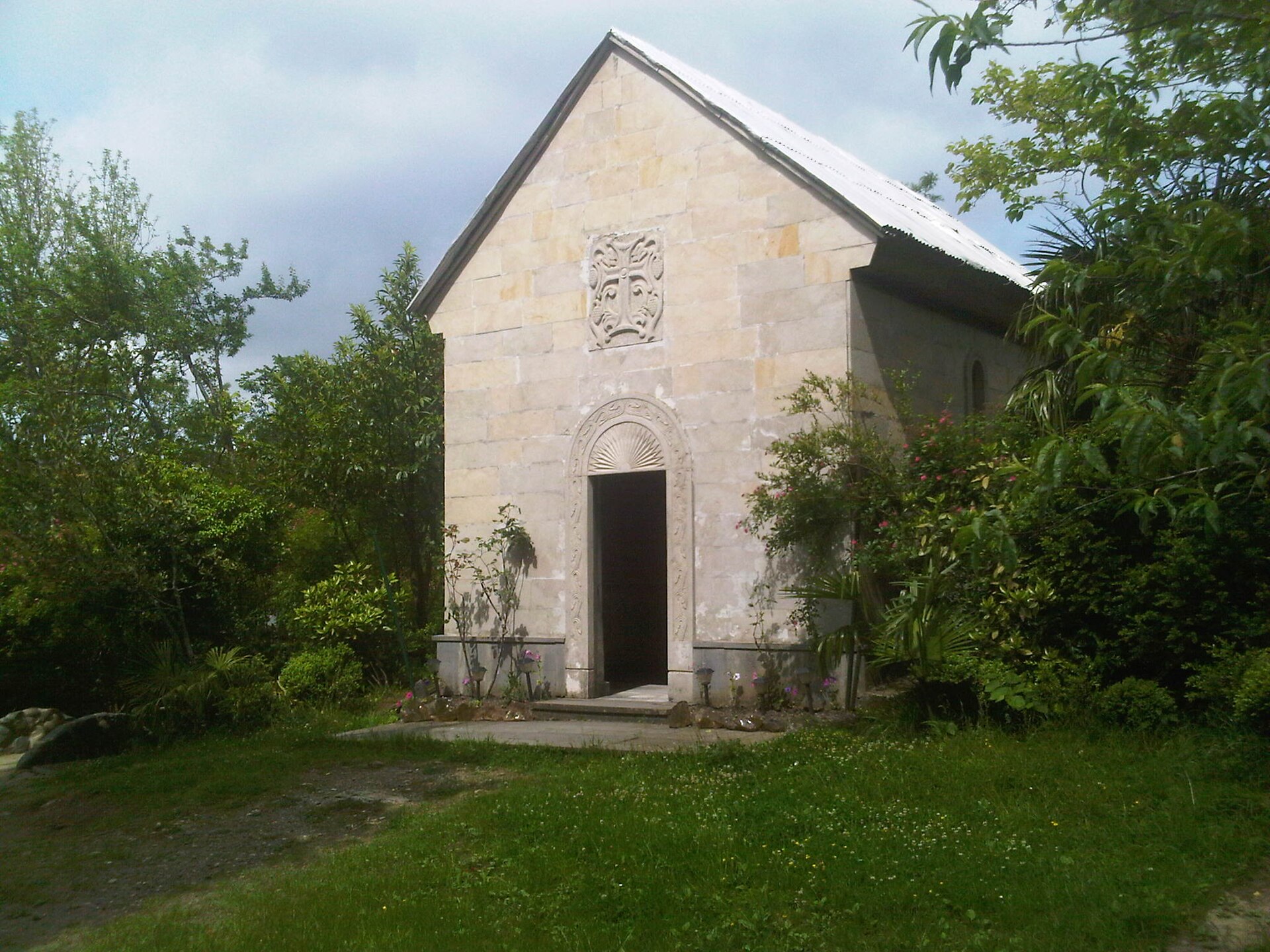
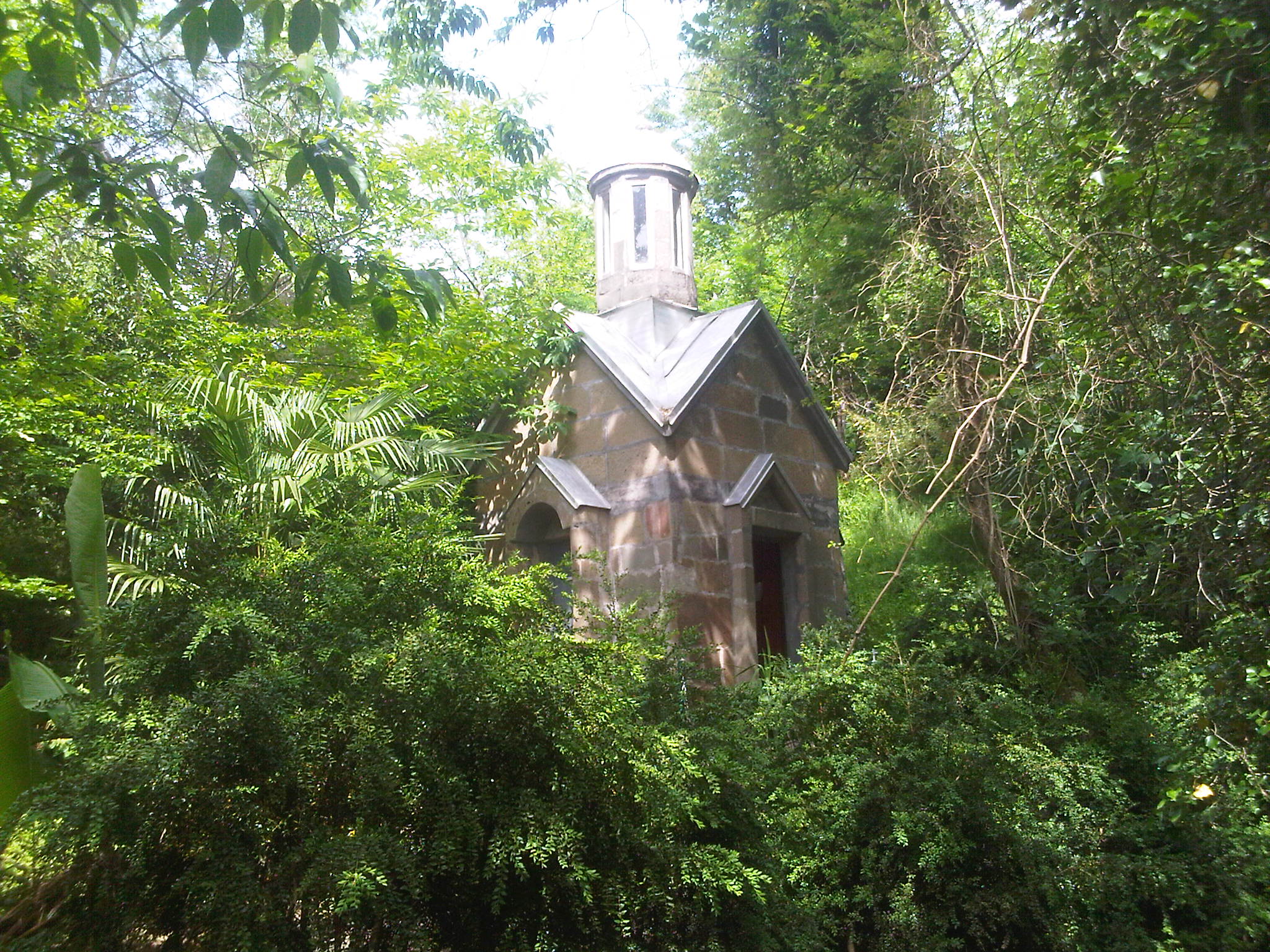
The main church is of dark stone under grey metal roofs, and Christ looks down from its dome. Since 1987 the community has added a bell tower and three more churches, the latest, of the Holy Apostles, in 2011. In the courtyard the "Spring of Jordan" runs into a baptismal pool, its water believed to heal. Whatever you make of the doves, they chose a place where the water flows and the prayer has never stopped.
Gallery
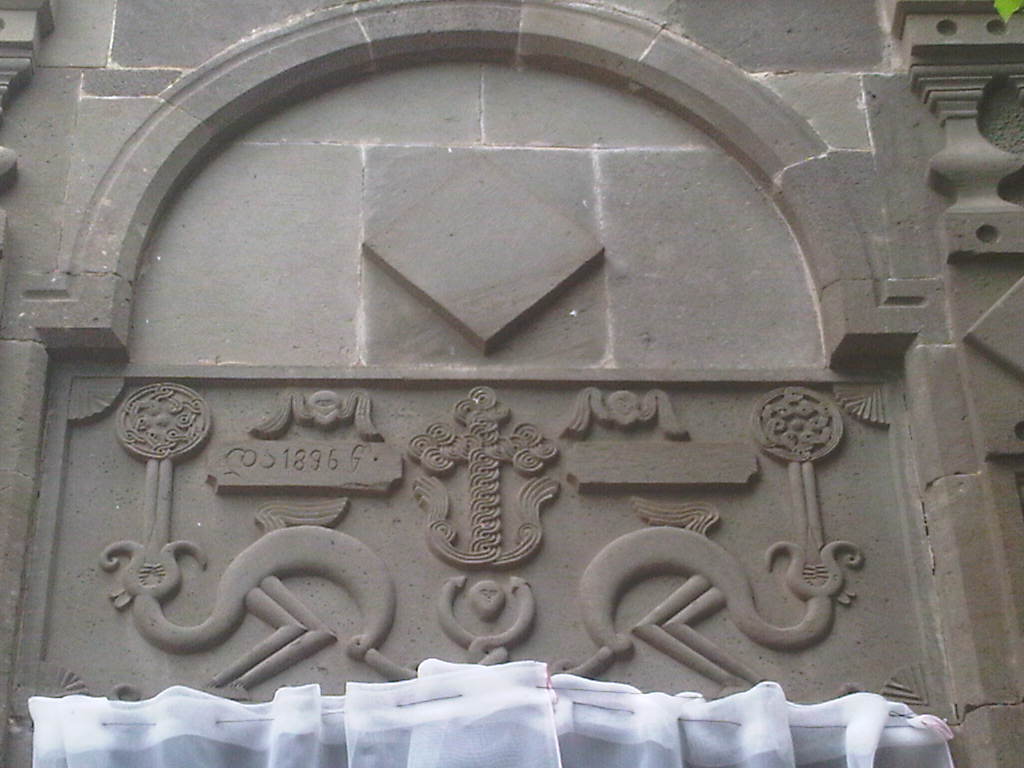
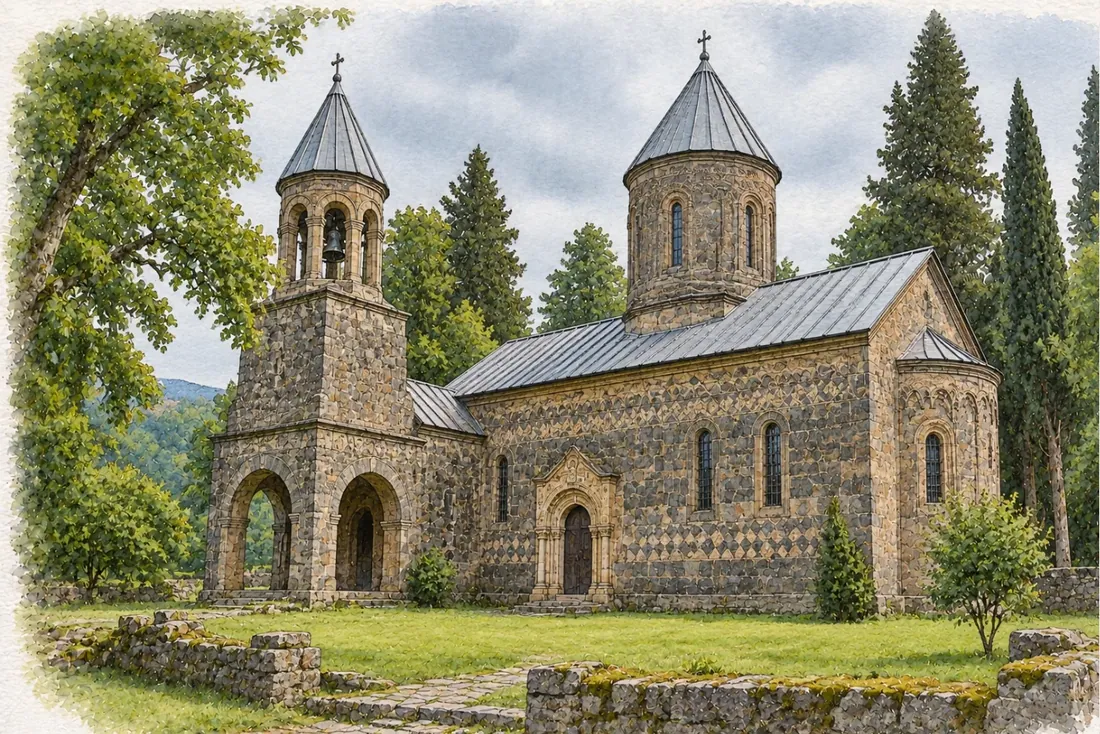
Practical advice
An hour is enough. This is a working convent: women need a headscarf and a skirt, men long trousers; photograph the nuns only with their permission, and keep your voice low during services. On 4 December, the feast of Jikhetoba, expect crowds and long services — a moving day to come, but not a quiet one. If you would like water from the spring, ask the nuns first. Do not count on a café; Lanchkhuti, a short drive away, has shops and food. Telefisi Fortress, a few kilometres east, pairs well with the visit.
How to get there from Tbilisi
From Tbilisi it is about 275 km, around four hours. Take the S1 (E60) west past Khashuri, through the Rikoti section and past Kutaisi to Samtredia, then the S12 towards Lanchkhuti. Before Lanchkhuti, near the village of Nigoiti, leave the highway: the convent lies about 6 km away on the northern slope of the Guria range, first along a local road and then up a narrow lane through the woods. The lane is tight and winding, but in dry weather an economy car is entirely adequate. Fill up in Samtredia or Lanchkhuti.
Click a marker for details. Coloured lines are ready-made road trips.
Nearby places
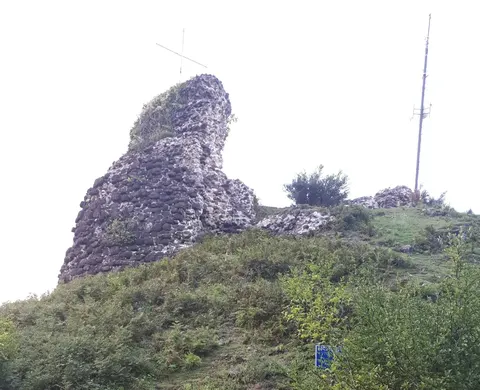
Telefisi Fortress (Tolebi)
A broken 6th-century wall on a steep hill above the Rioni plain — the Telephis where Byzantium and Persia fought for western Georgia.
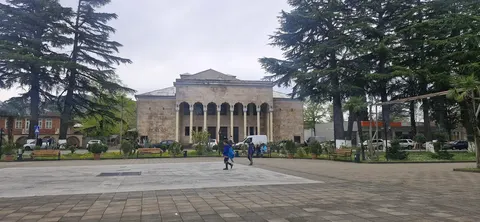
Lanchkhuti
Guria's northern gateway: birthplace of Noe Zhordania, a hotbed of the 1905 peasant revolt, and the last big stop before the sea.
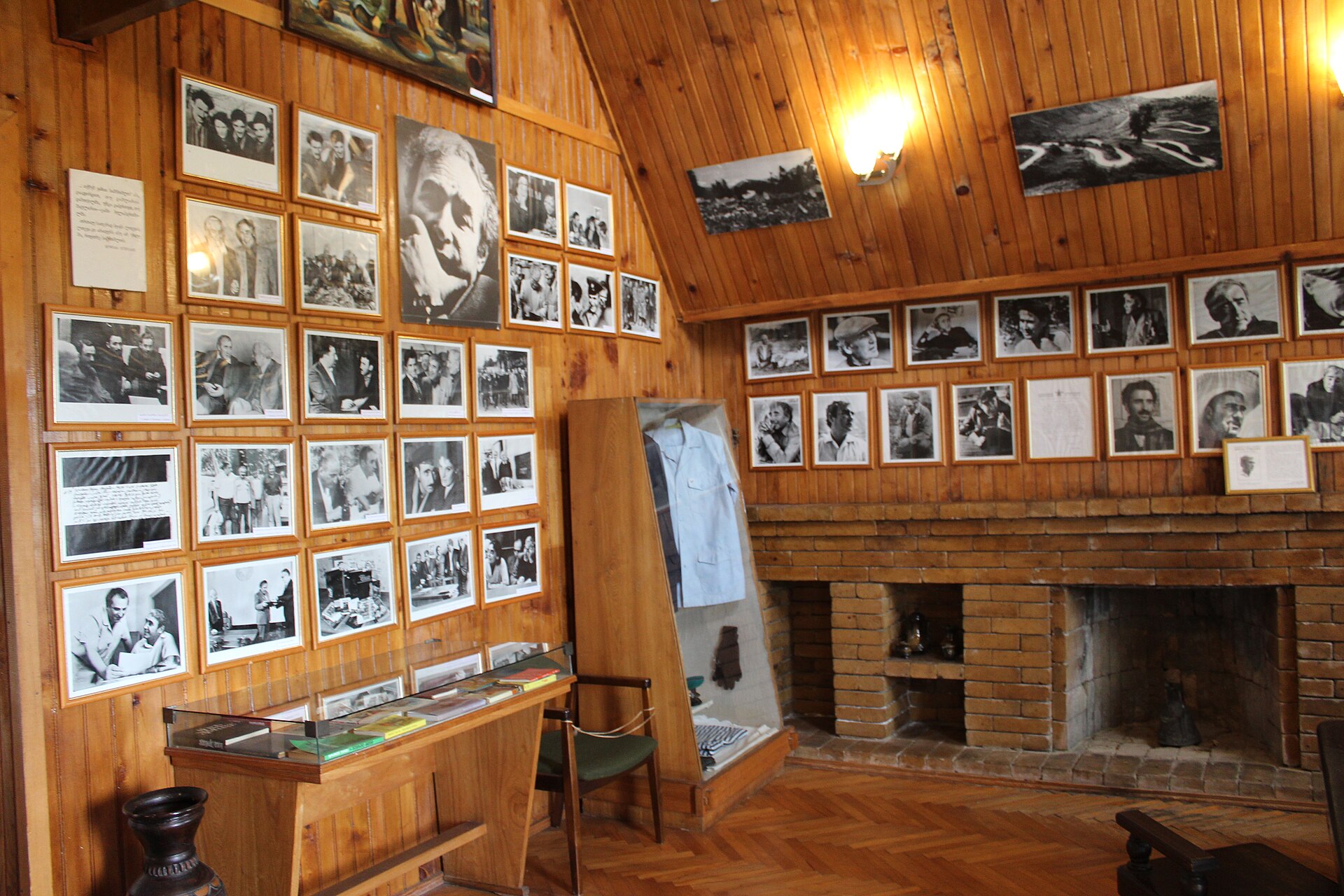
Nodar Dumbadze House Museum
A memorial museum in Zenobani, the Gurian hill village where Nodar Dumbadze grew up with his grandparents after the 1937 purges took his parents.
Part of these road trips
- Adjara-Guria Green Road 5 days · 520 km
- Guria Slow Food and Coast 3 days · 330 km
Best car for this trip
Mostly paved
Guides
- Driving in Georgia: What the Distances Actually Cost You Georgia is a small country with slow roads. Here is what 267 measured drives from Tbilisi say about how long y
Pickup locations
Car Rental at Kutaisi Airport — 29 km (straight line)