
Tsunda
The site of Javakheti's oldest centre by the Mtkvari near Vardzia: a 12th–13th-century church on a rock, a carved porch and terraces nobody has dug.
- Time needed
- 1 h
- From Tbilisi
- 259 km · 4:15
- Road
- Paved
- Car needed
- Economy class
- Season
- All year
- Entry
- free
Before Vardzia was cut into the cliffs upstream, Tsunda was the chief city of Javakheti.
Georgian tradition credits its founding to Javakhos, one of the forefathers of the Georgians: according to the chronicler Leonti Mroveli, he built two fortress-cities, Tsunda and Artaani. The chronicles go on to say that in the third century BC King Parnavaz made it the seat of a duchy covering Javakheti, Kola and Artaani. After the conversion, they relate, the envoy of Emperor Constantine left builders and treasure at Tsunda for a church before moving on to Manglisi. In the fifth century Vakhtang Gorgasali installed a bishop here and willed the town to his wife and two sons. By the eighth or ninth century the centre had shifted across the Mtkvari to the fortress of Tmogvi, and Tsunda slowly dissolved into fields.
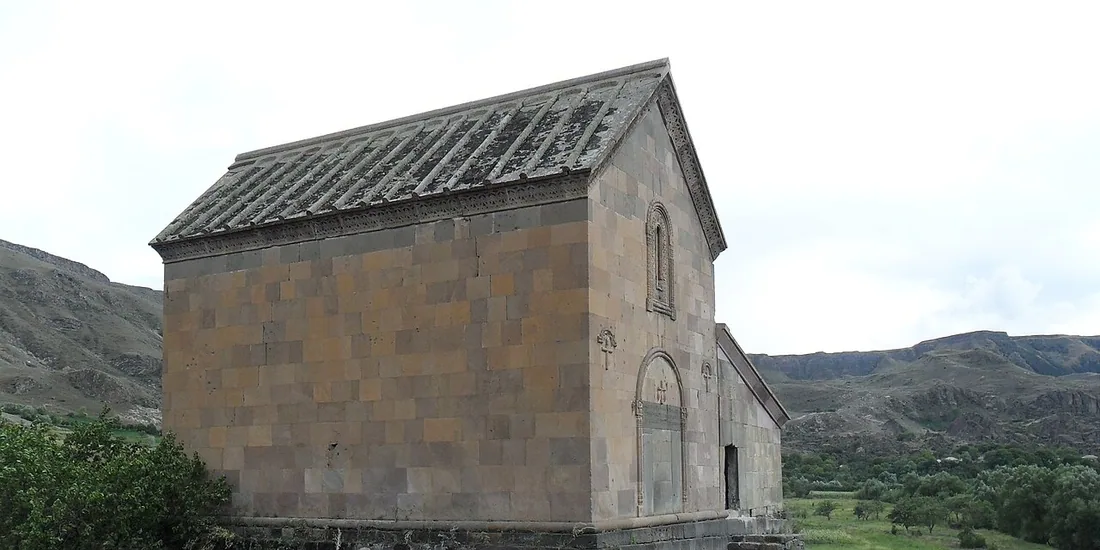
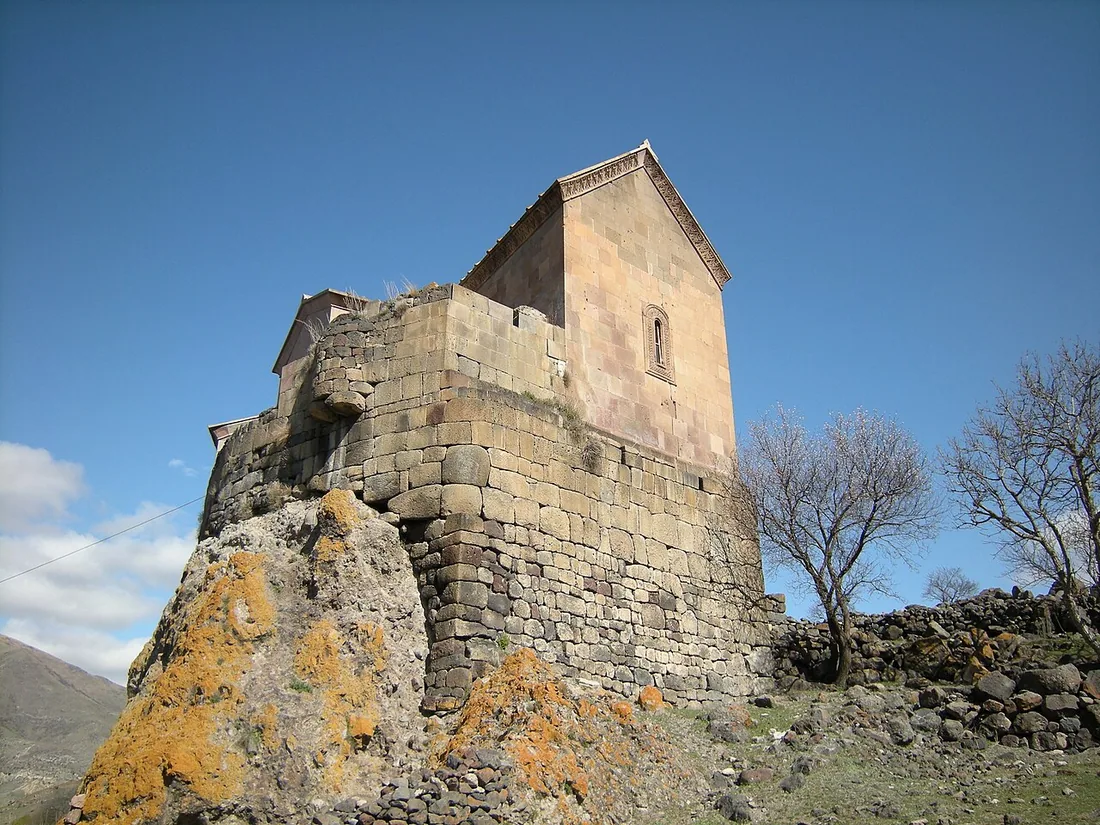
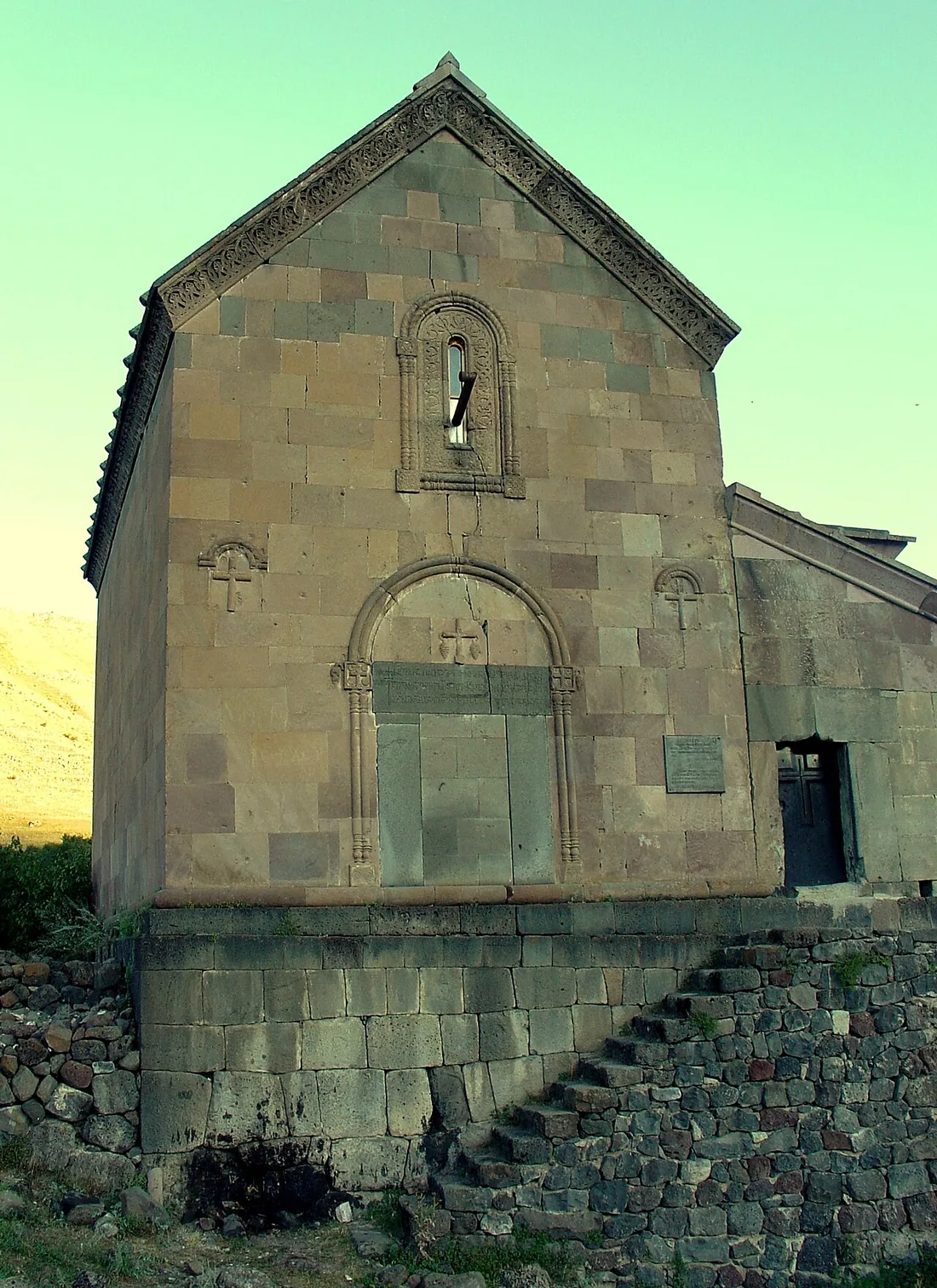
Almost nothing of the city stands above ground. On the hill is the church of St John the Baptist, a twelfth- or thirteenth-century hall church on a small rock, built of finely dressed blocks. An asomtavruli inscription over the west door preserves the builder's name: Ichkit Gurgenisdze, a Javakheti nobleman of Queen Tamar's time. The same man restored the nearby cave monastery of Vanis Kvabebi in 1186–1191, and his name was remembered as far away as the Georgian Monastery of the Cross in Jerusalem, where a commemoration was kept for him on 23 November.
The south porch, added later, has carved columns, and the window frames and cornice are richly worked. Look for the bell tower and wine presses cut into the rock; a nineteenth-century caravanserai also survives. Stepped terraces up to three metres high climb the western side of the hill, perhaps as old as the city, but nobody has yet dug to find out. Tsunda is still waiting for its archaeologist.
Practical advice
Entry is free and there is no ticket office. Do not expect toilets, a café or water here: all of that is at Vardzia, about five kilometres on, so pair the two in one day. The church stands a couple of hundred metres from the road on a small rock; the path is short but uneven, so wear proper shoes. If the church is open, cover shoulders and knees. The valley bakes in July and August, so come in the morning or late afternoon, when low light sharpens the carving on the porch. Half an hour to an hour is enough.
How to get there from Tbilisi
From Tbilisi take the E60/S1 to Khashuri, the S8 through Borjomi to Akhaltsikhe, then the S11 to Aspindza. From Aspindza the road follows the Mtkvari upstream past Khertvisi fortress towards Vardzia; Tsunda's hill rises just east of the road, about five kilometres before Vardzia. In all it is roughly 259 km and 4 hours 15 minutes, on asphalt throughout, though the last stretch along the river is narrow with blind bends. An economy car is fine. Fill up in Akhaltsikhe or Aspindza, as fuel stations are scarce beyond.
Click a marker for details. Coloured lines are ready-made road trips.
Nearby places
Vanis Kvabebi
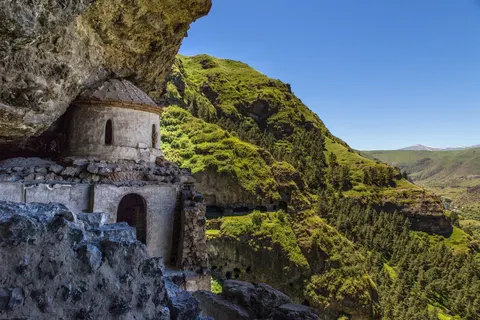
An 8th-century cave monastery two kilometres from Vardzia, where women in the 15th century inked verses of Rustaveli on a chapel wall.
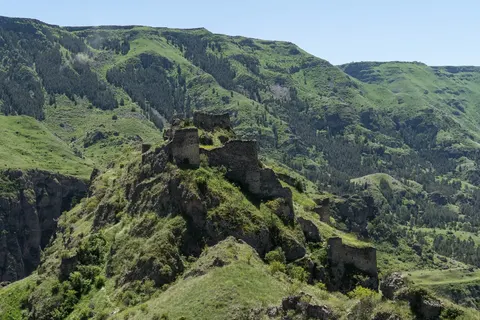
Tmogvi Fortress
A cliff town-fortress strung across three rocky hills above the Mtkvari, thrown down by earthquakes and still reached only on foot.
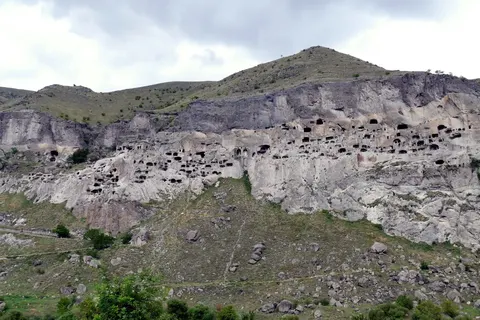
Vardzia
Queen Tamar's cave monastery above the Mtkvari: some 500 m of cliff in up to nineteen tiers, and a church where Tamar was painted in her lifetime.
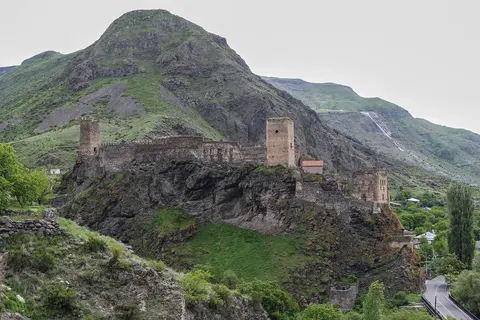
Khertvisi Fortress
A fortress on a rock spur where the Paravani flows into the Mtkvari, its tower and walls dated by inscription to 1354–1356. On the road to Vardzia.
Best car for this trip
Guides
- Driving in Georgia: What the Distances Actually Cost You Georgia is a small country with slow roads. Here is what 267 measured drives from Tbilisi say about how long y
Pickup locations
Car Rental in Kutaisi — 109 km (straight line)
Booking and enquiries
The easiest way to reach these places is by car — you pick the route and the stops.