
Tmogvi Fortress
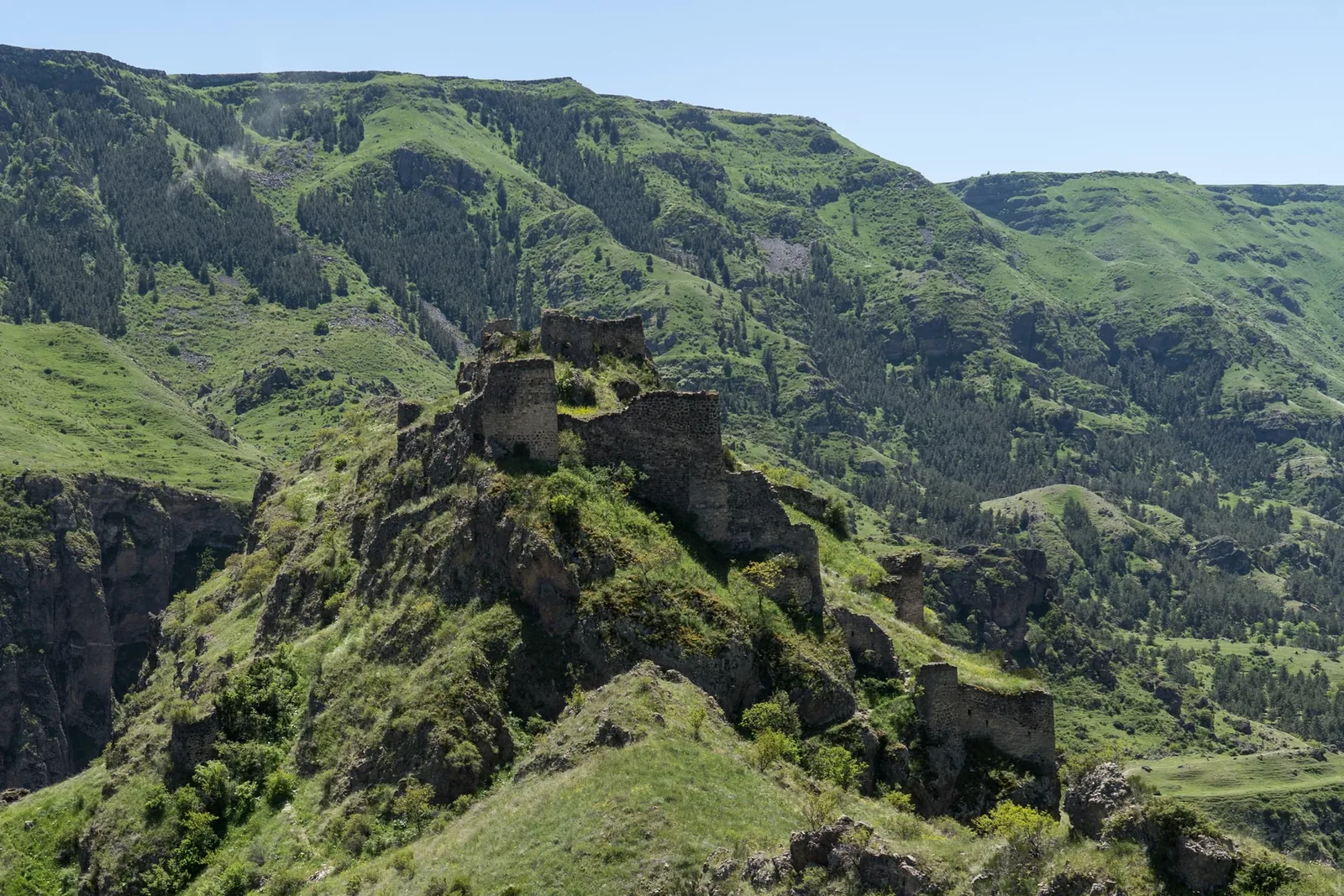
A cliff town-fortress strung across three rocky hills above the Mtkvari, thrown down by earthquakes and still reached only on foot.
- Time needed
- 2 h
- From Tbilisi
- 221 km · 4:10
- Road
- Mostly paved
- Car needed
- Crossover / SUV
- Season
- May–October
- Entry
- free
Enemies rarely got the better of Tmogvi; in the end it was the ground itself that brought the town down.
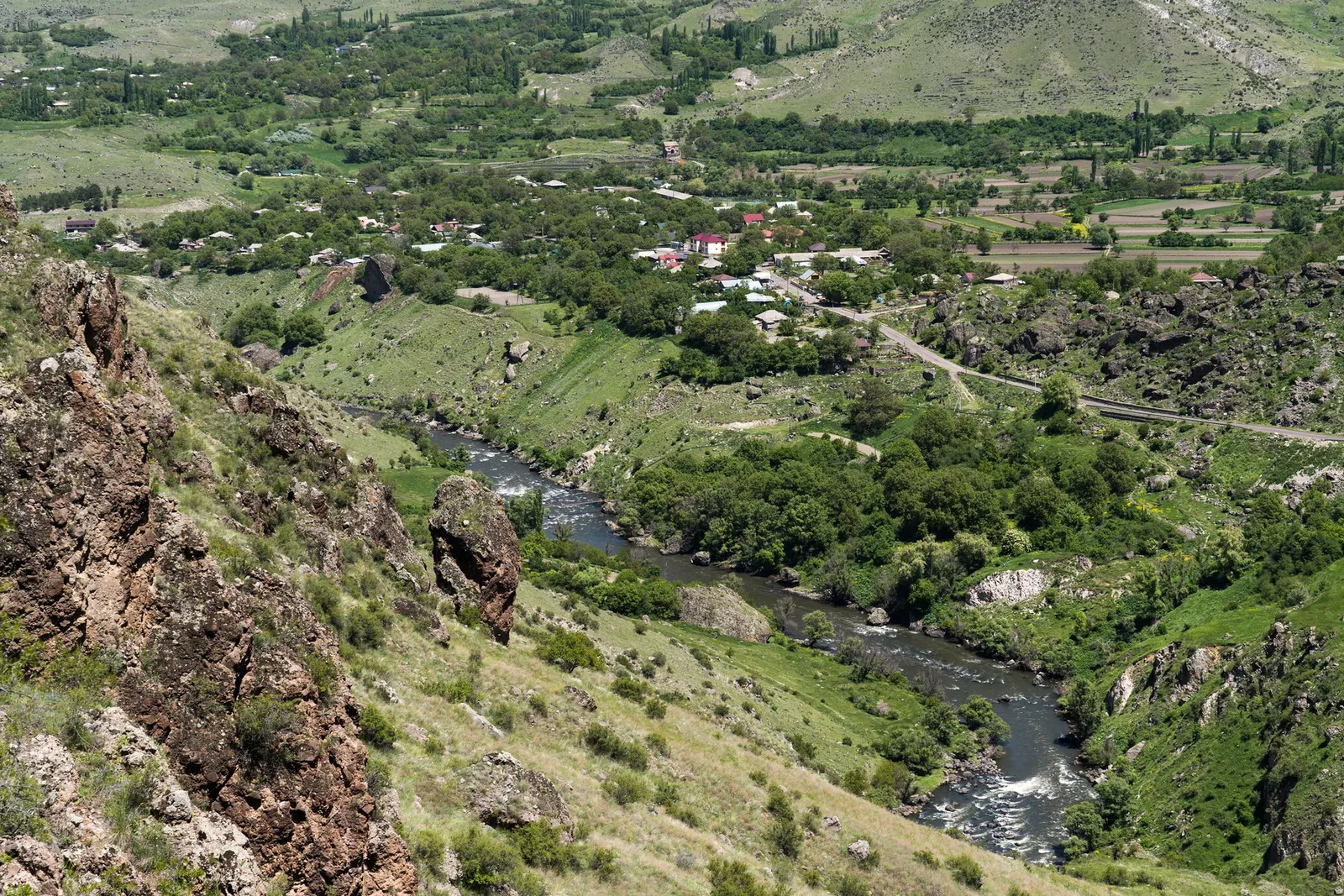
The fortress holds a crag on the Mtkvari's left bank between Khertvisi and Vardzia, guarding the old road from the Javakheti plateau into the gorge. The chronicles first name it in 914, when the Arab commander Yusuf ibn Abi'l-Saj reached its walls and left without taking it. Early in the 11th century Bagrat III, the king who united Georgia, used it as a royal prison for the deposed princes of Klarjeti, Sumbat and Gurgen.
Then the earth moved. The earthquake of 1088 brought the fortress down on its lord, Kakhaber, and his wife; the ground shook again in 1283 and 1319, and each time Tmogvi was rebuilt. In 1191 Queen Tamar granted it to Sargis Mkhargrdzeli, and his line produced Sargis Tmogveli, the writer traditionally credited with the Georgian prose version of the Persian romance Vis and Ramin, the Visramiani. The Shalikashvili were its last Georgian masters; the Ottomans took it in 1578.
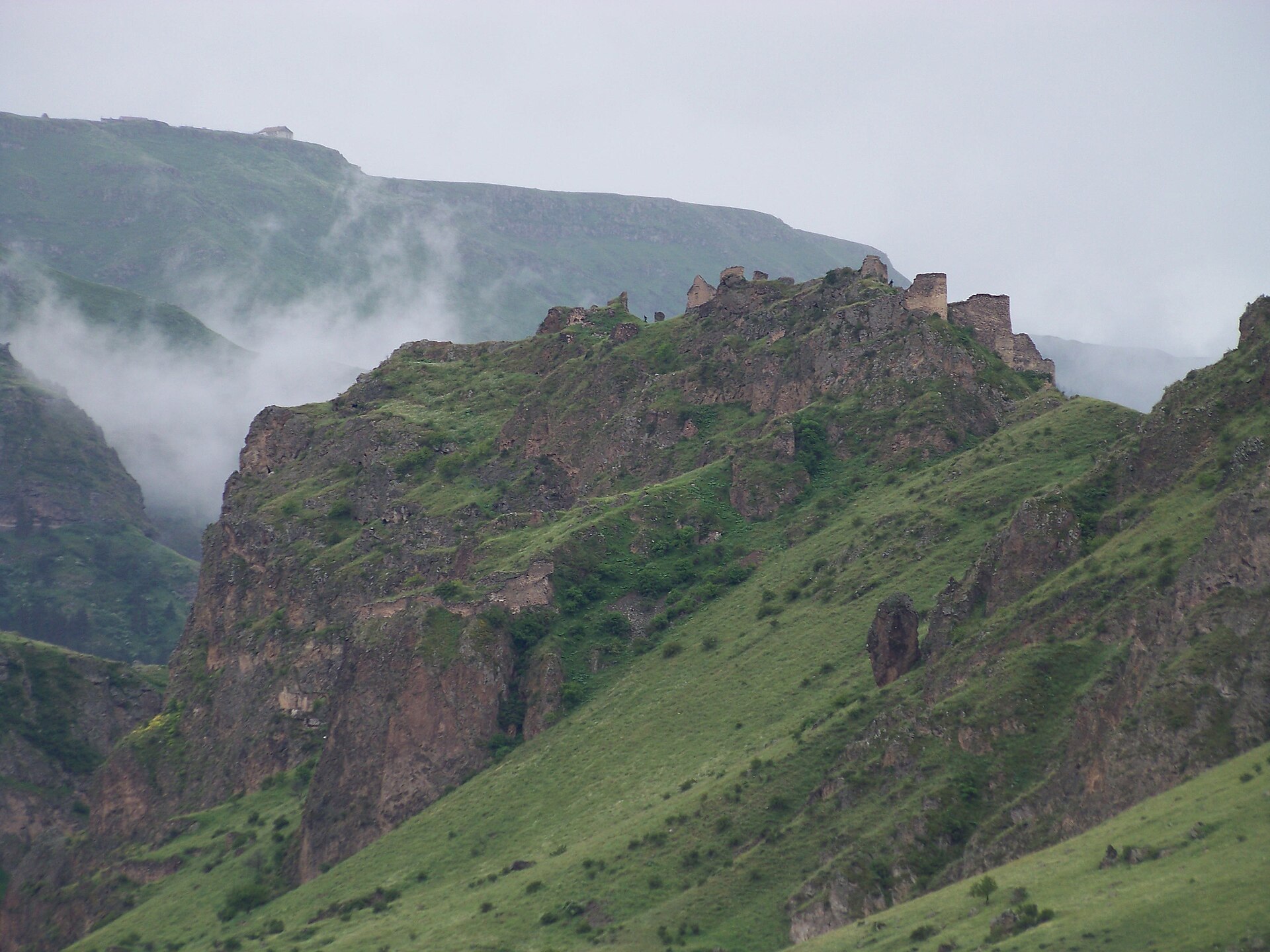
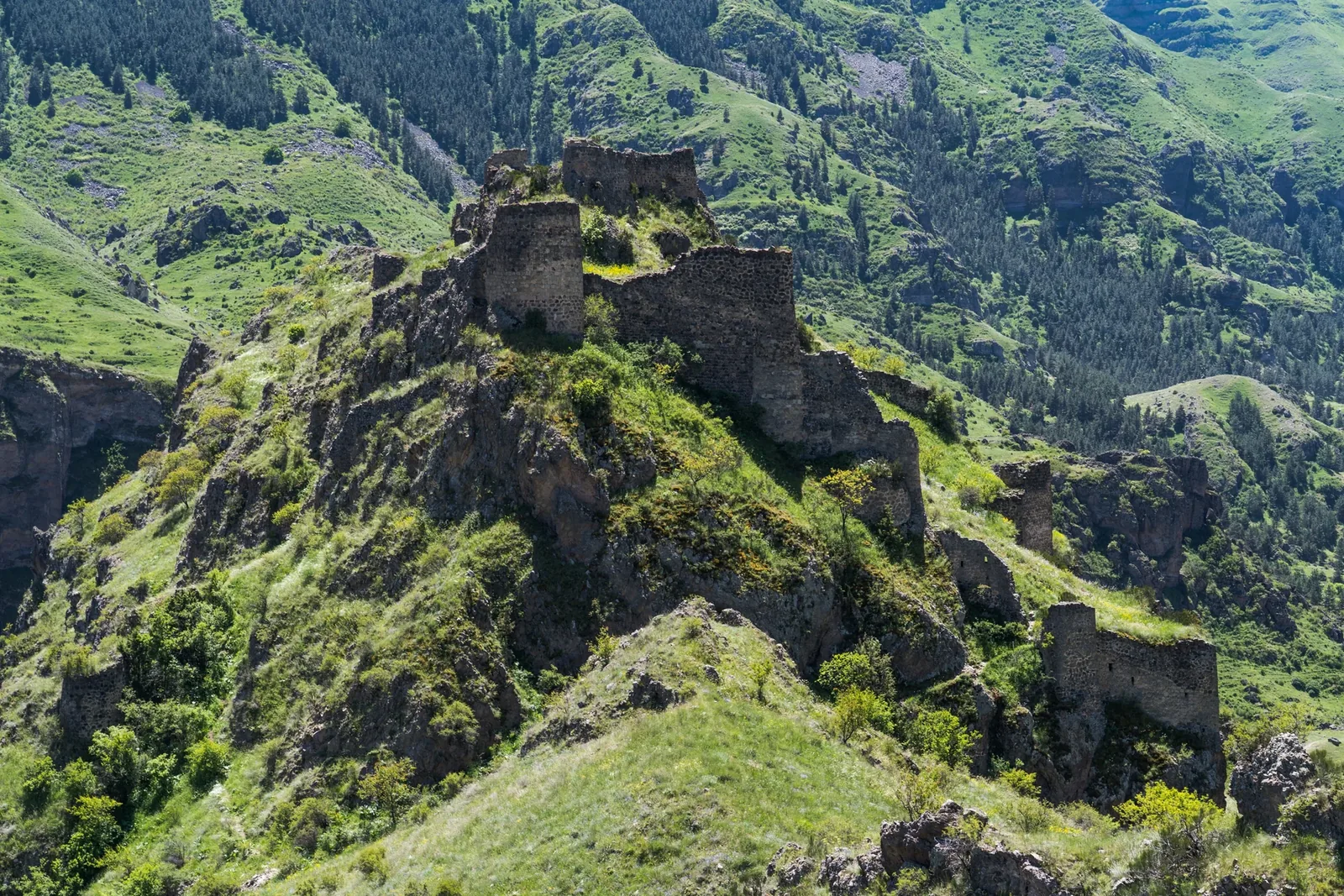
Today a single wall binds three rocky hills, each crowned with ruined towers, with two cisterns inside. Look for the secret passage cut through the rock down to the river, which kept the garrison in water under siege. In a ravine west of the walls hides the rock-cut church of St Ephrem, its chancel screen carved from the living stone; nearby ruins keep fragments of 13th-century painting.
Armenians call the place Tmkaberd. Their tradition tells of a lord no army could defeat until a Persian shah seduced his wife; she poisoned him, got his soldiers drunk and opened the gates. Hovhannes Tumanyan turned the story into a poem in 1902, and Alexander Spendiaryan into the opera Almast.
Stand on the western hill at dusk. The town the earth threw down three times lies scattered in the grass, and the only sound is the Mtkvari far below.
Gallery
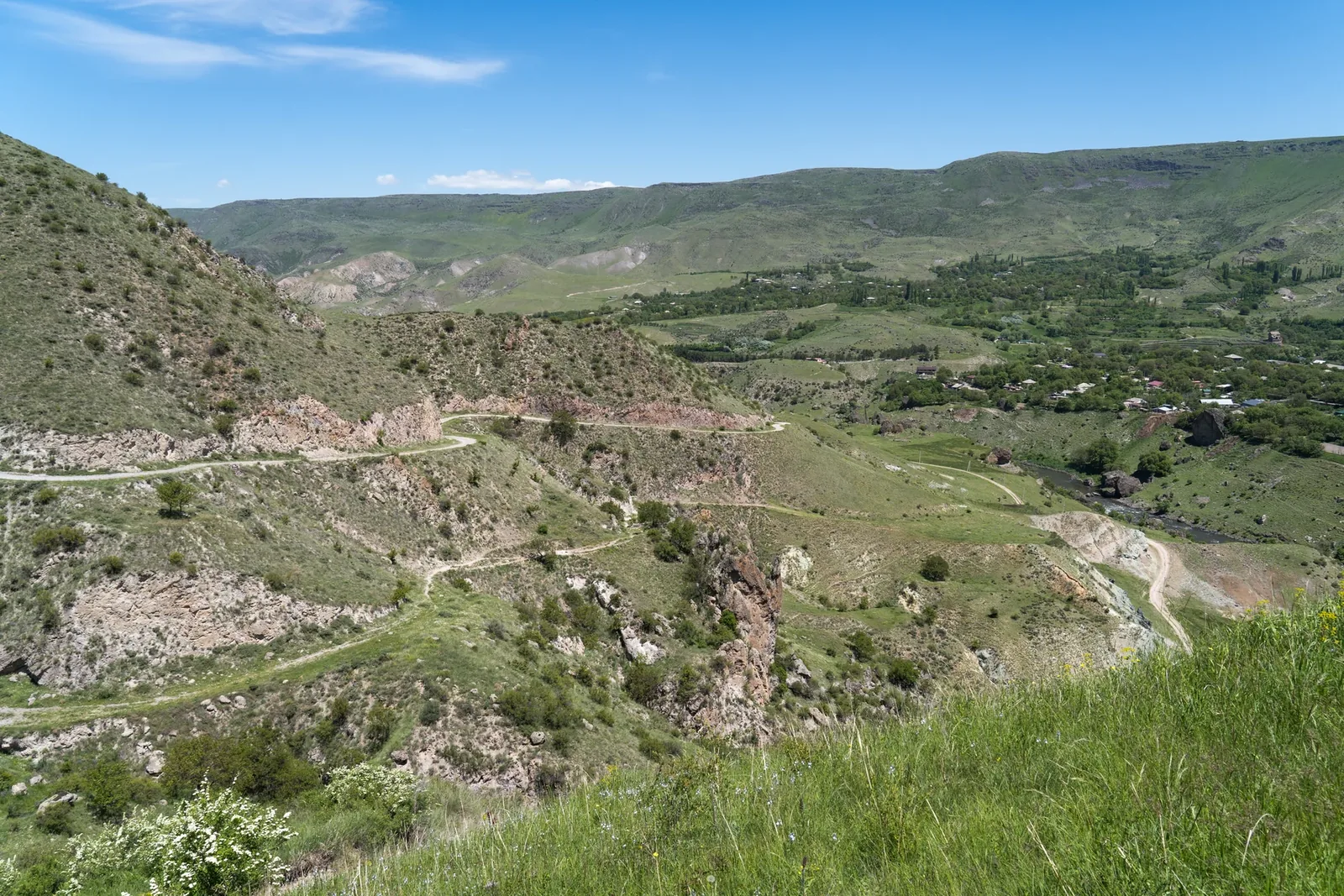
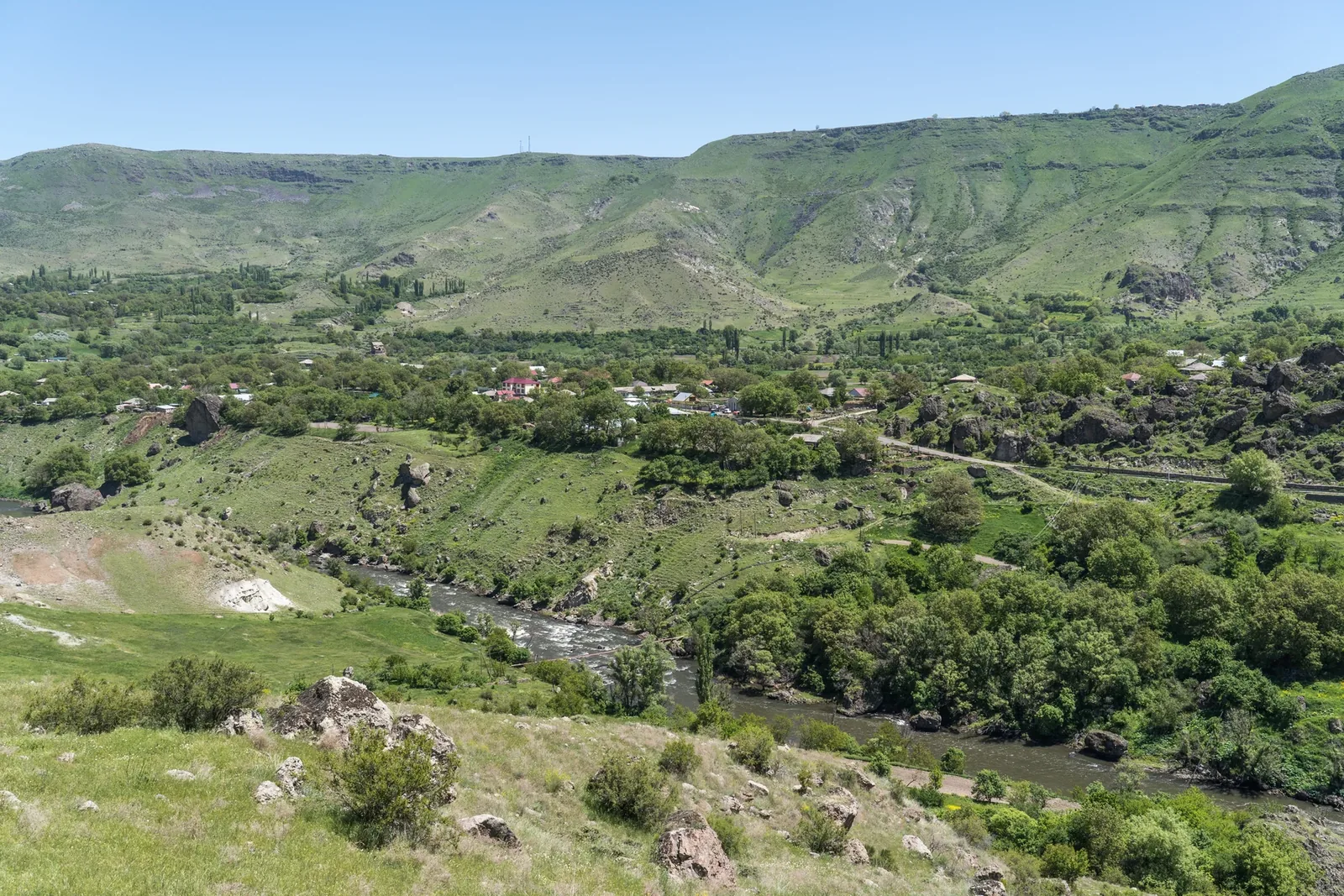
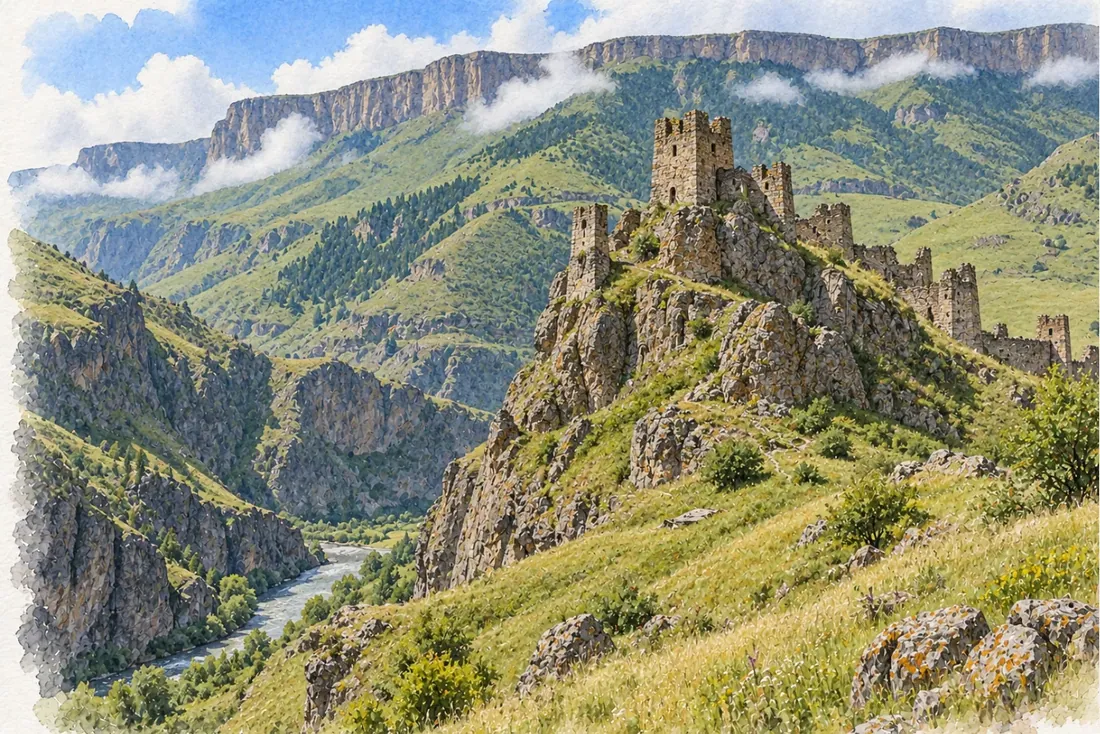
Practical advice
Allow two hours. There is no ticket, no guard, no railing and no marked path: the climb from the river takes 30 to 45 minutes on steep, loose stone, and the drops at the top are unguarded. Wear boots, don't go alone and tell someone your plan, as the phone signal comes and goes in the gorge. There is no shade at all, so carry two litres of water each, a hat and sun cream. In spring and autumn watch for ticks and snakes in the long grass. There are no shops or toilets beyond Aspindza; the nearest cafés are at Vardzia. Don't attempt it in snow or ice.
How to get there from Tbilisi
The shortest way (about 221 km, 4 h 10 min) crosses the Javakheti plateau. From Tbilisi take the Sh36 through Tskneti to Manglisi, then the Sh31 through Tsalka towards Ninotsminda, and the S11 through Akhalkalaki and down the Paravani canyon to Khertvisi. From there it is about 12 km along the Sh58 Vardzia road. Near Tmogvi village, where the road passes below the fortress, leave the car at the short gravel turn-off and cross the Mtkvari by the footbridge. The route via Borjomi, Akhaltsikhe and Aspindza is about 270 km and 4 h 45 min. Fill up in Akhalkalaki or Aspindza. An SUV's clearance helps on the gravel, especially after rain.
Click a marker for details. Coloured lines are ready-made road trips.
Nearby places
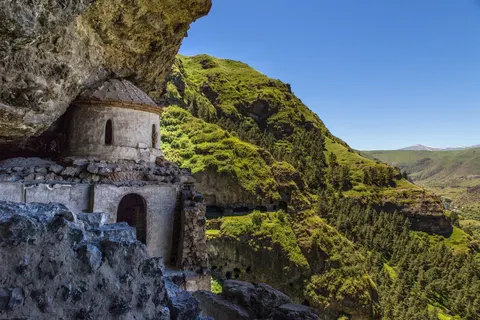
Vanis Kvabebi
An 8th-century cave monastery two kilometres from Vardzia, where women in the 15th century inked verses of Rustaveli on a chapel wall.
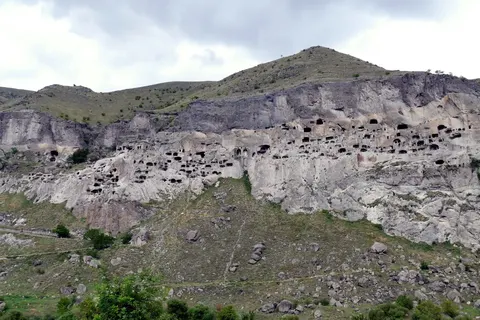
Vardzia
Queen Tamar's cave monastery above the Mtkvari: some 500 m of cliff in up to nineteen tiers, and a church where Tamar was painted in her lifetime.
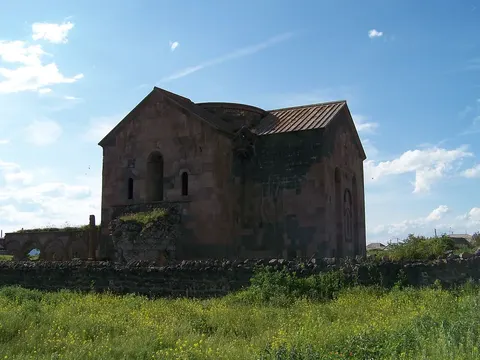
Kumurdo Cathedral
A domeless cathedral of 964 on the Javakheti plateau, signed by its architect Sakotsari and carved with a queen, lions, eagles and angels.
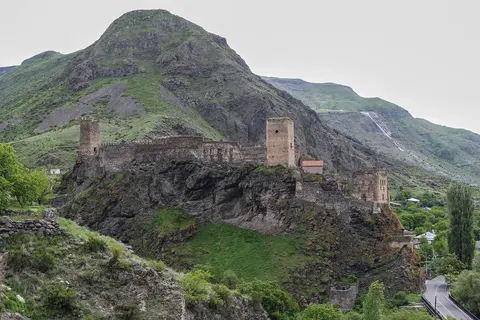
Khertvisi Fortress
A fortress on a rock spur where the Paravani flows into the Mtkvari, its tower and walls dated by inscription to 1354–1356. On the road to Vardzia.
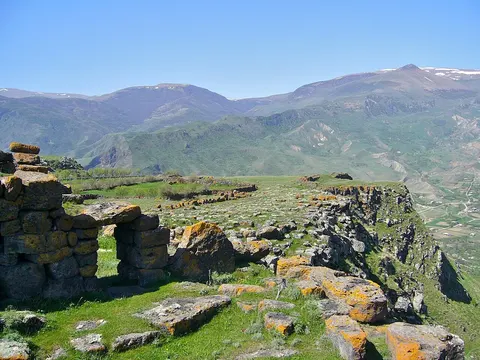
Saro Megaliths
Walls of huge unmortared boulders on the edge of the Javakheti plateau above Khertvisi: a stronghold perhaps three thousand years old.
Best car for this trip
Mostly paved
Guides
- Winter Driving in Georgia: What Closes, What Opens, Which Car Of the 267 places we map, 161 are in season in winter and 52 are flagged as not reachable year-round. The pass
- The Best Time to Visit Georgia, Counted Month by Month Georgia does not have one season. It has two countries: a 60% country from November to April and a 99% country
Pickup locations
Car Rental in Kutaisi — 109 km (straight line)
Booking and enquiries
The easiest way to reach these places is by car — you pick the route and the stops.