
Open Air Museum of Ethnography
A village assembled on a wooded hill above Vake, where a Khevsur tower, an early basilica from Tianeti and a Megrelian maize granary stand as neighbours.
- Time needed
- 2 h
- From Tbilisi
- 9 km · 0:20
- Road
- Paved
- Car needed
- Economy class
- Season
- All year
- Entry
- ~10 ₾
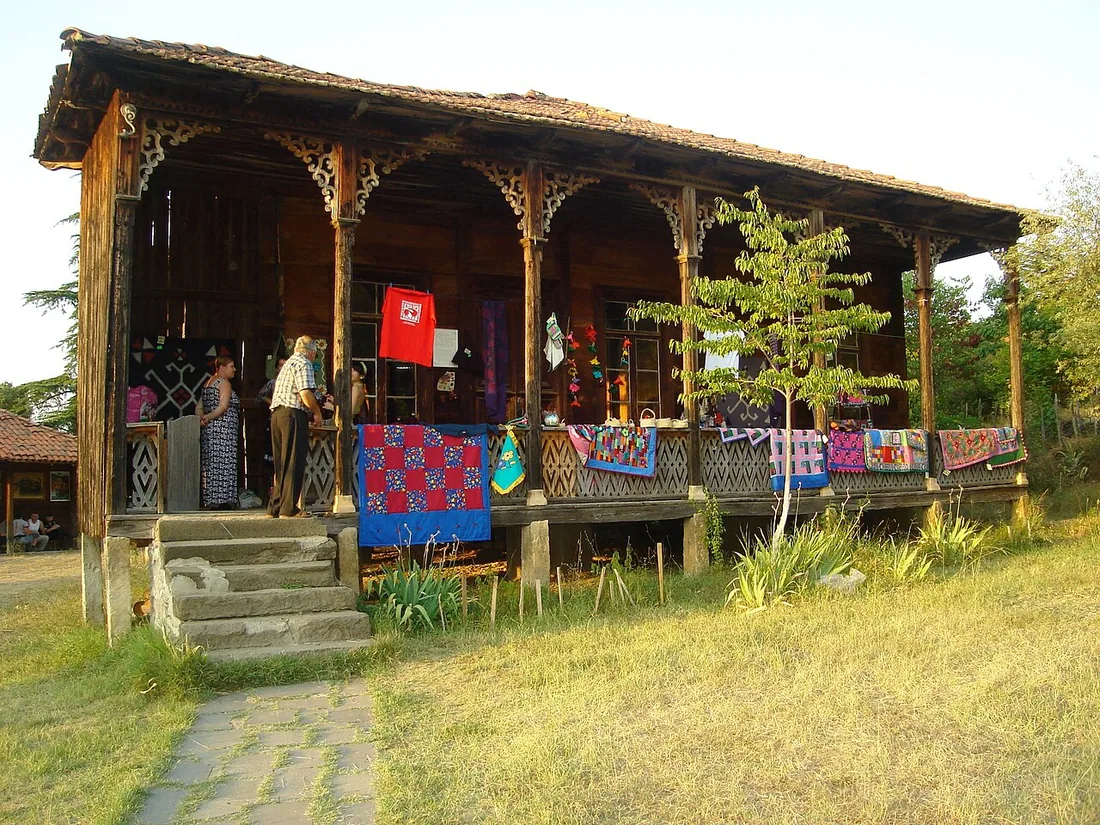
Somewhere between a Svan tower and a Kakhetian wine cellar, the whole of Georgia fits on one wooded hillside. The Giorgi Chitaia Open Air Museum of Ethnography sits above Vake, west of Turtle Lake, and it is less a museum than a village assembled from everywhere: some seventy buildings brought from the country's historical provinces and set out across 52 hectares in eleven zones.
The ethnographer Giorgi Chitaia founded it on 27 April 1966, and since 2004 it has been part of the Georgian National Museum. The idea is simple: you walk, and the landscape of the country changes under your feet.
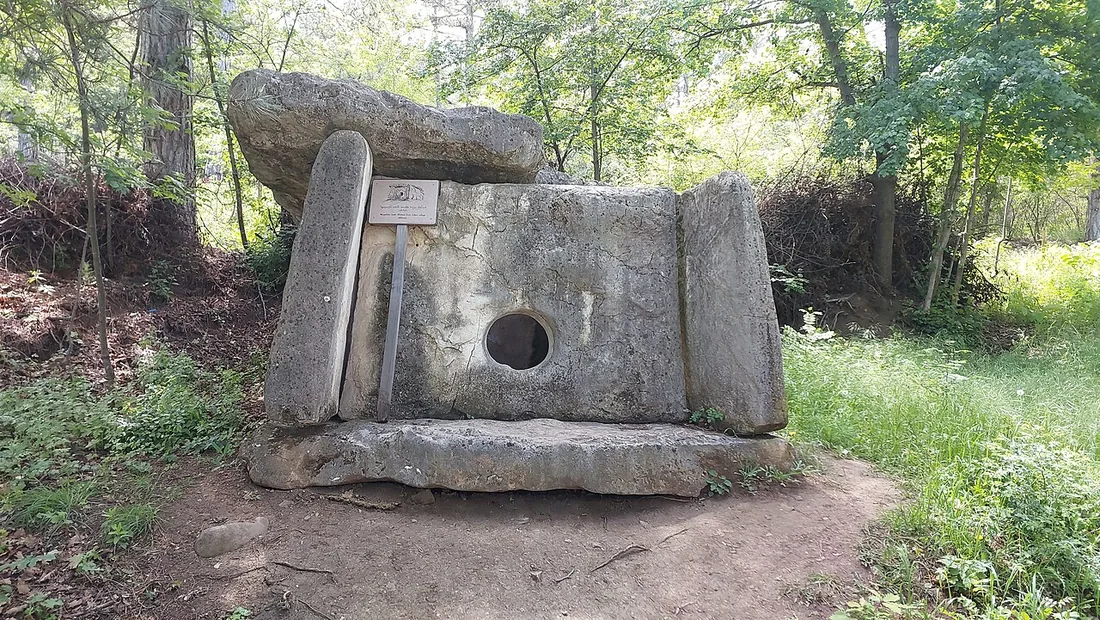
From the east come darbazi houses, their stepped wooden domes rising to a smoke hole that drops light straight onto the hearth, and flat-roofed stone houses. From the west, timber houses under gabled roofs of straw or boards, and the wattle maize granaries of Samegrelo and Imereti. Watchtowers from Svaneti, Khevsureti and Pshavi look down on it all; nearby stand a Kakhetian marani, a Kartlian water mill, an early Christian basilica brought from Tianeti and a family burial vault of the sixth or seventh century, sarcophagus and all.
Inside, more than 8,000 objects — distaffs, carpets, clay pots, clothes, furniture — make the rooms look as if someone has just stepped out.
Every summer since 2004 the hill has also hosted Art-Gene, a folk-culture festival founded by the musician Zaza Korinteli, and then the old houses fill with song. Come on an ordinary weekday, though, and you may have an entire mountain province to yourself, with only the wind in the trees for company.

Practical advice
Allow two hours for the main zones and three for everything. The paths are earth and gravel on a slope, so wear proper shoes; after rain some stretches turn to mud. The museum is a branch of the Georgian National Museum — check opening days and the current ticket price on museum.ge before driving up. Don't count on food or drink inside: bring water. A pushchair is hard work here, though children tend to love the houses. The best hours are early morning or an October afternoon, when the low sun turns the timber houses gold.
How to get there from Tbilisi
The museum is 9 km from the centre, about 20 minutes. Follow Ilia Chavchavadze Avenue through Vake to its upper end, then take the Turtle Lake road as it winds up through the woods; the museum gate is on this road, before the lake, and well signposted. It is asphalt all the way and open all year, but the bends are steep — on icy winter days drive slowly or choose another day. There is free parking at the gate, tight at weekends. An economy car is entirely adequate. Fill up on Chavchavadze Avenue; there is no fuel on the hill.
Click a marker for details. Coloured lines are ready-made road trips.
Nearby places
Turtle Lake and Vake Park
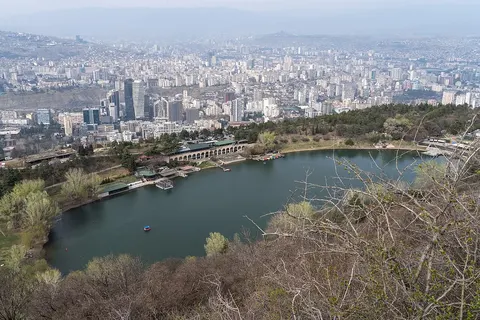
A landslide pond on a pine ridge above Vake, six minutes up by gondola: the place Tbilisi goes when the streets below start to bake.
Tbilisi Zoo
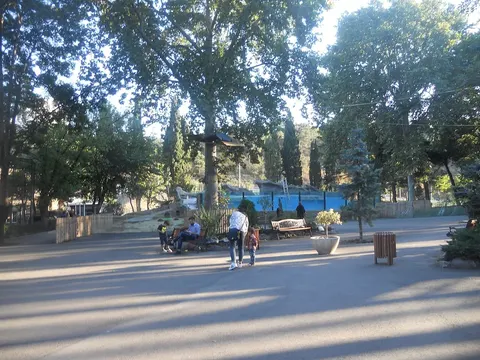
Georgia's oldest zoo, opened in 1927 in the green fold of the Vere valley: an easy family morning with a hard and honest history.
Mtatsminda Park and Funicular
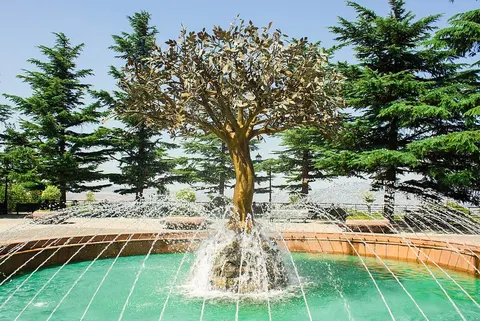
Tbilisi's highest balcony: a 1905 funicular lifts you to a Ferris wheel on the lip of the ridge, with the whole city turning below.
Best car for this trip
Guides
- Driving in Georgia: What the Distances Actually Cost You Georgia is a small country with slow roads. Here is what 267 measured drives from Tbilisi say about how long y
Pickup locations
Car Rental in Tbilisi — 5 km (straight line)