
Salkhino Dadiani Residence
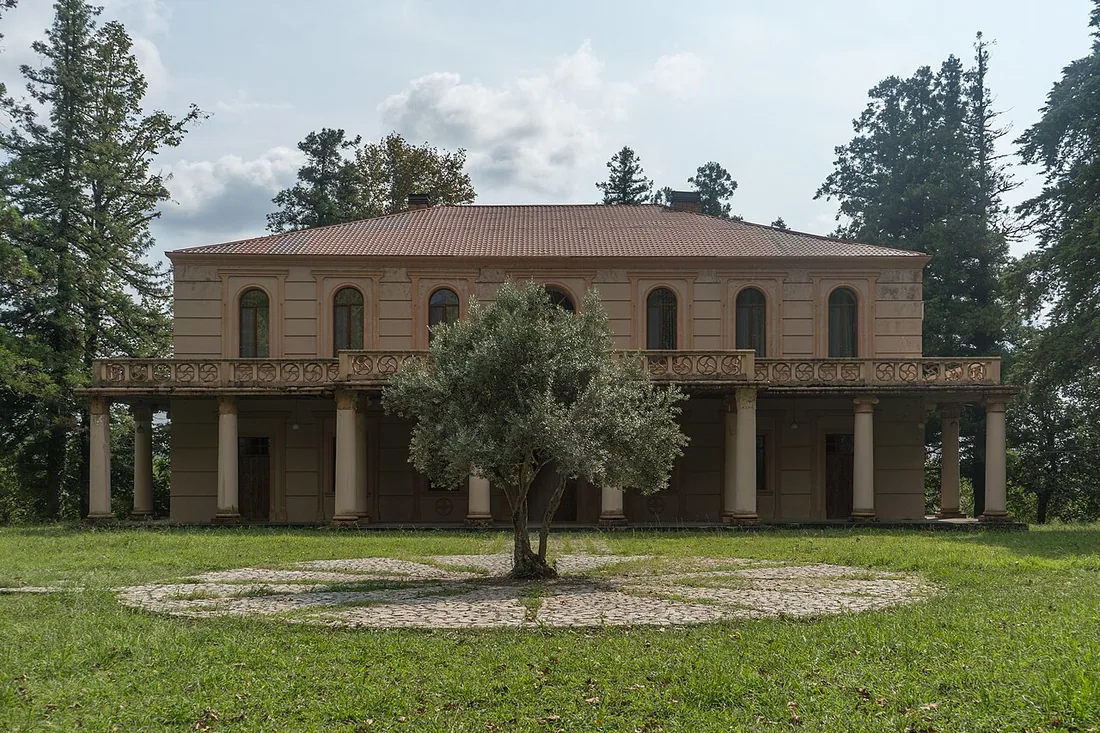
The Dadiani 'house of feasting' north of Martvili: a stone palace with a qvevri set into its great hall, near the old home of the Ojaleshi grape.
- Time needed
- 1 h
- From Tbilisi
- 312 km · 4:40
- Road
- Mostly paved
- Car needed
- Economy class
- Season
- All year
- Entry
- free
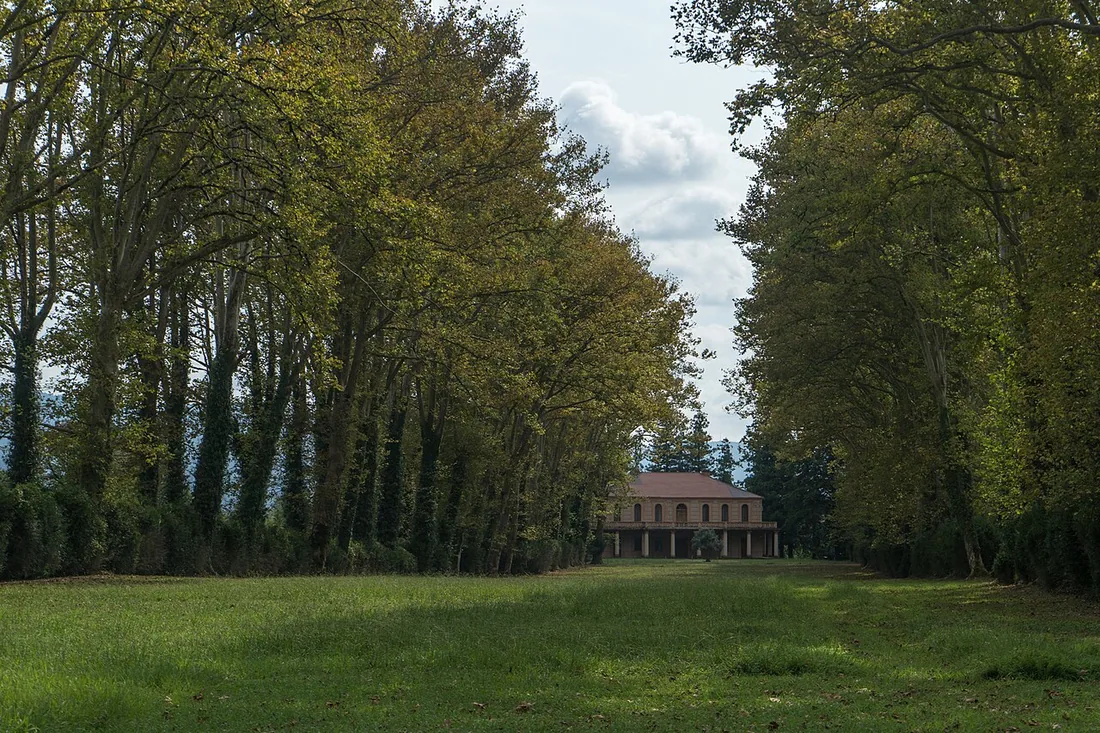
The name is a promise: Salkhino comes from the Georgian lkhini, a feast, and for much of the 19th century the princes of Mingrelia came here to keep it. The village lies 250 metres up, below the Kvibi hills, and the palace stands on the bank of the Tsachkhura, a stream once famous for its trout.
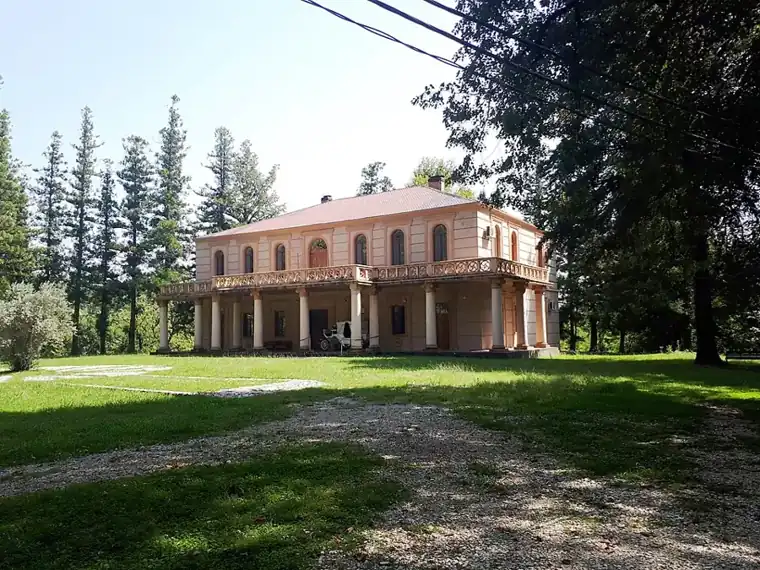
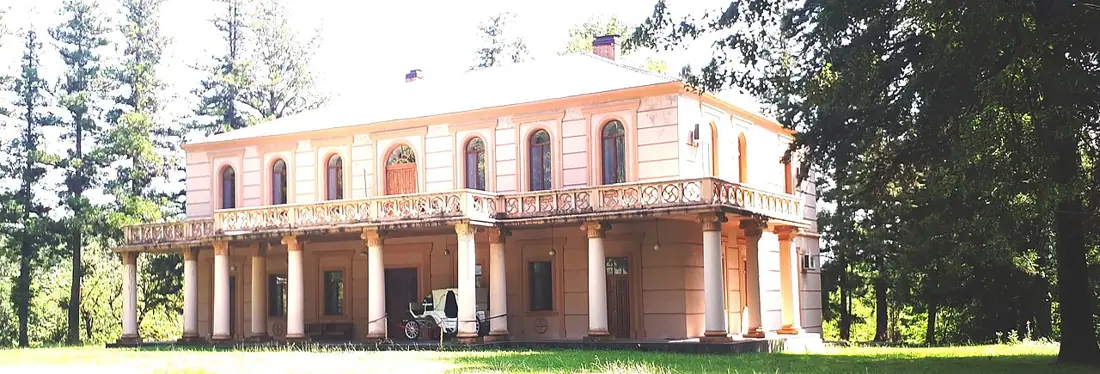
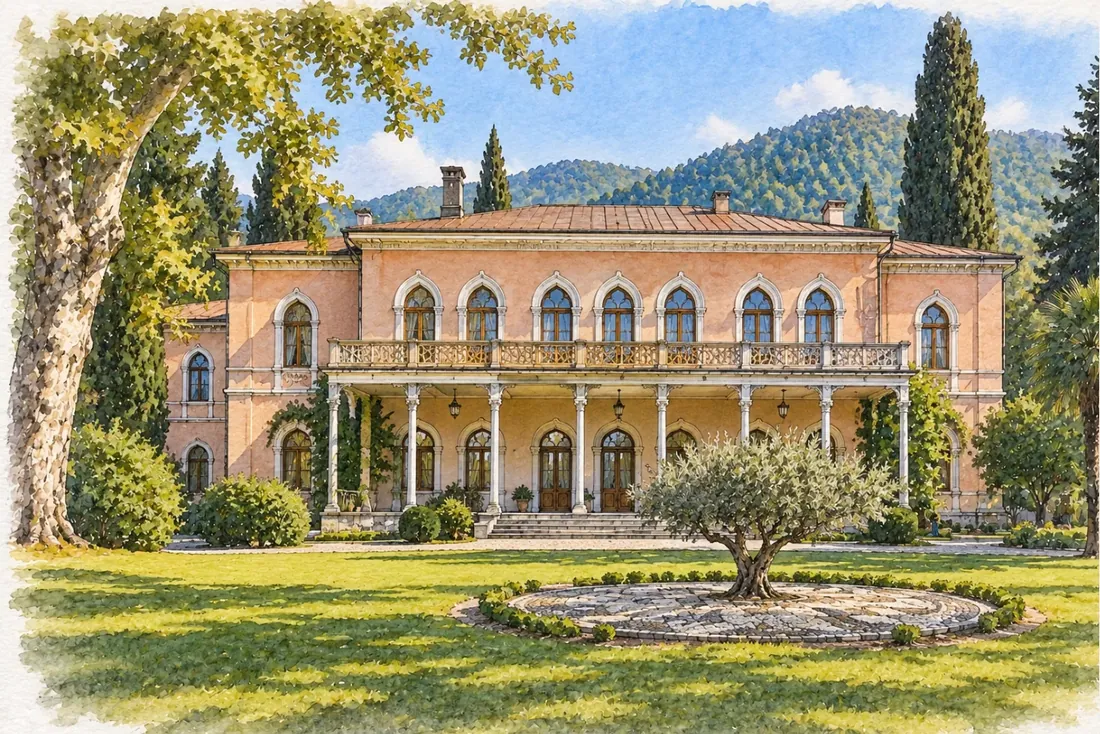
In 1825–26 there was nothing here but a plain wooden oda house, home to the widowed Princess Ana. Levan V Dadiani (ruled 1804–1840) began a two-storey stone palace on the advice of Prince Archil and Giorgi Gegelia; it took its final form only later, in the time of Salome Murat. As at Zugdidi, Turkish and Greek masons did the work. Villagers hauled the stone from nearby Letsave on sledges drawn by a hundred yoke of oxen and buffalo, and the master builder, Osman, died before it was finished.
Everything turned on wine. The ground floor held a marani 35 metres long and 10 wide, its roof carried on oak columns; a qvevri was set into the great hall beside a massive fireplace crowned by a figure of Bacchus, and the walls were panelled in oak and chestnut. Two versts away lies what an old description calls "the homeland of Ojaleshi", the Mingrelian red grape traditionally trained high into trees — its name is linked to the Mingrelian ja, "tree". The last great feast was held in 1897, for the wedding of Lucien Murat and Marie de Rohan-Chabot.
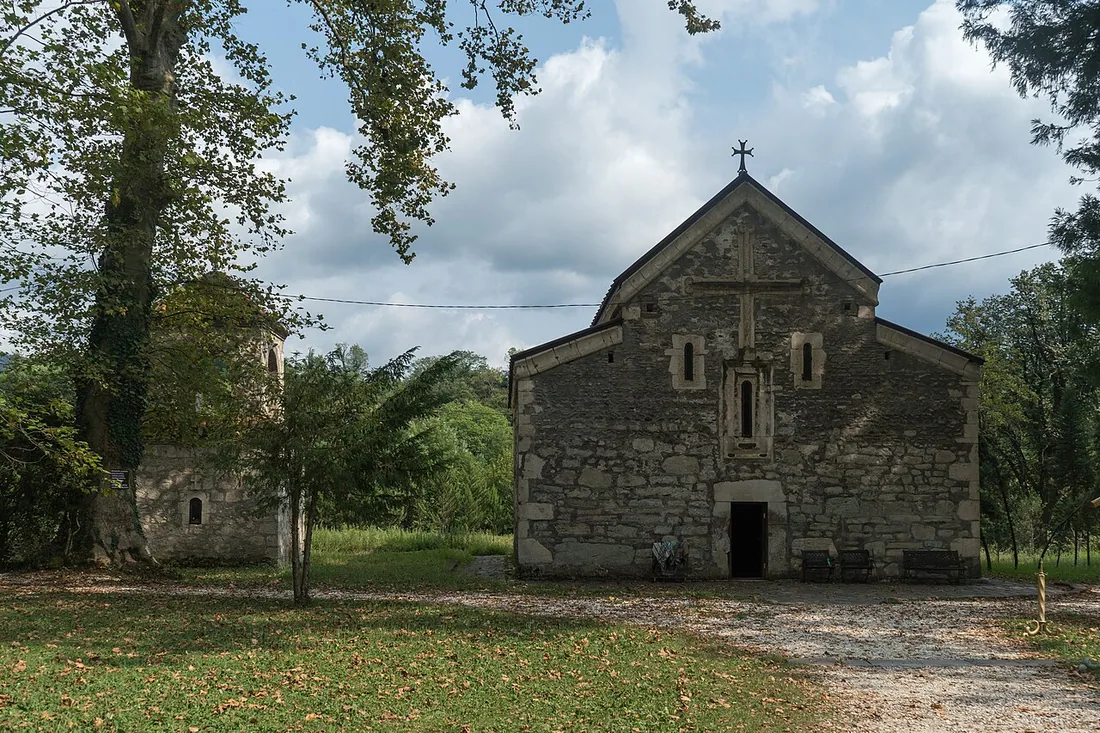
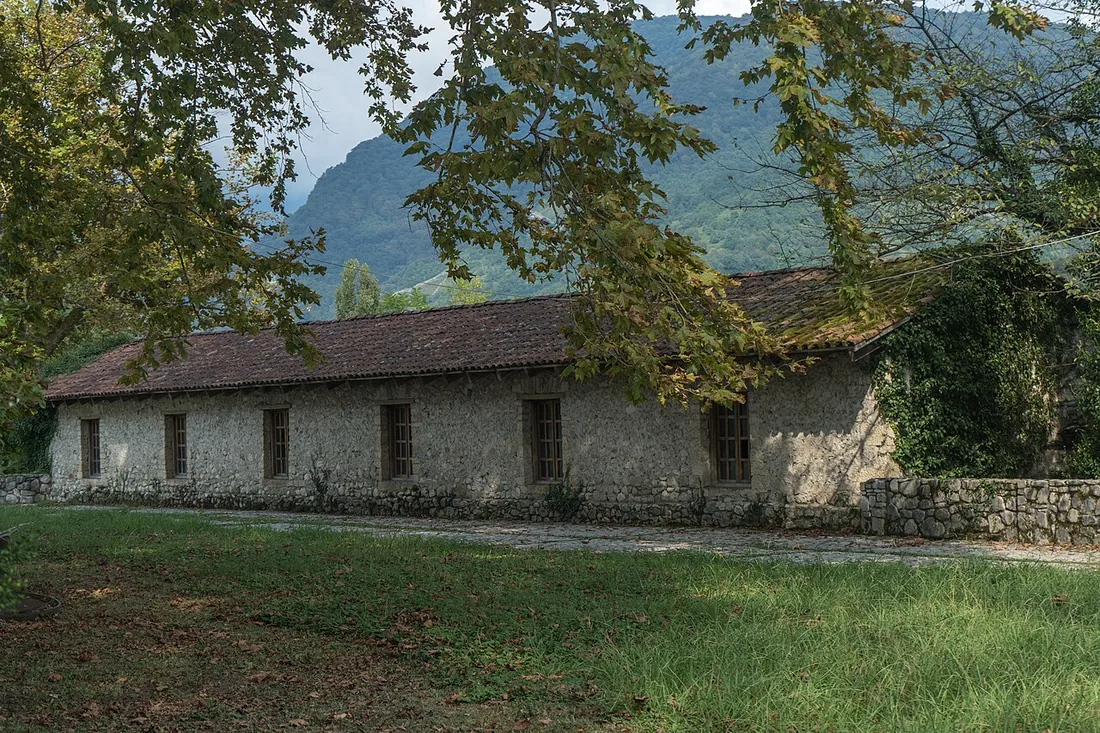
Today the house is quiet and often shut; there is no museum and no ticket desk. A working church in the grounds gives the place its daily life. Walk round the walls, picture the hundred oxen and Bacchus above the fire, and listen: the silence here sounds like the pause after a toast.
Gallery
Practical advice
Allow an hour. The palace is often locked and restoration has started and stalled over the years, so treat any glimpse inside as a bonus. There is a working church in the grounds: cover shoulders and knees, keep voices low and ask before photographing the clergy. There is no café — bring food from Martvili or plan lunch there. Paths are grass and clay and turn slick after rain, so wear closed shoes. Autumn is the best time, when the late-ripening Ojaleshi is picked across Samegrelo and the air smells of fresh must.
How to get there from Tbilisi
About 312 km and 4 hours 40 minutes from Tbilisi. Take the E60 motorway west past Kutaisi to Samtredia and on to Abasha, then turn north for Martvili; Salkhino is about 15 km further north. The motorway and the Abasha–Martvili road are good asphalt, but the final village stretch is narrow and patched, with potholes that deepen after rain. Signs are sparse — ask locals for 'Dadianebis sasakhle'. Refuel in Abasha or Martvili. In dry weather an economy car copes; after a wet spell, a crossover's extra clearance is welcome.
Click a marker for details. Coloured lines are ready-made road trips.
Nearby places
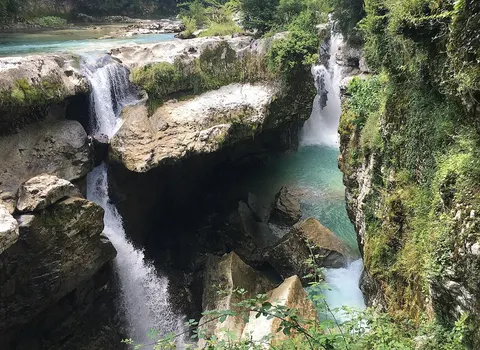
Martvili Canyon
The Abasha river's deep green water between limestone walls up to 70 m high: a 700 m walkway, a short boat ride and the Dadianis' bathing place.
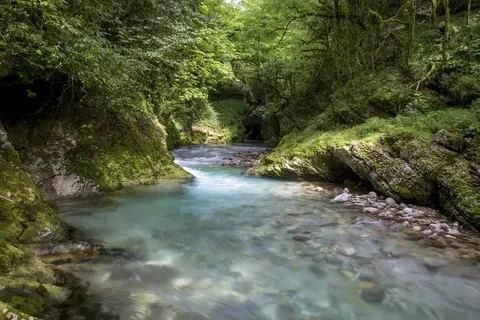
Balda Canyon
A 1.4 km limestone slot cut by the Abasha river beside Balda monastery: narrow, green-walled and far quieter than Martvili Canyon.
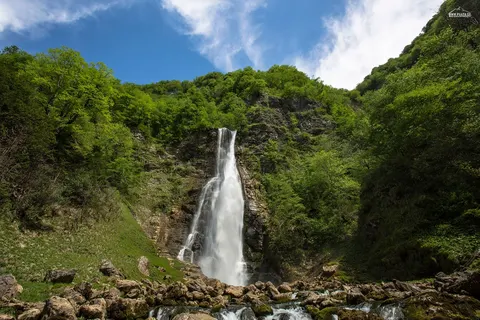
Oniore Waterfall
A 67-metre waterfall fed by the underground river of the Toba First Cave, in the karst forest above Martvili: seldom visited and hard to reach.
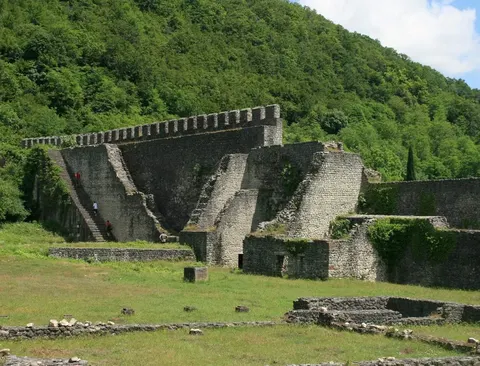
Nokalakevi (Archaeopolis)
The walled capital of ancient Egrisi above the Tekhuri gorge, fought over by Byzantium and Persia in the 6th century and still being excavated.
Part of these road trips
- Imeretian and Megrelian Flavours 4 days · 610 km
- Samegrelo Kingdoms and Wetlands 4 days · 480 km
- Nokalakevi and Martvili Canyon 1 days · 165 km
Best car for this trip
Mostly paved
Guides
- Driving in Georgia: What the Distances Actually Cost You Georgia is a small country with slow roads. Here is what 267 measured drives from Tbilisi say about how long y
Pickup locations
Car Rental at Kutaisi Airport — 39 km (straight line)
Booking and enquiries
The easiest way to reach these places is by car — you pick the route and the stops.