
Red Bridge (Tsiteli Khidi)
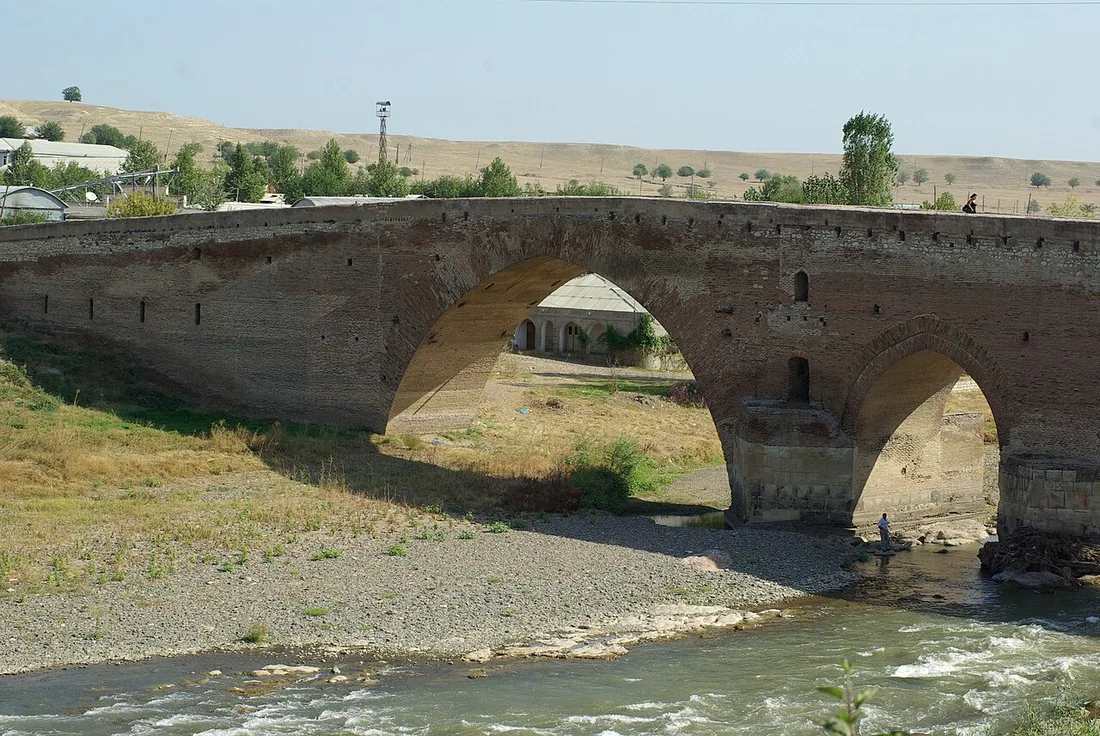
King Rostom's 17th-century brick bridge over the Khrami, 175 metres long, stranded in the neutral strip between Georgia and Azerbaijan.
- Time needed
- 0.5 h
- From Tbilisi
- 60 km · 1:00
- Road
- Paved
- Car needed
- Economy class
- Season
- All year
- Entry
- free
For three and a half centuries, anyone travelling overland from Tbilisi to Ganja crossed the Khrami on these arches of red brick — merchants, caravans and at least two armies.
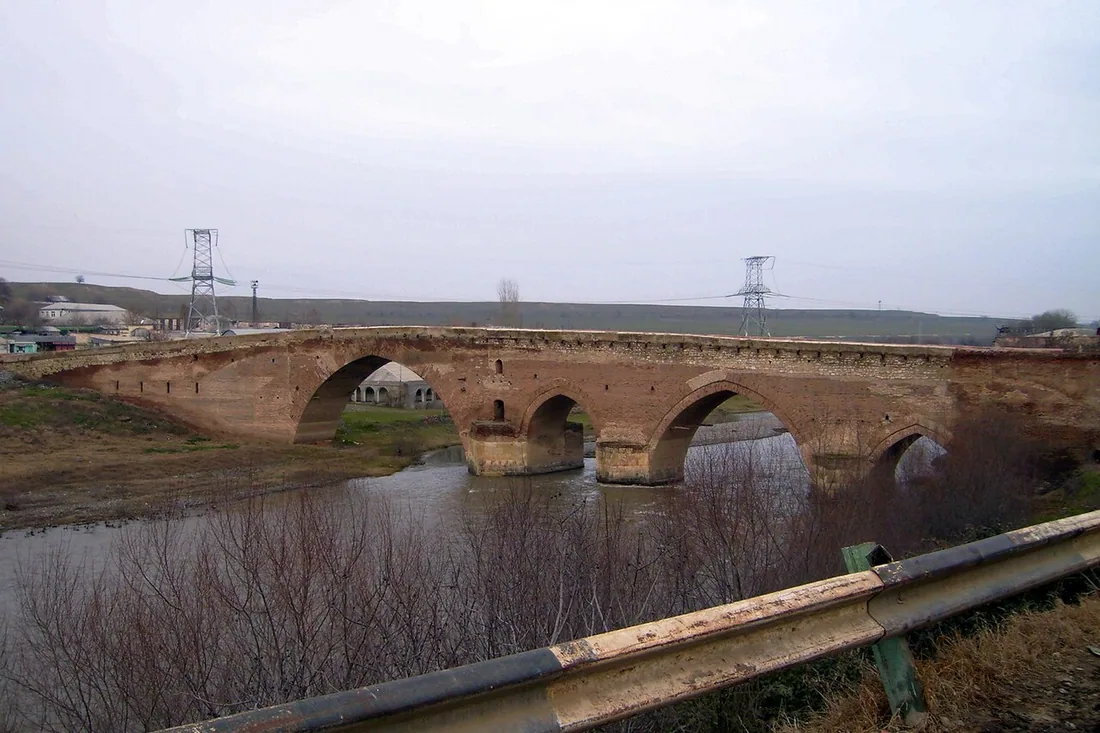
King Rostom of Kartli built the bridge in the middle of the 17th century. It is 175 metres long, only 4.3 metres wide at its centre and 10–12 metres high, and its piers hide small chambers that may have held customs men, guards or caravans resting for the night; nobody knows which. The name, taken from the colour of the brick, came later, in Tsarist times. Azerbaijanis call it Qırmızı Körpü, which means the same.
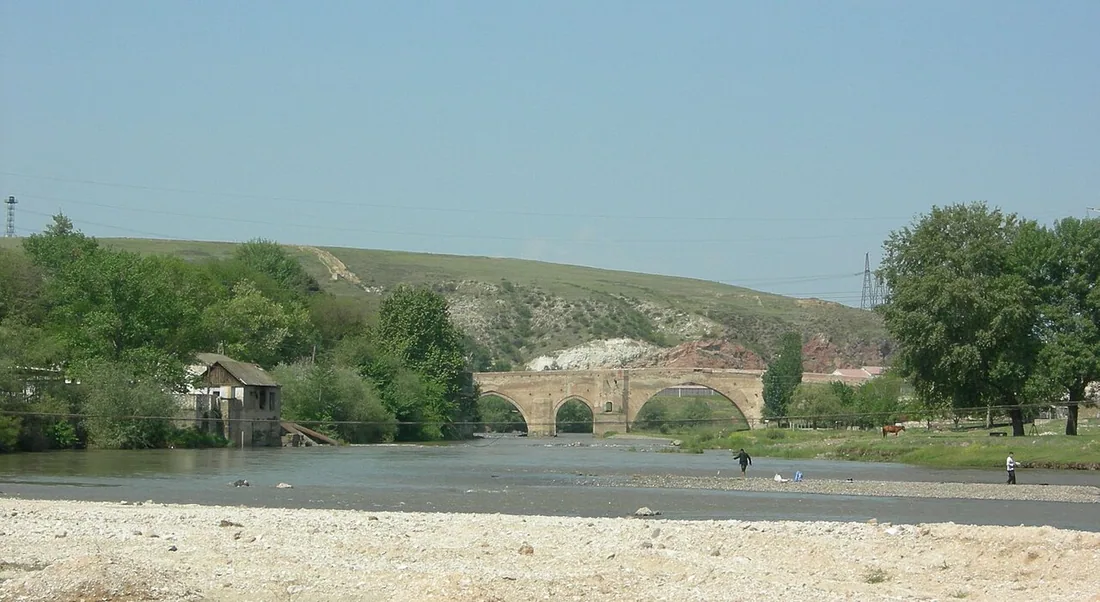
Georgians also call it the "Broken Bridge", though Rostom's bridge has never fallen. The name belongs to an older crossing 95 metres away, of which only the piers survive on either bank.
History tested this crossing hard. On 7 September 1795, as Agha Mohammad Khan's army marched on Tbilisi, 200 of King Erekle II's men were left to hold the bridge; they could not stop an army many thousands strong and fell back with heavy losses. In February 1921 troops of the Democratic Republic of Georgia fought the Red Army here; the Bolsheviks took the bridge and pressed on towards the capital.
Daily traffic crossed it until 1998, when a far larger bridge built for the TRACECA corridor took over. Through the 1990s the strip between the border posts held a sprawling informal market, run largely by Azerbaijanis from the Marneuli area, until it was shut in spring 2006 in an anti-smuggling drive. Since 2012 the bridge has been a monument of national significance.
The lorries use the new bridge now. Rostom's arches, off duty after more than three centuries, have only one job left: to stand over the river and glow red.
Practical advice
The old bridge lies inside the border zone, between the Georgian and Azerbaijani checkpoints, so how close you get depends on the guards on duty. Park well clear of the queue, walk up to the Georgian post and ask before you approach the bridge or raise a camera. Carry your passport even if you have no plan to cross. There is no fee. The Khrami valley here sits at about 270 metres and bakes in July, so bring water and a hat. Half an hour is enough; pair it with Rustavi or the Gardabani Managed Reserve, 9 km away. Travellers crossing into Azerbaijan pass it in the neutral strip.
How to get there from Tbilisi
From central Tbilisi take the Rustavi road south-east and join the S4 (E60), the highway to the Azerbaijani border. It skirts Rustavi, crosses the dry plain of Kvemo Kartli and ends, quite literally, at the Red Bridge checkpoint: about 60 km and roughly an hour, allowing for lorries and the slow final approach. It is asphalt all the way, so an economy car is all you need. Fill up in Rustavi or at the stations along the highway; after that there is only the border. Near the post, pass the lorry queue with care and do not join it unless you are crossing.
Click a marker for details. Coloured lines are ready-made road trips.
Nearby places
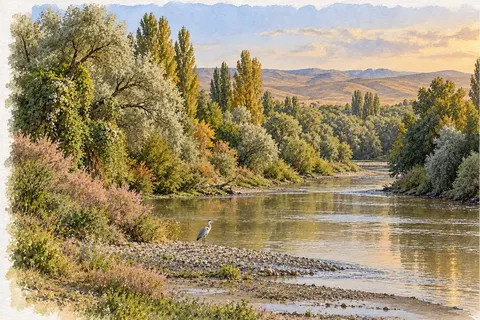
Gardabani Managed Reserve
Flood-fed poplar and willow jungle on the Mtkvari by the Azerbaijani border: 135 bird species, red deer and no infrastructure whatsoever.
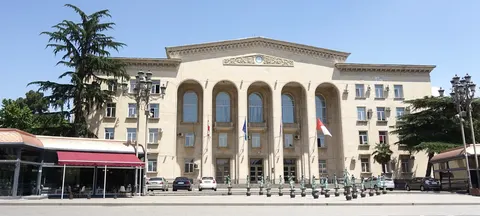
Rustavi
A city built twice on the Mtkvari: an ancient royal fortress-town, then Stalin's steel city, with a Soviet race circuit and a vast car market.
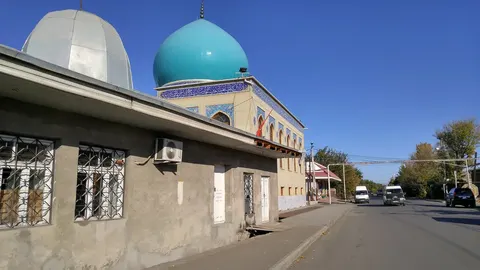
Marneuli
A market town on the Algeti where Georgian and Azerbaijani share the street, tea comes by the pot, and in 1625 Saakadze fought the Safavids at nearby Marabda.
Best car for this trip
Guides
- Driving in Georgia: What the Distances Actually Cost You Georgia is a small country with slow roads. Here is what 267 measured drives from Tbilisi say about how long y
Pickup locations
Car Rental at Tbilisi Airport — 39 km (straight line)
Booking and enquiries
The easiest way to reach these places is by car — you pick the route and the stops.