
Gardabani Managed Reserve
Flood-fed poplar and willow jungle on the Mtkvari by the Azerbaijani border: 135 bird species, red deer and no infrastructure whatsoever.
- Time needed
- 3 h
- From Tbilisi
- 60 km · 2:10
- Road
- Unpaved sections
- Car needed
- Crossover / SUV
- Season
- All year
- Entry
- free
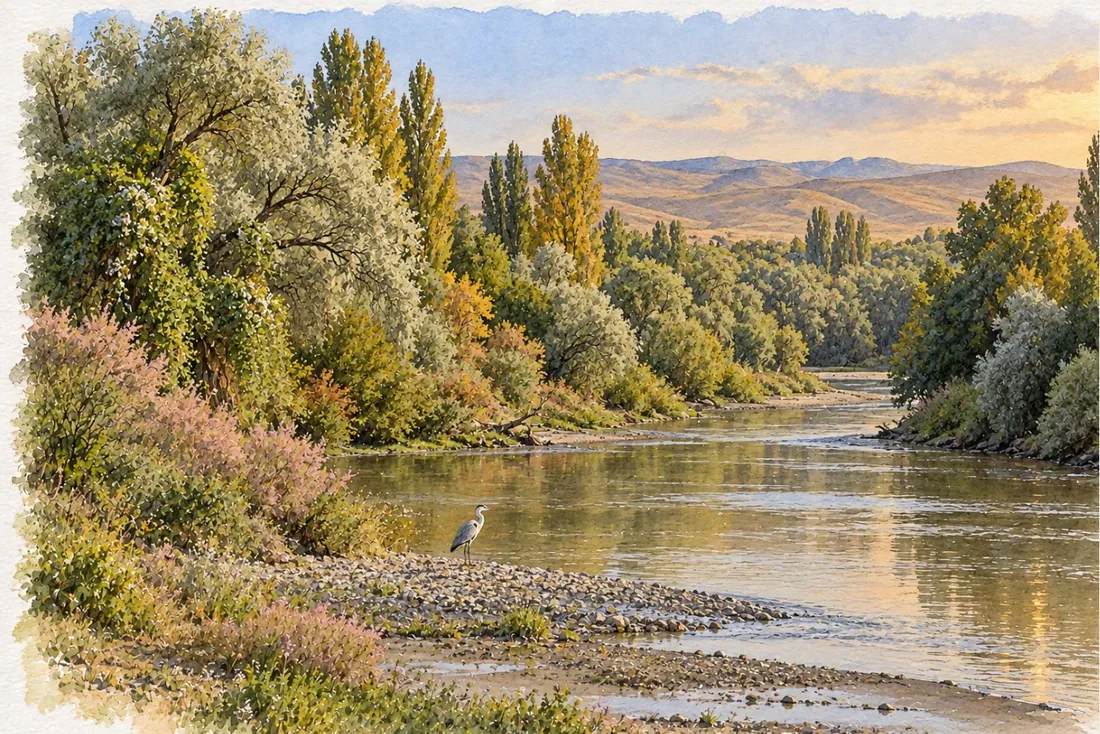
South-east of Rustavi, where the Mtkvari slows and spreads across the lowland, a forest still stands that the river raised with its own floods.
The Gardabani Managed Reserve, created in 1996, protects 3,484 hectares of this floodplain woodland on the left bank of the Mtkvari, in Gardabani and Marneuli municipalities, close to the border with Azerbaijan. Ecologists call it tugai: riverside forest that lives by the flood. Grey and black poplar, white willow, long-stalked oak and elm tower over an undergrowth of hawthorn, tamarisk and cornel, and everything is laced with clematis, silk vine and wild hop. In high summer it feels less like a European wood than the edge of the tropics.
The numbers are the reason to come: 135 species of bird, 26 of mammal, 21 of fish. Red deer, on Georgia's Red List, still move through the thickets alongside wild boar and jackal. Overhead, watch for white-tailed and eastern imperial eagles. The reserve has been considered for the Ramsar list of wetlands of international importance, though it is not on it yet.
People have lived by this river for a very long time. Near the reserve archaeologists have found Eneolithic and Early Bronze Age settlements, Middle Bronze Age graves and Late Bronze to Early Iron Age sites; further east, on the waterless Iori plateau, lies the monastery complex of David Gareja.
Be honest with yourself before setting out. There are no marked trails, no visitor centre and no toilets; the tracks in are farm roads; in summer the heat and the mosquitoes are ferocious. Come in spring or autumn, walk slowly, and let the birds come to you.
Practical advice
Give it three hours, and come between March and May or September and November. Wear long trousers, long sleeves and closed shoes, and bring strong insect repellent: the forest is humid and dense. Paths are unmarked, so download an offline map or GPS track while you still have signal, or arrange a local guide. This is a border zone: carry your passport, as patrols do check. Bring all your water and food; there is nothing inside. Binoculars matter more than a camera here. Early morning is best for birds, and a July midday is not worth attempting.
How to get there from Tbilisi
Take the S4 south-east from Tbilisi to Rustavi, then the Sh66 through the city to Gardabani: about 45 km of asphalt and three-quarters of an hour. From Gardabani unmarked farm tracks run south towards the floodplain forest for some 15 km more, slow going on gravel and dirt that turns to deep mud after rain. That makes about 60 km in all, but allow two hours and ten minutes. An SUV with real ground clearance is essential. Refuel in Rustavi or Gardabani. Leave the car at the forest edge: driving deep into a protected wood is neither wise nor welcome.
Click a marker for details. Coloured lines are ready-made road trips.
Nearby places
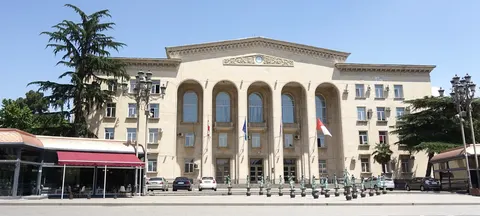
Rustavi
A city built twice on the Mtkvari: an ancient royal fortress-town, then Stalin's steel city, with a Soviet race circuit and a vast car market.
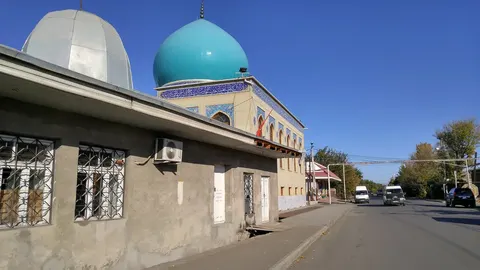
Marneuli
A market town on the Algeti where Georgian and Azerbaijani share the street, tea comes by the pot, and in 1625 Saakadze fought the Safavids at nearby Marabda.
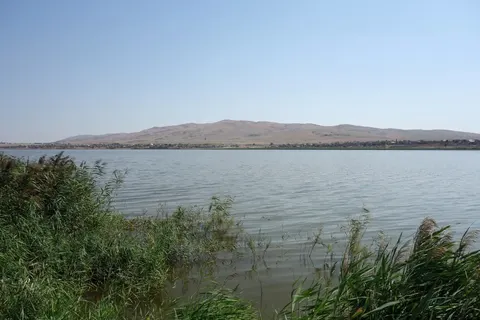
Kumisi Lake
A shallow steppe reservoir south of Tbilisi, once a bitter salt pool, where migrating waterbirds rest among the reeds on a great flyway.
Best car for this trip
Unpaved sections
Guides
- Do You Need a 4x4 in Georgia? We rate the road surface and the minimum car class for all 267 places in our database. 227 of them need nothin
- Driving in Georgia: What the Distances Actually Cost You Georgia is a small country with slow roads. Here is what 267 measured drives from Tbilisi say about how long y
Pickup locations
Car Rental at Tbilisi Airport — 30 km (straight line)
Booking and enquiries
The easiest way to reach these places is by car — you pick the route and the stops.