
Rabati Castle (Akhaltsikhe)
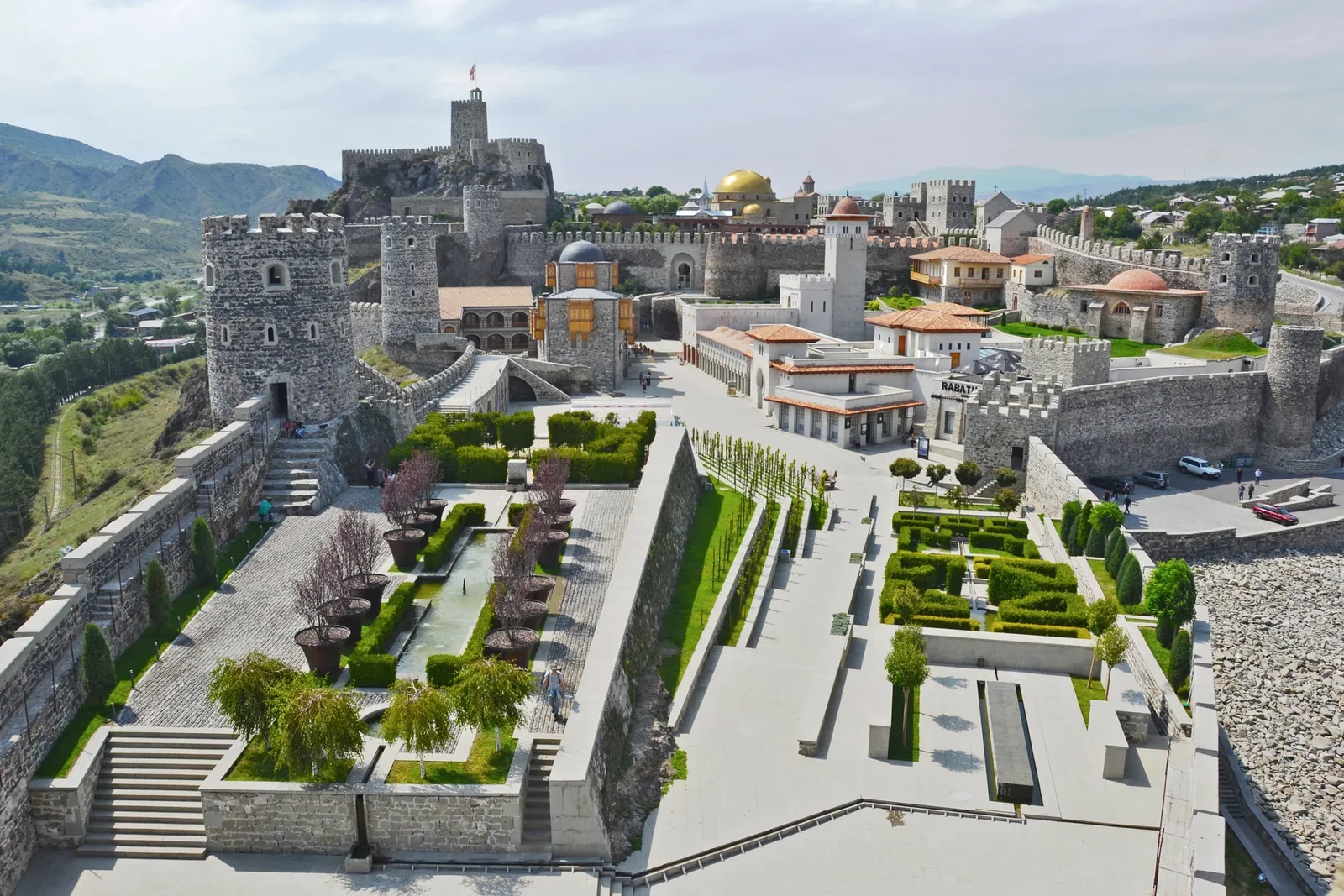
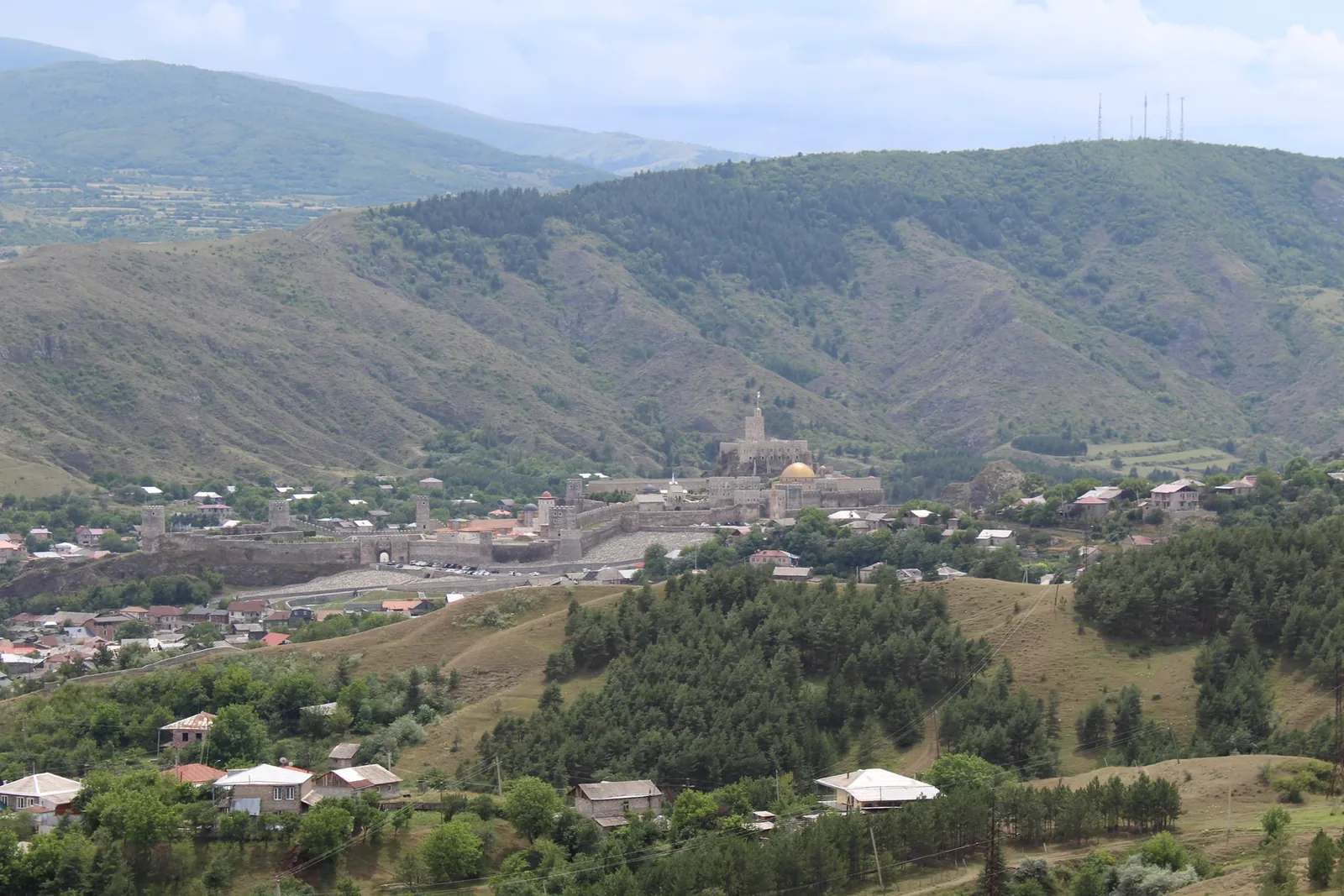
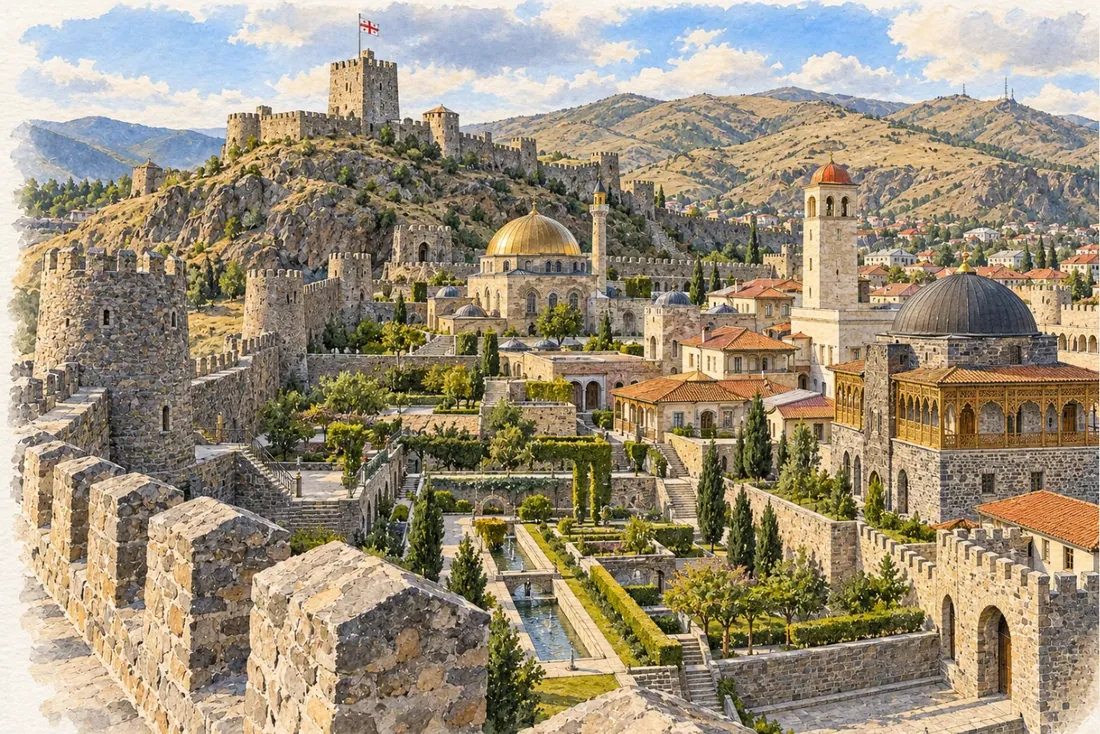
Akhaltsikhe's walled hill, where a Jaqeli palace, an 18th-century mosque and an Orthodox church share one enclosure above the old town.
- Time needed
- 2 h
- From Tbilisi
- 205 km · 3:20
- Road
- Paved
- Car needed
- Economy class
- Season
- All year
- Entry
- lower town free; citadel ticket (check locally)
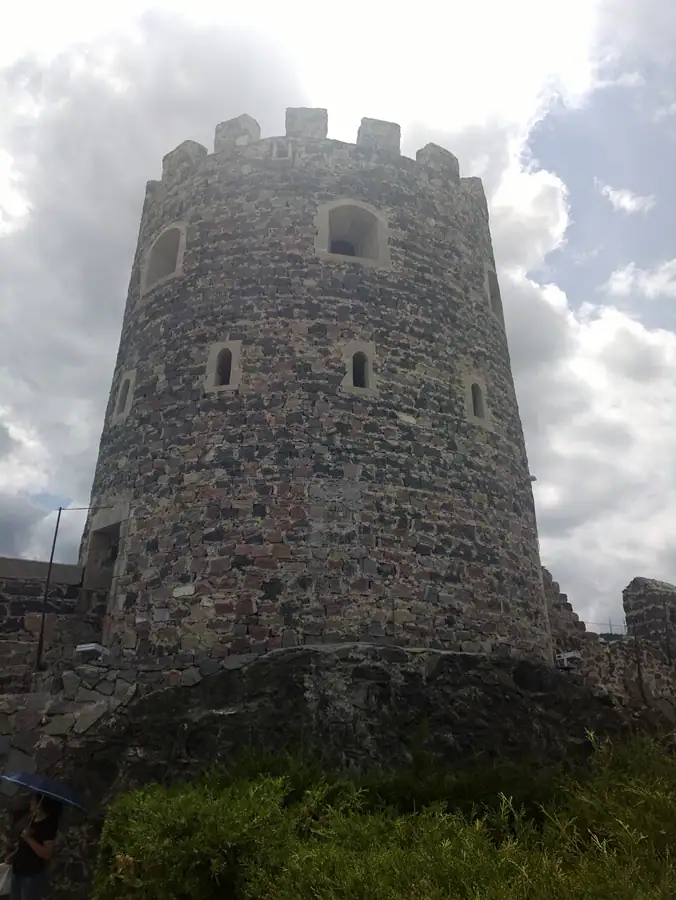
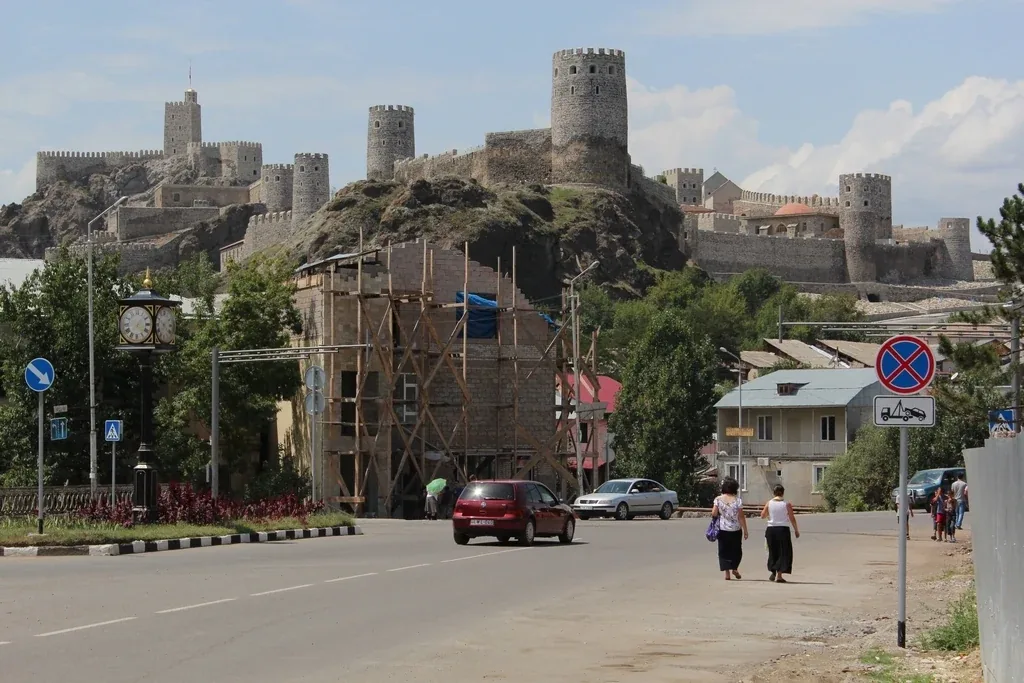
Few fortresses in Georgia have answered to as many masters as Rabati: Georgian princes, Ottoman pashas, Russian generals and, most recently, the restorers.
The Georgian Chronicles credit Guaram Mampali, son of the king of Tao, with founding a stronghold here in the 9th century, when the place was still called Lomsia. By the end of the 12th century it had a new name, Akhaltsikhe, the "new fortress", and from the 13th century it was the seat of the Jaqeli, princes of Samtskhe. It withstood Tamerlane's army in 1393, fell to the Ottomans in 1579 and became a pasha's capital, and was stormed by General Paskevich's troops in 1828.
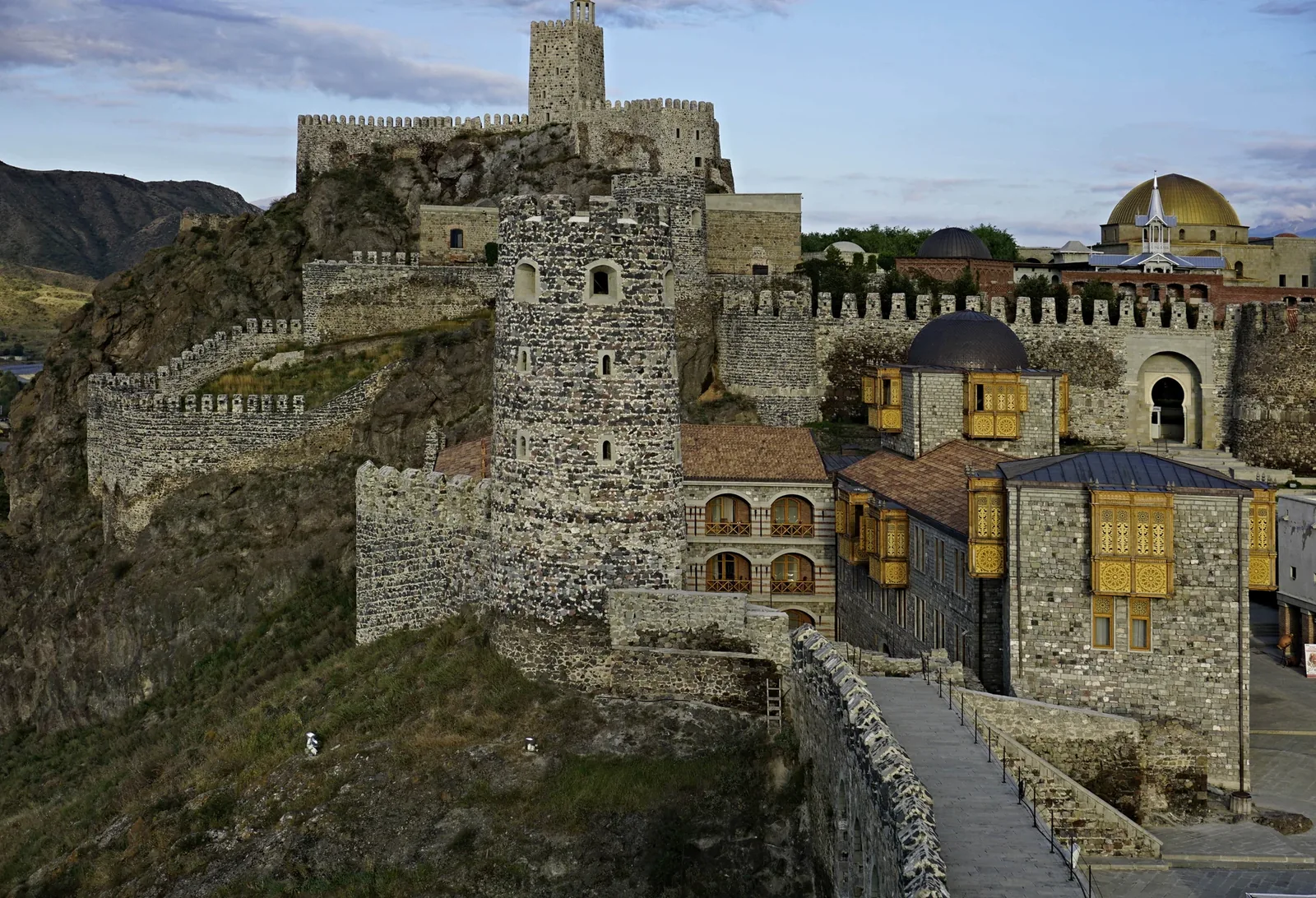
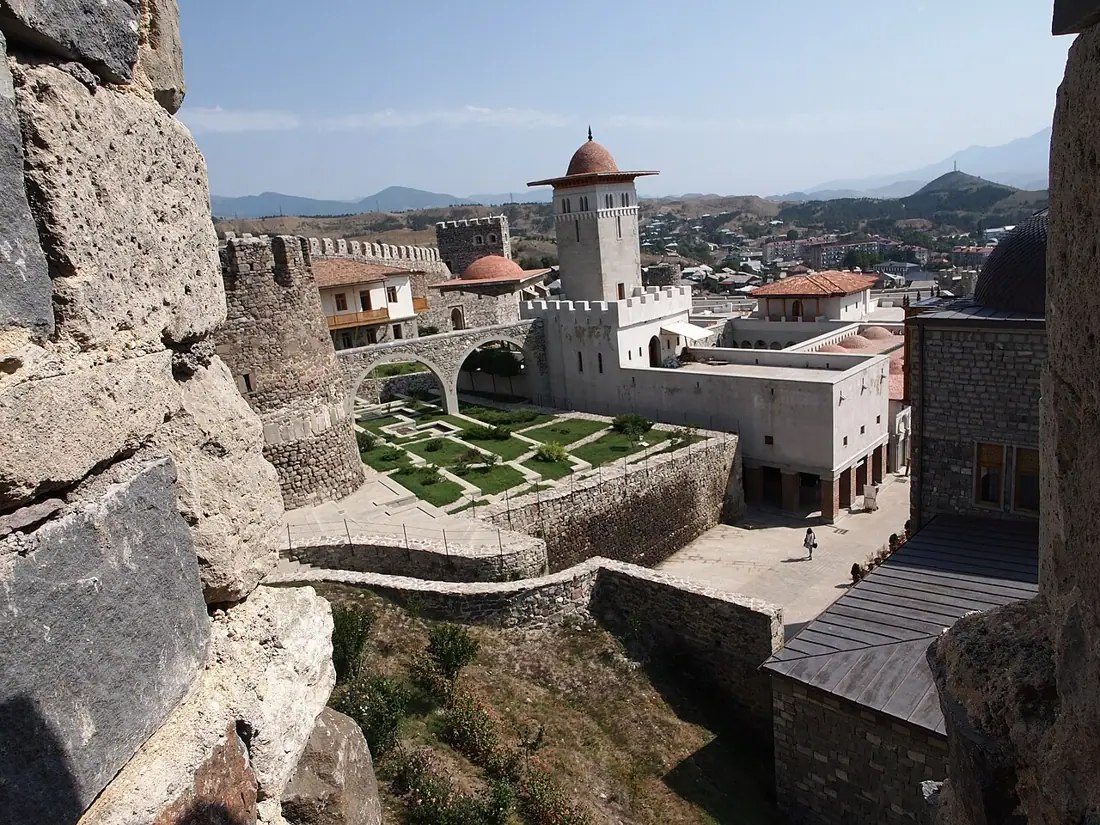
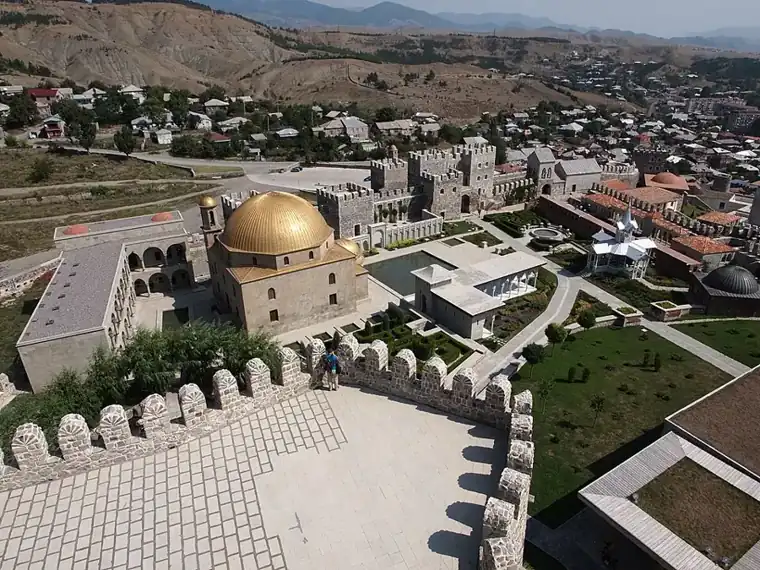
The building that tells the story best is the Akhmediye Mosque. It was raised in 1752 by Haji Ahmed-Pasha Jaqeli, a descendant of the Christian princes who had become an Ottoman pasha, and its dome echoes Hagia Sophia in Constantinople over the plan of a Georgian church. It served as a mosque until 1828 and, from 1850 to 1920, as a church of the Virgin. Around it stand the madrasa and minaret, the Jaqeli palace, the baths, the citadel and an Orthodox church.
In 2011–2012 the state spent 34 million lari rebuilding almost all of it, and the result still divides opinion: much of the crisp, pale masonry is new, so read Rabati as a reconstruction over old bones rather than a ruin. The synagogue often listed alongside it stands outside the walls, in the old Rabati quarter; an inscription dates it to 1862, when this was home to one of Georgia's great Jewish communities.
By the late 17th century Akhaltsikhe was a town of Turks, Armenians, Georgians, Greeks and Jews, and Charles Aznavour's father was born here. Walls like these were built to keep strangers out; today they are the best place to see how many different peoples the town once held.
Gallery
Practical advice
The lower lanes are free to wander; the citadel, the mosque and the regional history museum in the upper zone take a ticket bought at the gate. Two hours is enough, and the visit sits most comfortably on the way back from Vardzia, when the clock is no longer pressing. Park by the lower entrance, where you will also find cafés and toilets. In July and August the paved courtyards throw the heat back at you and shade is scarce: come in the morning, or after five, when the stone turns honey-coloured and the lights come on. The synagogue opens only when its keeper is there.
How to get there from Tbilisi
From Tbilisi take the E60/S1 west past Gori to Khashuri, about 130 km, then turn south onto the S8 through Borjomi and up the Mtkvari gorge to Akhaltsikhe: 205 km and roughly 3 hours 20 minutes in all. It is asphalt the whole way. The 45 km between Borjomi and Akhaltsikhe are narrow and full of bends, and from December to March they can carry ice and fog, so fit winter tyres. Fuel up in Khashuri, Borjomi or Akhaltsikhe. Rabati rises in the old town on the north bank of the Potskhovi. An economy car is entirely adequate.
Click a marker for details. Coloured lines are ready-made road trips.
Nearby places
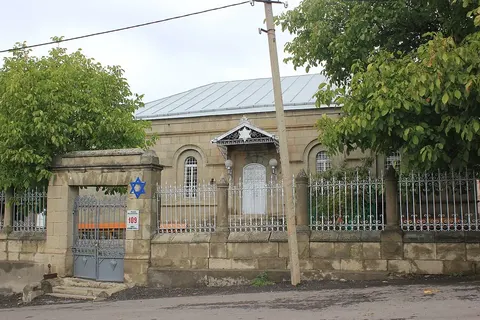
The Jewish quarter and synagogues of Akhaltsikhe
A synagogue of 1862 with a painted wooden interior, its empty younger neighbour and an old hillside cemetery in Akhaltsikhe's Rabati district.
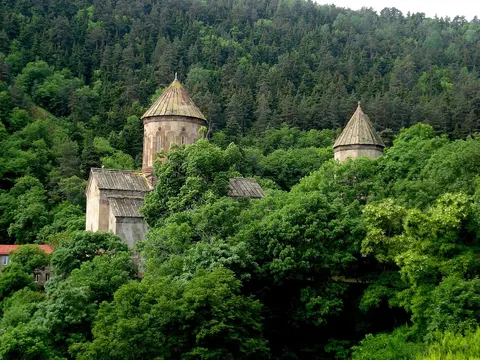
Sapara Monastery
The Jaqeli family's monastery at the head of a wooded valley above Akhaltsikhe, its walls painted with 14th-century portraits of Samtskhe's rulers.
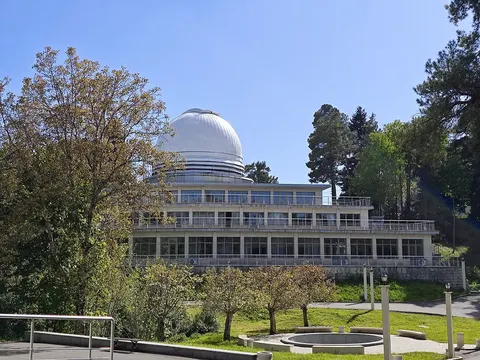
Abastumani Astrophysical Observatory
White domes in the pines of Mount Kanobili, where Georgian astronomy began in 1932, above the faded imperial spa of Abastumani.
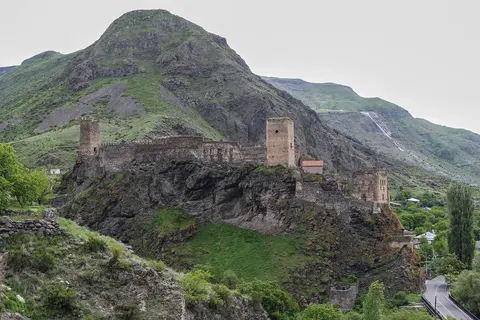
Khertvisi Fortress
A fortress on a rock spur where the Paravani flows into the Mtkvari, its tower and walls dated by inscription to 1354–1356. On the road to Vardzia.
Part of these road trips
- Vardzia and Borjomi — the Southern Route 2 days · 550 km
- Grand Samtskhe-Javakheti Heritage Road 4 days · 690 km
Best car for this trip
Guides
- Driving in Georgia: What the Distances Actually Cost You Georgia is a small country with slow roads. Here is what 267 measured drives from Tbilisi say about how long y
Pickup locations
Car Rental at Kutaisi Airport — 72 km (straight line)
Booking and enquiries
The easiest way to reach these places is by car — you pick the route and the stops.