
Abastumani Astrophysical Observatory
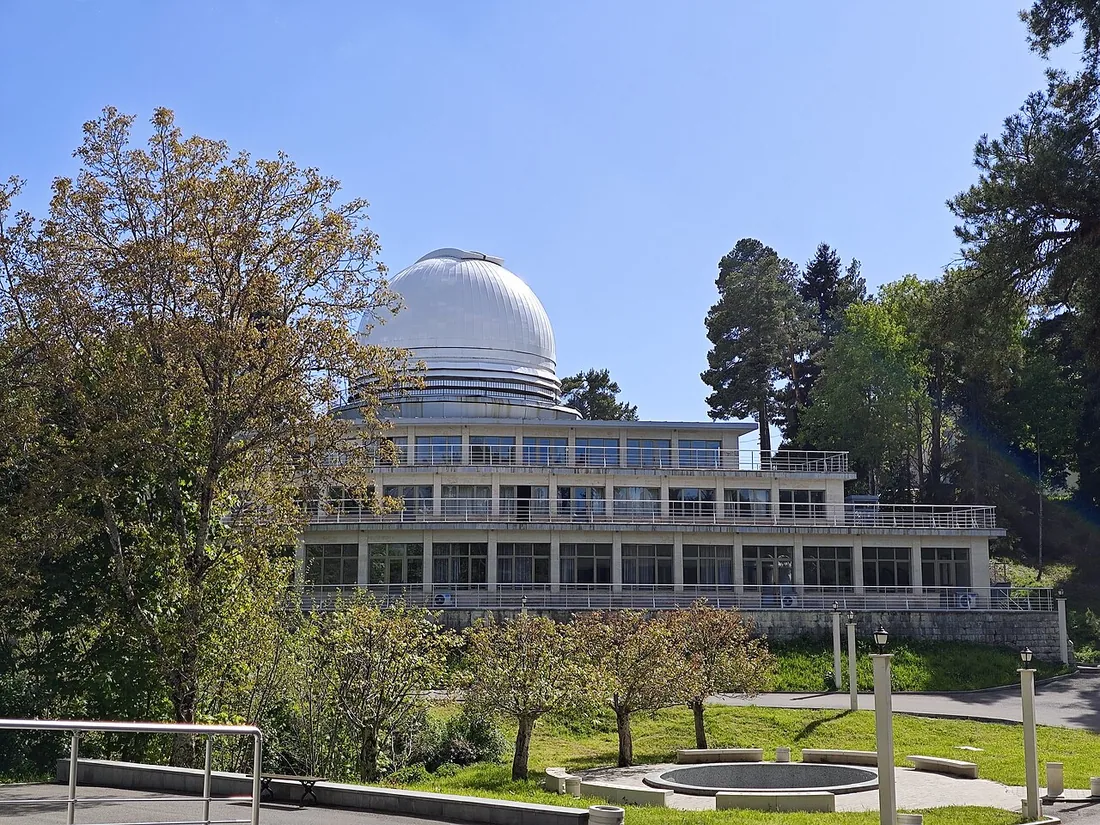
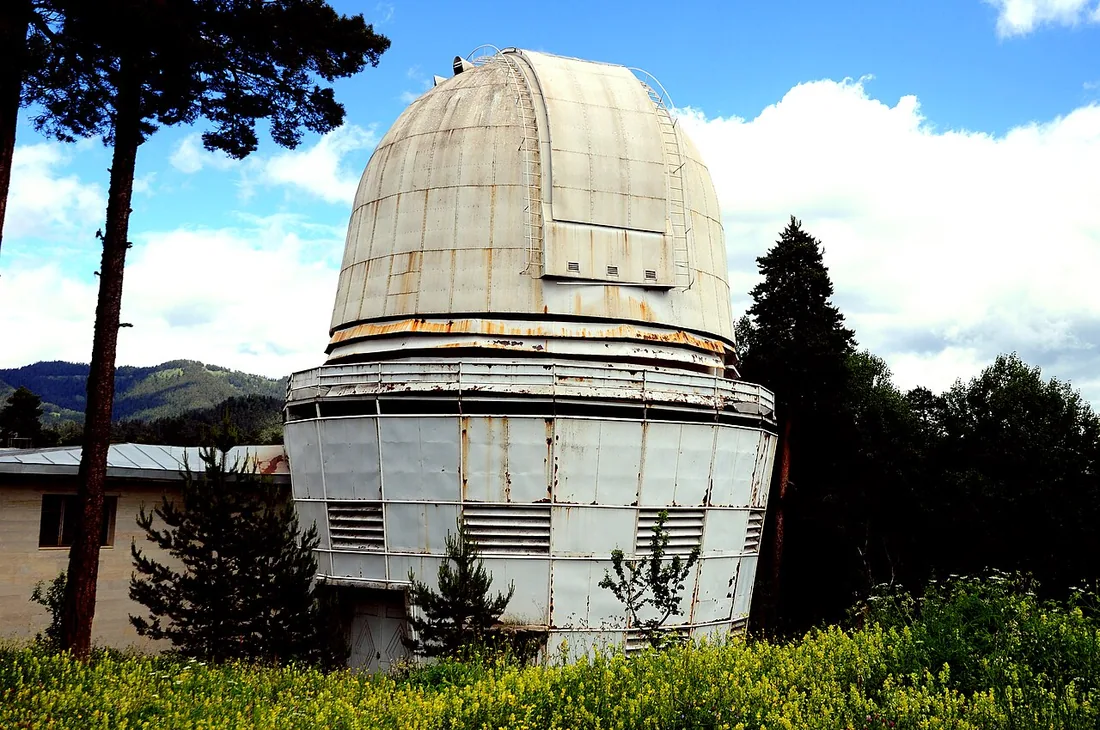
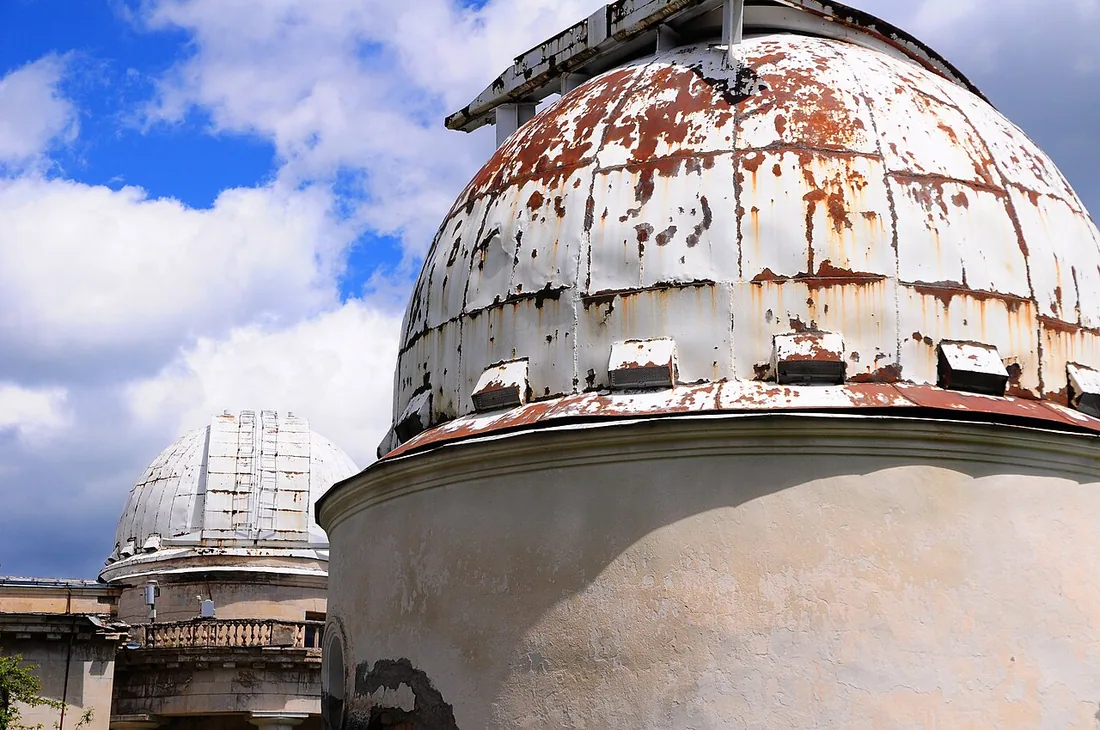
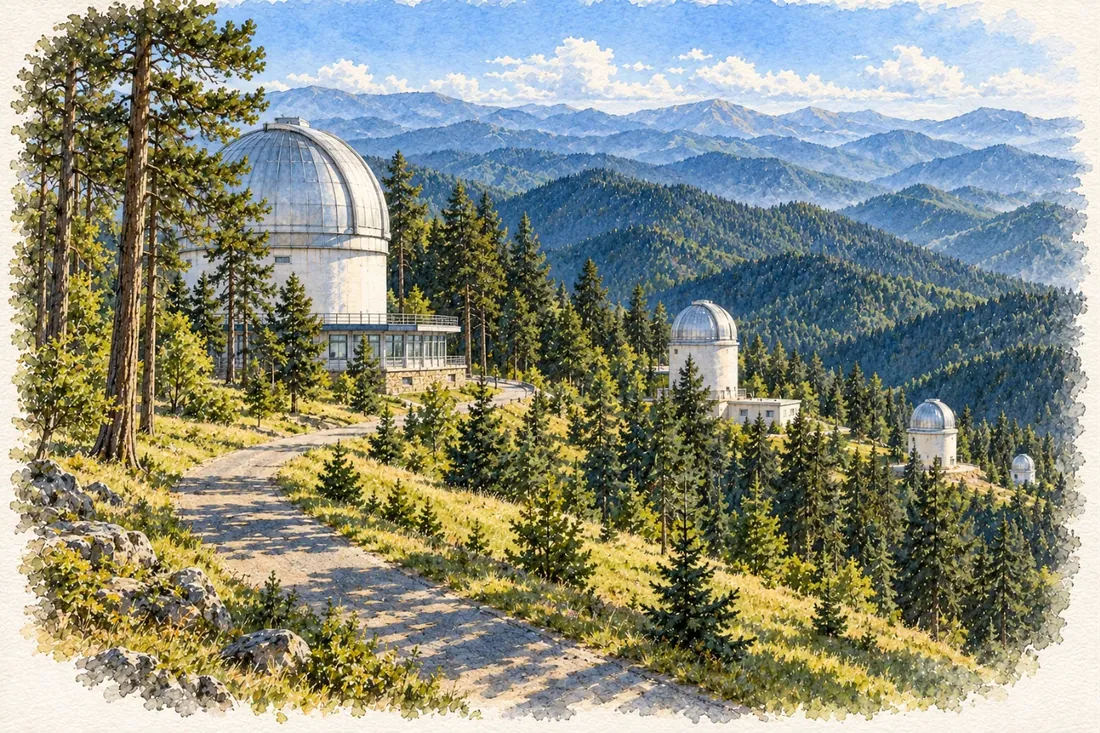
White domes in the pines of Mount Kanobili, where Georgian astronomy began in 1932, above the faded imperial spa of Abastumani.
- Time needed
- 2 h
- From Tbilisi
- 240 km · 4:10
- Road
- Mostly paved
- Car needed
- Crossover / SUV
- Season
- May–October
- Entry
- check locally
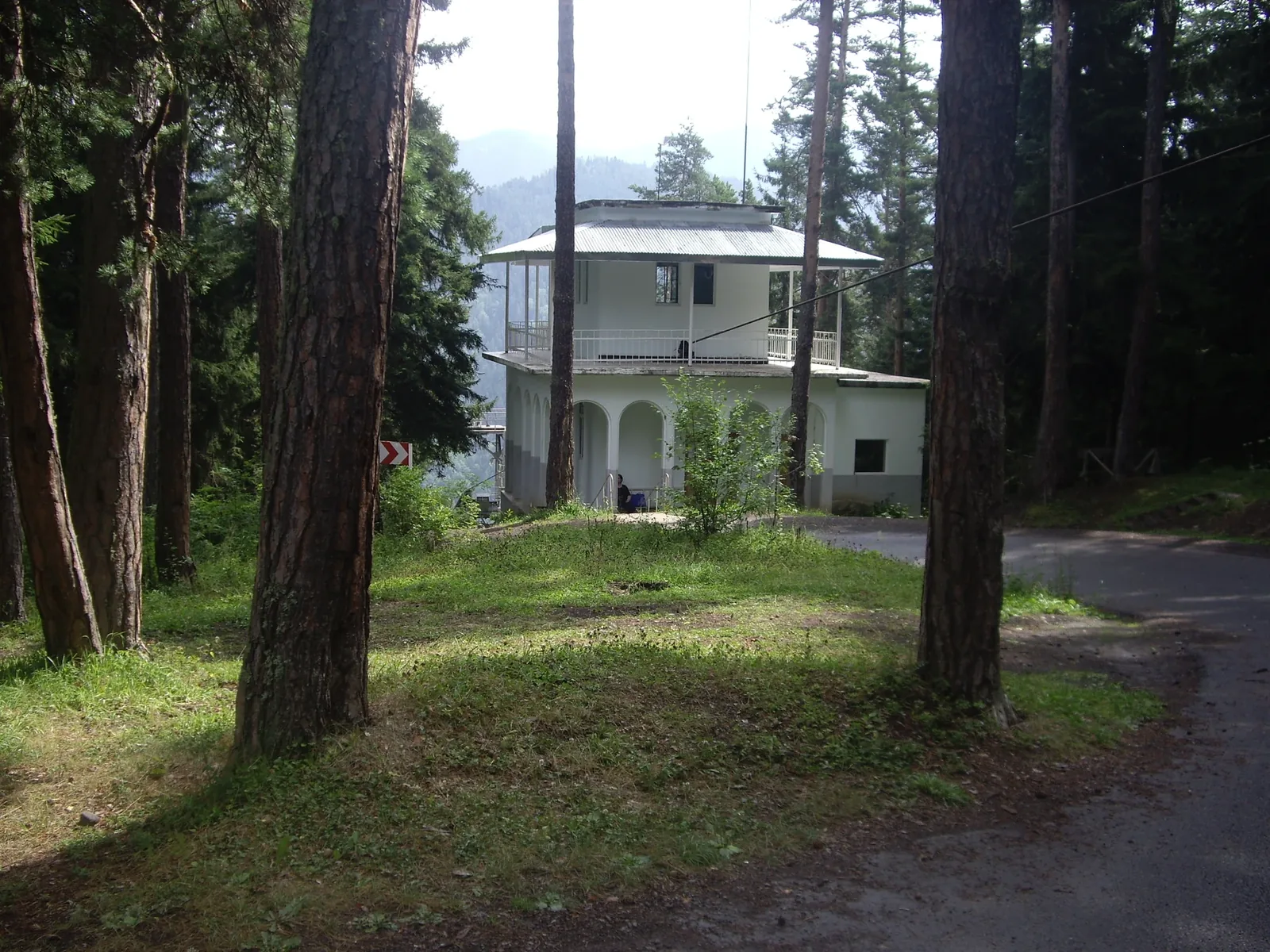
On Mount Kanobili the pines open onto white domes, and you soon understand that what was chosen here, before anything else, was the sky.
Below, in the gorge of the Otskhe, Abastumani rose in the 19th century as a mountain cure for the lungs: dry, sheltered air and, from 1864, a military hospital every summer. In 1892 St Petersburg University set up a temporary observatory in the village, and Professor Sergei Glazenap used a small telescope to separate close double stars that could not be resolved elsewhere.
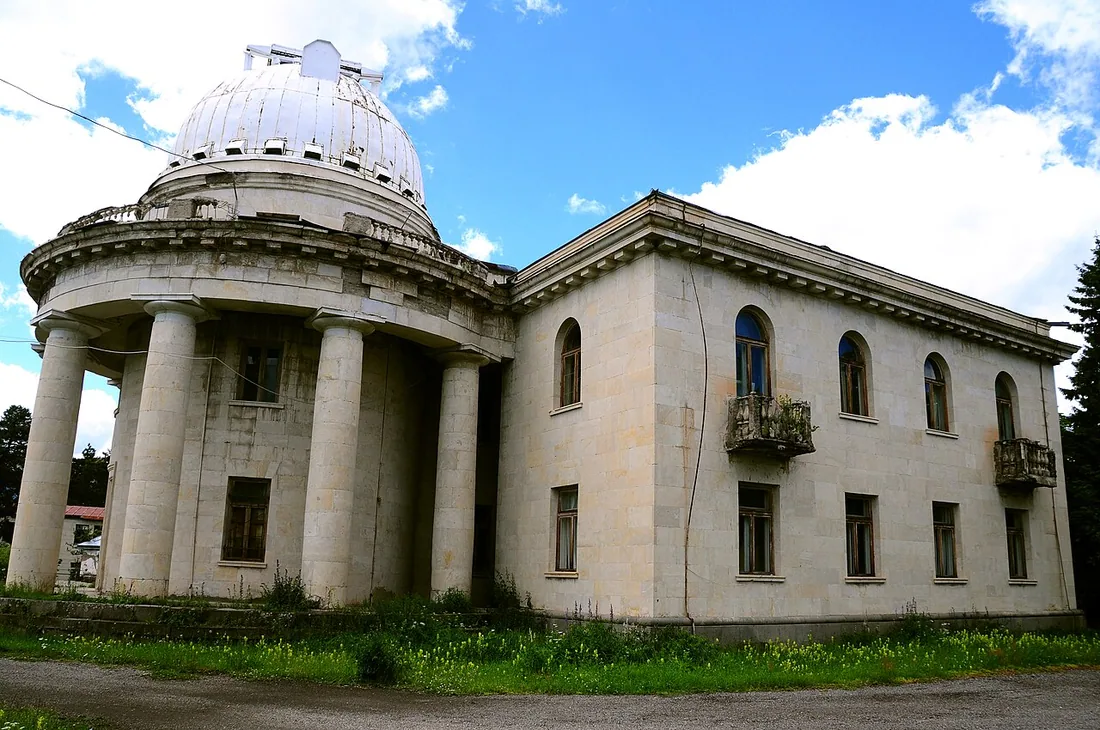
The permanent observatory followed on 28 February 1932, founded by the young astronomer Evgeni Kharadze, who led it for sixty years. The instruments arrived one dome at a time: a 40 cm Zeiss refractor, a 70 cm Maksutov meniscus telescope in the mid-1950s, the 125 cm Ritchey–Chrétien reflector in 1977. In 1942 Giorgi Tevzadze discovered two new comets from here, the first astronomical discovery made by a Georgian. Since 2007 the observatory has been part of Ilia State University, and it is still at work.
Down in the village the story turns human. Tsesarevich George Alexandrovich, heir to the Russian throne and brother of Nicholas II, spent years here under treatment, and on 28 June 1899, aged 28, died suddenly on the road down from the Zekari Pass — riding, according to the official notice, 'a bicycle with a petrol engine', in front of a Molokan woman named Anna Dasoeva. A chapel of Carrara marble marks the spot, and the Church of St Alexander Nevsky, built at his wish, holds frescoes by Mikhail Nesterov.
You climb up for the telescopes, but it is the darkness you remember: when the last car has gone down the serpentine, Kanobili keeps the same clear night that drew Glazenap up this valley with his small telescope in 1892.
Gallery
Practical advice
This is a working research institute, not a museum you can wander into: book a guided visit in advance through Ilia State University (iliauni.edu.ge) and confirm the day before. Tours are paid; check the current price when you book. Visits run in daylight, and an evening session at the eyepiece happens only under a clear sky, so treat it as luck rather than a plan. Kanobili is noticeably colder than the village, so bring a warm layer even in August. Parking is on the upper terrace. Food, rooms and the Nesterov church are down in Abastumani; for cash, use an ATM in Akhaltsikhe.
How to get there from Tbilisi
From Tbilisi take the E60/S1 west to Khashuri, then the S8 south through Borjomi to Akhaltsikhe, and from there head west up the wooded Otskhe valley for about 30 km to Abastumani. Allow roughly 240 km and a little over four hours. Asphalt reaches the resort, patched in places. The last 8 km to the observatory are a steep, narrow serpentine with a broken surface, which is why we suggest an SUV or crossover rather than an economy car. Fill up in Akhaltsikhe; there is no reliable fuel beyond it. In winter and after heavy rain the serpentine can close, so ask in the village before you climb.
Click a marker for details. Coloured lines are ready-made road trips.
Nearby places
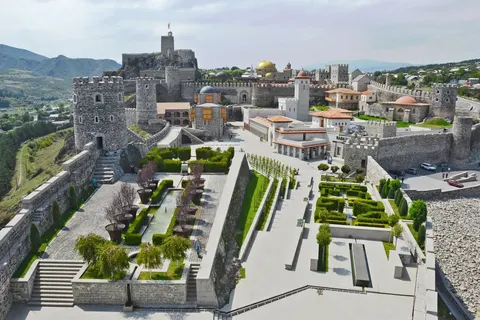
Rabati Castle (Akhaltsikhe)
Akhaltsikhe's walled hill, where a Jaqeli palace, an 18th-century mosque and an Orthodox church share one enclosure above the old town.
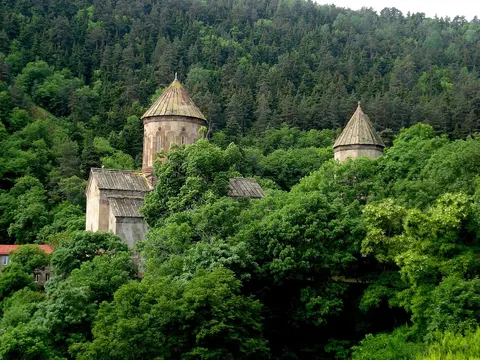
Sapara Monastery
The Jaqeli family's monastery at the head of a wooded valley above Akhaltsikhe, its walls painted with 14th-century portraits of Samtskhe's rulers.
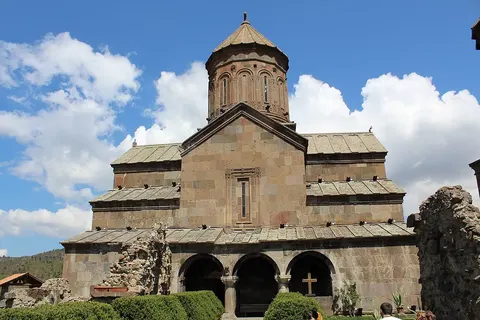
Zarzma Monastery
A 14th-century monastery in the forested Kvabliani valley west of Akhaltsikhe, with portraits of the Jaqeli princes and one of Georgia's largest bell towers.
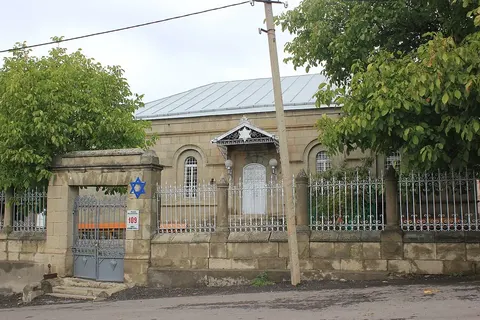
The Jewish quarter and synagogues of Akhaltsikhe
A synagogue of 1862 with a painted wooden interior, its empty younger neighbour and an old hillside cemetery in Akhaltsikhe's Rabati district.
Best car for this trip
Mostly paved
Guides
- The Best Time to Visit Georgia, Counted Month by Month Georgia does not have one season. It has two countries: a 60% country from November to April and a 99% country
- Driving in Georgia: What the Distances Actually Cost You Georgia is a small country with slow roads. Here is what 267 measured drives from Tbilisi say about how long y
Pickup locations
Car Rental at Kutaisi Airport — 55 km (straight line)
Booking and enquiries
The easiest way to reach these places is by car — you pick the route and the stops.