
Poti Lighthouse
A cast-iron tower made in London in 1862 and lit in 1864 at the mouth of the Rioni — 160 iron steps, a small museum, and a light that still works.
- Time needed
- 1 h
- From Tbilisi
- 319 km · 4:45
- Road
- Paved
- Car needed
- Economy class
- Season
- All year
- Entry
- free
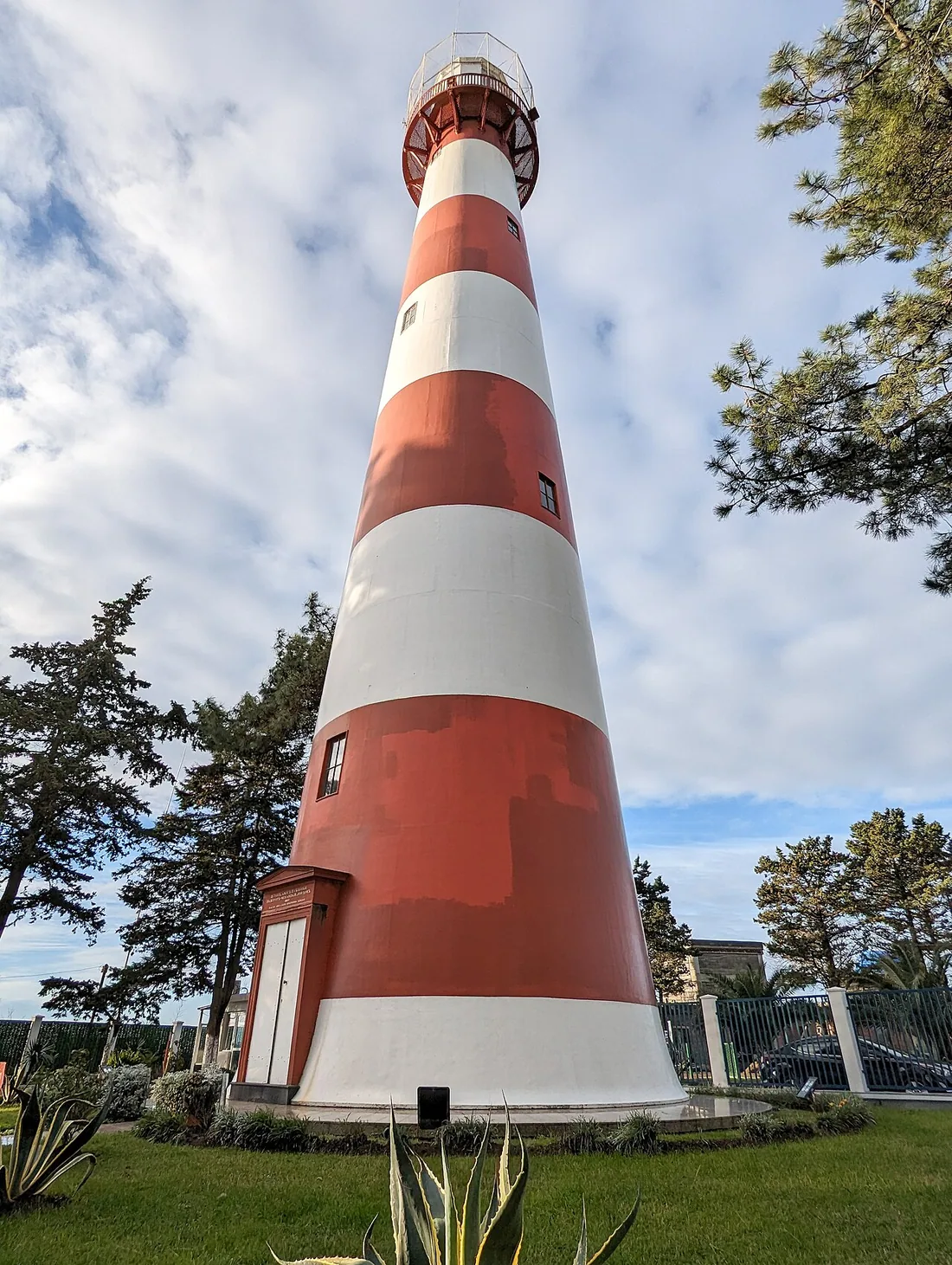
Poti's lighthouse arrived as a kit: cast-iron plates made in London in 1862, shipped out by sea and bolted together at the mouth of the Rioni without a single weld.
The London firm of Easton, Amos & Sons made it, and British engineers assembled it on site. The light first shone on 1 November 1864 and has served the port of Poti ever since. The tower is 36.6 metres tall and weighs 126 tonnes, with a spiral staircase of 160 iron steps inside. It was the first navigational facility of its kind in Georgia, and its operator, the Maritime Transport Agency, calls it the oldest and tallest lighthouse on the country's Black Sea coast. A wick lamp and Fresnel lens once lit it; today it runs on electricity and can be seen 17 nautical miles out.
It was whitewashed at first, then given its red-and-white bands to meet navigation standards, and is repainted every four years. The two lower floors hold a small museum of archival photographs, old beacons and navigational instruments. The iron spiral climbs to an open deck looking over the mouth of the Rioni and the harbour.
Two stories come with it. Local tradition, repeated by the Agency itself, says the English workers kicked a ball about during their breaks while curious Poti residents watched — the first football ever played on Georgian soil, if the tale is true. The second also comes from the Agency: in 1942 the keeper, Ivanidze, spotted an unknown dark vessel approaching from the top balcony and alerted the air force, which bombed it. Neither story has been independently confirmed.
After more than 160 years, the bolted tower still does the job it was shipped here for: every evening, the light comes on.
Practical advice
Entry is free; it opens daily from 9am to 6pm, but this is a working aid to navigation, so hours can change. The address is 93 Demetre Tavdadebuli Street, inside the State Hydrographic Service compound. The 160 steps are narrow and tightly spiralled — hard going if you dislike heights, and keep hold of children. The courtyard occasionally hosts film screenings, theatre and exhibitions. Park in the centre and walk. Nearby, see Poti Cathedral, a neo-Byzantine church of 1906–07 modelled on Hagia Sophia; Kolkheti National Park is about 4 km away.
How to get there from Tbilisi
The lighthouse is about 319 km and four and three-quarter hours from Tbilisi. Take the S1 (E60) west over the Rikoti Pass and past Kutaisi to Samtredia, then the S12 through Lanchkhuti towards the coast, and finally the S2 north for about 12 km into Poti. Equally good: stay on the S1 to Senaki and take the S2 straight into town. In Poti, follow Demetre Tavdadebuli Street towards the harbour. It is asphalt all the way with fuel stations everywhere — an economy car is all you need.
Click a marker for details. Coloured lines are ready-made road trips.
Nearby places
Poti
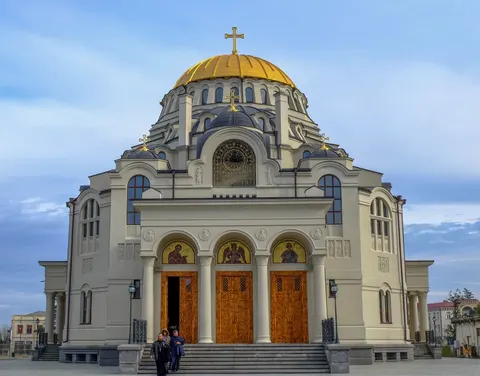
Georgia's working port at the mouth of the Rioni: a radial town built around a concrete echo of Hagia Sophia, with an English cast-iron lighthouse.
Kolkheti National Park and Lake Paliastomi
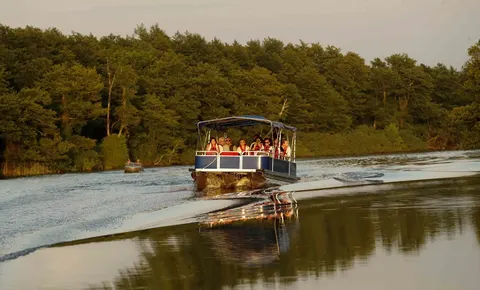
Peat bogs, flooded alder forest and the shallow lagoon of Paliastomi, explored by boat from Poti: the wet green heart of ancient Colchis.
Grigoleti
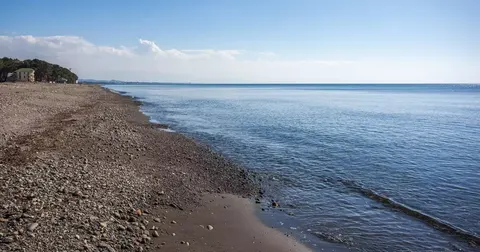
A quiet shore village of dark magnetic sand and pines, with the Kolkheti wetlands pressing right up behind the beach.
Best car for this trip
Guides
- Driving in Georgia: What the Distances Actually Cost You Georgia is a small country with slow roads. Here is what 267 measured drives from Tbilisi say about how long y
Pickup locations
Car Rental in Batumi — 54 km (straight line)
Booking and enquiries
The easiest way to reach these places is by car — you pick the route and the stops.