
Parsma
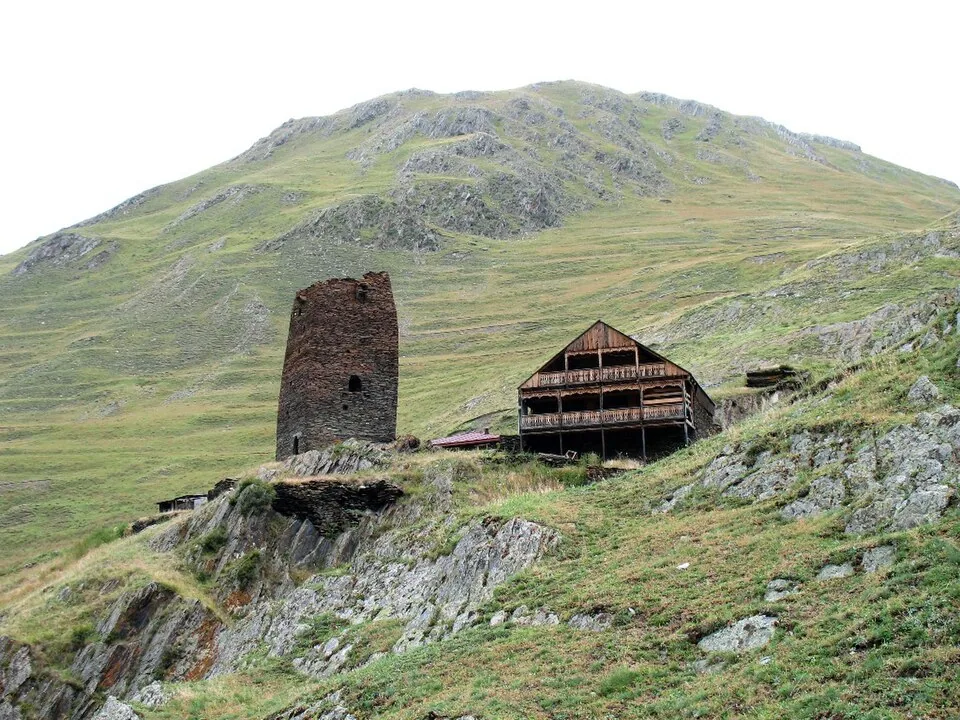
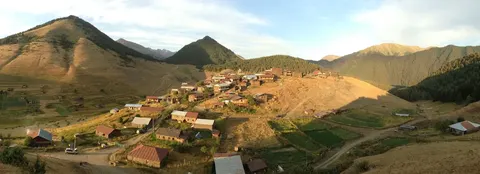
A deserted tower-village on the left bank of the Pirikiti Alazani, where a seven-storey tower-house still keeps watch over the track to Girevi.
- Time needed
- 1 h
- From Tbilisi
- 240 km · 7:45
- Road
- 4x4 only
- Car needed
- Off-road 4x4
- Season
- June–September
- Entry
- free
In the eighteenth century Parsma was the chief village of Pirikiti Tusheti; today its seven-storey tower-house shelters nothing but the wind.
The village stands on grassy knolls on the left bank of the Pirikiti Alazani, a short climb above the Dartlo–Girevi track, at about 2,100 metres. Eighteenth-century archive records name it as the central village of the Pirikiti community, home to the Kaadze, Torghvaidze and Sulakauri families, the Kaadzes the most numerous. The 2014 census recorded no permanent residents at all.
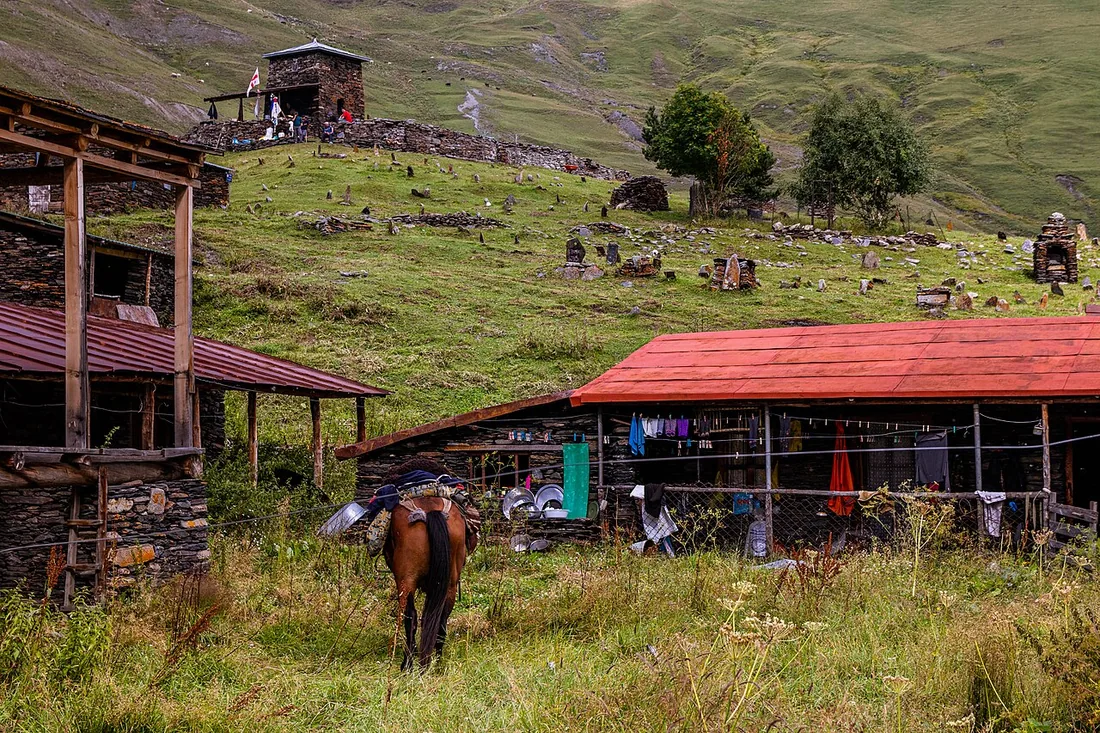
What remains is built of slate laid dry, without mortar. On the western edge three tower-houses stand shoulder to shoulder, two of six storeys and one of seven, its top floor now collapsed; one of them is still known as the village fortress. At the north-western edge a four-storey tower narrows sharply as it climbs. To the east, by the cemetery, a small late-medieval hall church has lost its roof and its east wall, while to the south-east the shrine of St Theodore remains a place of prayer.
Tradition says that Parsma's peaked tower, like the one at Girevi, was raised by a Kist father and son: in peaceful years the Tush hired their Chechen-speaking neighbours from across the ridge as builders.
Parsma has been a monument of national significance since 2018. In summer one house in the village still brews Tush beer, and in late June and early July the slopes around the towers fill with flowers.
Come towards evening, when the sun leaves the slate and the towers stop looking like ruins and start looking like sentries still waiting for the watch to change.
Gallery
Practical advice
Parsma is a stop on a Tusheti journey, never a day trip: sleep in Dartlo or further up the valley. Guesthouses open roughly from June to September. There is no shop, no ATM and little signal, so bring cash, food and a warm layer; nights are cold even in July. Leave the car by the track and walk up — the climb is short but steep. Enter the towers only where the floors survive, as several have collapsed inside. Tush shrines keep their own rules, and some may not be approached by women, so ask locally before going near the St Theodore shrine. An hour is enough.
How to get there from Tbilisi
From Tbilisi take the S5 to Vaziani and the Sh38 over the Gombori Pass to Telavi, then continue through Akhmeta to Pshaveli; fill up in Akhmeta, the last reliable fuel. At Pshaveli the asphalt ends and the Sh44 climbs as gravel over the Abano Pass (2,826 m) before dropping to Omalo; that section alone takes four hours or more. From Omalo a dirt track with river fords runs on to Dartlo in about an hour, and beyond it a rougher track follows the Pirikiti Alazani past Chesho to the foot of Parsma. Allow about 240 km and 7 hours 45 minutes. Offroad class only: a genuine high-clearance 4x4 is essential. The pass is snowbound roughly from October to May.
Click a marker for details. Coloured lines are ready-made road trips.
Nearby places
Dartlo
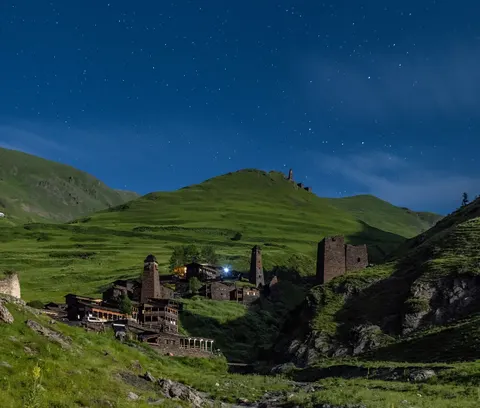
A Tusheti stone village at 2,000 m, with slate roofs, medieval towers and sun signs carved into its walls. Busy in summer, empty all winter.
Omalo and Tusheti
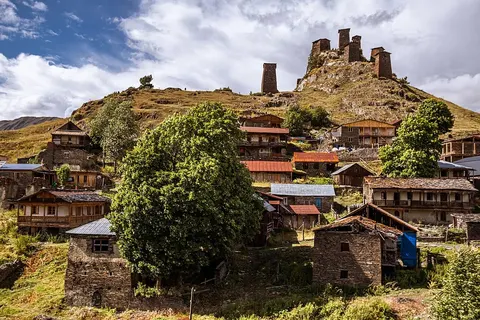
The slate towers of Keselo over Omalo, shepherd villages north of the Caucasus watershed and a gravel pass open only in summer.
Shenako and Diklo
Two stone villages at the eastern edge of Tusheti: a whitewashed 19th-century church and a ruined fortress a few kilometres from Dagestan.
Best car for this trip
Guides
- Do You Need a 4x4 in Georgia? We rate the road surface and the minimum car class for all 267 places in our database. 227 of them need nothin
- Winter Driving in Georgia: What Closes, What Opens, Which Car Of the 267 places we map, 161 are in season in winter and 52 are flagged as not reachable year-round. The pass
Pickup locations
Car Rental at Tbilisi Airport — 101 km (straight line)