
Navenakhevi Cave
A 250-metre karst cave near Terjola, four halls over two floors, ending in a seven-metre-thick column of stone that seals the way on.
- Time needed
- 1 h
- From Tbilisi
- 210 km · 3:05
- Road
- Paved
- Car needed
- Economy class
- Season
- All year
- Entry
- check locally
Navenakhevi saves its best moment for the end: a column of stone seven metres thick, closing the cave like a door that has never been opened.
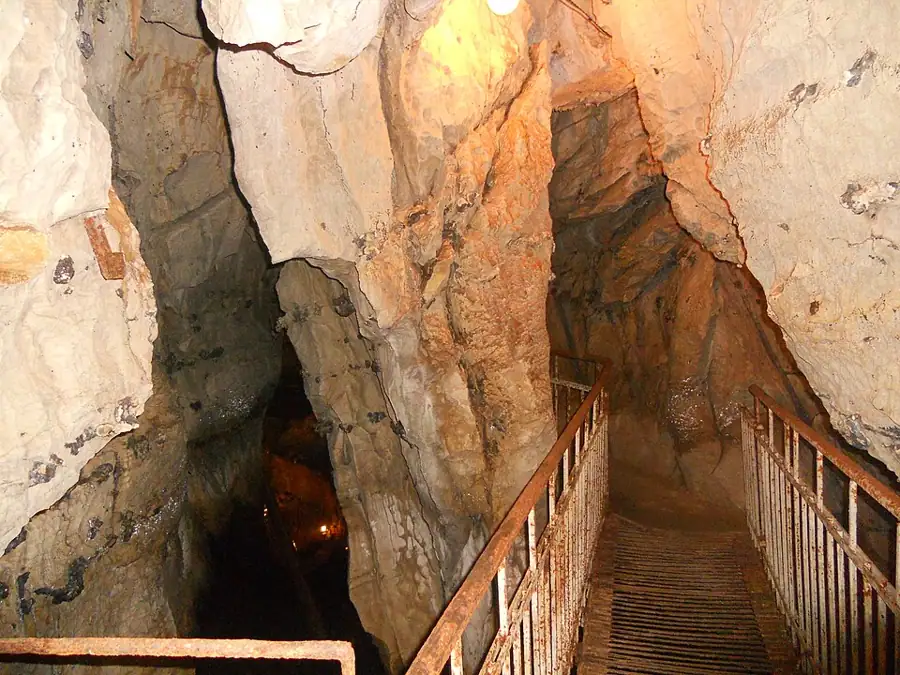
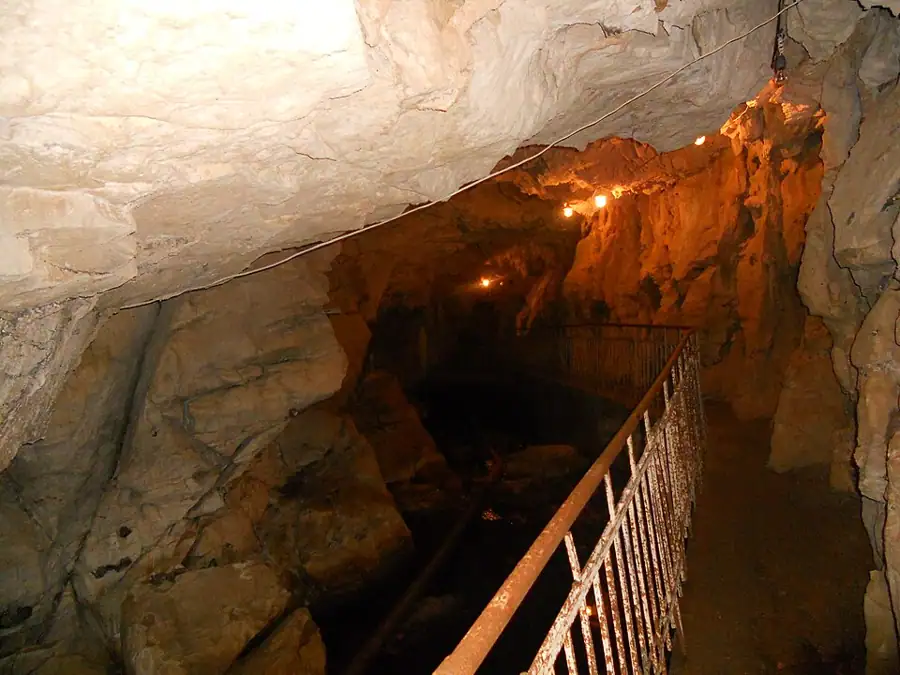
The cave lies at 235 metres in Terjola municipality, under a village whose name seems to recall a vineyard that once grew here. You enter at the bottom of a funnel-shaped hollow. Inside, the ceiling first rises to about five metres; thirty metres in, the main passage splits in two, and short flights of steps lead up to a second level and a hall whose roof soars above fifteen metres. Some 250 metres of passages, four halls on two floors, all dissolved out of Cretaceous limestone.
What to look for:
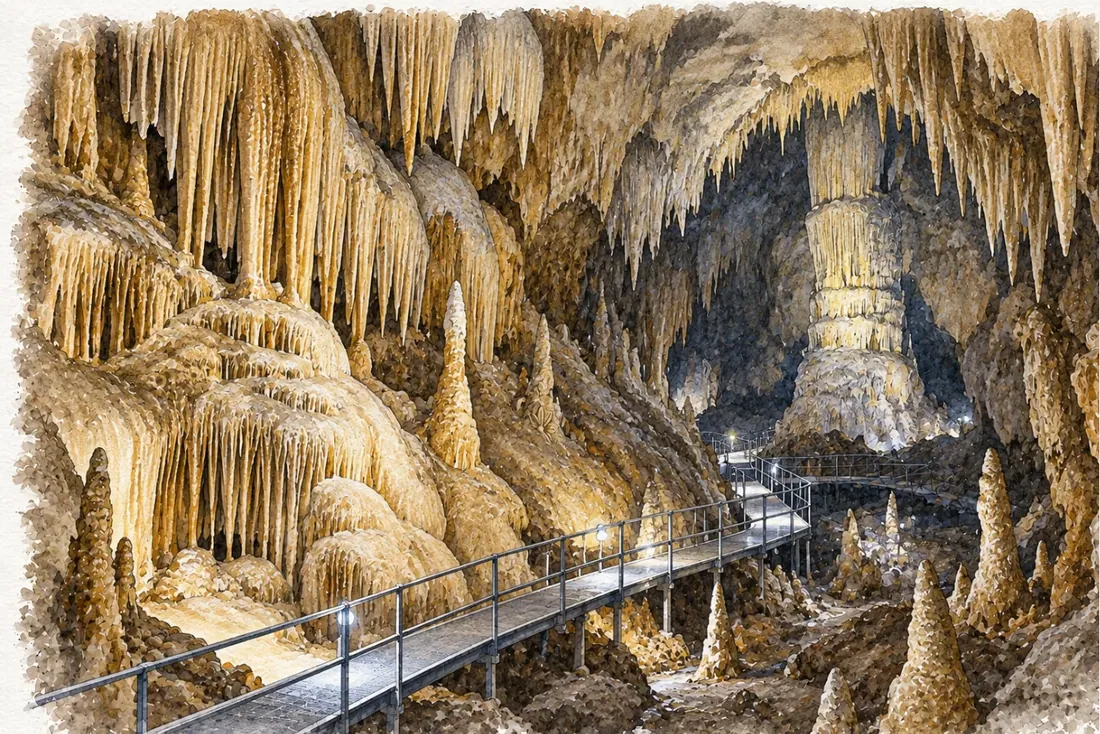
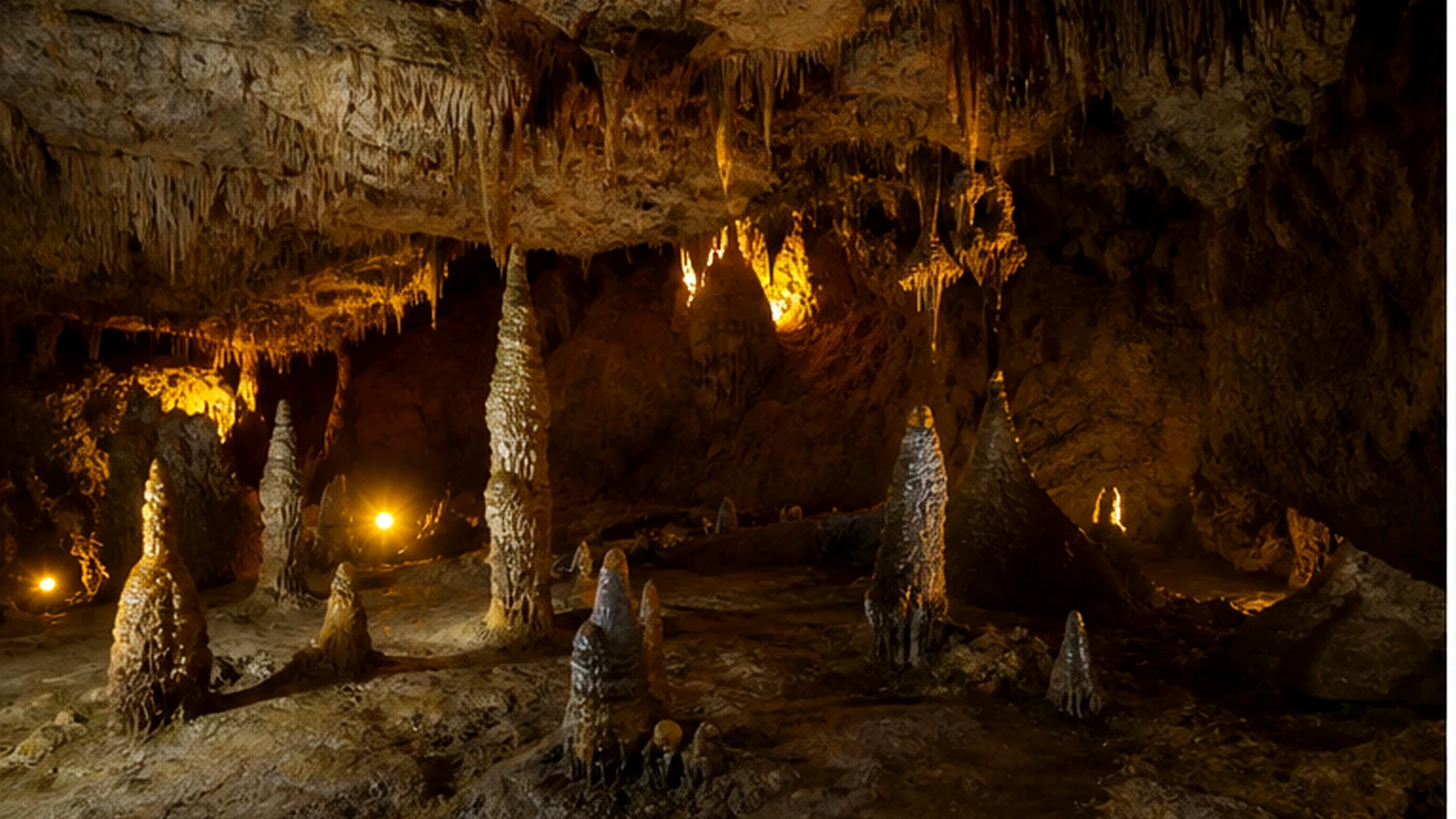
- Stalactites and stalagmites up to five metres long, grown drop by drop over an unimaginable span of time
- Banks of clay two to three metres deep, laid down by floods that once poured through the front of the cave
- The stalagnate at the end — a floor-to-ceiling column that has sealed the passage completely
The air holds at about 13.5 °C all year. The cave is mostly dry, and somewhere in the half-dark a single drip keeps time.
Science first took notice in the 1930s, when the geographer Levan Maruashvili studied it. The push to open it to visitors came from closer to home: in 1981 two local sisters, the Khujadzes, wrote about the cave, and their writing set in motion the long work that ended with its official opening in 2018. Today it is a protected natural monument, fitted with concrete paths, viewing platforms and an iron door.
There is only one way in, and it is also the only way out. You retrace your steps past the same stones — and see them differently the second time.
Gallery
Practical advice
Visits are guided and run in small groups. Opening hours shift with the season — roughly 10:00–18:00 in spring, 10:00–19:00 in summer and 10:00–17:00 in autumn and winter — and it is worth checking the current ticket price on nationalparks.ge before you go. It is about 13.5 °C inside, so bring a fleece even in July. The concrete paths can be damp, so wear shoes with grip; the steps rule out wheelchairs and pushchairs. The visitor centre has a café and a souvenir shop. Combine the cave with Tsutskhvati, Gelati Monastery or the Tkibuli reservoir, all within about ten kilometres as the crow flies.
How to get there from Tbilisi
From Tbilisi take the S1 (E60) west through the Rikoti tunnel and past Zestafoni, and leave the motorway at the Terjola junction, about 200 km out. From there it is a few kilometres of country road north to the village of Navenakhevi; follow the signs of the Agency of Protected Areas. About 210 km in all, just over three hours. The road is asphalt throughout; the last stretch is narrow but well kept. Refuel in Zestafoni or Terjola. There is parking at the visitor centre, and an economy car is all you need, in any season.
Click a marker for details. Coloured lines are ready-made road trips.
Nearby places
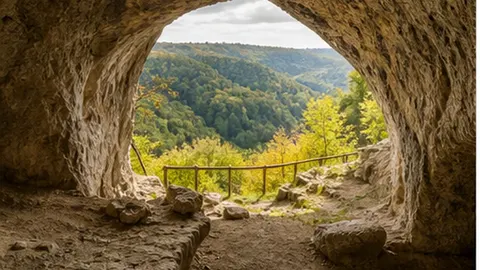
Tsutskhvati Caves
A thirteen-storey karst cave in the Chishura gorge, where Neanderthals camped and someone once laid out cave-bear skulls with care.
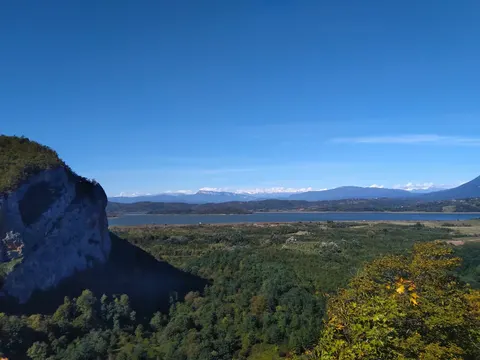
Tkibuli Reservoir
A dammed-up karst basin at the foot of the Nakerala cliff: grey-green water, wooded islands and a coal town's quiet back garden.
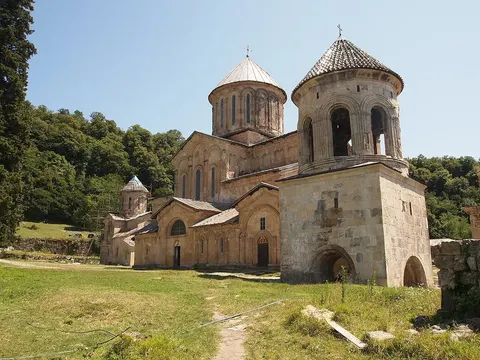
Gelati Monastery
David the Builder's monastery and academy above Kutaisi: a gold 12th-century mosaic, a royal burial ground, and the king himself under the gate.
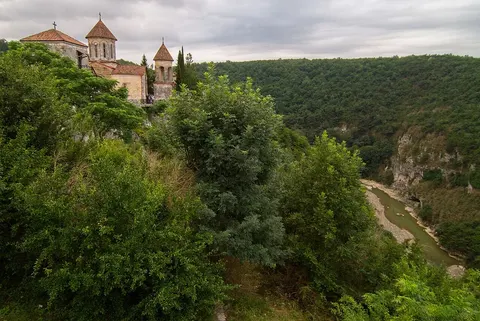
Motsameta Monastery
A cliff-top monastery in a bend of the Tskaltsitela gorge, where pilgrims stoop beneath the relics of two 8th-century martyrs.
Best car for this trip
Guides
- Driving in Georgia: What the Distances Actually Cost You Georgia is a small country with slow roads. Here is what 267 measured drives from Tbilisi say about how long y
Pickup locations
Car Rental in Kutaisi — 13 km (straight line)