
Tsutskhvati Caves
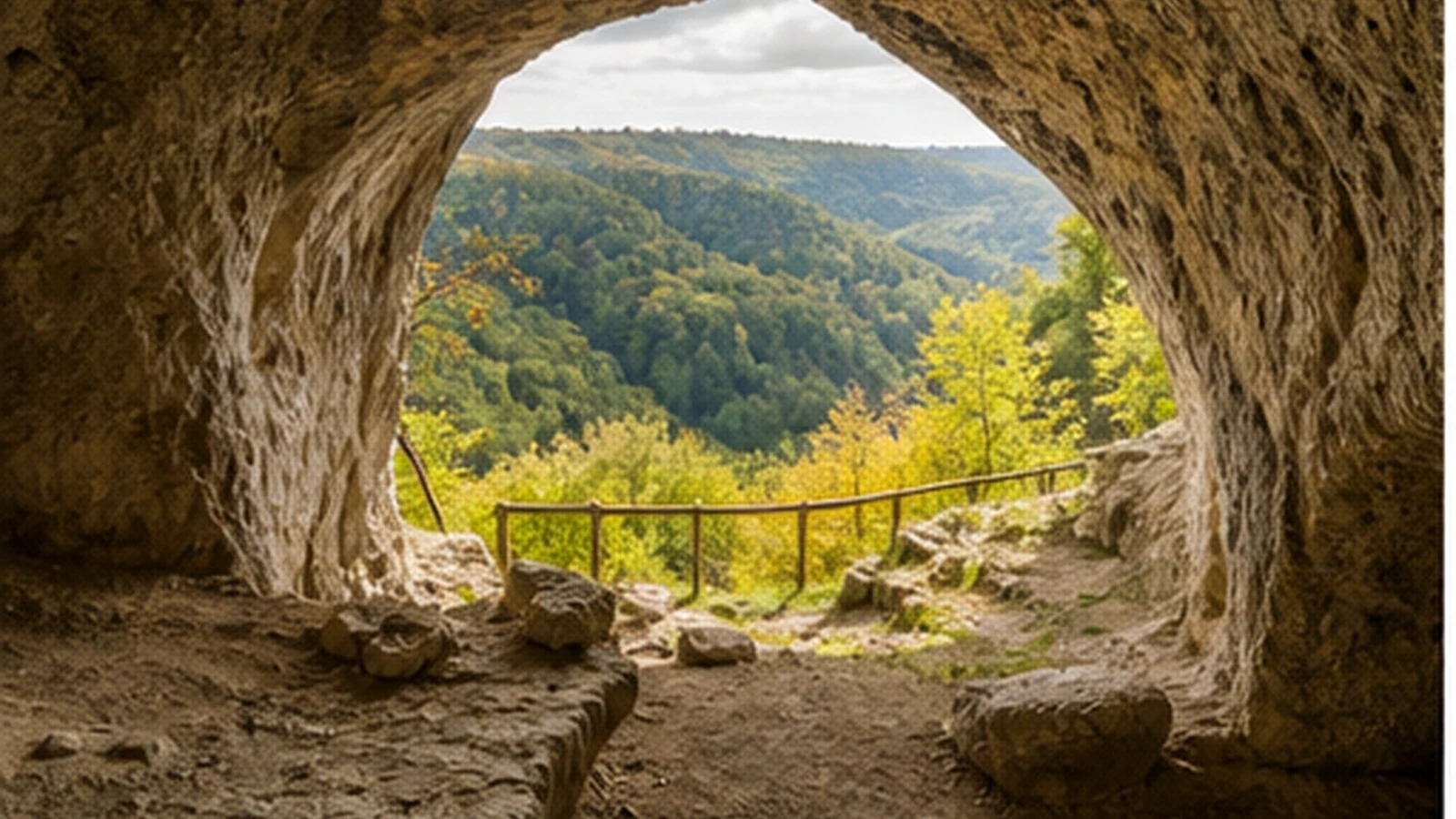
A thirteen-storey karst cave in the Chishura gorge, where Neanderthals camped and someone once laid out cave-bear skulls with care.
- Time needed
- 2 h
- From Tbilisi
- 240 km · 3:40
- Road
- Mostly paved
- Car needed
- Crossover / SUV
- Season
- May–October
- Entry
- free
Tsutskhvati is not one cave but a tower of them: thirteen storeys carved into the limestone by one small river. The Shabataghele, which becomes the Chishura below the cave, has been cutting down through the Okriba massif for so long that each abandoned riverbed survives as a separate floor. Professor Levan Maruashvili’s expedition counted thirteen in a vertical section of 75 metres. Locals simply call the place Maghara.
The lowest floor is a slot too narrow for a person, and the river runs through it all year. The second is the main gallery, a natural tunnel 200 metres long, 10 to 30 metres wide and up to 28 metres high. Its side passages hold springs, a small lake and calcite flowstone, and beams fixed to the ceiling by human hands survive from an ancient cult structure.
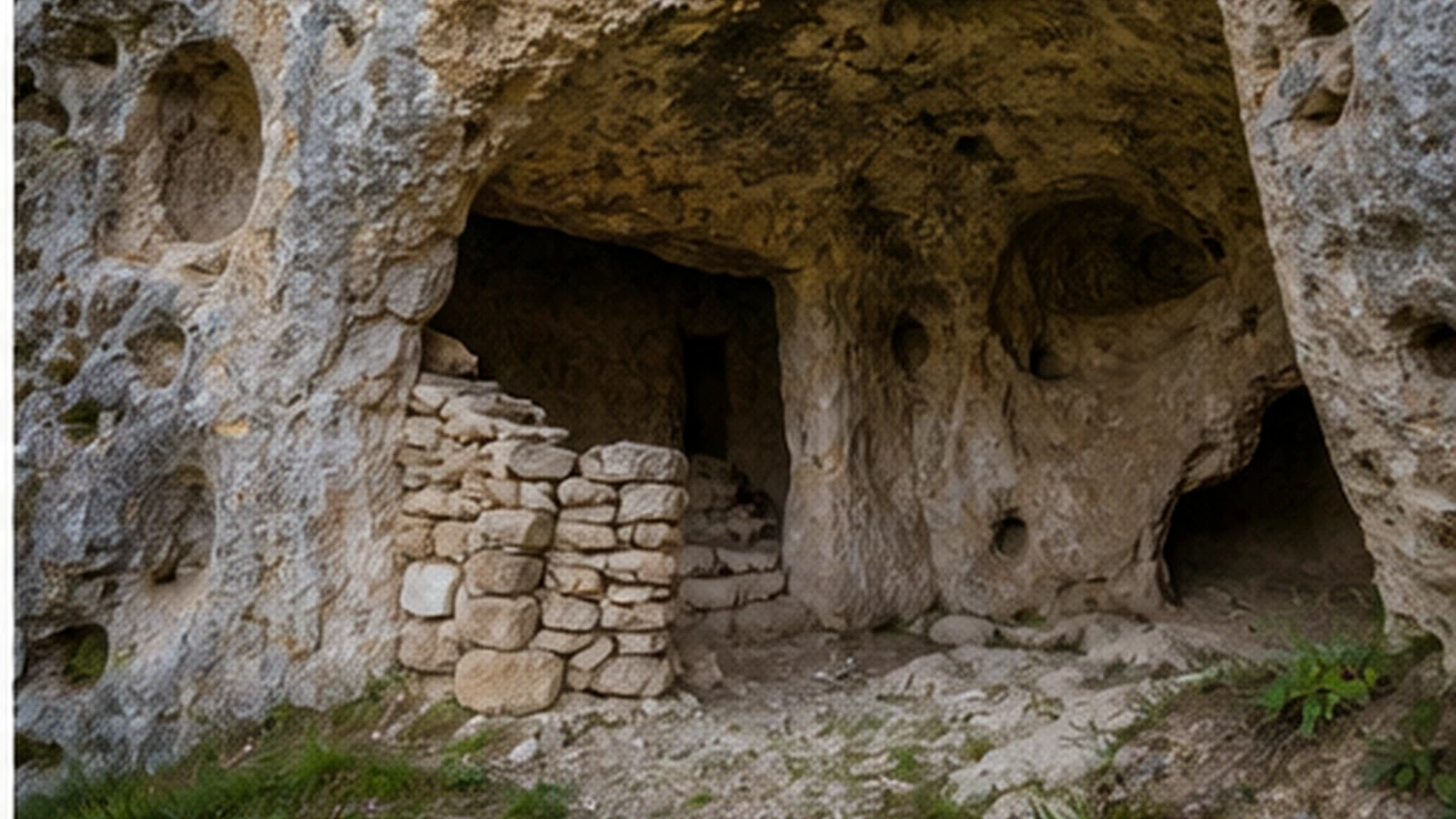
From the fourth floor up the caves are dry, and people have used them since deep prehistory. In the Bronze Cave on the fifth floor, 12–13 metres of sediment record 140,000 years of climate change. A child’s tooth has been confirmed as Neanderthal and dated to about 50,000 years ago, traces of modern humans fall between 80,000 and 12,000 years ago, and stone tools are dated as far back as 400,000 years. In the Upper Cave on the eleventh floor, excavators found cave-bear skulls, thigh bones and teeth deliberately arranged. Three caves on floors seven to nine were walled into refuges in the Middle Ages; mortared walls, cut steps and wine-jar shards remain, along with a large colony of bats.
Since 2017 an international team from Georgia, France and the United States has been excavating here with around fifty local students. Everyone else gets the great tunnel, a torch beam and the knowledge that, for tens of thousands of years, this was someone’s doorstep.
Gallery
Practical advice
Allow two hours, including the walk in. There is no lighting, walkway or ticket office, so bring a strong torch and a spare, boots with grip and clothes you do not mind muddying. Stay in the great second-floor tunnel: the upper storeys are archaeological sites and the climbs between them are dangerous. Leave the bats in peace. The Shabataghele can flood the main gallery, so stay away after heavy rain and during the spring melt. Never go alone, and tell someone your plan, as there is no phone signal underground. The nearest shop is in the village.
How to get there from Tbilisi
Take the E60 (S1) west from Tbilisi to the Terjola turn-off, about 190 km, then head north on the Sh19 through Terjola towards Tkibuli. Just short of Tkibuli, bear west on the Sh17 towards Kutaisi and follow local roads to Orpiri, where the Sh201 lane leads to the cave. That makes about 240 km and three hours forty in all. The lane is narrow and deteriorates on the final kilometres: a careful crossover copes in the dry, but after rain you want an SUV’s clearance. Fuel up in Zestaponi or Terjola, as there is nothing on the last stretch.
Click a marker for details. Coloured lines are ready-made road trips.
Nearby places
Navenakhevi Cave
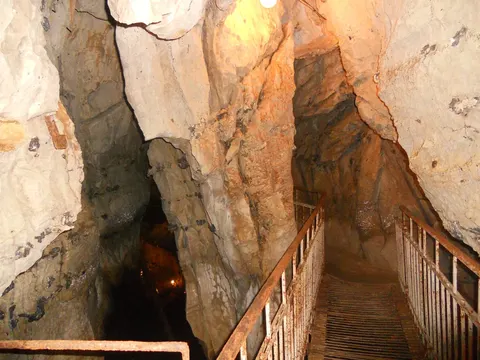
A 250-metre karst cave near Terjola, four halls over two floors, ending in a seven-metre-thick column of stone that seals the way on.
Tkibuli Reservoir
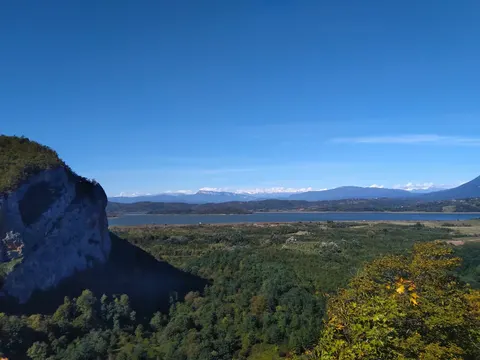
A dammed-up karst basin at the foot of the Nakerala cliff: grey-green water, wooded islands and a coal town's quiet back garden.
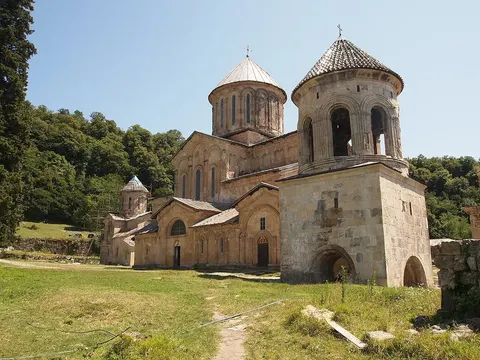
Gelati Monastery
David the Builder's monastery and academy above Kutaisi: a gold 12th-century mosaic, a royal burial ground, and the king himself under the gate.
Best car for this trip
Mostly paved
Guides
- Winter Driving in Georgia: What Closes, What Opens, Which Car Of the 267 places we map, 161 are in season in winter and 52 are flagged as not reachable year-round. The pass
- The Best Time to Visit Georgia, Counted Month by Month Georgia does not have one season. It has two countries: a 60% country from November to April and a 99% country
Pickup locations
Car Rental in Kutaisi — 12 km (straight line)