
Mdzovreti Fortress
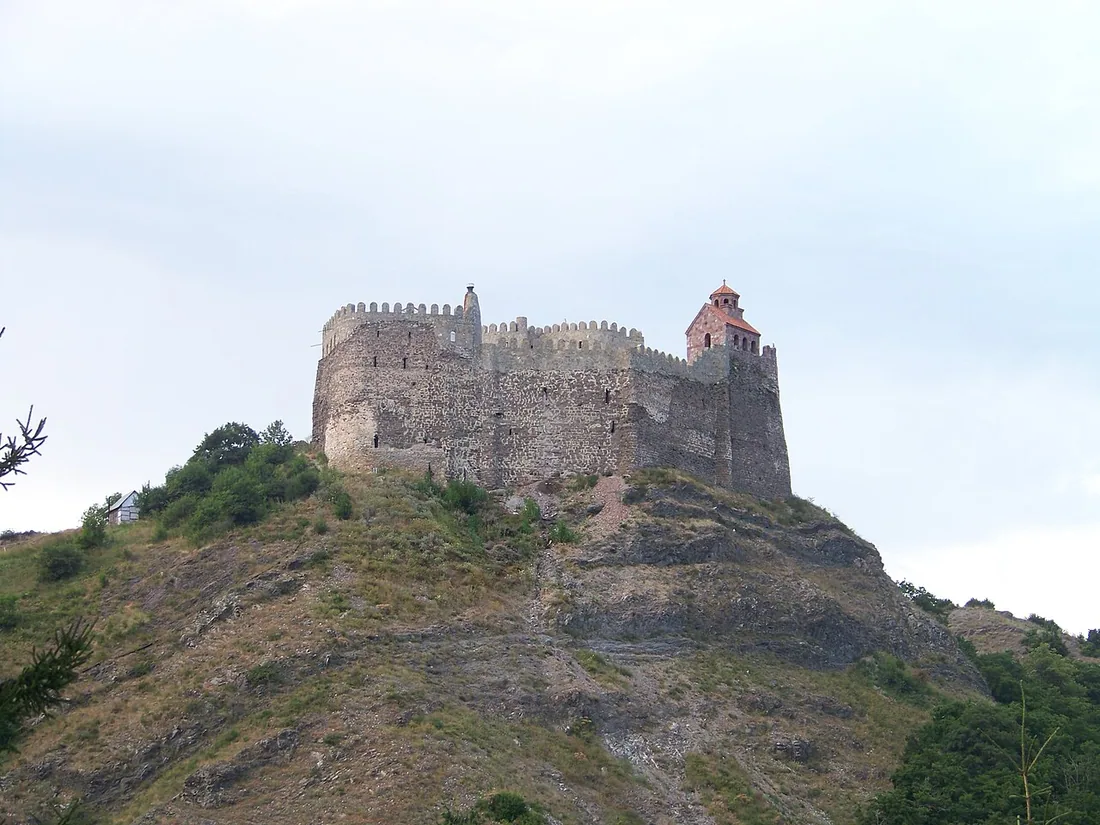
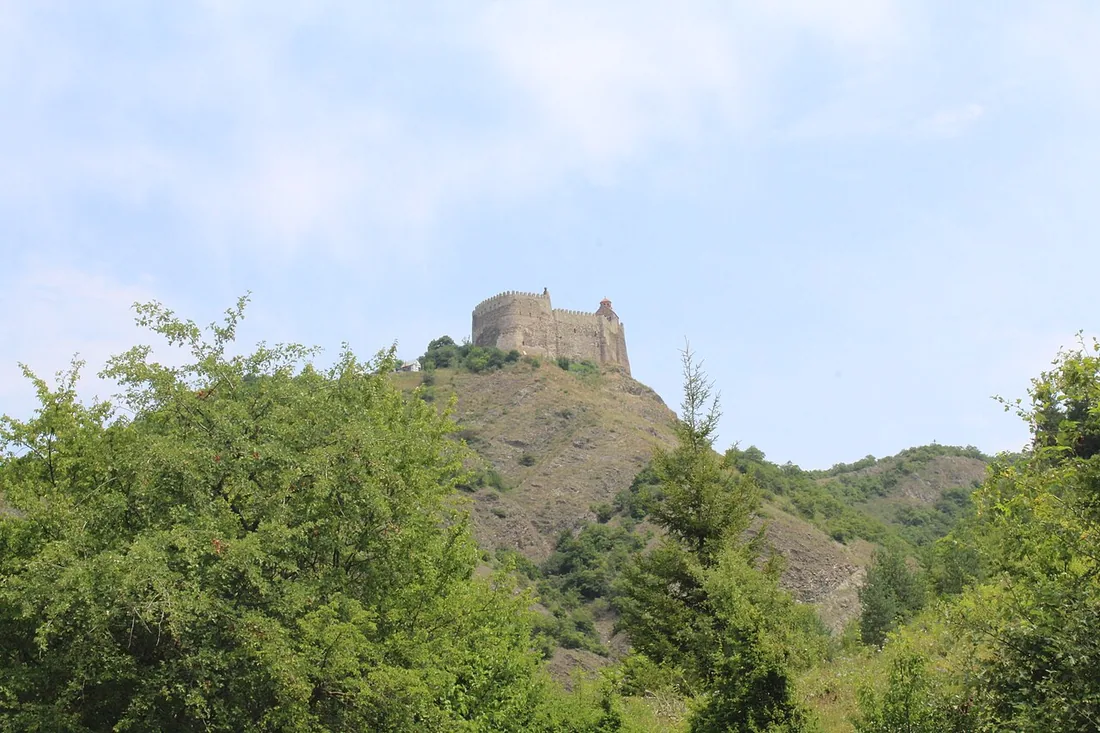
A Tsitsishvili castle-palace in the Dzama valley that King Rostom of Kartli failed to take in 1640, with a seven-storey tower and an arched belfry.
- Time needed
- 1.5 h
- From Tbilisi
- 122 km · 2:05
- Road
- Unpaved sections
- Car needed
- Crossover / SUV
- Season
- All year
- Entry
- check locally
In 1640 Prince Nodar Tsitsishvili, in revolt against King Rostom of Kartli, shut himself in Mdzovreti — and the king went home without it.
The castle-palace stands at the foot of a rocky slope at the entrance to Ortubani village, on the right bank of the Dzama, in the south-eastern corner of what was once the town of Mdzovreti. The place is far older than the walls you see. In the 10th century a fugitive prince of the Abkhazian royal house, the future King Theodosius III, remembered as 'the Blind', found shelter here; in the 13th century it belonged to Gamrekeli Toreli, son of Kakha. From the 14th century the Dzama valley was ruled by the Panaskerteli-Tsitsishvili princes, and in the early 17th century they moved the centre of their domain here from Samtsevrisi. Most of what survives dates from that move.
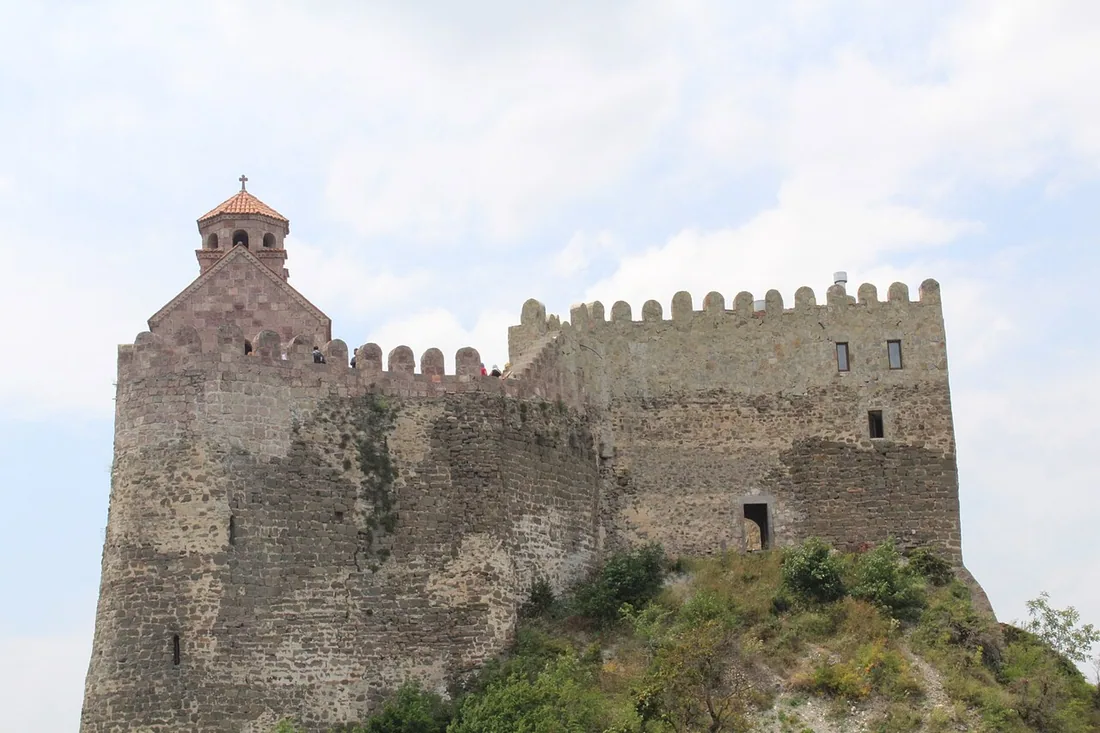
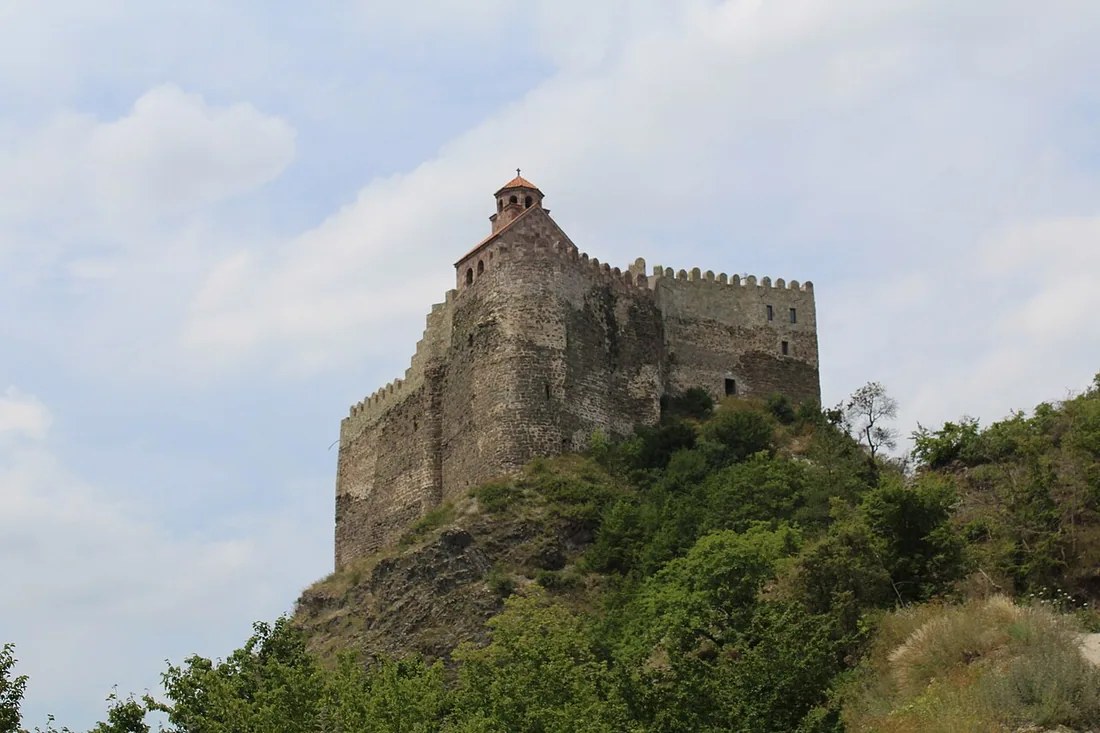
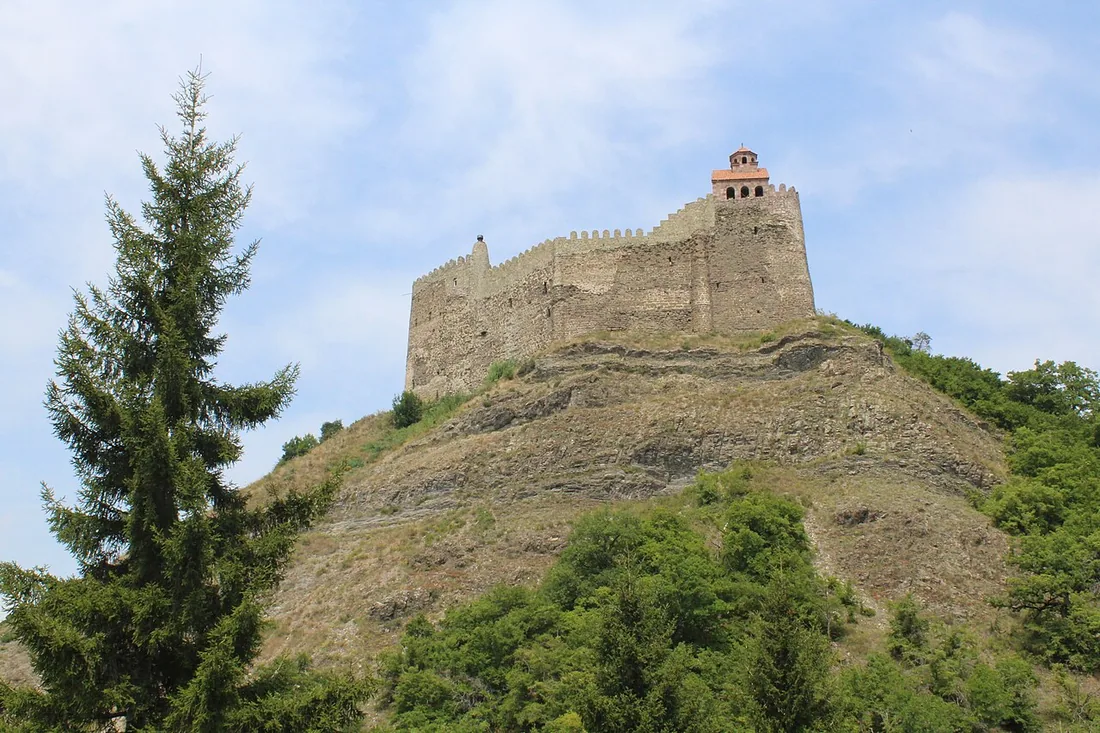
The walled enclosure ran along the foot of the slope, a long terrace of about 75 by 180 metres; its northern wall still stands for its full length. In the south-western corner rises the tower: seven storeys and 22.3 metres of river stone, braced by half-round buttresses on three sides, with fireplaces, gun-ports and, on the fifth and sixth floors, small latrines jutting out from the wall. Inside the enclosure, to the east, is the Church of the Virgin, a modest early-17th-century hall of rubble stone. Its three-storey bell tower, added in the second half of the 18th century, stacks a vaulted gateway, a guard's room reached by a wooden ladder and an open belfry crowned by an eight-sided pyramid.
The walls that turned back a king are now the first thing you see above you as you drive into the village.
Gallery
Practical advice
Park in Ortubani: the castle stands at the start of the village, a short walk from the road; the ground is uneven, so wear shoes with grip. Access may be restricted — ask in the village whether visitors can go in, and at what hours. Do not count on a café or toilets; buy fuel and food in Kareli before heading up the valley. The church may be locked; dress modestly in case it is open. Allow an hour and a half. Spring and autumn are kindest; summer afternoons in the valley are hot. Kintsvisi Monastery lies along the same road.
How to get there from Tbilisi
Take the S1 (E60) west from Tbilisi for about 100 km and leave at Kareli. Cross the town and pick up the Sh134, the road to Kintsvisi Monastery, which climbs south up the Dzama valley; Ortubani is about 13 km along it, and the fortress stands at the start of the village. Total: about 122 km and 2 hours 5 minutes. The valley road begins paved, but the final stretch is broken and partly gravel, so an SUV is the comfortable choice, especially after rain. There is no fuel beyond Kareli — fill up there.
Click a marker for details. Coloured lines are ready-made road trips.
Nearby places
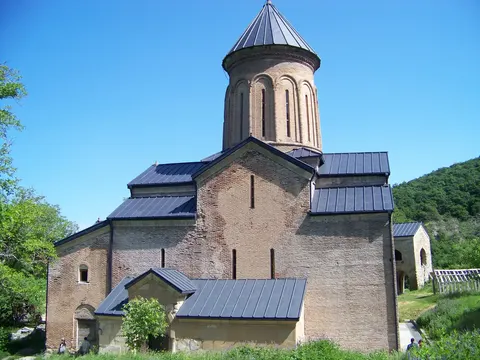
Kintsvisi Monastery
A red-brick Golden Age church in the forest near Kareli, where an angel in lapis-lazuli blue points to Christ's empty tomb.
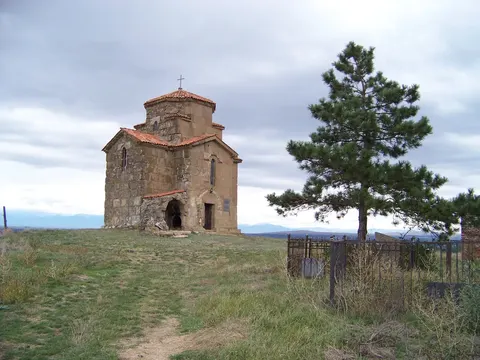
Samtsevrisi Church of St George
A 7th-century free-cross church barely eleven metres tall that still commands the plain where the Dzama meets the Mtkvari.
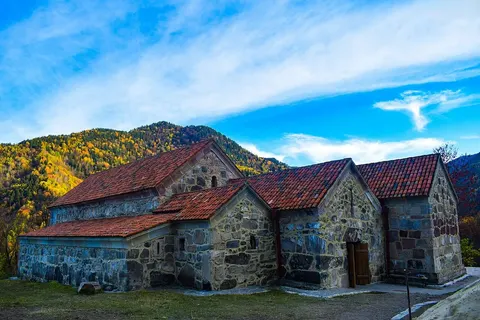
Kozifa Monastery
Five hall churches from the 8th to the 16th century, packed inside one wall on a mountain in the Dzama gorge, with 13th-century frescoes.
Best car for this trip
Unpaved sections
Guides
- Do You Need a 4x4 in Georgia? We rate the road surface and the minimum car class for all 267 places in our database. 227 of them need nothin
- Driving in Georgia: What the Distances Actually Cost You Georgia is a small country with slow roads. Here is what 267 measured drives from Tbilisi say about how long y
Pickup locations
Car Rental in Tbilisi — 92 km (straight line)
Booking and enquiries
The easiest way to reach these places is by car — you pick the route and the stops.