
Lopota Lake
A once-forgotten lake at the foot of the Caucasus, turned into a resort in 2008, above a wine village with more history than it lets on.
- Time needed
- 3 h
- From Tbilisi
- 115 km · 2:10
- Road
- Paved
- Car needed
- Economy class
- Season
- May–October
- Entry
- check locally
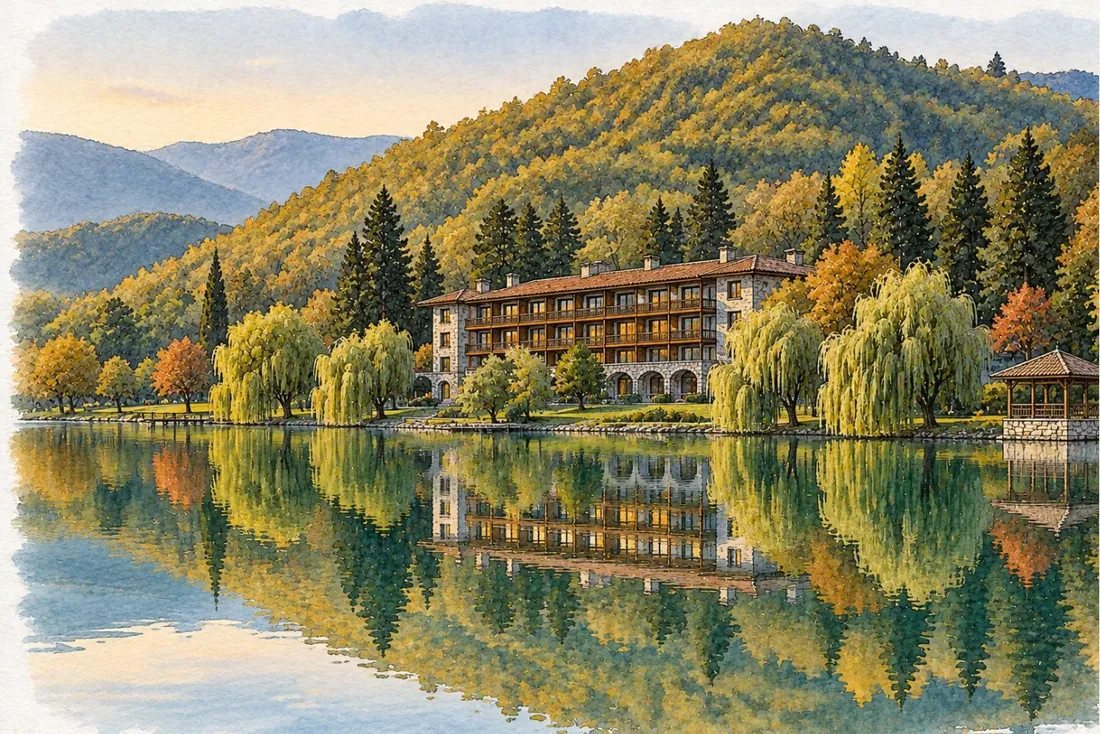
Above Napareuli, where the Lopota river leaves the Caucasus for the Alazani plain, a small lake that was long left to itself has become the centrepiece of a large resort.
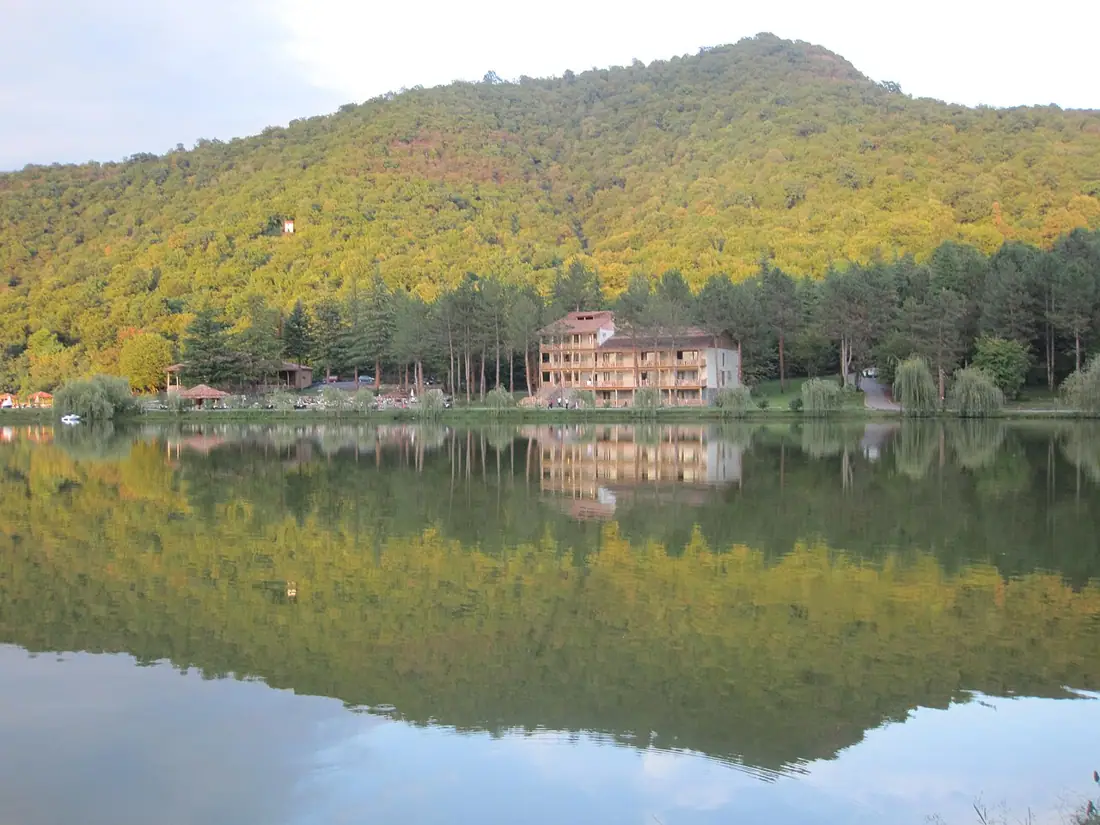
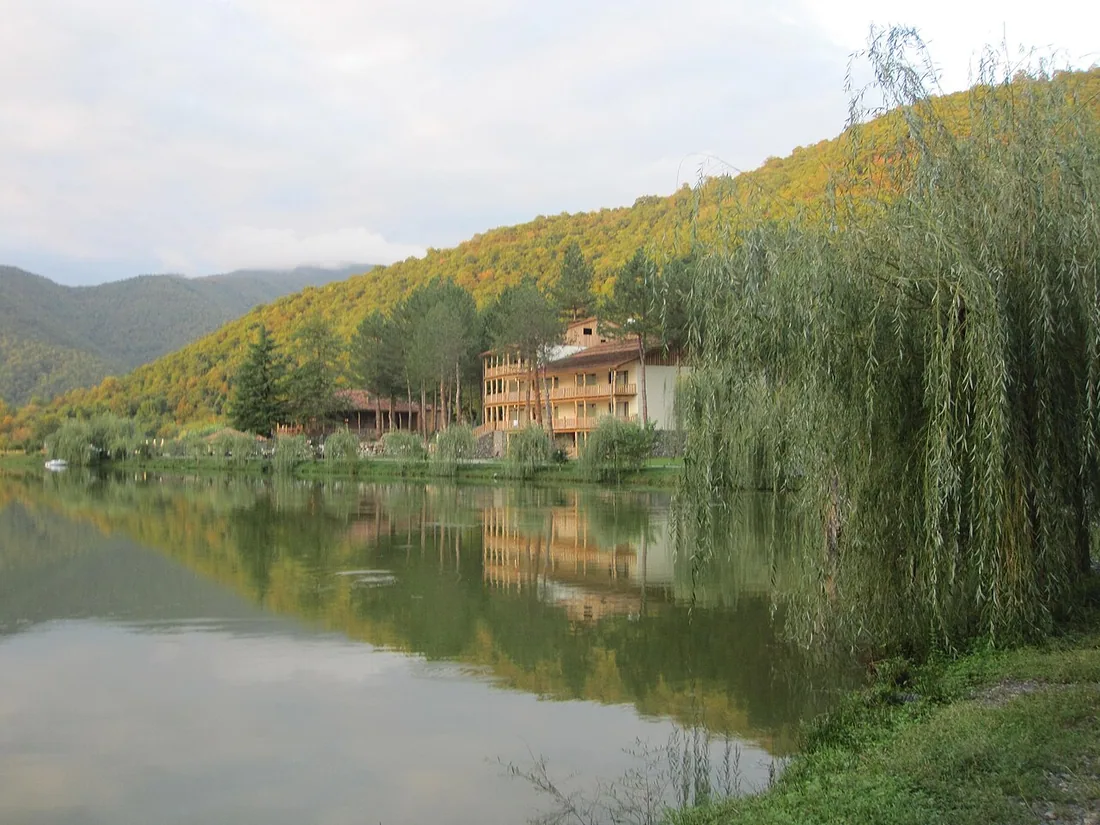
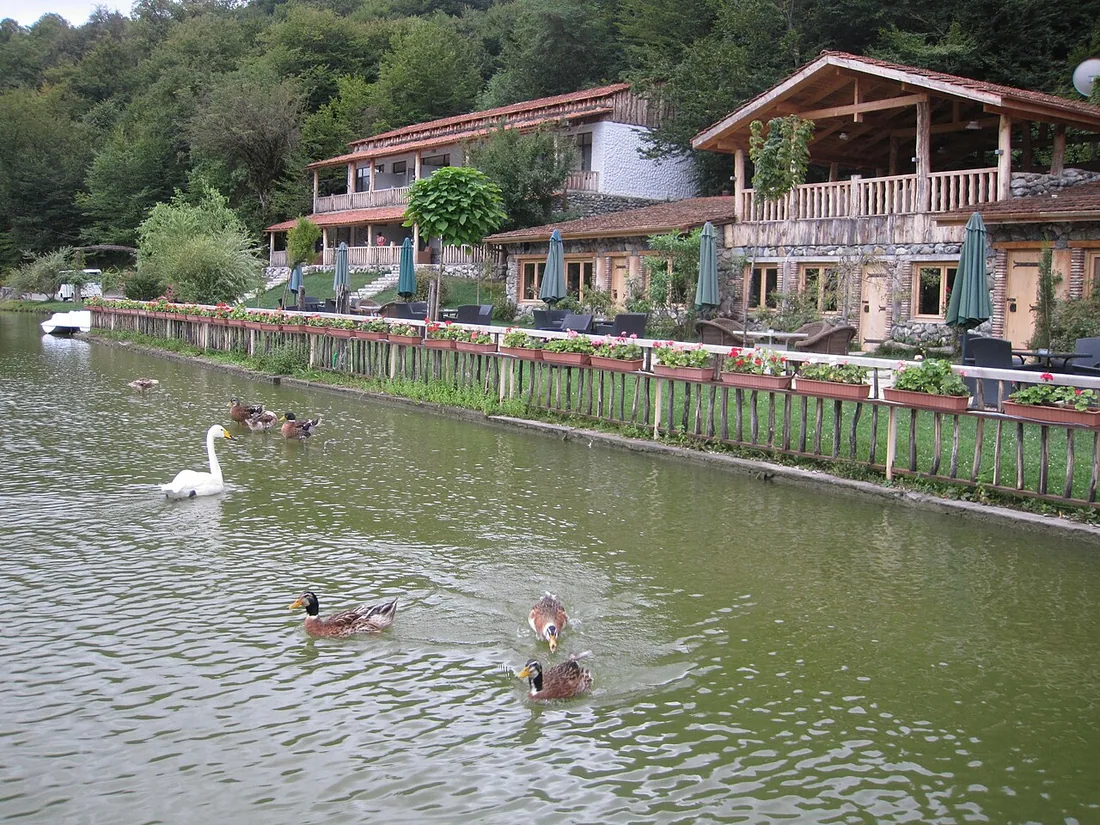
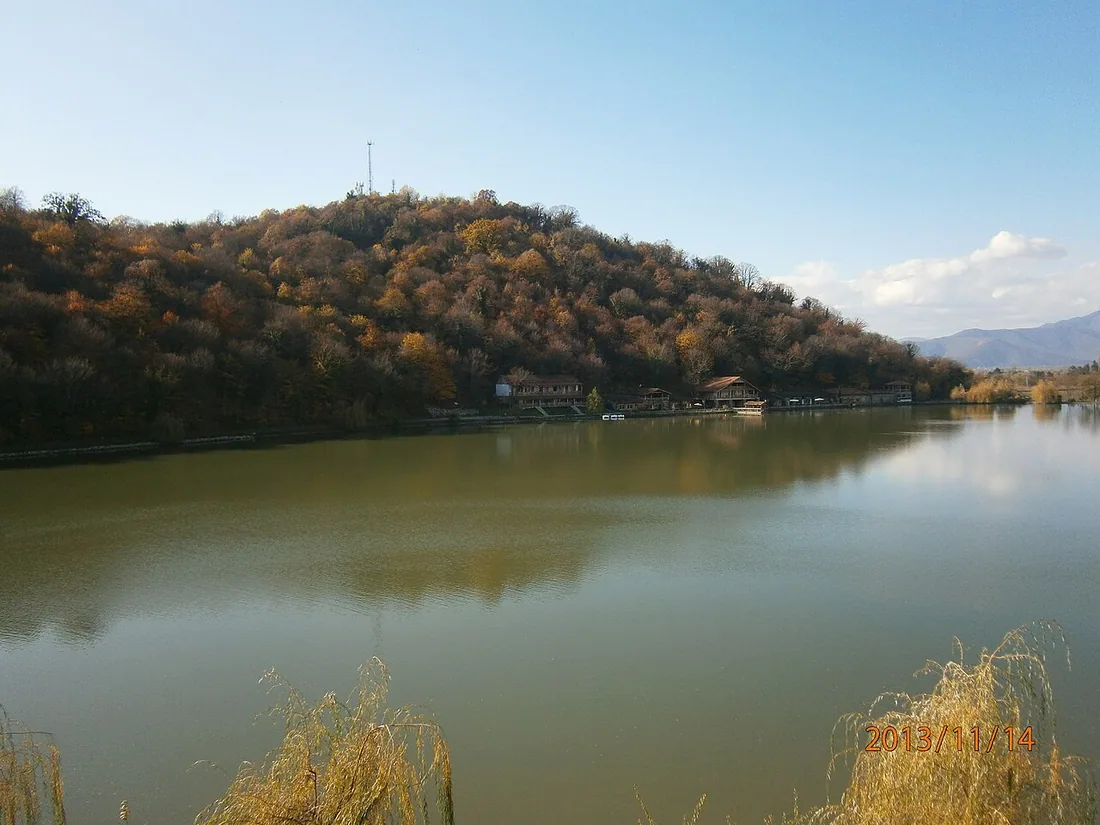
The resort opened in 2008. Hotel buildings, pools, a spa and a winery of its own stand round the water, on grounds of about a million square metres, and the builders like to call the place a "forgotten lake". On a windless morning the surface lies still enough to hold the green slopes of the Caucasus; by day boats slide across it, and in the evening cool air pours down out of the gorge.
The village below is older and more interesting than it looks. Napareuli means, roughly, "where the flock once stood": the old sheep road ran through it, and Tush, Kakhetian and Pankisi shepherds drove their flocks along it, by way of Shilda, Kvareli and Chiauri, up into the mountains of Dagestan. King Erekle II granted Napareuli to Garsevan Chavchavadze. His son Alexander, the poet of Tsinandali, borrowed a million roubles in the 1820s to plant vineyards and orchards here, and a winery followed in 1883. Today Napareuli is a wine appellation in its own right.
The village also keeps an 18th-century fortified wall, built against the mountain raids of the time. In the summer of 1812, during the Kakhetian uprising against Russian rule, tsarist troops were beaten near it. From Napareuli the victors sent two envoys, Oman Makashvili and Ioseb Andronikashvili, to Yerevan to invite Prince Alexander, a son of King Erekle II, to take the throne of Kakheti.
Spend the morning at the lake, then give the village an hour. Marble from Napareuli's quarry went into the Leningrad and Warsaw metros, and commuters still pass it every day.
Gallery
Practical advice
The lake and its shores belong to a private resort, so check day-visitor terms and the prices of boats and other activities by phone or at reception before you plan your day around them. Weekends and summer evenings are busy; weekdays are much quieter. Restaurants, toilets and parking are on site. Bring insect repellent in summer and a light jacket even in July, as air sliding down from the gorge cools the evenings quickly. In September and October, harvest time, Lopota makes a calm base for the cellars of Tsinandali and Telavi.
How to get there from Tbilisi
From Tbilisi take the Kakheti Highway (S5) to Sagarejo, cross the Gombori Pass (Sh38) to Telavi, then follow the Kvareli road past Tsinandali to Napareuli, where the resort turn-off is signed. Allow about 115 km and a little over two hours. It is asphalt all the way. Gombori is a long chain of bends and holds snow in winter; when it does, go round via the Kakheti Highway and Gurjaani. Fill up in Telavi, since fuel stations are sparse on the Napareuli side. An economy car is fine all year.
Click a marker for details. Coloured lines are ready-made road trips.
Nearby places
Napareuli
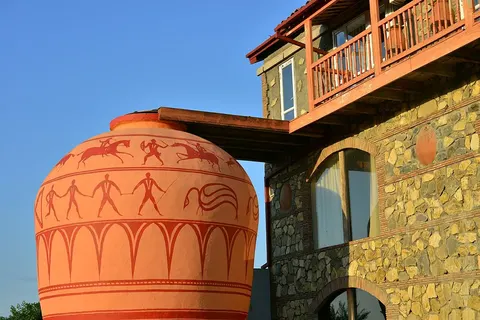
A wine village on the Lopota under the Caucasus, with its own appellation, an 18th-century fortified enclosure and a winery founded in 1883.
Gremi
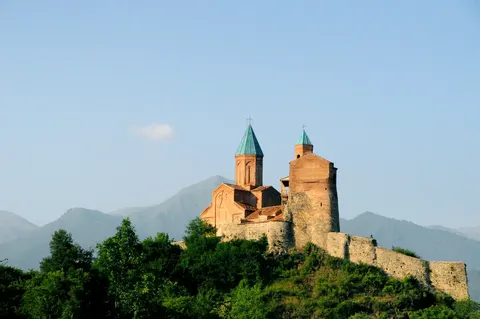
A brick church, a royal tower and a painted king holding his own church, on the hill of Kakheti's lost capital above the Intsoba river.
Alaverdi Cathedral
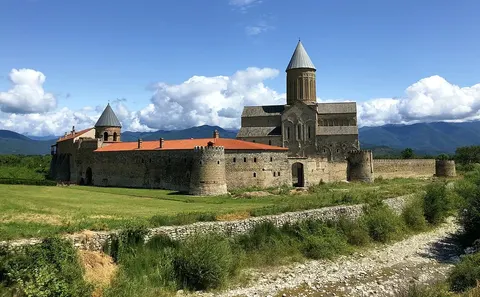
Kvirike III's 11th-century cathedral, over fifty metres tall and alone on the Alazani plain — for nearly a thousand years Georgia's tallest church.
Best car for this trip
Guides
- The Best Time to Visit Georgia, Counted Month by Month Georgia does not have one season. It has two countries: a 60% country from November to April and a 99% country
- Driving in Georgia: What the Distances Actually Cost You Georgia is a small country with slow roads. Here is what 267 measured drives from Tbilisi say about how long y
Pickup locations
Car Rental at Tbilisi Airport — 64 km (straight line)