
Grakliani Hill
A mound beside the Tbilisi–Gori motorway, found by road-builders in 2007, where a goddess's temple hid signs that may be the Caucasus's oldest script.
- Time needed
- 1 h
- From Tbilisi
- 58 km · 0:50
- Road
- Paved
- Car needed
- Economy class
- Season
- May–October
- Entry
- free
Grakliani Hill was found by road-builders: in 2007, widening the motorway west of Tbilisi, the machines cut into a mound that turned out to hold thousands of years of Kartli.
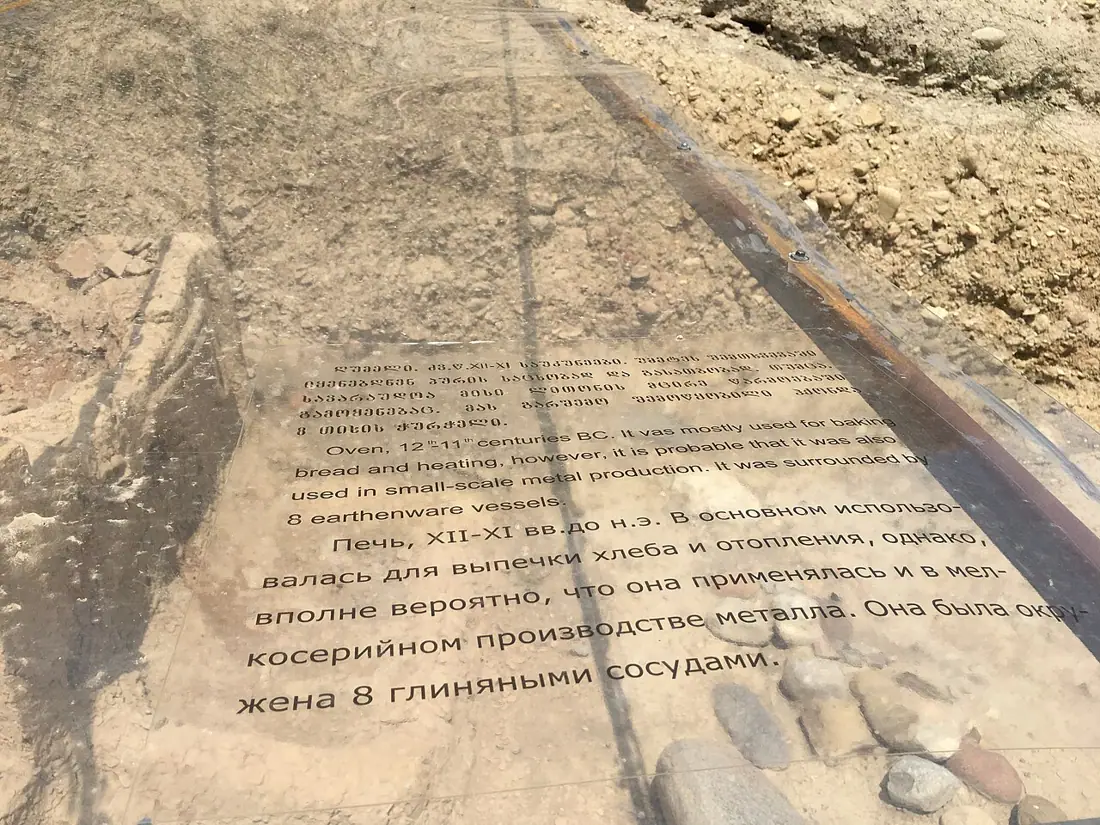
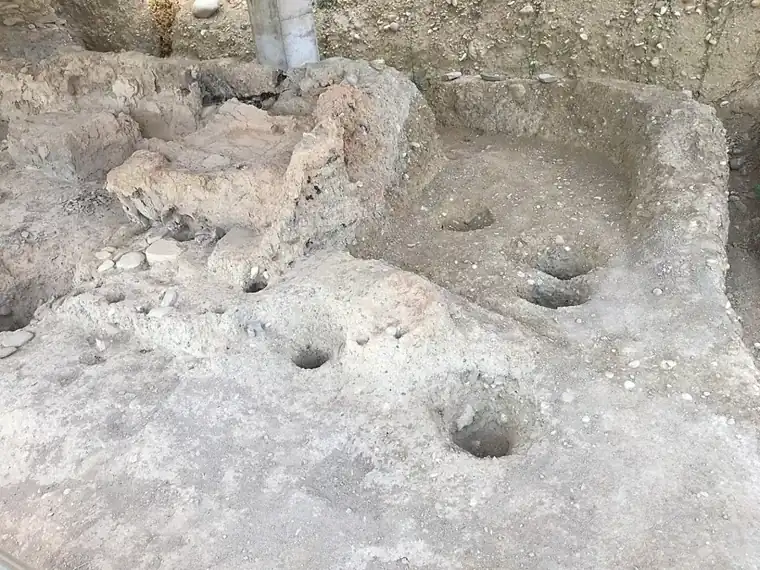
Since then students and staff of Tbilisi State University, led by the archaeologist Vakhtang Licheli, have dug it season after season. Occupation runs from the Chalcolithic to the late Hellenistic age, and the team believes people may have used the hill far earlier, possibly 300,000 years ago. In the first two months alone they lifted more than 35,000 objects from hundreds of graves and settlement ruins: children's toys, weapons, gilded and engraved discs of gold and bronze from the 6th century BC, instruments they read as pharmacological, and a rare 4th-century BC seal for stamping documents. There are early Bronze Age pit burials too, and a three-room house with storerooms from about 450–350 BC.
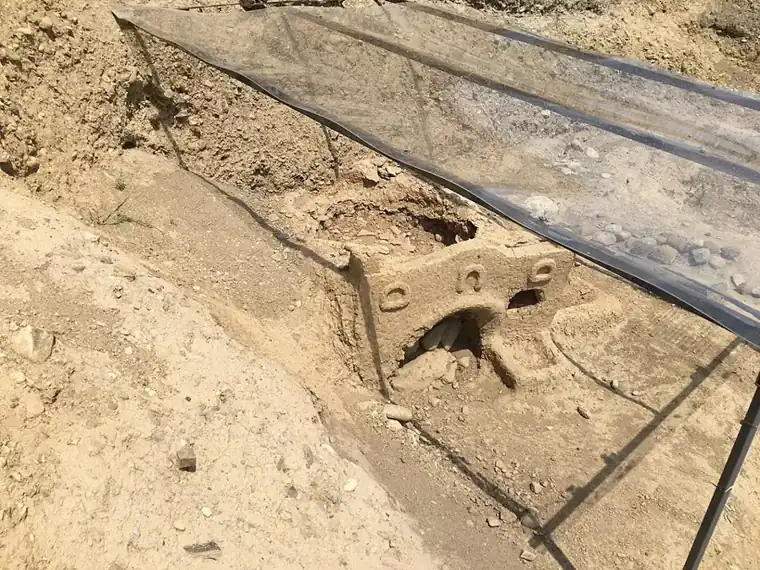
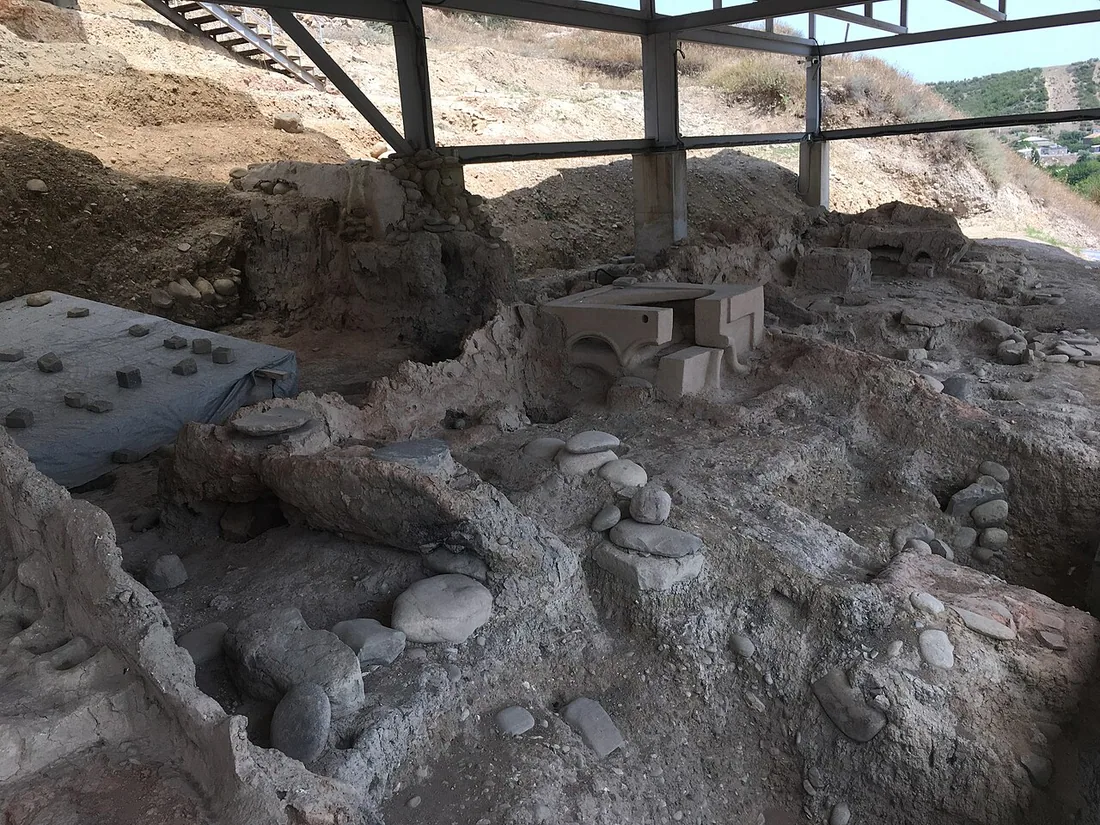
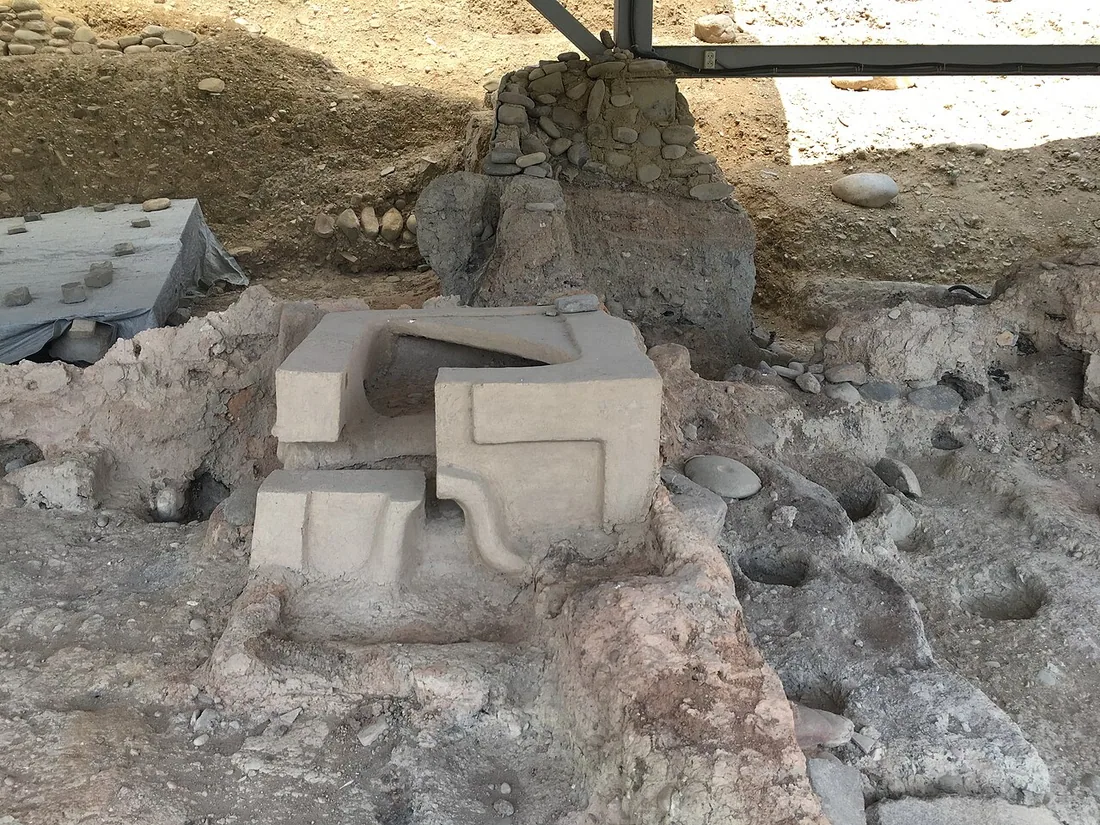
The heart of the hill is a 7th-century BC temple to a fertility goddess, with a large decorated ritual oven the excavators call unprecedented. In 2015 unpaid student volunteers, clearing beneath its collapsed altar, found rows of carved signs. Licheli's team argues they are a local script roughly a thousand years older than any native writing previously known in the Caucasus, with a few letters that recall Greek and Aramaic; the linguist Kukuri Pipia has proposed a kinship with the three Georgian alphabets instead. The reading remains open.
What you find is a working excavation, not a museum: stepped trenches, stone footings, information panels, and the lorries of the motorway a stone's throw below. Stand on the top and the argument over the altar turns personal. Somebody, on this very hill, wanted to write something down.
Gallery
Practical advice
Forty-five minutes is enough. The path is bare earth and trench edges crumble: stay on the marked route and never climb down into the excavations. There is no shade, so bring a hat and water in summer. No toilets or café on site; use the roadside services at Igoeti. The site is at its most alive when the university team is digging in the warm months, and students will often explain what is coming out of the ground. Samtavisi Cathedral, 10 km away, makes a natural pairing.
How to get there from Tbilisi
Take the S1 (E60) motorway west from Tbilisi to Igoeti, about 55 km of fast dual carriageway. The mound rises right beside the motorway on its north side at Zemo Rene, just west of the Igoeti junction — on your right as you drive from Tbilisi. Leave the motorway at Igoeti and follow the local road the last couple of kilometres to the foot of the hill; signs are small, so set your navigation to 41.9967, 44.4047. Around 58 km and 50 minutes in all. Fuel at Igoeti. An economy car is entirely sufficient.
Click a marker for details. Coloured lines are ready-made road trips.
Nearby places
Samtavisi Cathedral
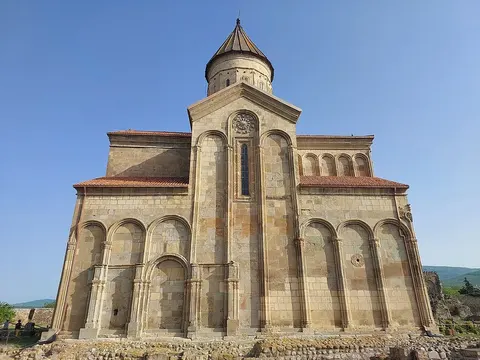
A cathedral of 1030 near Igoeti; its carved east front, a great cross over two stone diamonds, was copied by Georgian masons for generations.
Ertatsminda Cathedral
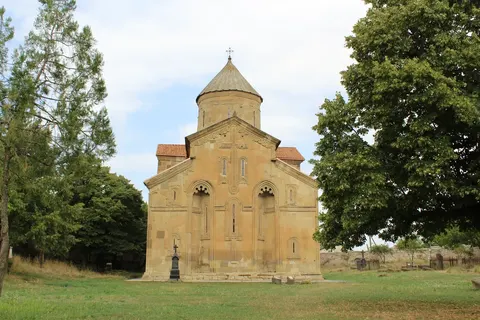
A 13th-century church south of Kaspi with a carved cross on every façade, 1654 frescoes of its martyr saint and the Saakadze family tombs.
Uplistsikhe
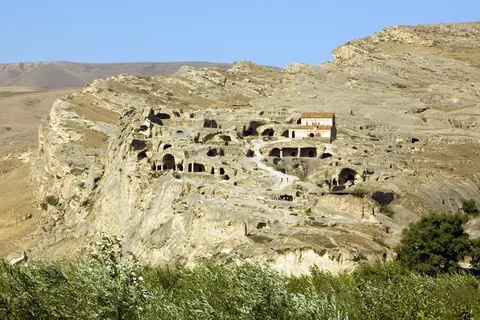
A town cut into a sandstone ridge above the Mtkvari: rock halls, a stone main street, wine presses and a tunnel to the river, lived in for three millennia.
Best car for this trip
Guides
- The Best Time to Visit Georgia, Counted Month by Month Georgia does not have one season. It has two countries: a 60% country from November to April and a 99% country
- Driving in Georgia: What the Distances Actually Cost You Georgia is a small country with slow roads. Here is what 267 measured drives from Tbilisi say about how long y
Pickup locations
Car Rental in Tbilisi — 47 km (straight line)
Booking and enquiries
The easiest way to reach these places is by car — you pick the route and the stops.