
Dashbashi Canyon
An eight-kilometre basalt gorge near Tsalka where springs burst from the rock as waterfalls, while the glass Diamond Bridge hangs overhead.
- Time needed
- 3 h
- From Tbilisi
- 90 km · 1:45
- Road
- Paved
- Car needed
- Economy class
- Season
- May–October
- Entry
- free (Diamond Bridge paid)
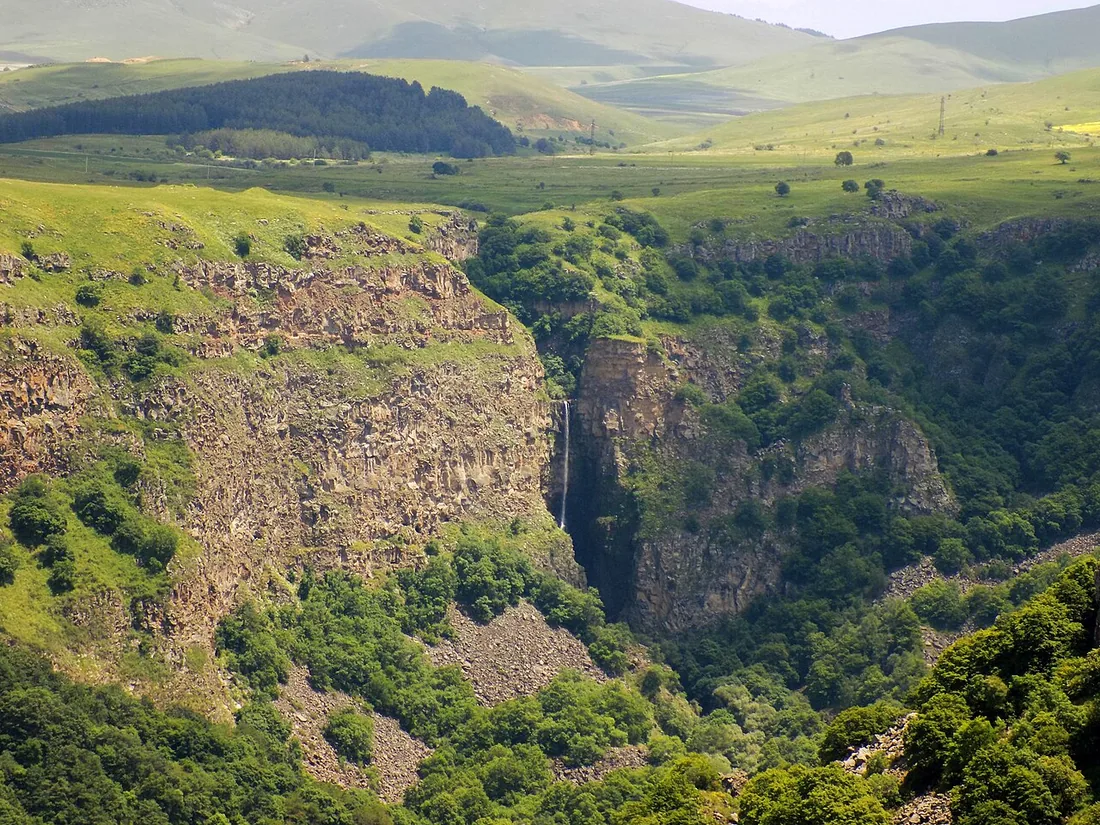
On the bare, wind-scoured Tsalka plateau the ground simply opens, and below your feet lies a green world of falling water.
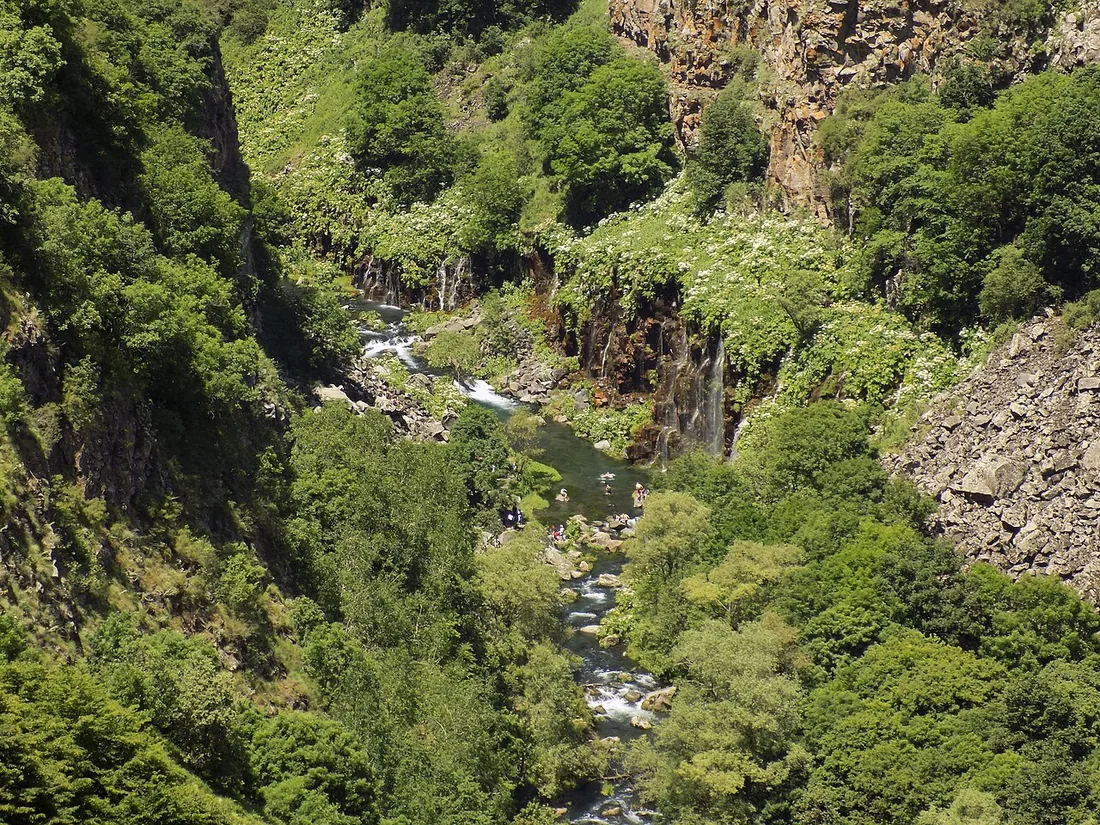
Dashbashi, also called the Tsalka Canyon, runs for eight kilometres. It was cut by the Ktsia, as the Khrami is called in its upper course, into the basalt lavas that built this plateau, and the protected gorge lies between roughly 1,110 and 1,450 metres above sea level. The canyon's secret is groundwater. Copious springs burst straight from the rock faces and fall in white veils over mossy ledges into green pools. Down there the air is damp and the slopes are wooded with beech, oak and hornbeam, while the rim above is almost treeless. In winter the curtains freeze into organ pipes of ice.
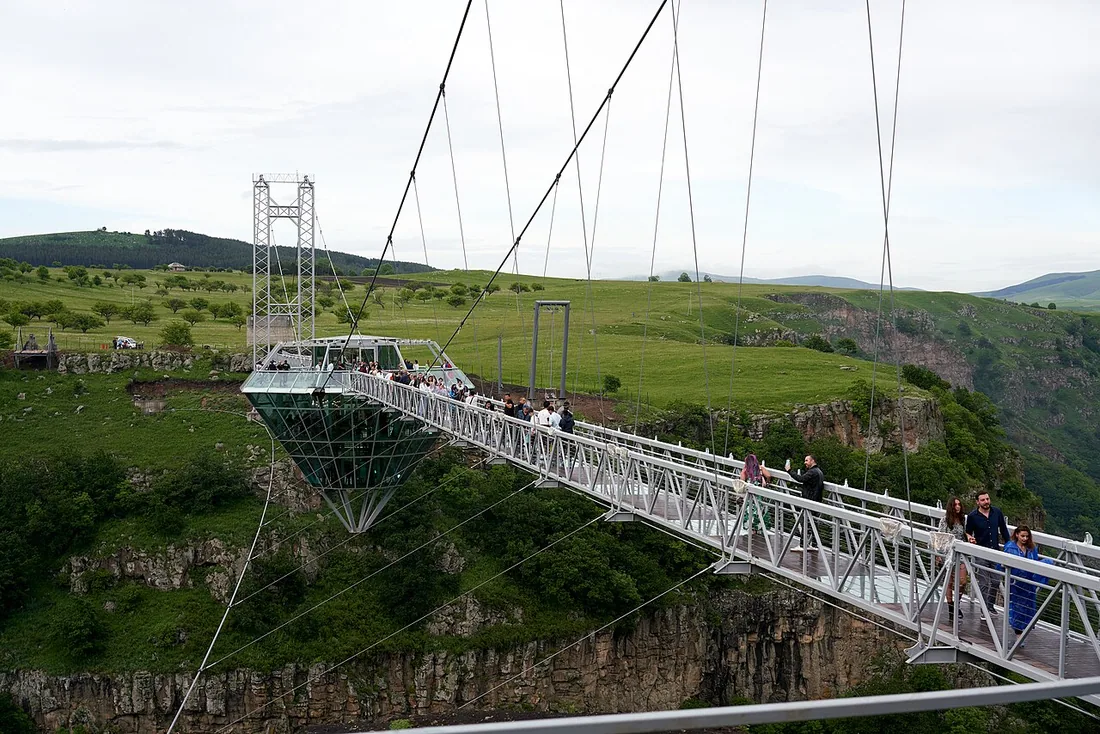
In 2022 a 240-metre glass bridge opened across the gorge, with a glass pavilion shaped like a cut diamond hanging at its middle. The Diamond Bridge is why most visitors now come, and it is a fine piece of theatre. The older pleasures lie beneath it: the paths down to the falls, the river, where trout still swim, and, in the canyon area, a 10th–11th-century church of St George. In the 18th century the geographer Prince Vakhushti Bagrationi described a pool in this canyon rich in fish.
The plateau around it has its own story. Until the 1990s Tsalka district was one of the most Greek places in the Soviet Union, by most accounts more than nine-tenths Greek. After independence most of those families left for Greece, and between 1997 and 2006 Georgians displaced by landslides in Svaneti and Adjara were resettled in their villages.
The bridge is the headline, but the springs are the story: they were falling here long before anyone thought to sell a ticket to the view.
Gallery
Practical advice
The Diamond Bridge is a paid attraction and prices change, so check before you set out; the rim viewpoints and the paths down to the falls do not require crossing it. Come early, because queues build at the bridge by midday at weekends. The descent is steep and slick with spray, so wear shoes with real grip and allow up to two hours down and back. At 1,100–1,450 metres the canyon is cool even in August; bring a layer. Snow lies for about three months a year, and in winter the paths ice over and may close. Parking and food are at the bridge complex.
How to get there from Tbilisi
The shortest way, about 90 km and an hour and three-quarters, climbs out of Tbilisi through Tskneti and Kojori on the Sh36 to Manglisi, then runs west on the Sh31 across the open plateau; the turn for the canyon comes a few kilometres before Tsalka town. The alternative, the S6 south and then through Koda and Tetritskaro, is about ten kilometres longer. Both are asphalt, so an economy car copes, but expect tight bends after Kojori and strong crosswinds on the plateau. Refuel in Tbilisi or Tsalka. In winter snow and ice are routine up here, and winter tyres are essential.
Click a marker for details. Coloured lines are ready-made road trips.
Nearby places
Beshtasheni
A Pontic Greek village on the Trialeti plateau, named after 'Five Stones' in Anatolia, beside a Bronze Age cyclopean settlement and cemetery.
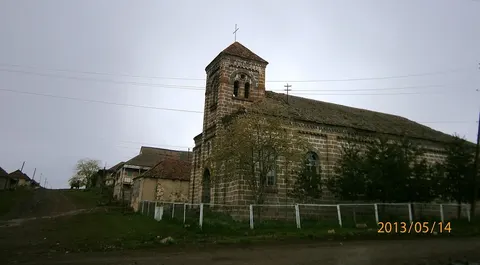
Trialeti Evangelical-Lutheran Church
A stone church with a square bell tower, built by German colonists on the Trialeti plateau: a Soviet warehouse and cinema, now re-roofed and listed.
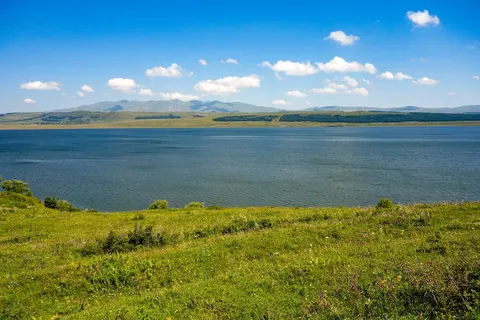
Tsalka Reservoir
Georgia's largest reservoir by surface: 33.7 km² of cold, wind-whipped water at 1,506 m on the Tsalka plateau, where Bronze Age gold came out of the ground.
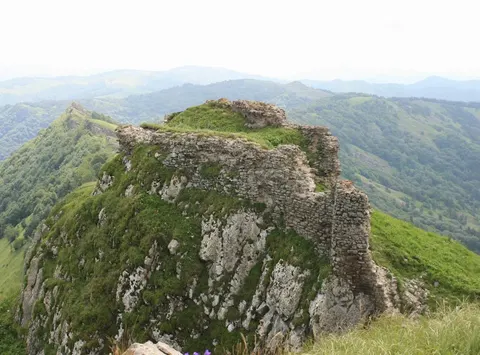
Kldekari Fortress
The Baghuashi eyrie on the Trialeti ridge: a 'rock gate' whose lords held the roads for two centuries and fought kings for the kingdom.
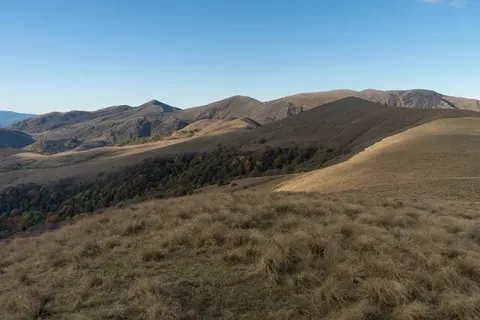
Algeti National Park
Georgia's easternmost spruce and fir, protected since 1965 on the Trialeti slopes above Manglisi: cool forest, five trails and very few people.
Part of these road trips
- Kvemo Kartli Archaeology Road 2 days · 285 km
Best car for this trip
Guides
- The Best Time to Visit Georgia, Counted Month by Month Georgia does not have one season. It has two countries: a 60% country from November to April and a 99% country
- Driving in Georgia: What the Distances Actually Cost You Georgia is a small country with slow roads. Here is what 267 measured drives from Tbilisi say about how long y
Pickup locations
Car Rental in Tbilisi — 57 km (straight line)
Booking and enquiries
The easiest way to reach these places is by car — you pick the route and the stops.