
Trialeti Evangelical-Lutheran Church
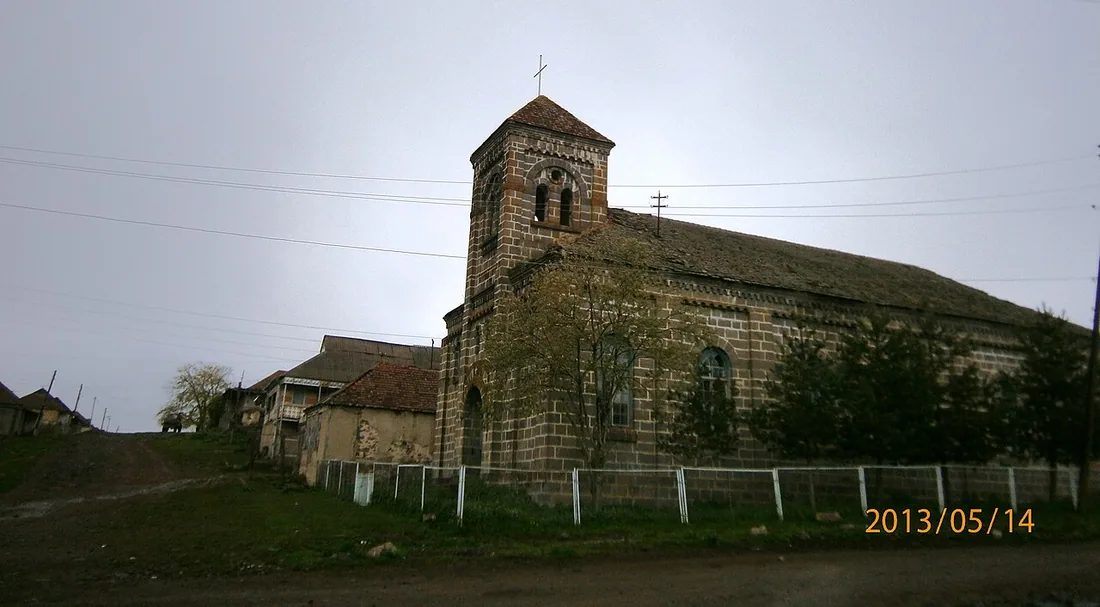
A stone church with a square bell tower, built by German colonists on the Trialeti plateau: a Soviet warehouse and cinema, now re-roofed and listed.
- Time needed
- 0.5 h
- From Tbilisi
- 98 km · 1:45
- Road
- Paved
- Car needed
- Economy class
- Season
- All year
- Entry
- free
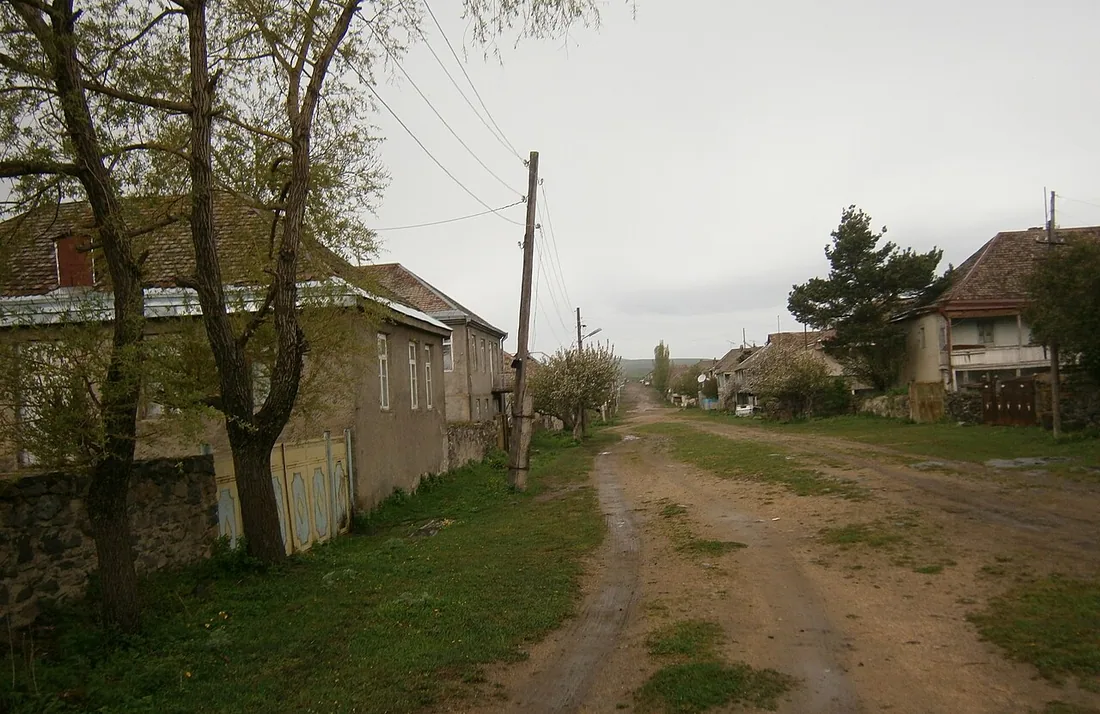
On the open plateau, 1,550 metres up, a square bell tower of dark dressed stone gives away a village that was once German.
In 1857 South German Protestant colonists founded a settlement here and called it Alexandershilf. They belonged to the wave of emigrants whom Emperor Alexander I had allowed into the Caucasus in 1815, and the founders had first lived at Elisabethtal — today's Asureti — before moving up to the plateau. Soviet rule renamed the village twice: Rosenberg in 1921, Molotov in 1941, the year the Caucasus Germans were deported east after Nazi Germany invaded the USSR. It has been Trialeti since 1957. No Germans remain.
The church they built is the only one in the village. Exactly when is not settled: a 2017 report on its restoration says it was founded in 1862 and finished in 1866, while other sources give 1906. Until the heritage register settles it, treat both dates with caution.
What is certain is its later life. Services were banned from the 1930s, and the building served as a warehouse, a club and a cinema before it was left empty. The roof caved in in several places, and rain and snow ate into the plaster. In 2016 it was listed as a cultural heritage monument; the roof was then repaired with money from the German Foreign Office, and the exterior was kept as it was.
Look at the tower's pyramid roof and cross, the paired arched belfry openings with a small round window above them, the long nave of reddish-brown dressed stone. The Germans were taken away in 1941. Their church stayed, and has outlived three of the village's four names.
Gallery
Practical advice
The church stands in the village centre, a few steps from the road. Regular opening hours could not be confirmed, so you may find it locked, but the stonework outside is the point; if you want to see inside, ask locals politely. There is no fee. At 1,550 metres the wind bites even in summer, and snow is routine in winter. The village has no fuel or shops, so stop in Tsalka. Half an hour is enough; Beshtasheni and Dashbashi Canyon are close, and the Caucasus German story continues in Asureti and Bolnisi.
How to get there from Tbilisi
From Tbilisi climb out through Tskneti, take the Sh36 to Manglisi and the Sh31 across the plateau into Tsalka. From Tsalka follow the Sh33 (the Marneuli–Tetritskaro–Tsalka road) south for about 7 km to Trialeti. In all it is about 98 km and 1 hour 45 minutes, on asphalt throughout. An economy car is fine in summer; in the cold months fit winter tyres, because the Manglisi–Tsalka stretch ices over. Fill up in Tsalka, since Trialeti has no petrol station.
Click a marker for details. Coloured lines are ready-made road trips.
Nearby places
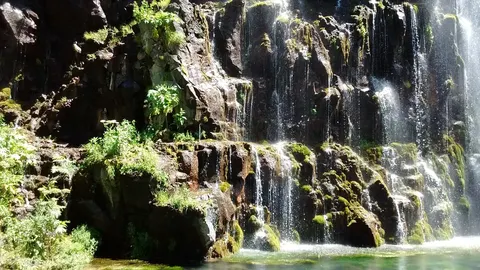
Dashbashi Canyon
An eight-kilometre basalt gorge near Tsalka where springs burst from the rock as waterfalls, while the glass Diamond Bridge hangs overhead.
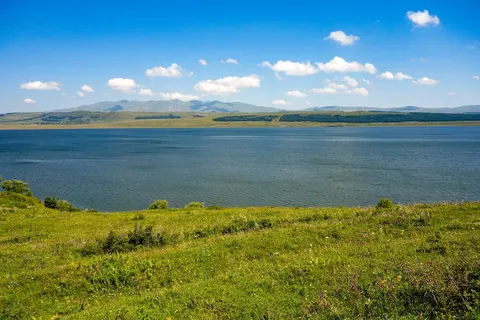
Tsalka Reservoir
Georgia's largest reservoir by surface: 33.7 km² of cold, wind-whipped water at 1,506 m on the Tsalka plateau, where Bronze Age gold came out of the ground.
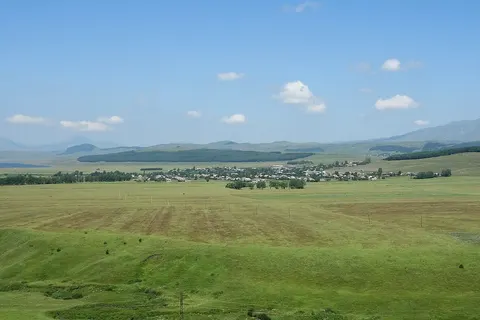
Beshtasheni
A Pontic Greek village on the Trialeti plateau, named after 'Five Stones' in Anatolia, beside a Bronze Age cyclopean settlement and cemetery.
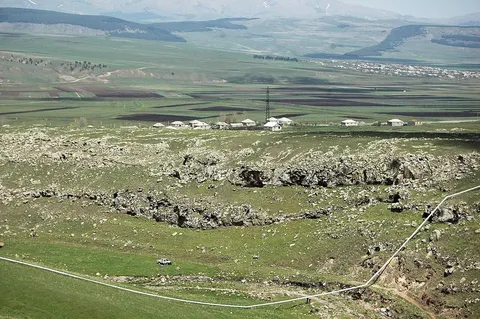
Trialeti Petroglyphs (Gantiadi)
About a hundred deer, horses, goats, fish and tiny archers cut into basalt near Gantiadi: Georgia's only prehistoric rock art of its kind.
Best car for this trip
Guides
- Driving in Georgia: What the Distances Actually Cost You Georgia is a small country with slow roads. Here is what 267 measured drives from Tbilisi say about how long y
Pickup locations
Car Rental in Tbilisi — 60 km (straight line)
Booking and enquiries
The easiest way to reach these places is by car — you pick the route and the stops.