
Bebris Tsikhe Fortress
An ancient fortress on a spur above the Aragvi at Mtskheta's northern gate, where King Demetre I died in 1156 — free, unfenced and open to the sky.
- Time needed
- 1 h
- From Tbilisi
- 27 km · 0:30
- Road
- Paved
- Car needed
- Economy class
- Season
- All year
- Entry
- free
Bebris Tsikhe means "the Old Man's Fortress", and the name comes with a story: a brother, a sister and a vow kept for a lifetime.
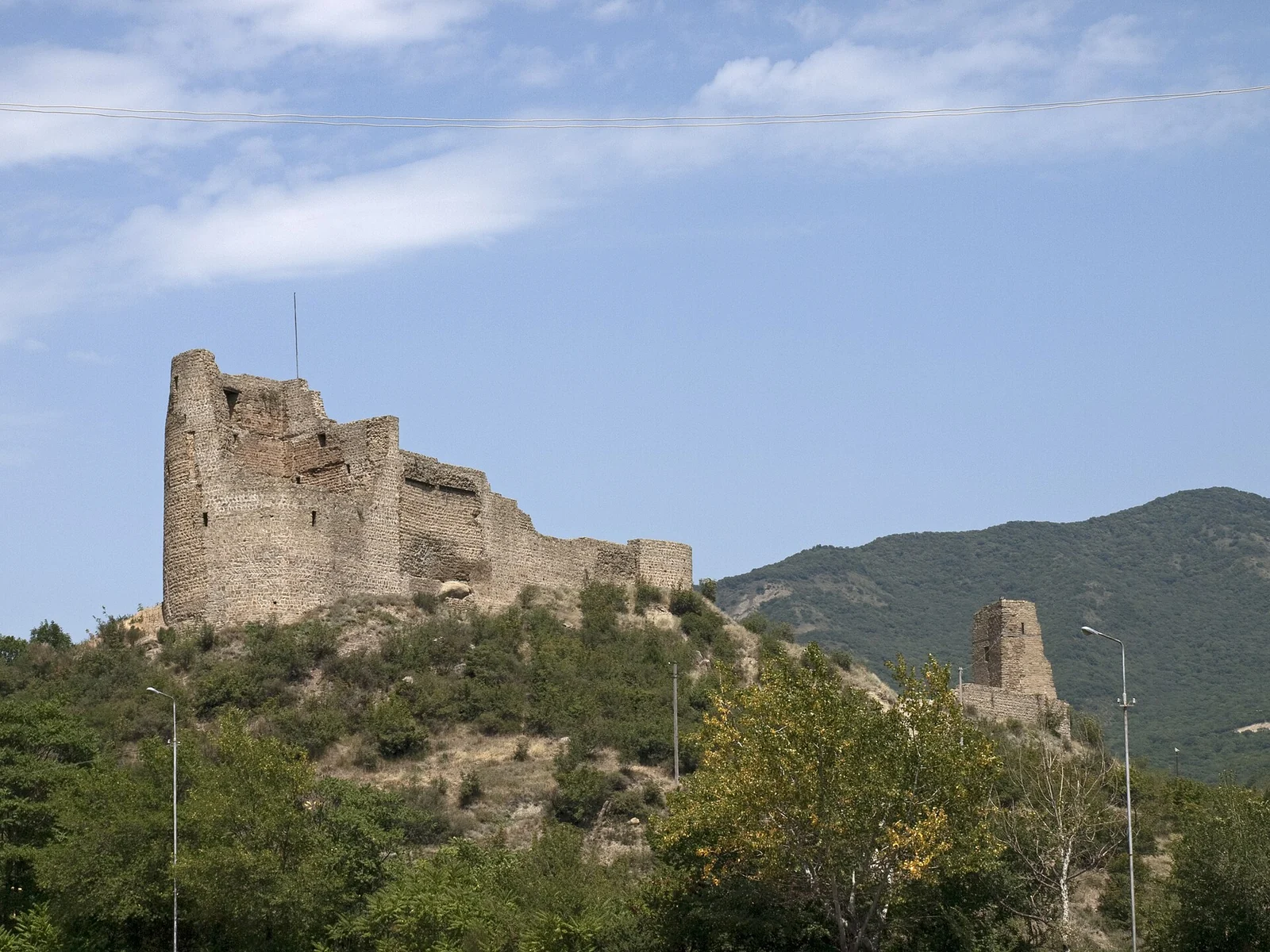
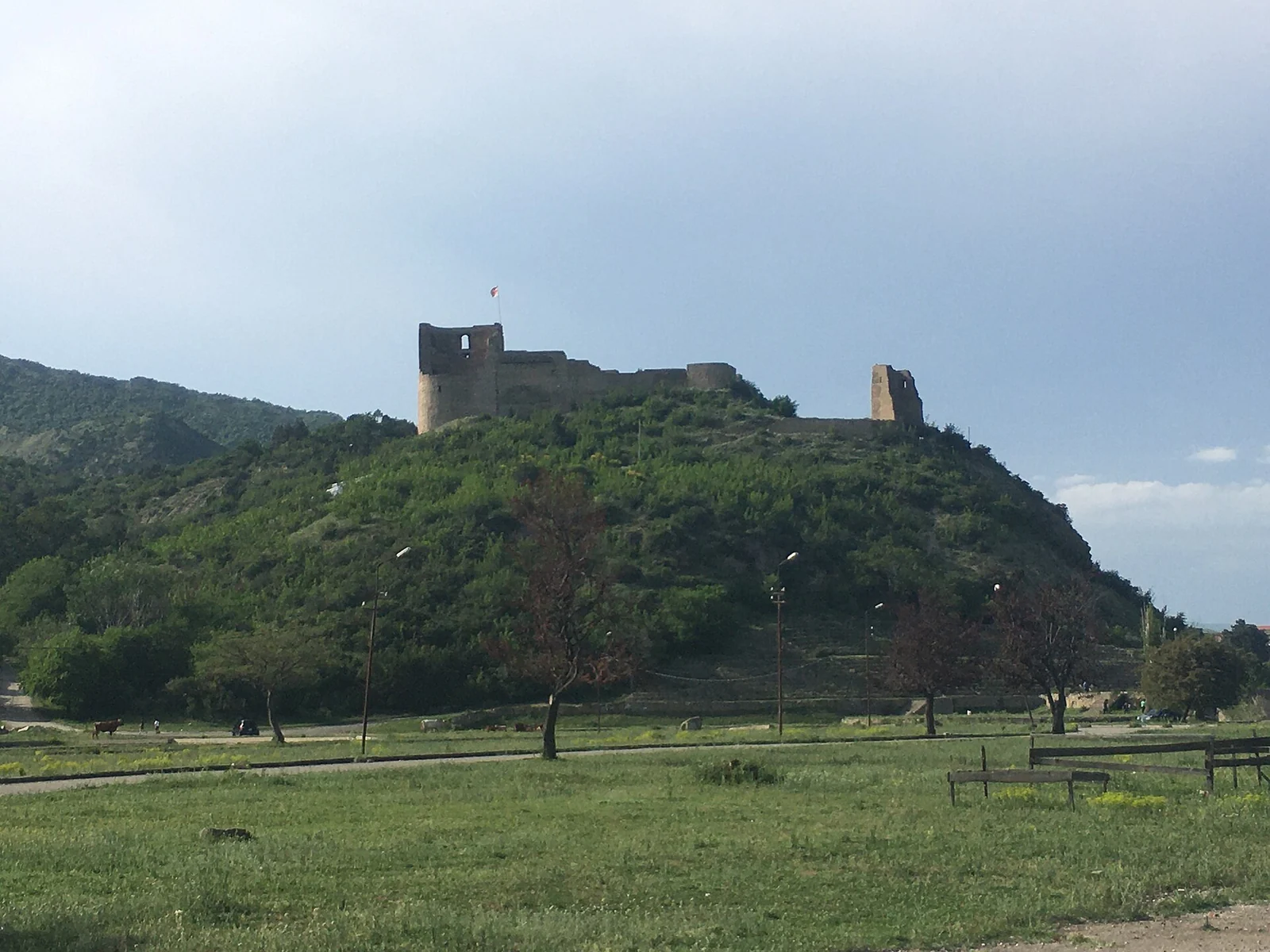
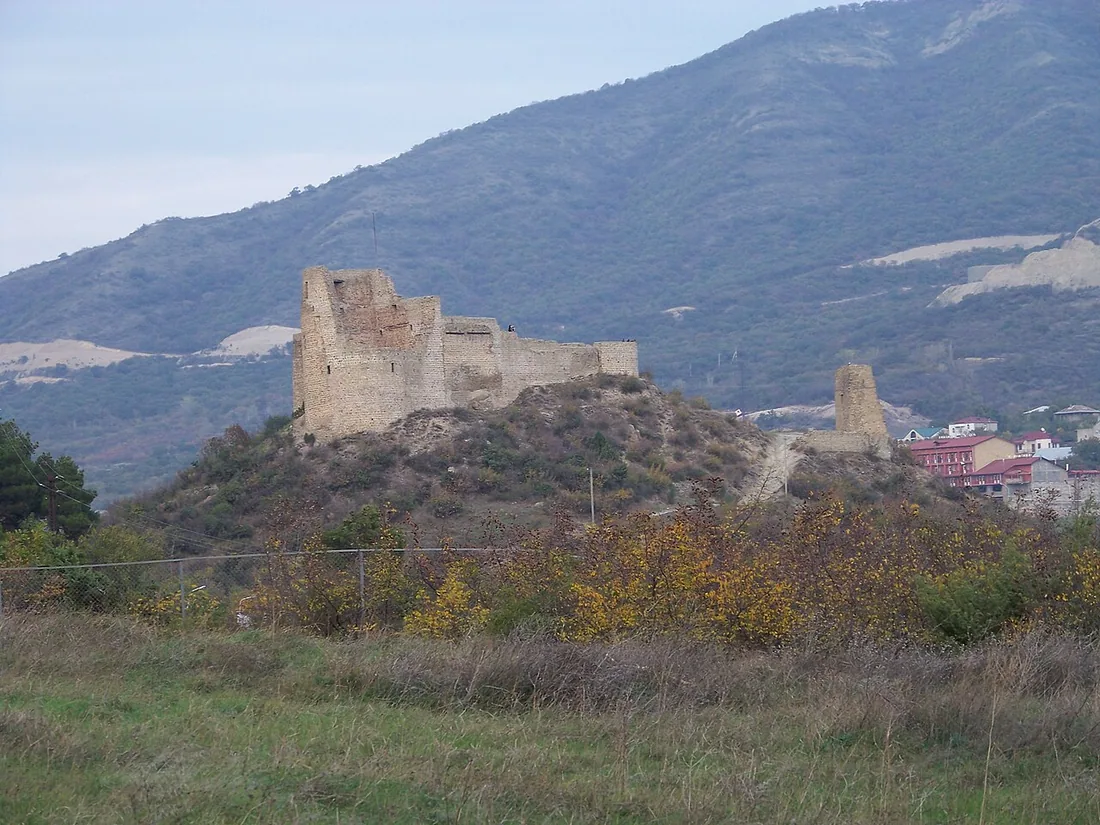
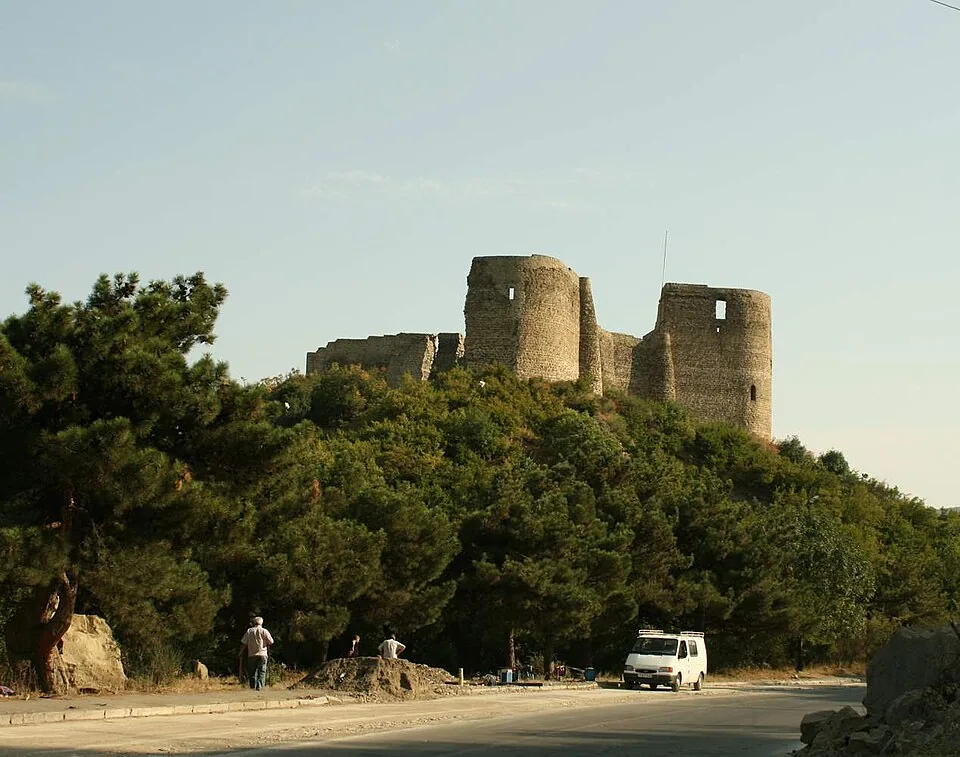
The fortress sits on a spur on the right bank of the Aragvi, at the northern edge of Mtskheta, where the valley narrows — the lock on the ancient capital's northern door. Its older names were Beltistsikhe and Natsikhvari. The 18th-century scholar Vakhushti Bagrationi credited it to Ardam, an early eristavi of Kartli, and a chronicler of Lasha-Giorgi's time records that King Demetre I, son of David the Builder, died at Beltistsikhe in 1156 and was carried to Gelati for burial. Excavations in 2006–2008 showed the stronghold in use from the 4th century to the 18th. Some scholars have even identified it with Seusamora, a fortified town named by Strabo.
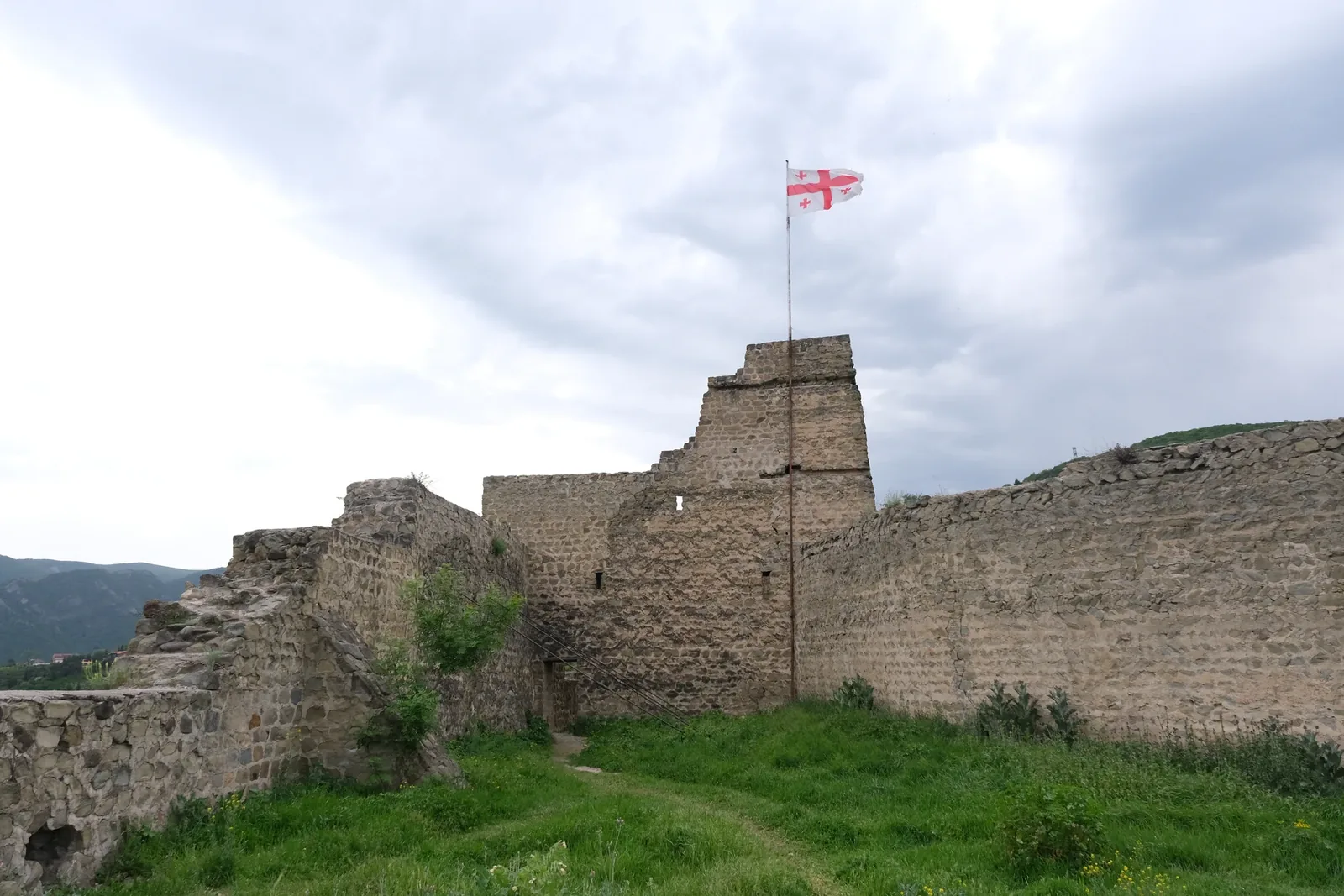
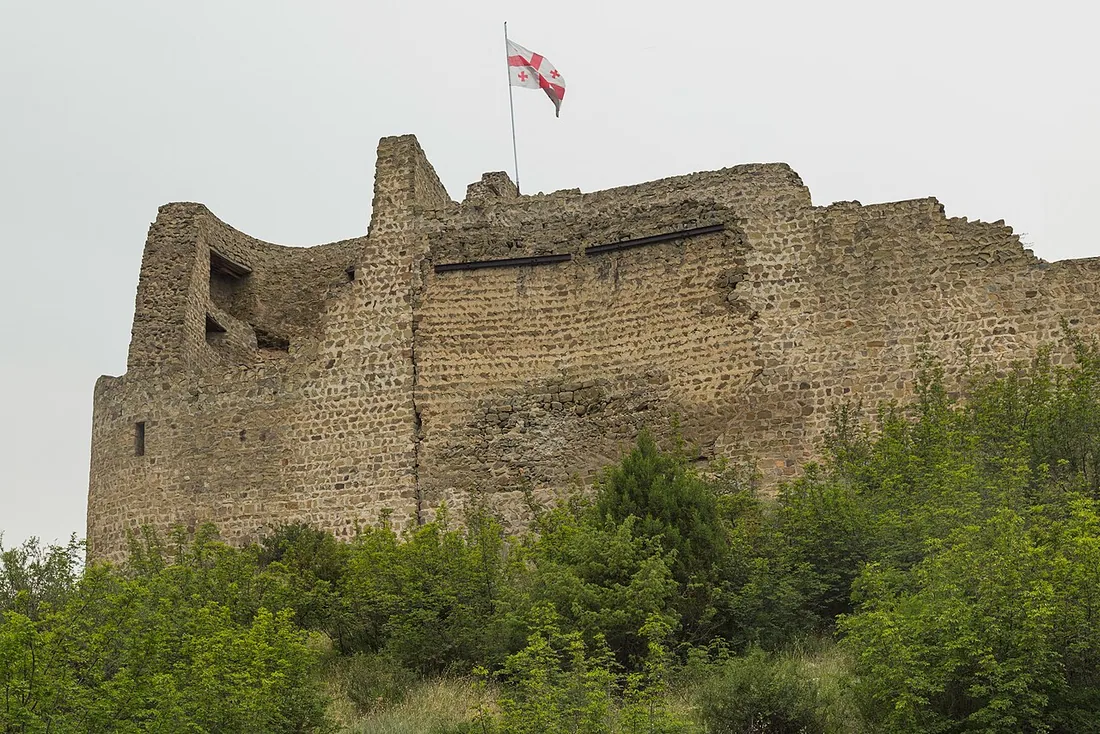
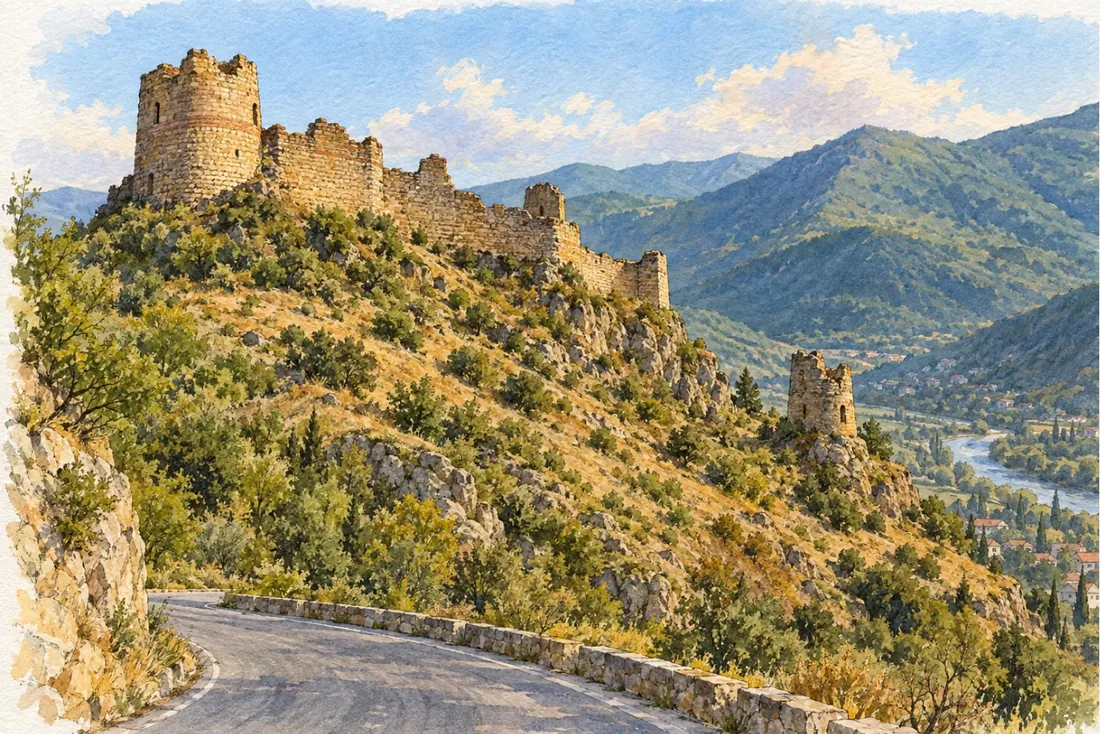
What stands today is a roughly triangular citadel with a small courtyard to the south and towers at the three corners. The south-eastern tower, the largest, rose several storeys and was lived in as well as defended. In walls two to three metres thick, the loopholes sit at the back of deep niches — the only way an archer could shoot through that much stone. A later round watchtower stands where the eastern tower fell.
The legend: Prince Simon's daughter Makrine begged her hard-hearted brother Mamuka to lift a crushing tax, and he locked her in the tower. When snakes poured from a peasants' cauldron and coiled around him, Mamuka vowed to build a church; brother and sister took monastic vows. At Makrine's funeral, when she was seventy, a white-bearded old man kissed her brow, said "My sister, we have kept our vow" — and died on the spot.
Look down from the walls: the narrow valley explains the fortress better than any plaque.
Gallery
Practical advice
Entry is free, and there is no fence, gate or ticket office, so any daylight hour will do. Take care: some of the masonry is loose and there are no railings, so hold small children by the hand. Wear closed shoes — the path up is short but steep and slippery. Late-afternoon light is kindest to the stone and to the valley below. There are no facilities at all; cafés and toilets are in central Mtskheta, about 2 km south. Svetitskhoveli and Samtavro make it an easy half-day.
How to get there from Tbilisi
From central Tbilisi take the S1 (E60) along the Mtkvari towards Mtskheta and leave it at the Mtskheta exit onto the Sh29 into town. Cross the centre and head north on Davit Aghmashenebeli Street, the old road out of Mtskheta; the fortress rises on the spur to your right at the northern edge of town. About 27 km and 30–35 minutes, asphalt all the way — any car will do. Park considerately on the roadside at the foot of the hill, then climb the short, steep path on foot in five to ten minutes.
Click a marker for details. Coloured lines are ready-made road trips.
Nearby places
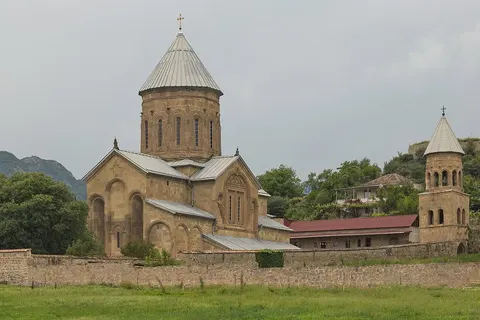
Samtavro Monastery
Where Nino lived among the brambles and Georgia's first Christian king lies buried: a working convent five minutes up the street from Svetitskhoveli.
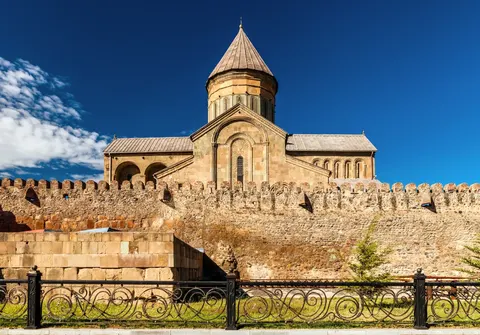
Svetitskhoveli Cathedral
Georgia's mother church: an 11th-century cathedral said to guard Christ's robe, with kings beneath its floor and its architect's carved hand on the wall.
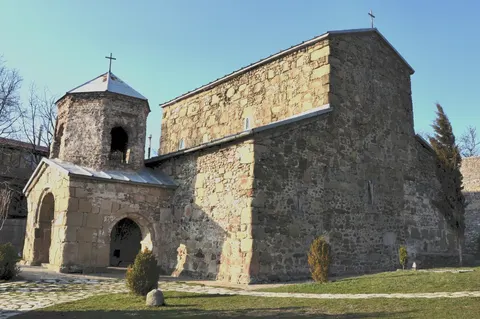
Zedazeni Monastery
On the forested Saguramo ridge above Mtskheta, the hill where John, leader of the Thirteen Assyrian Fathers, settled on the site of a pagan idol.
Best car for this trip
Guides
- Driving in Georgia: What the Distances Actually Cost You Georgia is a small country with slow roads. Here is what 267 measured drives from Tbilisi say about how long y
Pickup locations
Car Rental in Tbilisi — 19 km (straight line)
Booking and enquiries
The easiest way to reach these places is by car — you pick the route and the stops.