
Armaztsikhe-Bagineti
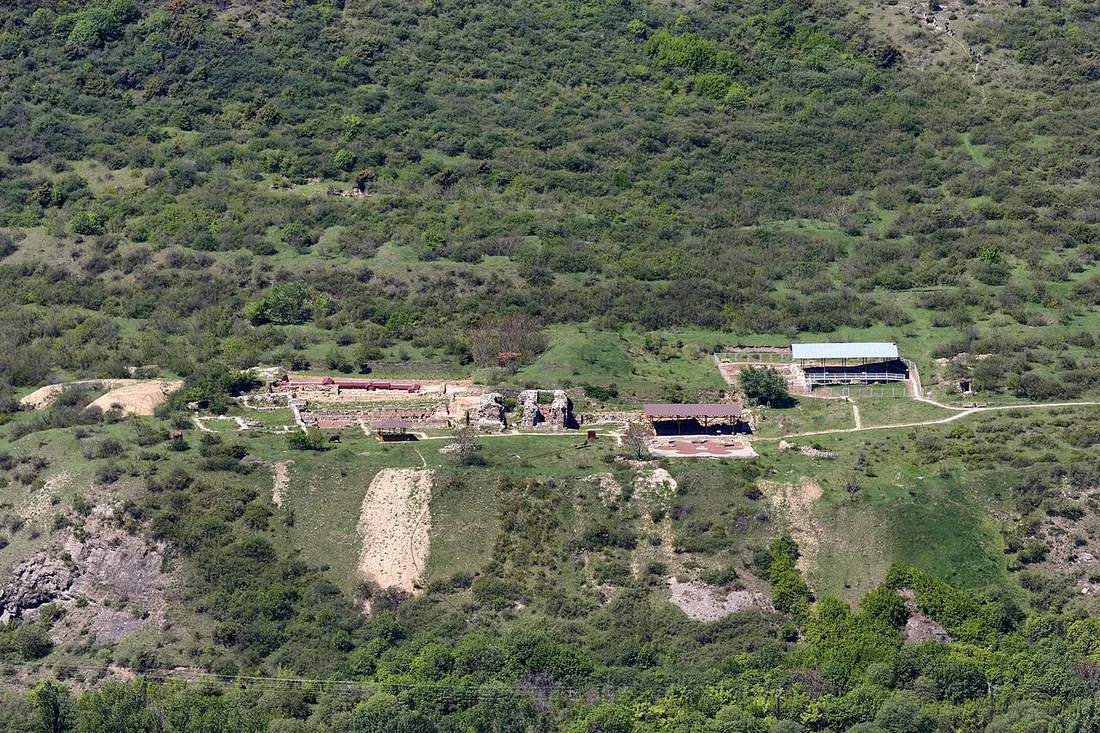
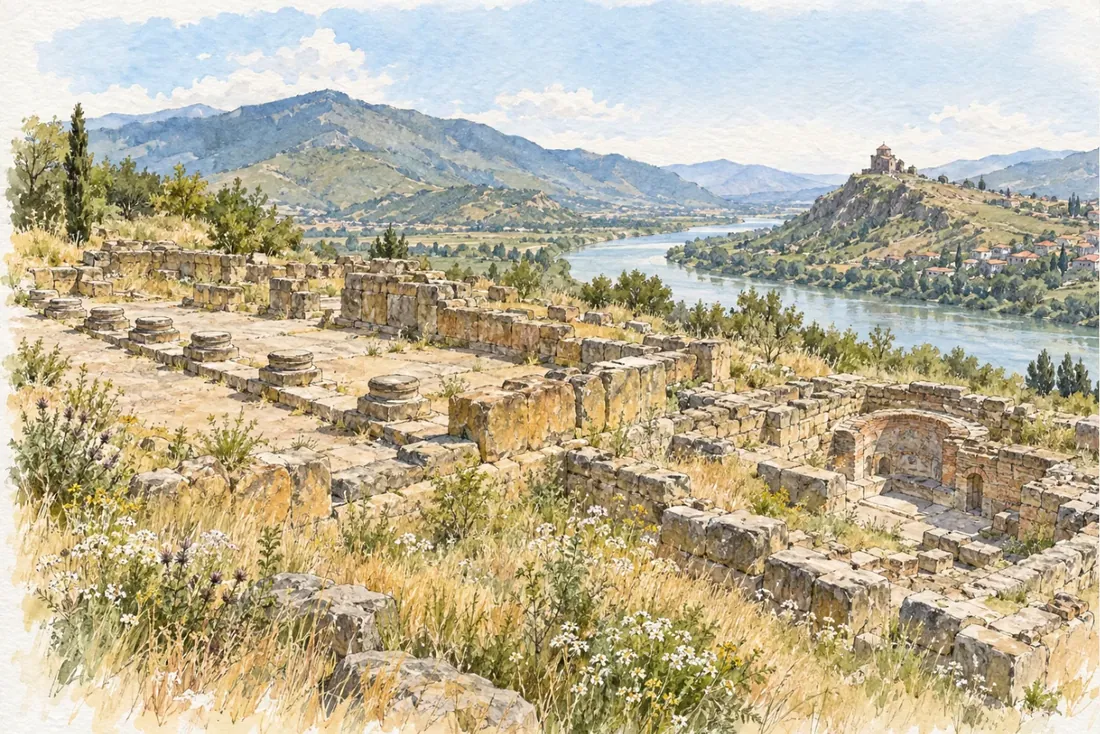
The hilltop citadel of pagan Iberia, facing Mtskheta across the Mtkvari: palace footings, a Roman-age bath house and, most days, nobody else.
- Time needed
- 1.5 h
- From Tbilisi
- 22 km · 0:35
- Road
- Mostly paved
- Car needed
- Economy class
- Season
- May–October
- Entry
- free
Long before Mtskheta had a cathedral, the kings of Kartli ruled from the hill across the river — and named their citadel after a god.
Armaztsikhe, "the fortress of Armazi", crowns Mount Bagineti on the right bank of the Mtkvari, at its meeting with the Aragvi; across the water rise the drum of Svetitskhoveli and, higher, the ridge of Jvari. The medieval chronicles credit its founding to King Pharnavaz I in the 3rd century BC and name it after Armazi, chief deity of the pagan Iberians. Greek and Roman writers knew it as Harmozica.
Rome came twice. Pompey's army took the fortress in 65 BC, and a ruined crossing over the Mtkvari is still called Pompey's Bridge. In AD 75, a stele found in 1867 records, Emperor Vespasian fortified the city for King Mithridates I. The viceroys who governed here, the pitiakhshes, were buried in the nearby ravine of Armaziskhevi; engraved gems from their graves show two of them, Asparukh and Zevakh, in some of the earliest portraits made in Georgia. The same cemetery yielded the Armazi bilingual, found on 25 November 1940: a Greek and Aramaic epitaph for Serapita, a noblewoman who died young.
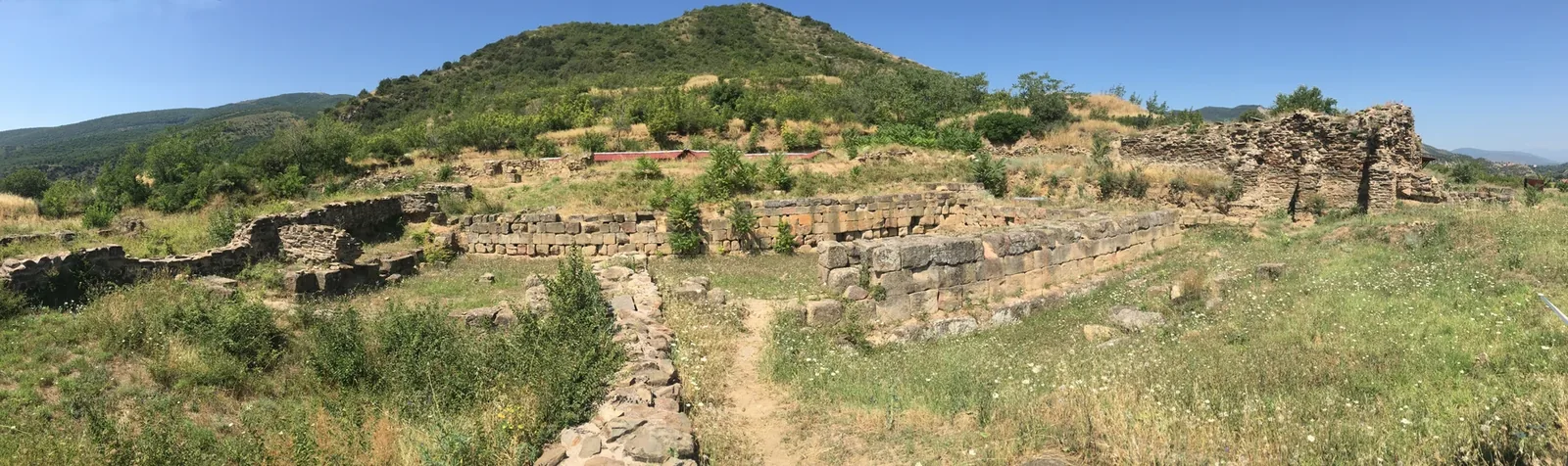
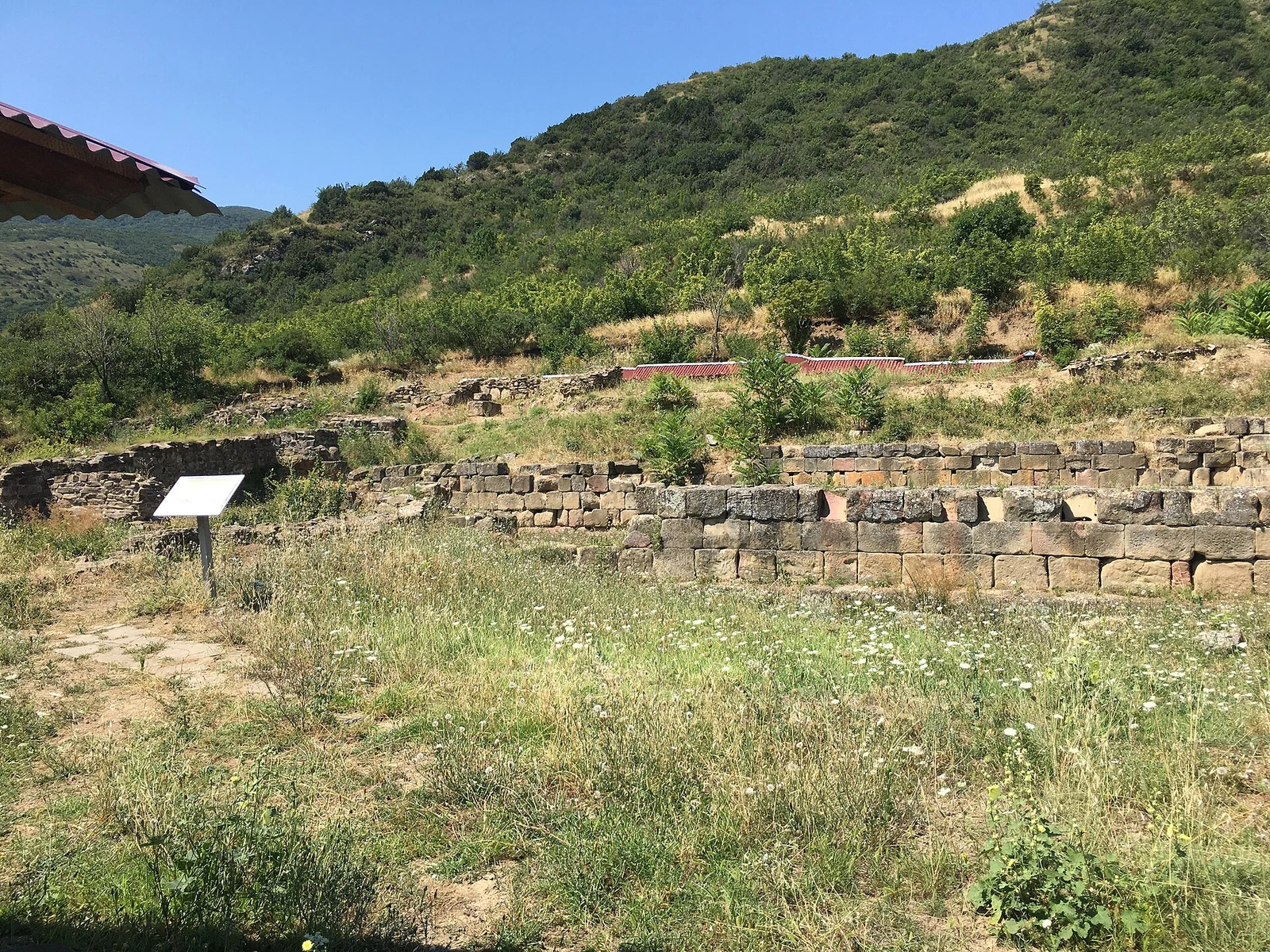
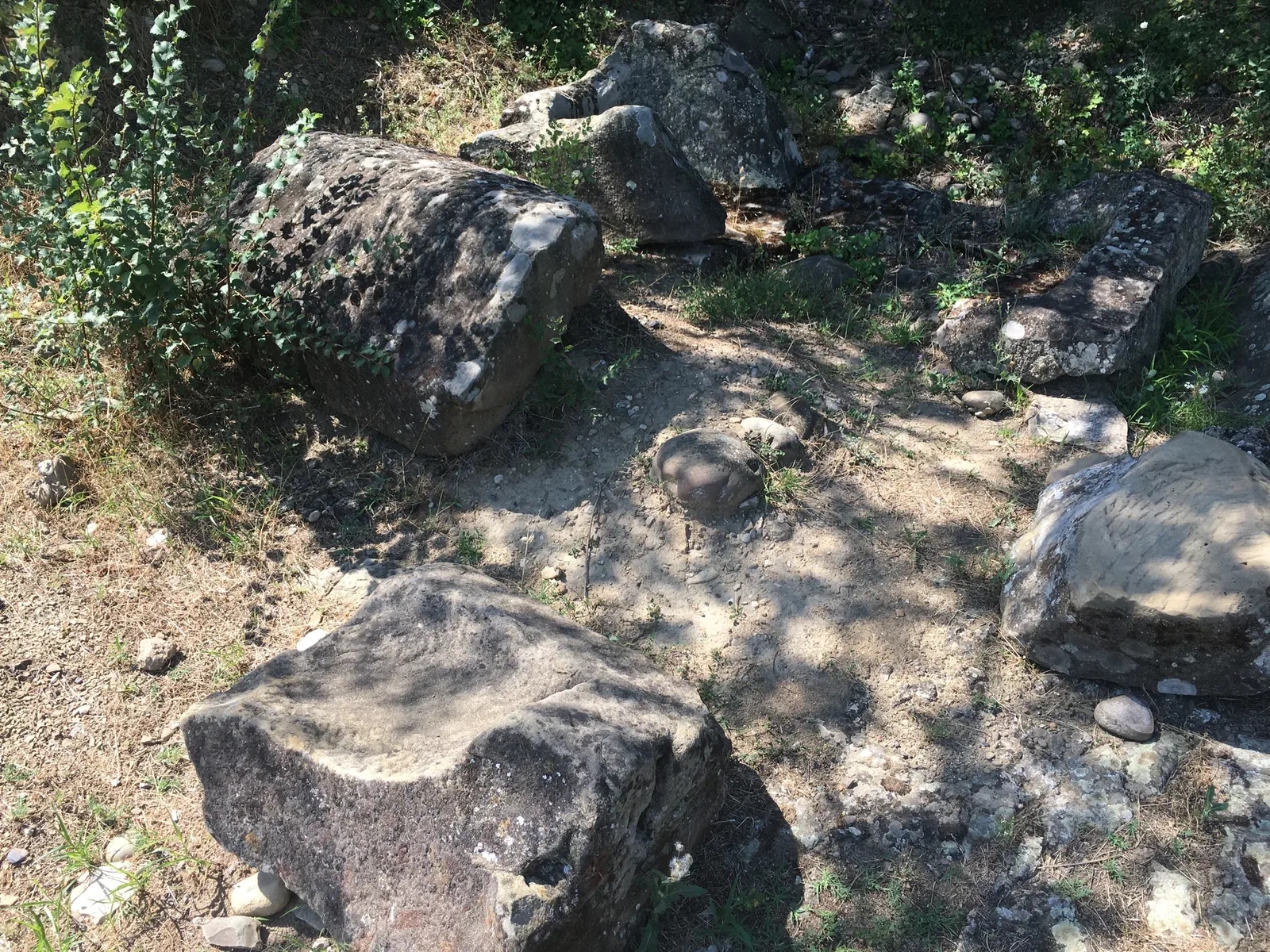
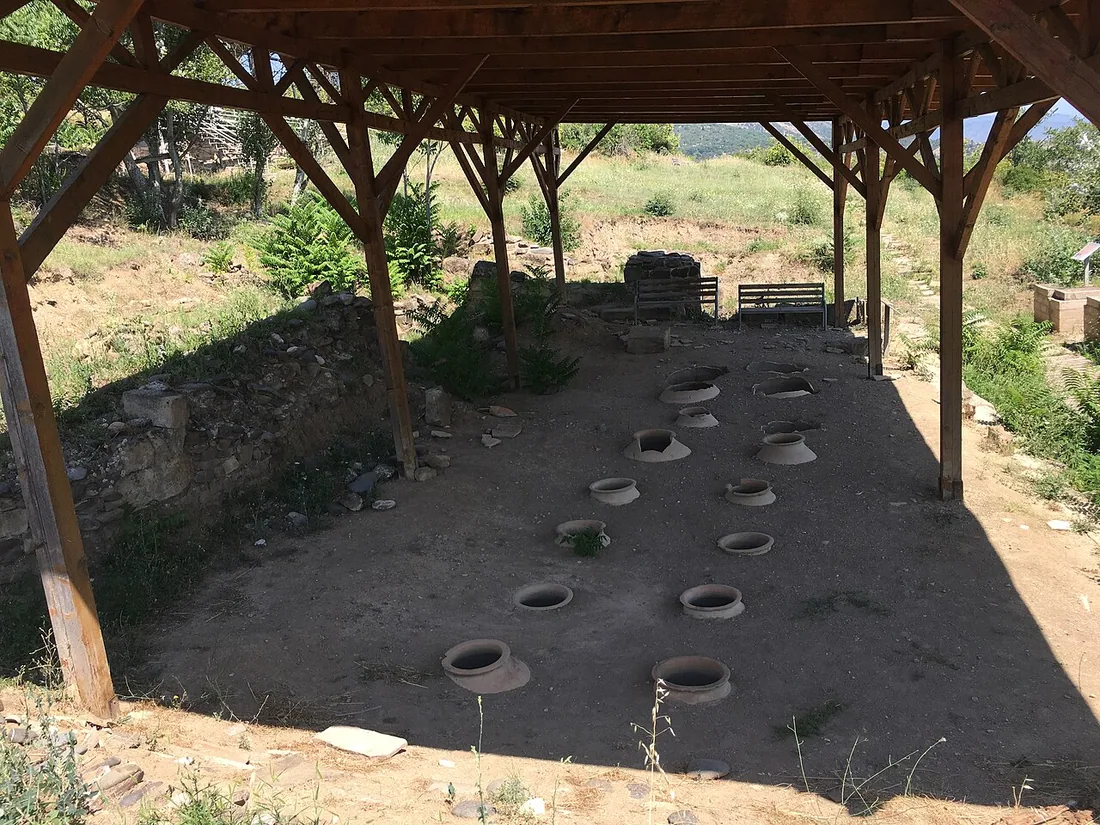
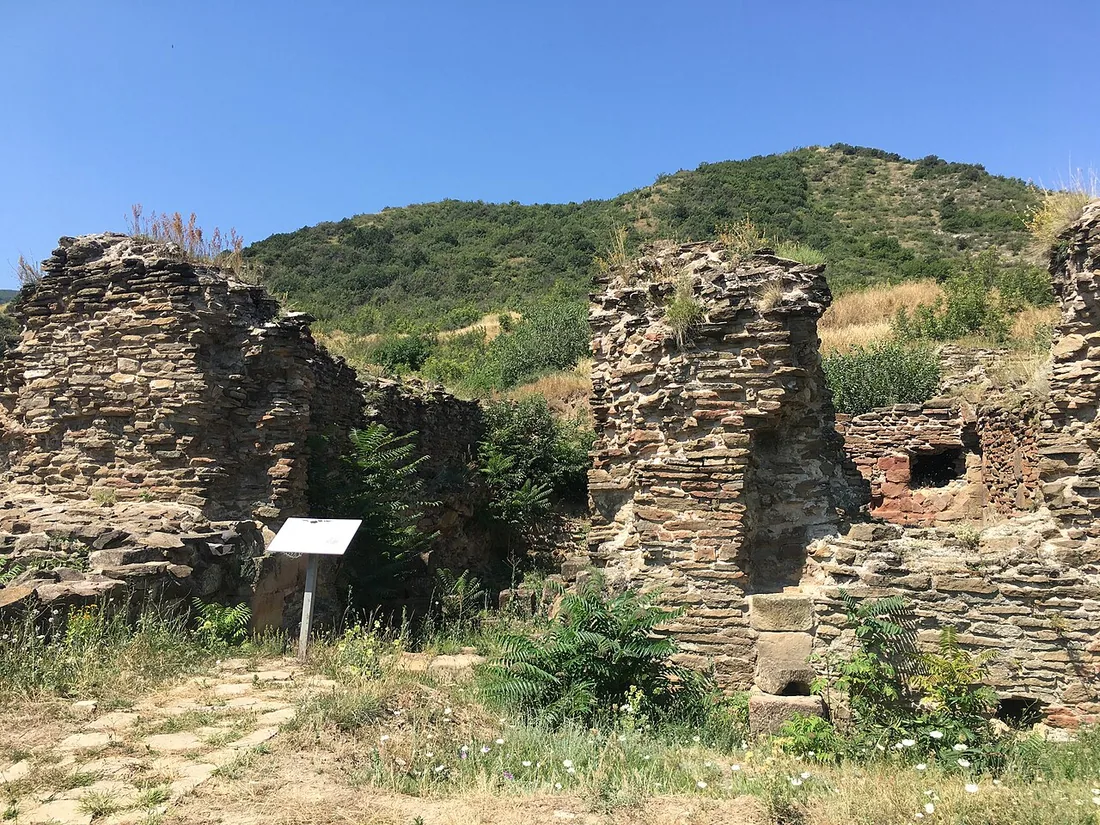
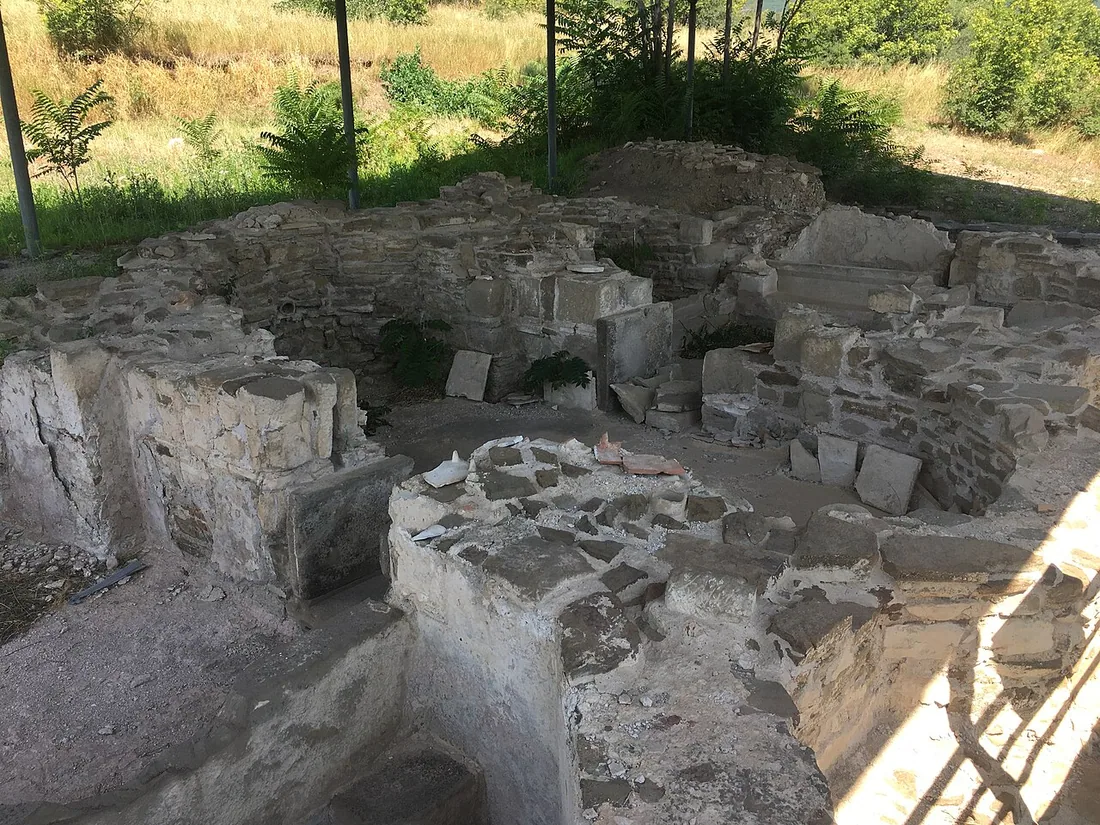
Systematic digging began only in 1943, under Andria Apakidze, and resumed in 1985. Most of what it exposed stands at knee height:
- stone footings that once carried walls of mud brick, and the base of a six-columned hall
- a bath house and open and covered water channels
- the remains of a royal tomb and a small mausoleum
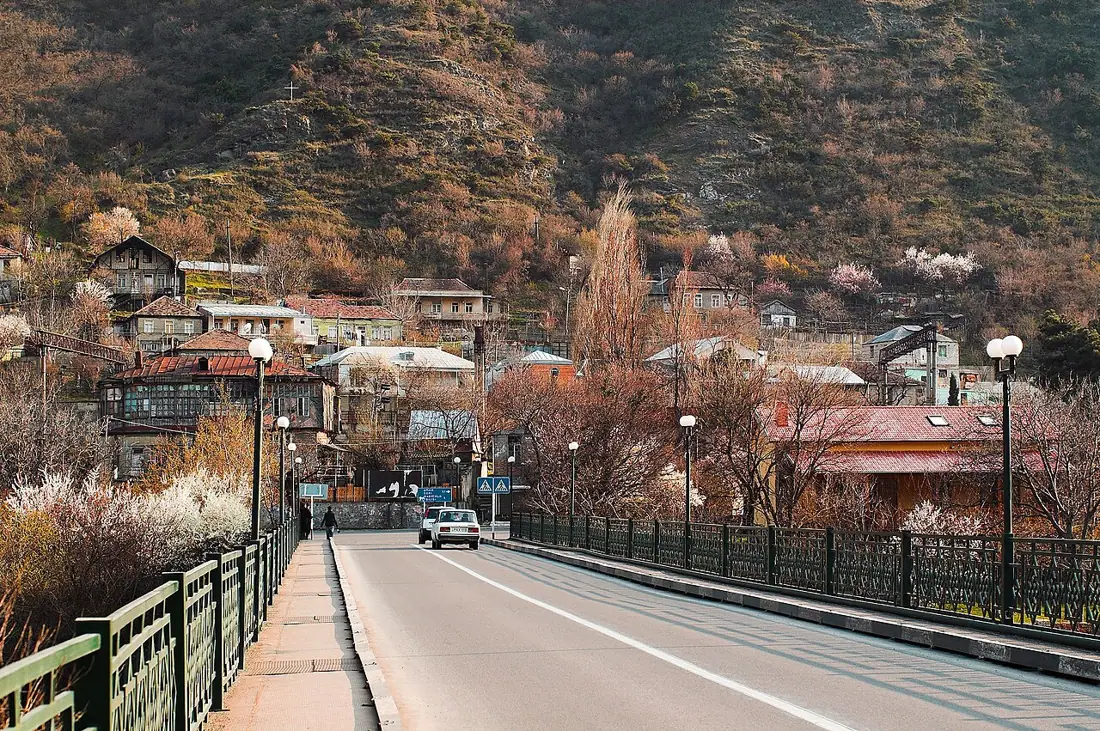
In 736 the Arab commander Marwan ibn Muhammad razed the city, and it never rose again. Its gold and gems went to museums; what stays on the hill is the plan of a capital, and a clear view of the town that replaced it.
Gallery
Practical advice
An hour is enough unless ruins are your passion. This is an open-air archaeological site, part of the Greater Mtskheta museum-reserve, with almost no shade and no water, café or toilet, so bring a bottle and a hat in summer and eat in Mtskheta. The paths between the trenches are bare earth and slippery after rain; do not walk along the wall tops. Signage is thin, so read up before you come, and pair the visit with the National Museum in Tbilisi, which holds much of the treasure found here. Late-afternoon light is kindest to the view across to Svetitskhoveli.
How to get there from Tbilisi
Take the S1 motorway (E60) north-west out of Tbilisi and leave it at the Mtskheta exit, about 19 km out. You are already on the right bank of the Mtkvari: follow the old road towards the town bridge and, roughly 2 km on and before you cross the river, turn sharp left onto the lane that climbs Bagineti hill. Its last 700 metres are narrow and patched, ending at a rough turning area below the ruins that holds mud in winter. That is about 22 km and 35 minutes in all. An economy car copes in dry weather; park at the end and walk up for five minutes. Fuel up on the S1.
Click a marker for details. Coloured lines are ready-made road trips.
Nearby places
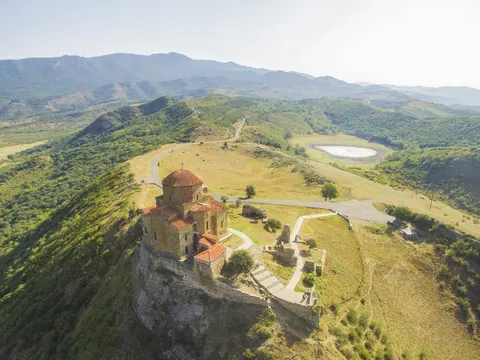
Jvari Monastery
A church of about 600 on a cliff above the meeting of the Aragvi and Mtkvari, with carved princes on its walls and Mtskheta spread out below.
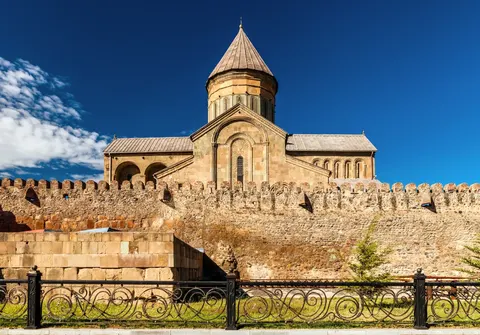
Svetitskhoveli Cathedral
Georgia's mother church: an 11th-century cathedral said to guard Christ's robe, with kings beneath its floor and its architect's carved hand on the wall.
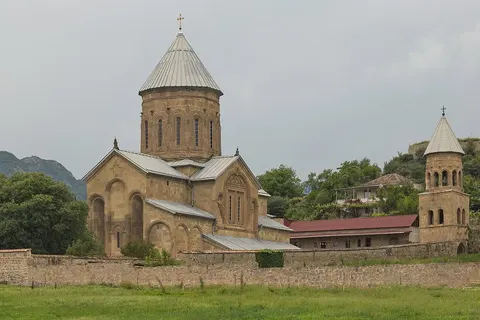
Samtavro Monastery
Where Nino lived among the brambles and Georgia's first Christian king lies buried: a working convent five minutes up the street from Svetitskhoveli.
Part of these road trips
- Mtskheta Heritage Day 1 days · 85 km
Best car for this trip
Mostly paved
Guides
- The Best Time to Visit Georgia, Counted Month by Month Georgia does not have one season. It has two countries: a 60% country from November to April and a 99% country
- Driving in Georgia: What the Distances Actually Cost You Georgia is a small country with slow roads. Here is what 267 measured drives from Tbilisi say about how long y
Pickup locations
Car Rental in Tbilisi — 17 km (straight line)
Booking and enquiries
The easiest way to reach these places is by car — you pick the route and the stops.