Zugdidi Botanical Garden
A garden laid out in the 1840s behind the Dadiani palace, full of subtropical trees and almost always empty.
- Time needed
- 1 h
- From Tbilisi
- 320 km · 4:40
- Road
- Paved
- Car needed
- Economy class
- Season
- All year
- Entry
- 2 ₾
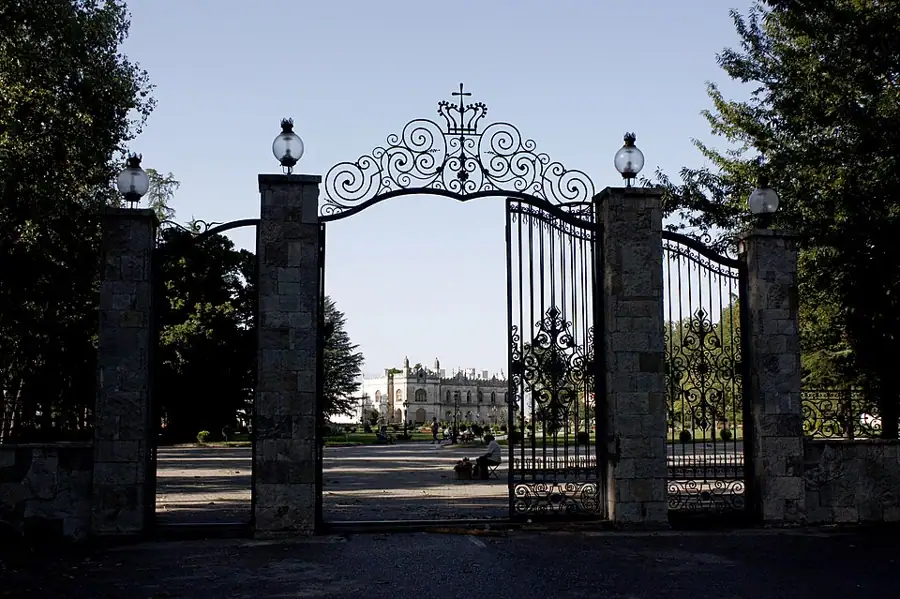
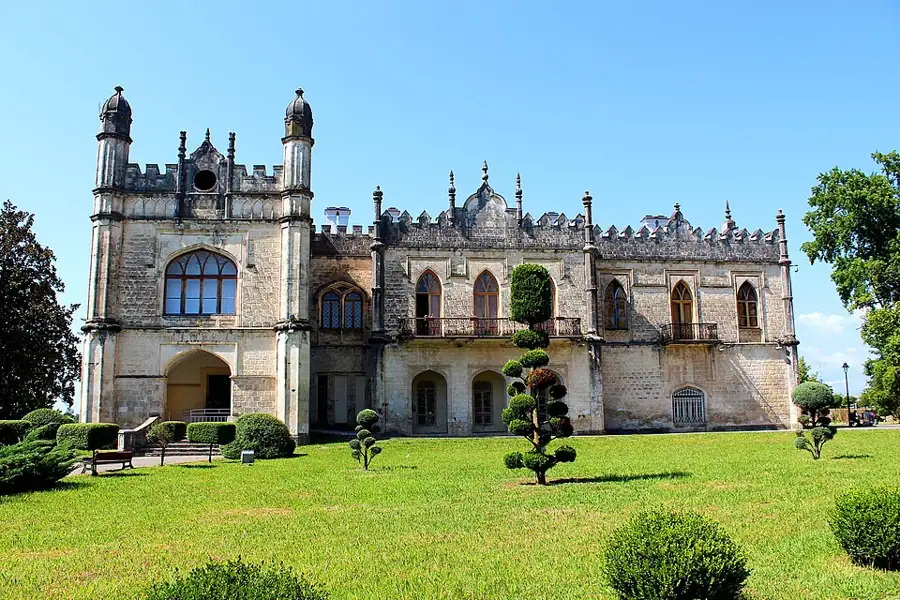
Zugdidi's botanical garden is among the oldest in Georgia, and it begins immediately behind the Dadiani palace. The two belong together: they are two sides of the same family's life.
The garden was laid out in the 1840s by Ekaterine Chavchavadze-Dadiani, wife of David Dadiani. She was a daughter of the poet Alexander Chavchavadze and a sister of Nino, Griboedov's widow; after her husband's death in 1853 she became regent of Mingrelia, and later moved to Paris. The garden is what happened when a European education met the Colchic climate.
That climate decides everything here: mild wet winters and well over fifteen hundred millimetres of rain a year. Subtropical species grow outdoors without glass, which is why the estate became a place for trying out plants brought from Japan, China and the Americas.
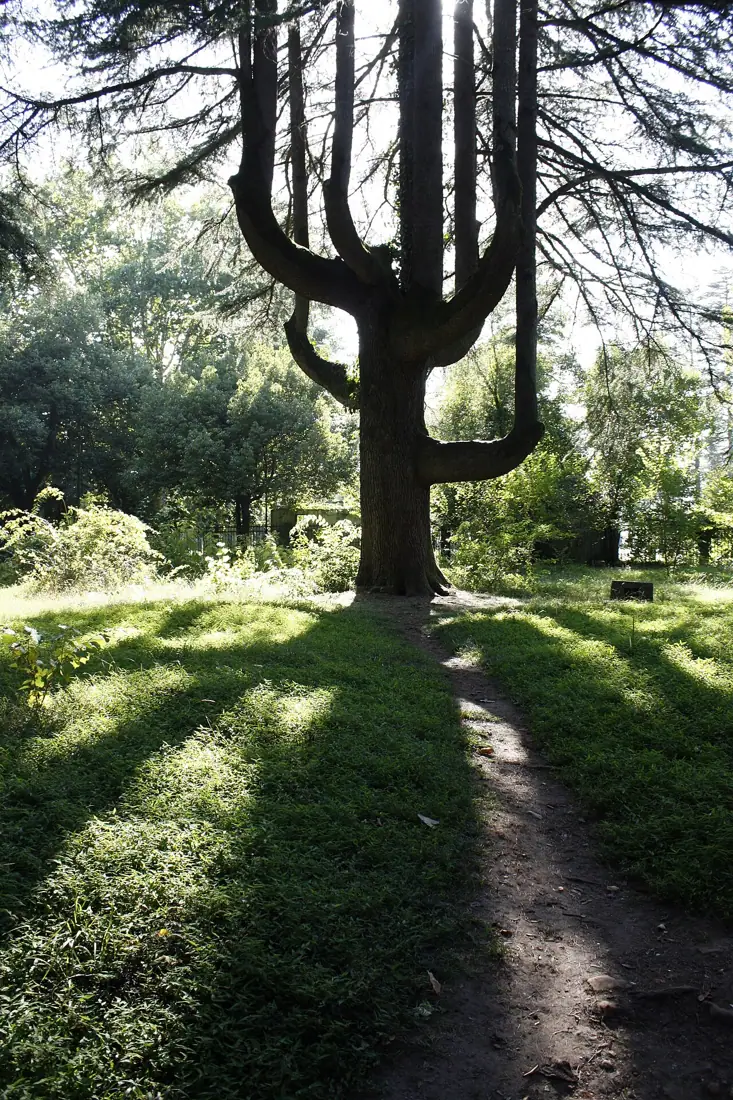
The garden now covers about twenty-six hectares. In it are cryptomeria, camphor laurel, magnolias, Himalayan cedar, cork oak, sequoia, bamboo, ginkgo and loquat. Some trees are close to two centuries old and thick enough that two people cannot reach round them.
The structure is a set of old avenues, a small pond in the middle, and the remains of formal beds. In the Soviet period this was a scientific institution; now it is half wild.
In the Soviet decades western Georgia was the citrus, tea and tung-oil district of the entire union, and the garden served that programme: new varieties were trialled here before being planted out across Samegrelo. Traces remain — old citrus stock, tea bushes at the edges of the avenues, and a bamboo grove by the eastern wall that is the loudest thing in the garden in a wind.
The museum next door belongs to the same story. Three minutes away in the Dadiani palace is Napoleon's death mask, which reached Mingrelia through the marriage of Salome Dadiani and Achille Murat. Two inheritances of one family, exotic trees and a Bonaparte relic, sit side by side.
It is fair to say plainly what it is not. This is not a manicured show garden. Paths turn to mud after rain, labelling is thin, and parts of it are simply neglected. Anyone arriving with Batumi's botanical garden in mind will be disappointed.
What it offers instead is emptiness. People from Zugdidi walk dogs here, schoolchildren skip lessons, and the birds are loud. April and May bring magnolia and azalea; November brings colour. Those are the two best moments.
An hour is enough for a walk through, two if you start looking at individual trees.
Gallery
Practical advice
An hour covers it. The entrance is on the palace side and the ticket is nominal. After rain the paths are muddy, so proper shoes matter and sandals do not work. Mosquitoes are active in summer, especially near the pond, so bring repellent. There is plenty of shade and on a hot day it is noticeably cooler here than in the streets. Benches are few and the toilet is by the entrance. There is no café inside, but several stand near the palace square, two minutes away.
How to get there from Tbilisi
From Tbilisi take the E60 west through Gori and Kutaisi to Senaki, then continue towards Zugdidi — about 320 km and four hours forty. The road is asphalt throughout, largely dual carriageway, and in good condition. The garden is in the town centre, directly behind the Dadiani palace, so one turning serves both. Parking is on the street in front of the palace and is free, though space is short on summer afternoons. Refuel in Senaki or Zugdidi. An economy car is entirely sufficient all year round.
Click a marker for details. Coloured lines are ready-made road trips.
Nearby places
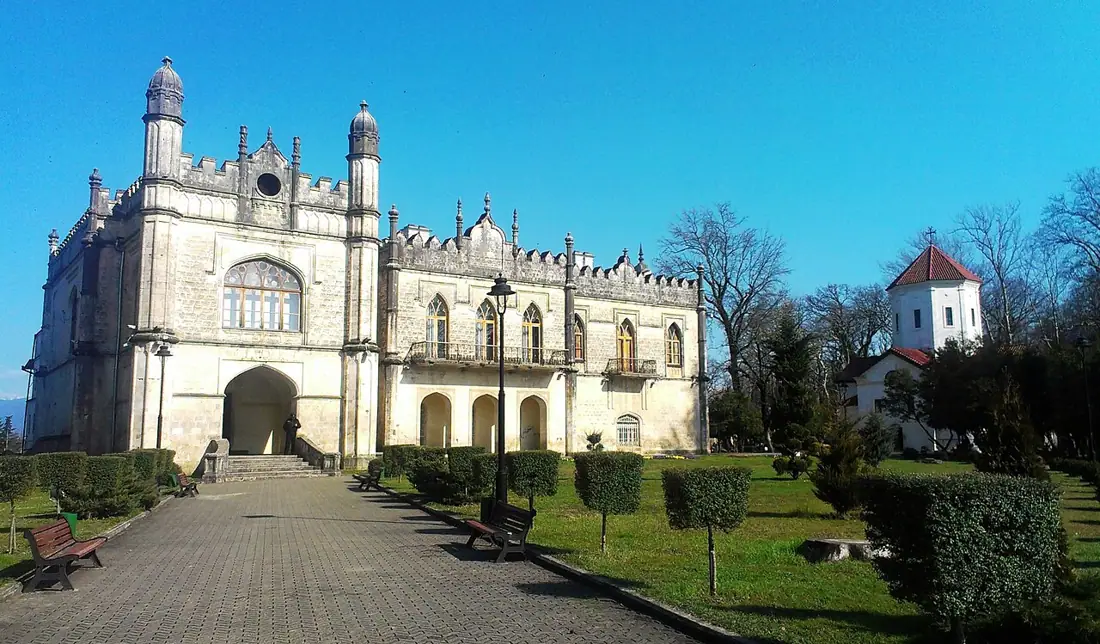 Museum
Dadiani Palace, Zugdidi
The residence of the princes of Mingrelia set in a botanical garden — Napoleon's death mask and the family collection.
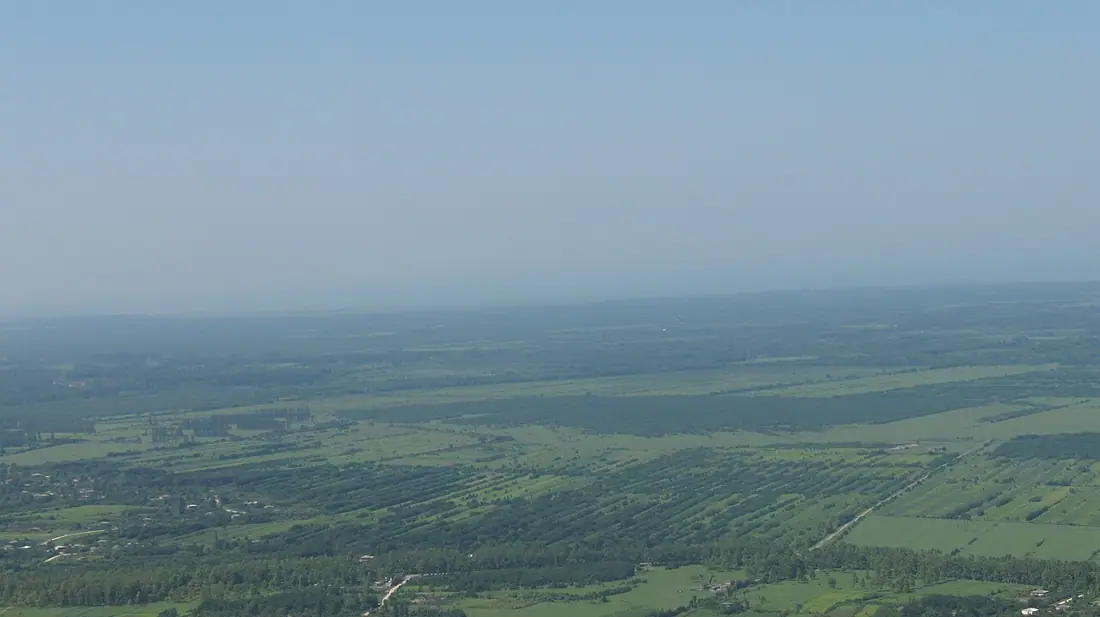 Monastery
Tsaishi Cathedral
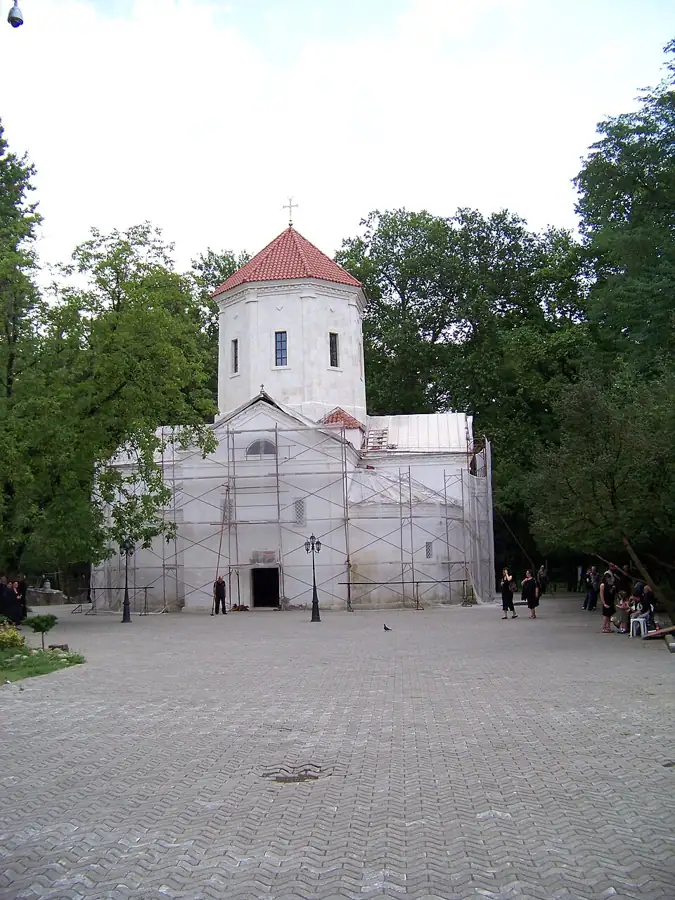
A medieval bishop’s seat south-west of Zugdidi, with a fine bell tower and a church rebuilt almost out of recognition.
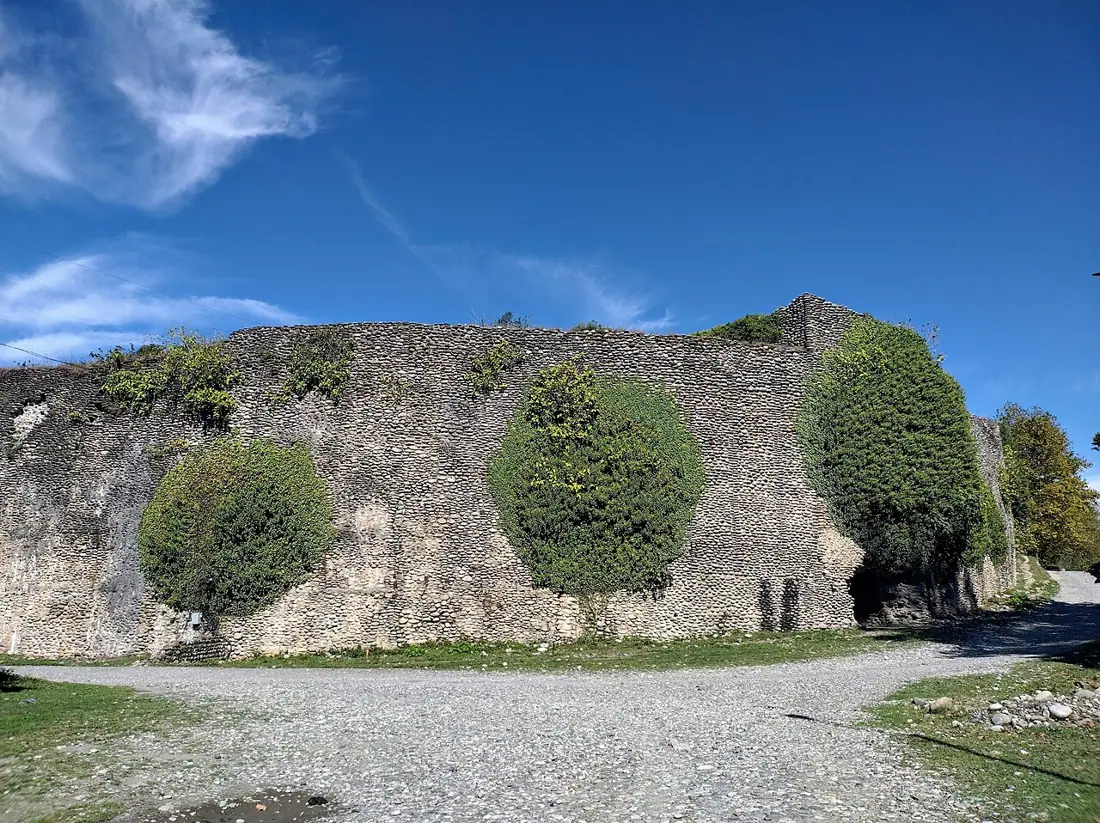 Fortress
Rukhi Fortress
Levan II Dadiani’s 17th-century fortress above the Enguri, with round towers and a wide view over the floodplain.
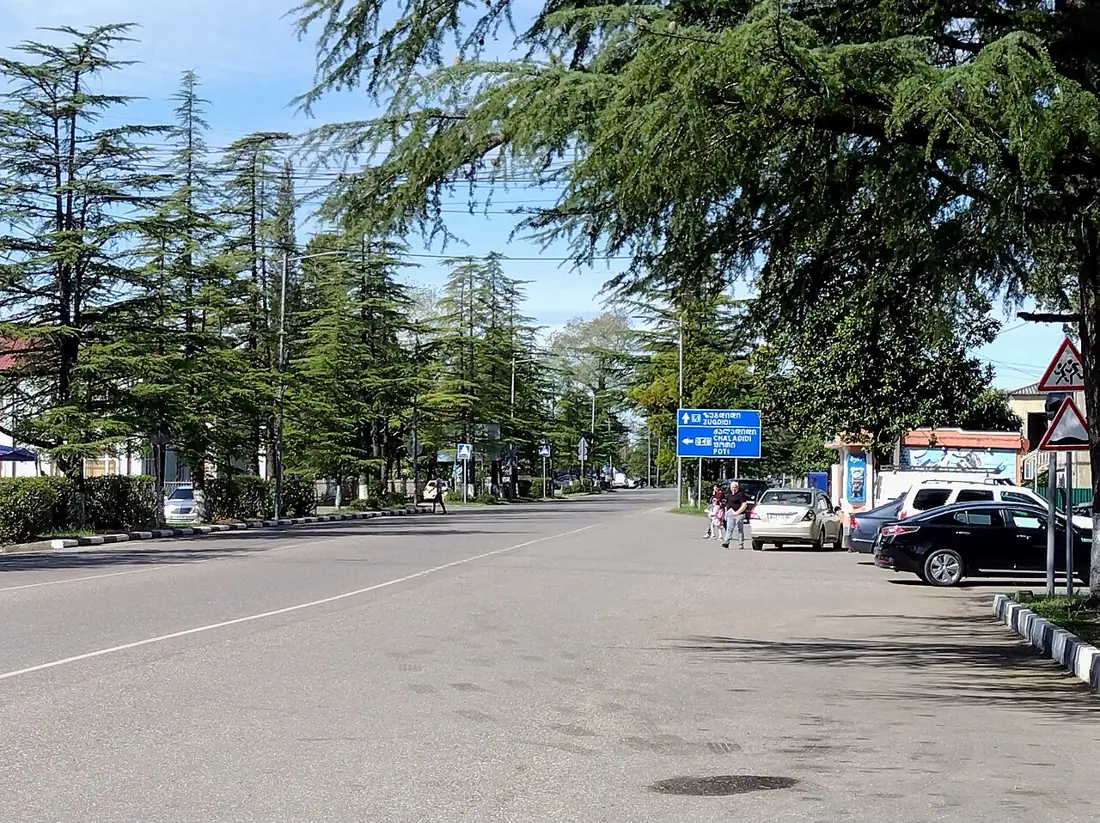 Monastery
Khobi Monastery
A 13th-century domeless church with carved facades, an open gallery and the burial vault of the Dadiani princes.
Booking and enquiries
This site is informational — there is no online payment. Call or email us to book.