Tsaishi Cathedral
A medieval bishop’s seat south-west of Zugdidi, with a fine bell tower and a church rebuilt almost out of recognition.
- Time needed
- 0.5 h
- From Tbilisi
- 320 km · 4:45
- Road
- Paved
- Car needed
- Economy class
- Season
- All year
- Entry
- free
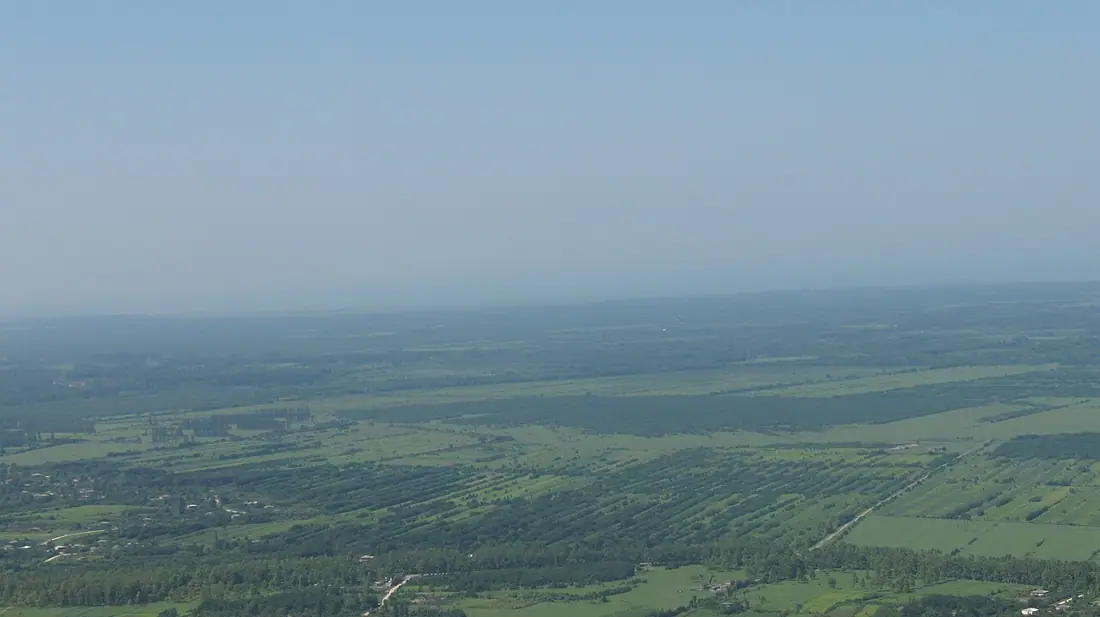
Tsaishi was one of the principal bishoprics of Mingrelia, and it is now one of the country's more argued-over restorations. The village lies about twelve kilometres south-west of Zugdidi on flat farmed ground.
The see of Tsaishi took shape at the end of the thirteenth century, when the church organisation of Odishi was revised. The bishop, known as the Tsaisheli, was among the most powerful clerics in Mingrelia and stood close to the Dadiani court.
The building itself has a tangled history. In the lower courses there are traces of a basilica of the tenth or eleventh century; the present domed cross-in-square volume is largely fourteenth century, from the rebuilding carried out under the Dadiani. It was damaged and patched repeatedly in the centuries that followed.
Restoration in recent decades changed it sharply: new stone, a new roof, a reconstructed drum. From a distance the church now reads as a new building, which many art historians dislike. The genuinely medieval fabric has to be looked for in the lower walls, in reused carved blocks set into the masonry, and in the surviving fragments of painting, which include both fourteenth-century and sixteenth- to seventeenth-century layers, neither of them extensive.
The most authentic thing on the site is the bell tower: a tall three-stage structure of the sixteenth or seventeenth century with an open belfry at the top. Its proportions and brickwork are the detail that justifies the stop.
The restoration is itself a document. It was done in years when Georgia was rebuilding many churches quickly and with more enthusiasm than archaeology, and you can see where new ashlar meets old cobble, and where a straight new arch has replaced a sagging medieval one. Whether that counts as rescue or loss is precisely the argument. The diocese, meanwhile, still exists: it was revived in 1995 as the eparchy of Zugdidi and Tsaishi, so the name survives in a living title.
The yard is large and calm, with maize plots and hazelnut orchards around it. Almost nobody stops here. There are no coaches, no ticket desk and no signage to speak of. Half an hour covers it.
Put plainly: if you want untouched medieval architecture, give your time to Tsalenjikha and Khobi instead. If you want to see how a Georgian monument lives in the twenty-first century, and what restoration can do both for and to a building, Tsaishi is where the question is posed most clearly.
Gallery

Practical advice
Half an hour is enough and it fits neatly into a Zugdidi day. The church is in use, so dress rules apply and scarves are left by the door. It is not always open; if the door is locked, ask in the yard or at the nearest house. Ask before photographing, and expect a refusal inside. Parking by the gate is free but there is little shade, so a car left there in summer will get hot. There are no toilets and no café; the nearest are in Zugdidi.
How to get there from Tbilisi
From Tbilisi take the E60 to Senaki and continue towards Zugdidi; a few kilometres before Zugdidi take the signposted turn south-west for Tsaishi — about 320 km in all and four hours forty-five. The road is asphalt throughout, with the last stretch a narrow country lane, potholed but perfectly passable in a low car. Navigate by the bell tower, which is visible across the fields from some distance. Refuel in Senaki or Zugdidi. An economy car is sufficient in every season, and parking is directly at the gate.
Click a marker for details. Coloured lines are ready-made road trips.
Nearby places
 Museum
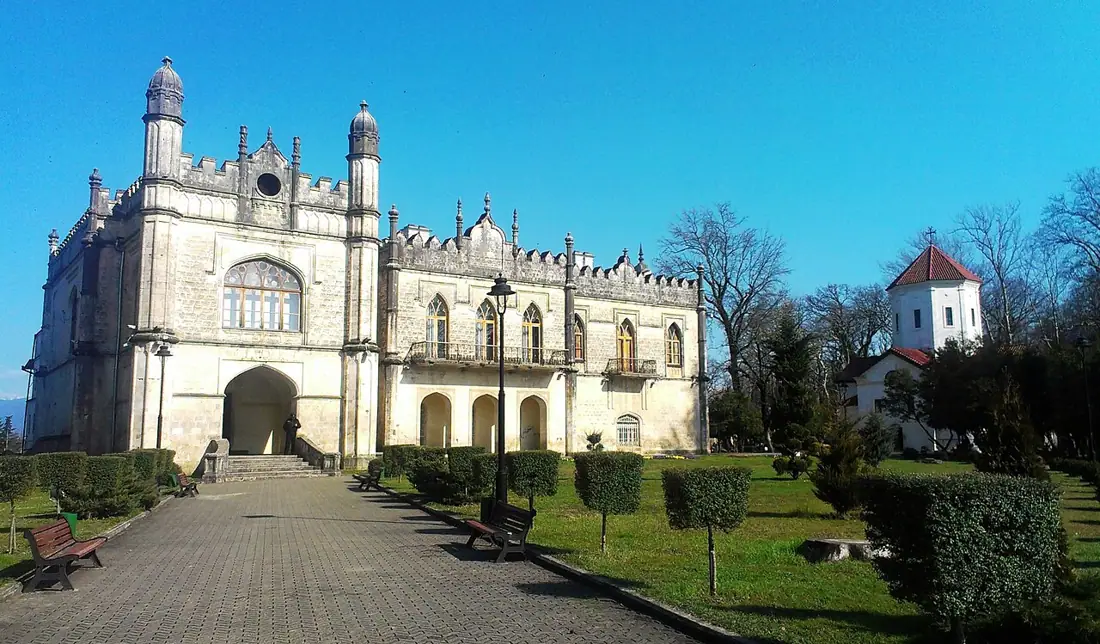
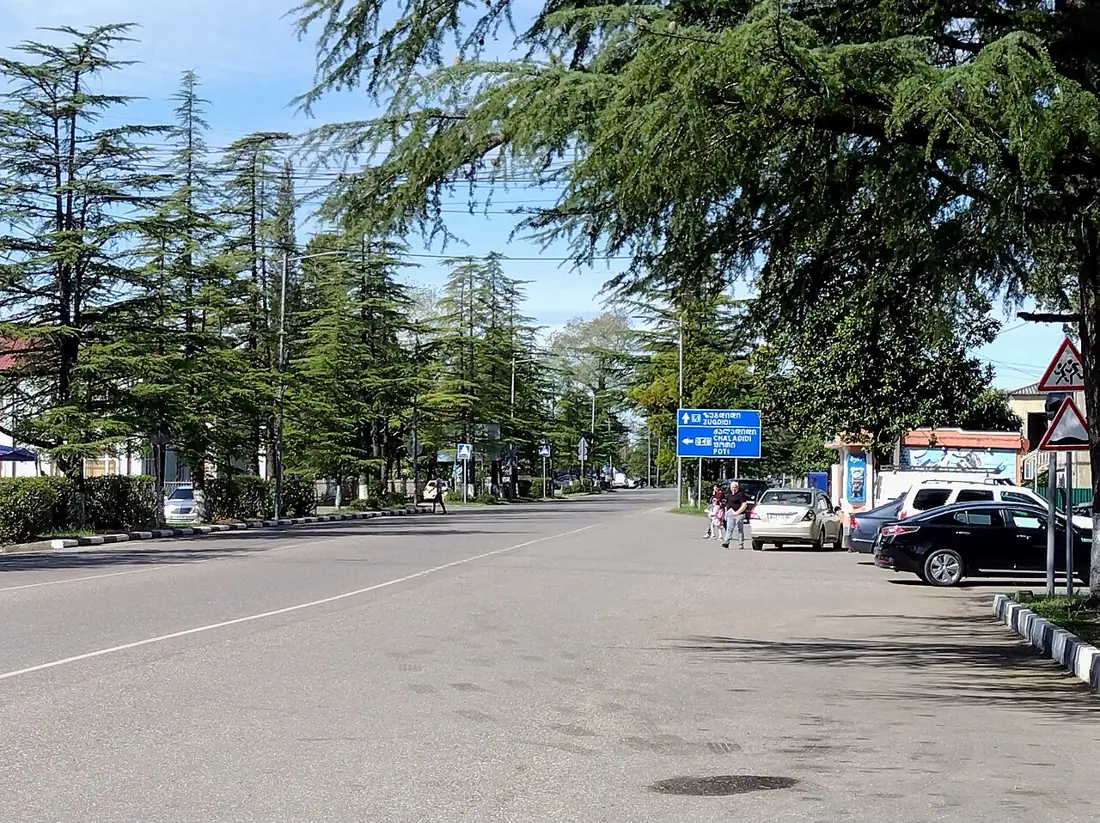
Dadiani Palace, Zugdidi
The residence of the princes of Mingrelia set in a botanical garden — Napoleon's death mask and the family collection.
 Monastery
Khobi Monastery
A 13th-century domeless church with carved facades, an open gallery and the burial vault of the Dadiani princes.
 Nature
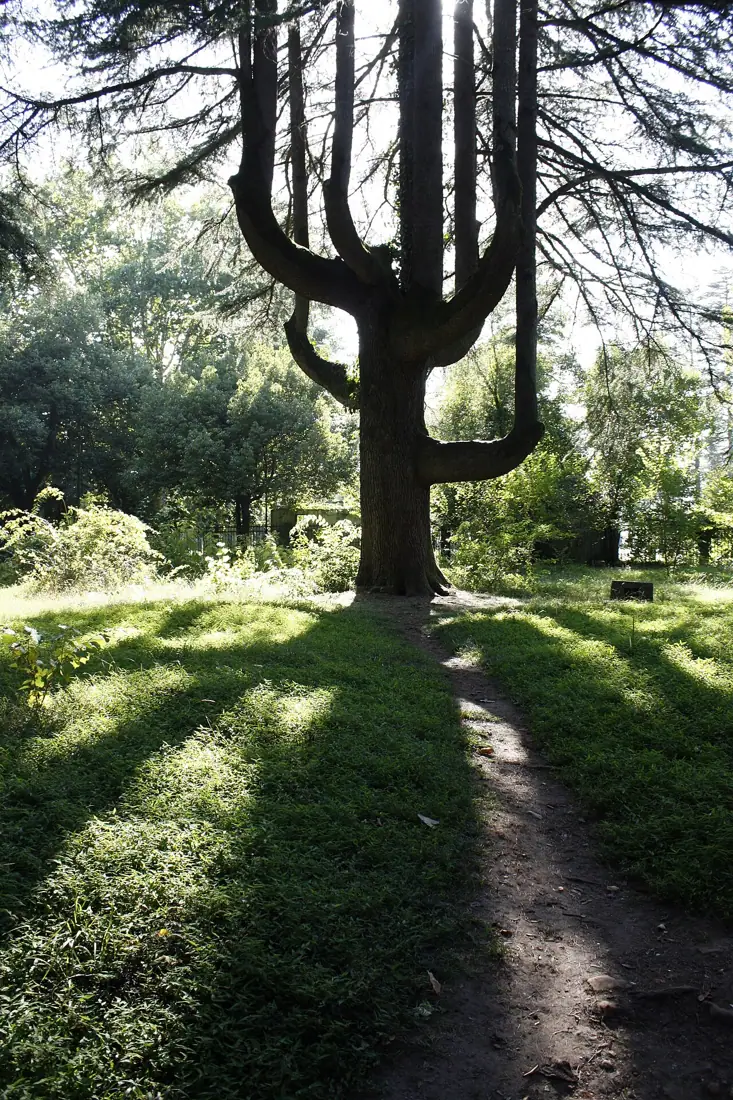
Zugdidi Botanical Garden
A garden laid out in the 1840s behind the Dadiani palace, full of subtropical trees and almost always empty.
 Fortress
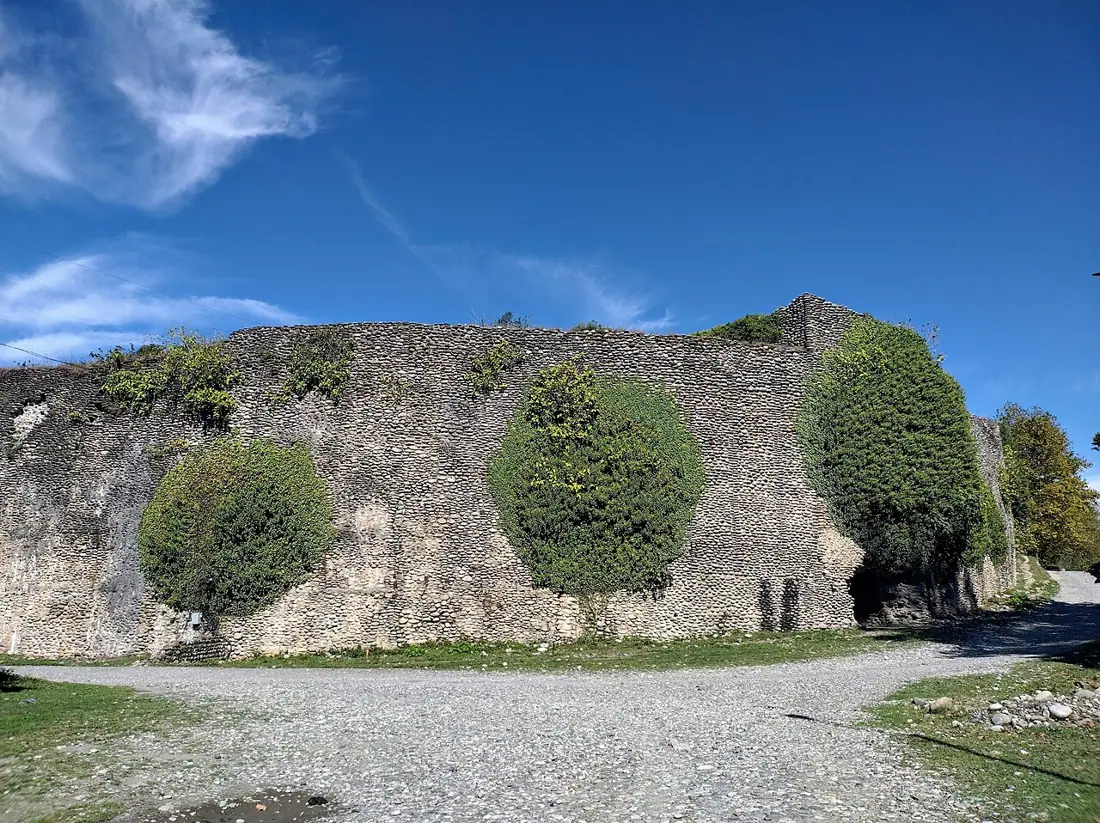
Rukhi Fortress
Levan II Dadiani’s 17th-century fortress above the Enguri, with round towers and a wide view over the floodplain.
Booking and enquiries
This site is informational — there is no online payment. Call or email us to book.