State Silk Museum
A museum founded in 1887 that has barely changed — the cases, the labels and the collection are all original.
- Time needed
- 1 h
- From Tbilisi
- 5 km · 0:15
- Road
- Paved
- Car needed
- Economy class
- Season
- All year
- Entry
- 5 ₾
This is less a museum about silk than a surviving specimen of a nineteenth-century museum. It was founded in 1887 alongside the Caucasian Sericulture Station on the initiative of Nikolai Shavrov, and the building was completed in 1892 to a design by Alexander Szymkiewicz, the architect who also gave Tbilisi the Rustaveli Theatre.
The purpose was practical. Peasants across the southern provinces of the empire had to be taught how to raise silkworms, recognise their diseases and handle cocoons properly. So this is a teaching collection, not a display of finished luxury.
What makes it remarkable is that almost nothing has been modernised. The halls still hold their original oak-and-glass cases, and inside them:
-
cocoons gathered from silk-producing countries around the world, sorted into hundreds of varieties
-
dried moths and every stage of the worm's life cycle
-
dyed silk samples, pigments and woven fabrics
-
handwritten labels in faded ink, in Russian and French
-
the station's own library and photographic archive
Much of the collection was prepared for the international exhibitions of the period and won medals at them. Today the rooms are often empty and the staff will usually walk you round themselves and explain what you are looking at. For anyone interested in old display cases, copperplate handwriting or the history of science, this is one of the more unusual hours available in Tbilisi.
Silk in Georgia is far older than the museum. Silkworms were raised for centuries in both the east and the west of the country, and under Soviet rule the trade was scaled up into an industry with its own factories and research institutes. In the 1990s it collapsed almost entirely. The museum is therefore not only a collection but the last coherent trace of an economy that fed parts of the country for well over a century, and the staff are quite clear-eyed about that.
Gallery
Practical advice
An hour is enough. The museum is small and quiet, and coach groups do not come here. The lighting is dim, so midday is better for photographs. It closes on Mondays, and individual rooms are sometimes shut for conservation work. English labelling is limited, though the staff make an effort. There is no lift and there are steps at the entrance. Toilets are inside; there is no cafe, and the nearest are on Agmashenebeli Avenue.
How to get there from Tbilisi
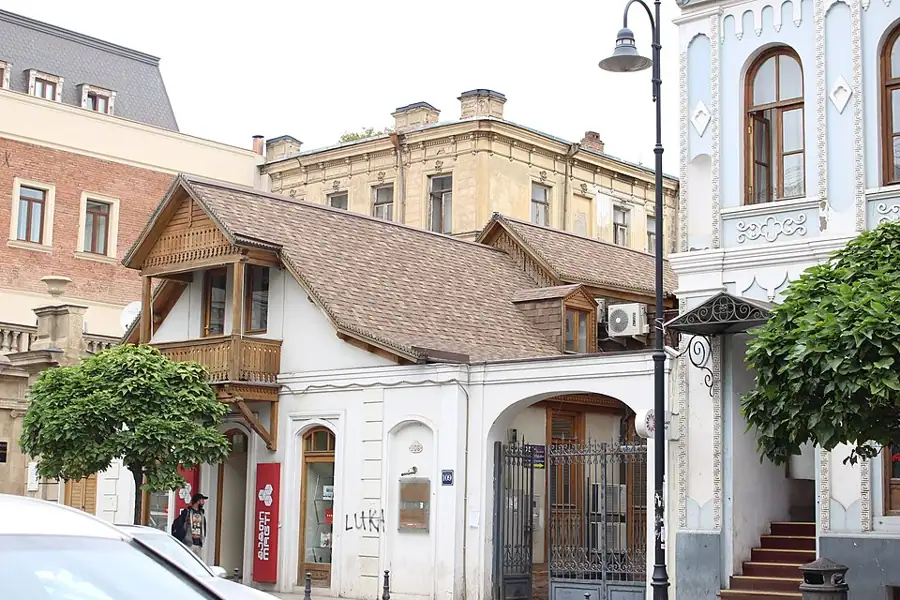
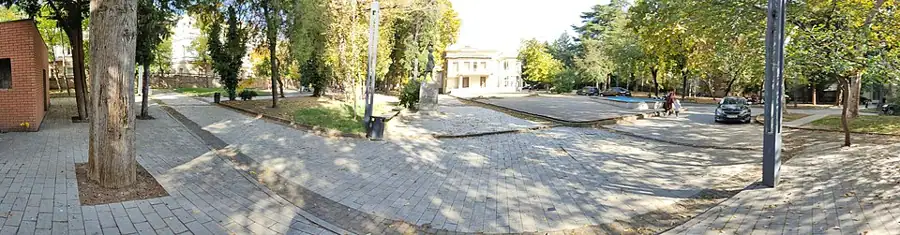
From the centre take Agmashenebeli or Tsereteli Avenue towards Station Square — 5 km, about fifteen minutes. The museum is on Giorgi Tsabadze Street, in a quiet neighbourhood slightly off the main road. Free street spaces can usually be found in the morning, though the street is narrow and two-way; later in the day it is better to use the paid car park at the Tbilisi Central complex and walk eight to ten minutes. Marjanishvili metro station is ten to twelve minutes away on foot. An economy car is enough.
Click a marker for details. Coloured lines are ready-made road trips.
Nearby places
 Town
TownDezerter Bazaar
Georgia's main food market beside the railway station, where produce from every region ends up.
 Town
TownFabrika and the Marjanishvili District
A Soviet sewing factory turned into a courtyard of bars and studios, and the old German quarter around it.
Dry Bridge Market
An open-air flea market where two centuries of the country's household objects are laid out on folding tables.
 Town
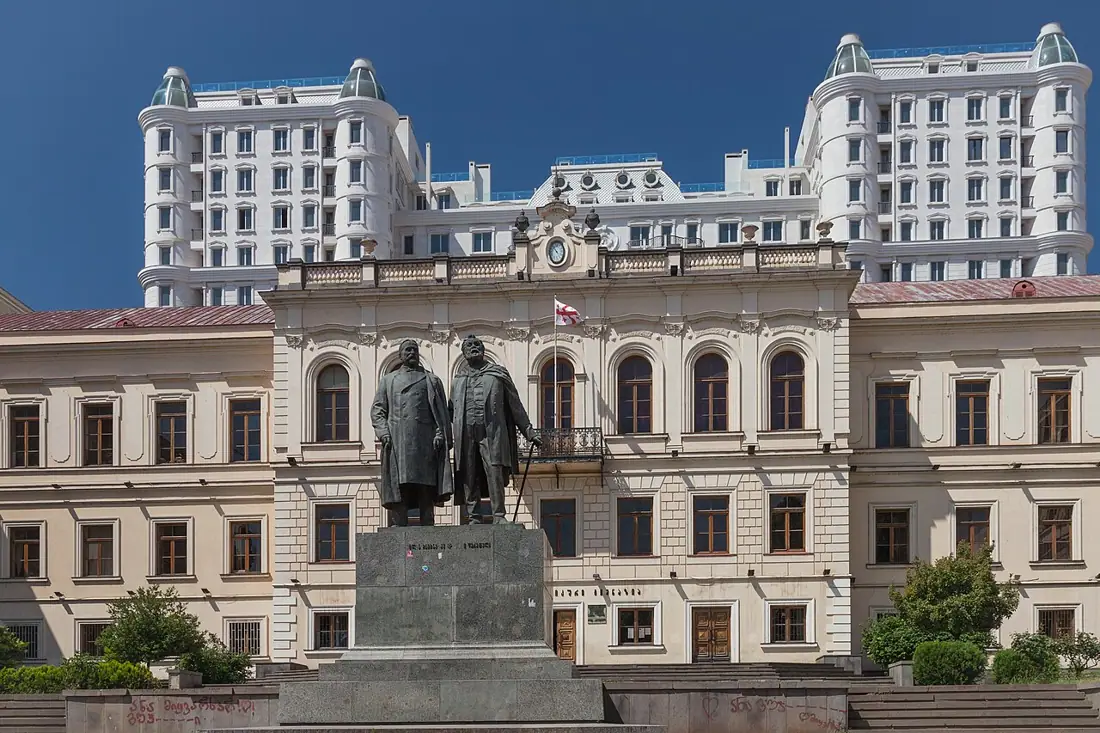
TownRustaveli Avenue
Tbilisi's main street: a kilometre and a half of plane trees, opera, parliament and political memory.